News

Henry Kwek & Hazel Poa spar over PSP's housing scheme on Day 1 of Budget Debate 2025
Both of them debated the implications of the PSP's proposed housing policies.
February 26, 2025, 06:29 PM
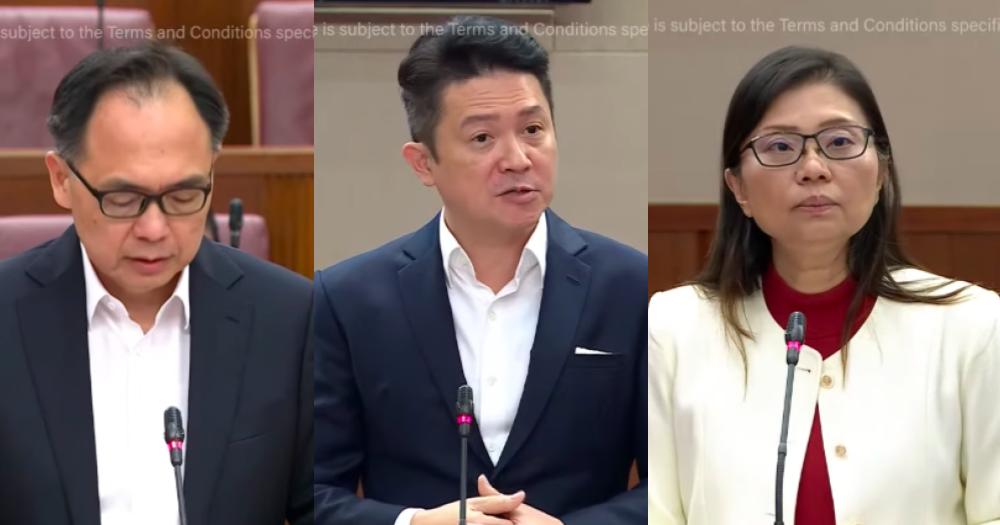


On the first day of the 2025 Budget debate in Parliament, multiple Members of Parliament (MPs) spoke in support of the Budget, delivered by Prime Minister and Finance Minister Lawrence Wong on Feb. 18, 2025.
One topic which emerged during the debate was housing.
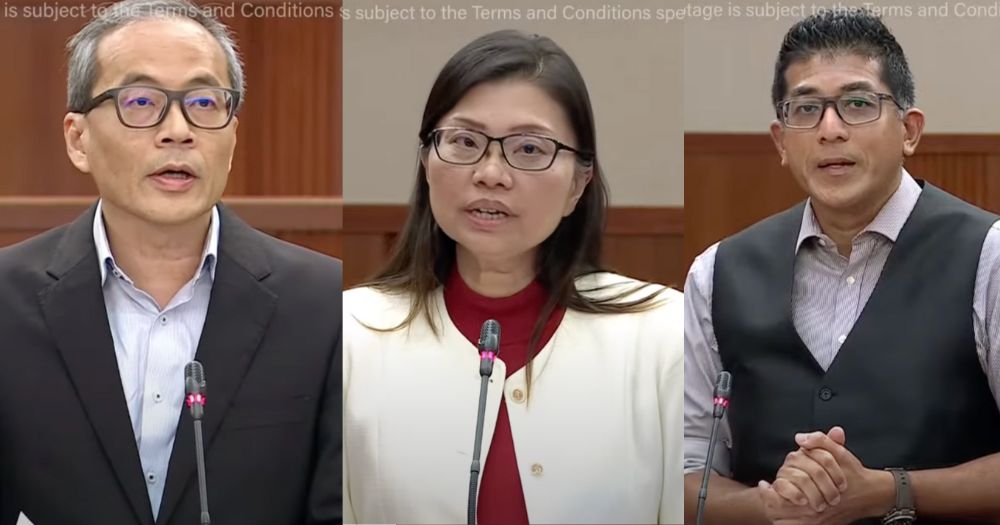
Three MPs spoke on the issue at length, with two of them, Henry Kwek from the People's Action Party (PAP) and Hazel Poa from the Progress Singapore Party (PSP), also briefly debating the PSP's proposed housing schemes.
Here's what they said.
Henry Kwek
 Screenshot via MDDI/YouTube
PSP's proposed schemes do not address "core issues"
Kwek noted that Singapore's property market has remained strong despite multiple rounds of cooling measures introduced in recent years.
"This underscores the resilience of a housing market, but it also raises questions about the affordability and accessibility for some young families and first-time buyers," he said.
Reiterating the importance of ensuring that access to homeownership is strengthened, without destabilising the long-term value of Singapore's housing market, Kwek cast the spotlight on the PSP's proposed housing policy.
According to Kwek, the PSP's Affordable Homes Scheme and Millennial Apartments Scheme may seem appealing on the surface, but risks destabilising the housing market without solving the "core issues".
Henry Kwek's criticism of PSP housing scheme
In the case of the Affordable Homes Scheme, it will create a "two-tiered housing market" where older flats must compete with significantly cheaper new ones as a result of the removal of land costs from the upfront price of new flats.
"This will put downward pressure on resale values, affecting homeowners who have spent decades building their housing equity in their flats," he pointed out.
Meanwhile, the Millennial Apartments Scheme, which expands state-controlled rental housing, could dampen demand for both resale HDB flats and private rentals, reducing rental yields and making it harder for homeowners to monetise their flats in their later years, he said.
Kwek pointed out that within his own constituency of Kebun Bahru, many of his residents do not just see their HDB as a home but also as a key pillar of their retirement planning.
"A sudden depreciation in housing prices or rental value will mean less financial security for seniors looking to right size or to lease out their flats to support their retirement," he added.
Government can examine the income ceiling and supply of executive condominiums
Kwek also recommended that the government take a look at the income ceiling and supply of executive condominiums.
According to Kwek, some young Singaporeans earn just above the threshold of eligibility for a Built-To-Order flat, but not enough to comfortably afford a private condominium.
"By increasing (the) income ceiling, we can ensure that young professionals, some of whom who do not have deep financial support from their families, still have access to public housing options," he said.
At the same time, increasing the supply of executive condominiums will provide aspirational, yet attainable housing ownership of Singaporeans, ensuring that the government is able to preserve the housing ladder which has been a "key driver" of social mobility, he said.
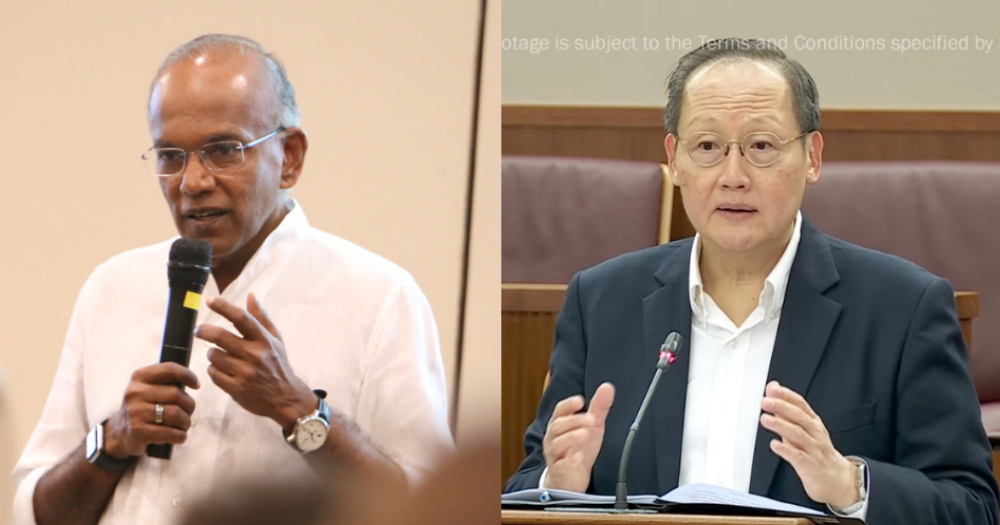
Hazel Poa
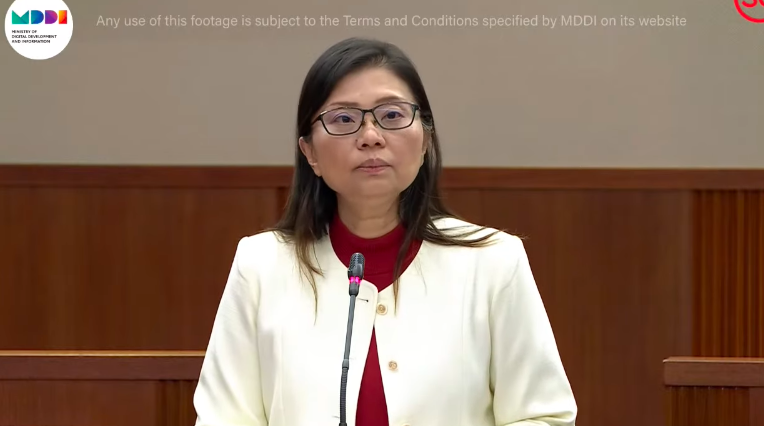 Screenshot via MDDI/YouTube
PSP's proposed scheme places a greater emphasis on keeping housing affordable
In her speech, PSP's Non-Constituency MP Hazel Poa explained that the PSP's proposed policies are based on a "better balance" of social and economic considerations, unlike the PAP’s current policies, which she said are "too heavy" on economic considerations.
Poa then claimed that the PAP's current policy of transferring the full market cost of land used for HDB flats into the reserves places a "heavy burden" on Singaporeans, as the land cost must be recovered from them through the cost of flats or additional taxes.
Under the PSP's Affordable Homes Scheme, HDB flats will be priced only to recover the construction costs but not the land at first purchase.
Flat buyers only need to pay the land costs upon selling their flat on the resale market.
"By doing this, we are also empowering Singaporeans to have the financial resources to achieve their dreams, instead of chaining them to 30-year-mortgages that are increasingly unaffordable," Poa added.
Addressing Kwek's claim that the PSP's proposal could destabilise the housing market
Poa also addressed Kwek's claim that the PSP's proposal could destabilise the housing market.
As flat owners have to repay the land cost with interest under their scheme when they resell their flats, the resale market will not be crushed, she said.
"And in any case, since resale prices have increased by 50 per cent since the last GE, far outpacing general inflation or wage increases, despite the cooling measures that have been implemented, does he not think that the resale market needs some dampening?"
Liang Eng Hwa
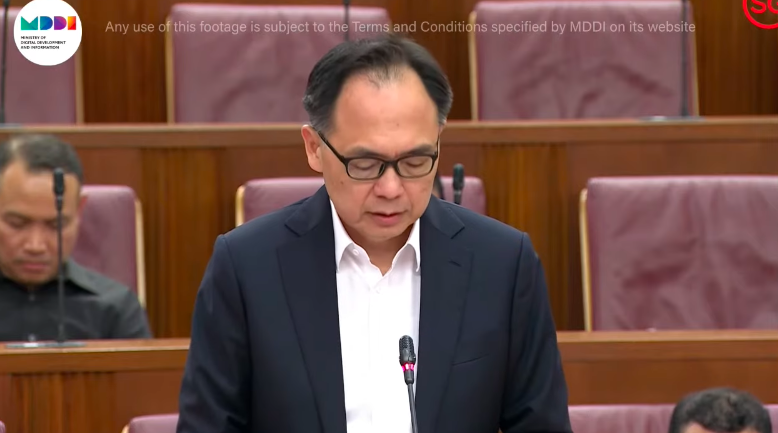 Screenshot via MDDI/YouTube
In his speech, Liang praised the government for introducing the Large Families Scheme.
Given that the rationale of the support is how more children means higher household expenditure for families, Liang questioned if such support would be extended to housing as well.
"It's understandable that families with three or more children will also need more spaces in their home," he said.
Liang then voiced his hope that the Housing Development Board (HDB) will look into helping such families and consider giving them priority when they apply for bigger flats such as five-room flats.
Top image via MDDI/YouTube