News
Scam victims lost over S$1.1 billion in 2024. Here's how I avoid becoming another statistic
I’d rather write news than become the news.
We all know someone who is paranoid about scams.
Case in point: My colleague, Joy (not her real name), shared with me over a lunch conversation that when her bank balance exceeds a certain point, she'll try to spend more on travel or gifts for friends and family so the scammers can't get her money.
 Screenshot from Telegram, by Daniel Seow.
"I'm generally quite careful about checking potential scam calls and texts, but I also tend to be more spendthrift because I want all the money I earn to go to things that I care about, and not a scammer's pocket," Joy said.
Joy's approach is unique, to say the least.
But given that scam victims lost over S$1.1 billion in 2024 alone, it's hard not to worry about becoming another statistic.
Thankfully, there are tools out there to protect oneself — like setting transaction limits, money lock features and kill-switches for bank accounts, and more.
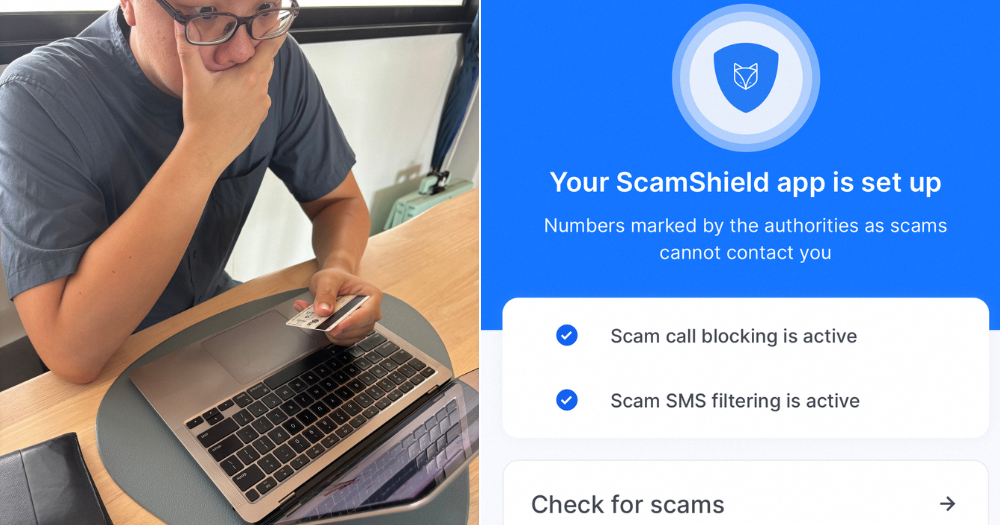
One tool I personally tried was the ScamShield app (available on iOS and Android), which automatically blocks scam calls if they are from suspicious numbers on a blocklist regularly updated by authorities.
It also uses AI to analyse and detect potential scams in SMSes and links, and flags up potentially suspicious messages to users.
There is also a check function that helps users check suspicious numbers and text messages.
And for those who need help, the app also has shortcuts to call the 24/7 ScamShield Helpline 1799 or to file a police report.
ScamShield blocks suspicious numbers
Setting up ScamShield to filter scam calls and messages on my phone was a pretty straightforward process.
In the app, I was directed to my phone's settings to grant ScamShield permission to block calls and filter messages from unknown senders.
It took less than five minutes to do so.
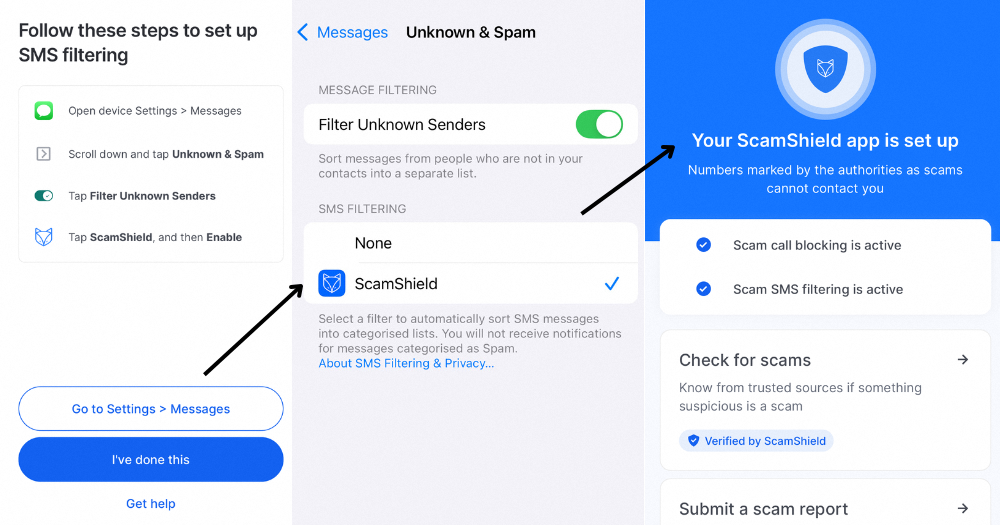 An example of the set-up process on iOS. Screenshots from ScamShield app.
Apart from silently blocking suspicious numbers from even reaching your phone, ScamShield also allows you to easily check potential scams.
While writing this article, I got a call supposedly from the "Ministry of Health", with an automated voice telling me in Mandarin I needed to urgently verify some personal information.
Frankly, that already sent alarm bells ringing.
But to double-check, I entered the number into ScamShield under "Check for scams", which confirmed my suspicions.
A total of 108 others had reported the same number, and the Singapore Police Force flagged it up as a suspected scam.
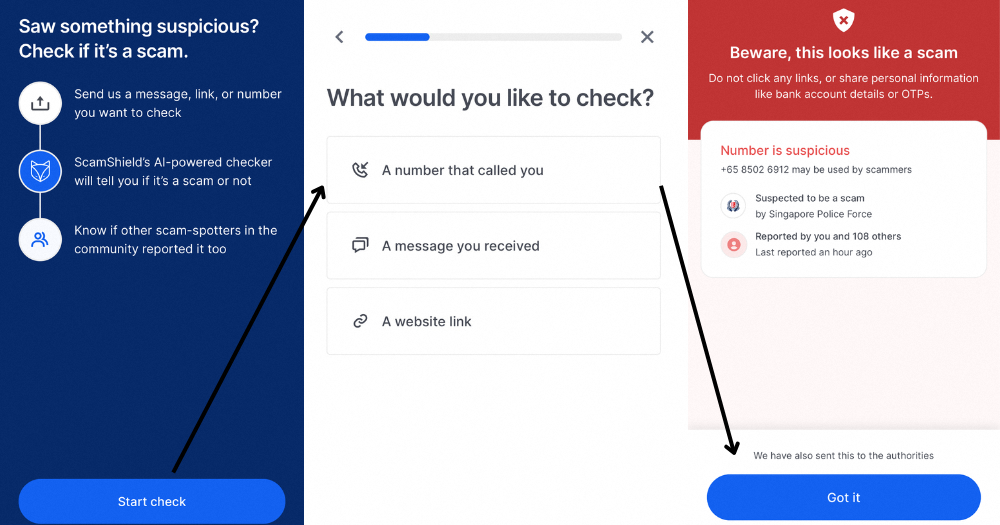 The process to check if a suspicious phone number was a potential scam took under a minute. Screenshots from ScamShield app.
Flags up suspicious SMSes using AI
ScamShield also flags up suspicious SMSes and links, through an AI-powered classifier that compares them against known scam patterns and sources.
If you're using iOS, flagged messages will be filtered to your junk folder, while Android users will get a notification in the ScamShield app.
You can also use ScamShield to manually check messages on WhatsApp and Telegram.
One such message I received was from the "Singapore Post" telling me that my package could not be delivered due to an incorrect address.
It also advised me to click on a link to update my address.
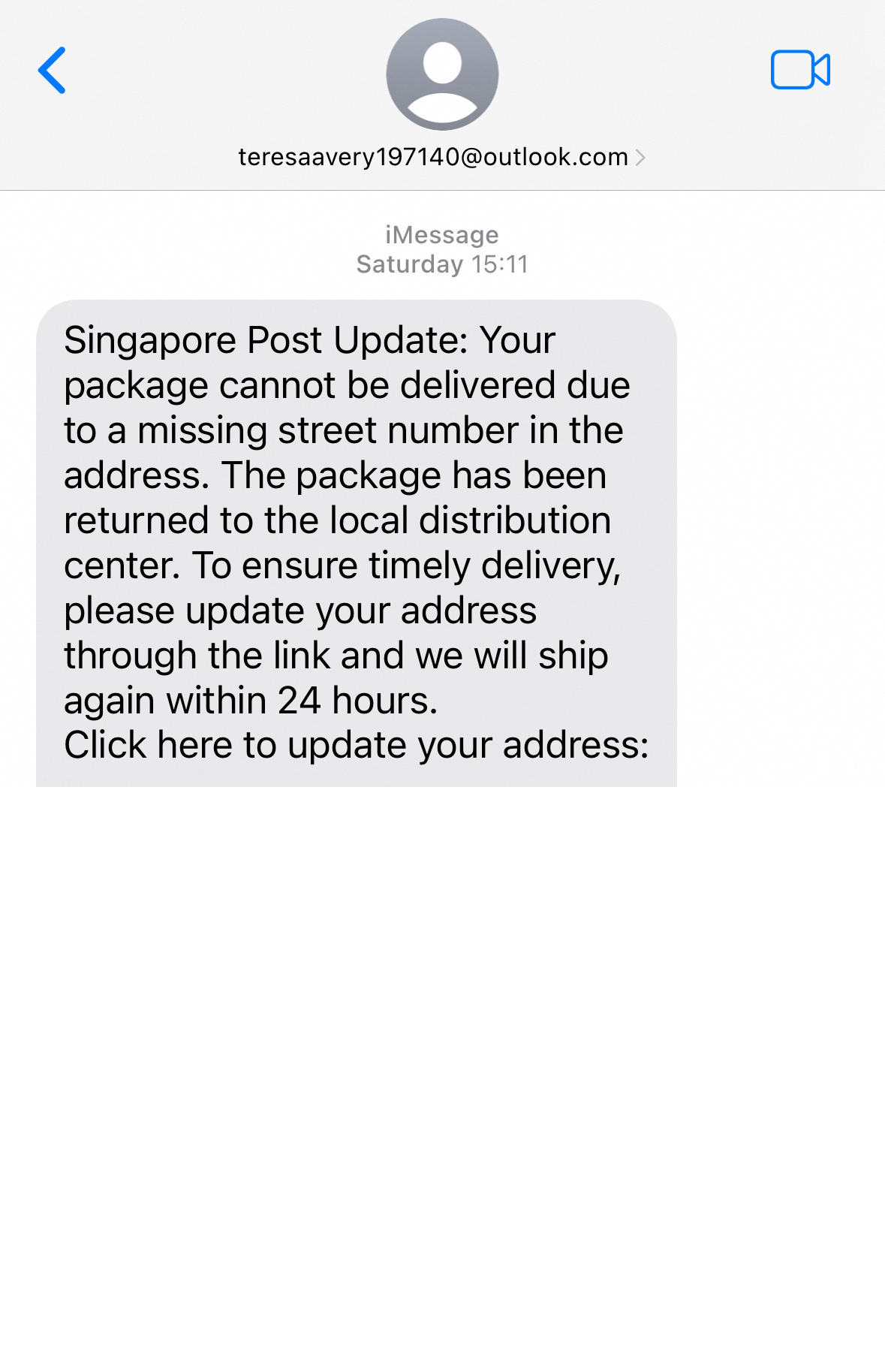 Image by Daniel Seow.
I briefly did a double take — did I actually order something that fit this description?
But instead of trying to rack my brains further, I simply uploaded a screenshot of the message to ScamShield (you can also copy the text directly).
It turned out that it was likely a phishing scam.
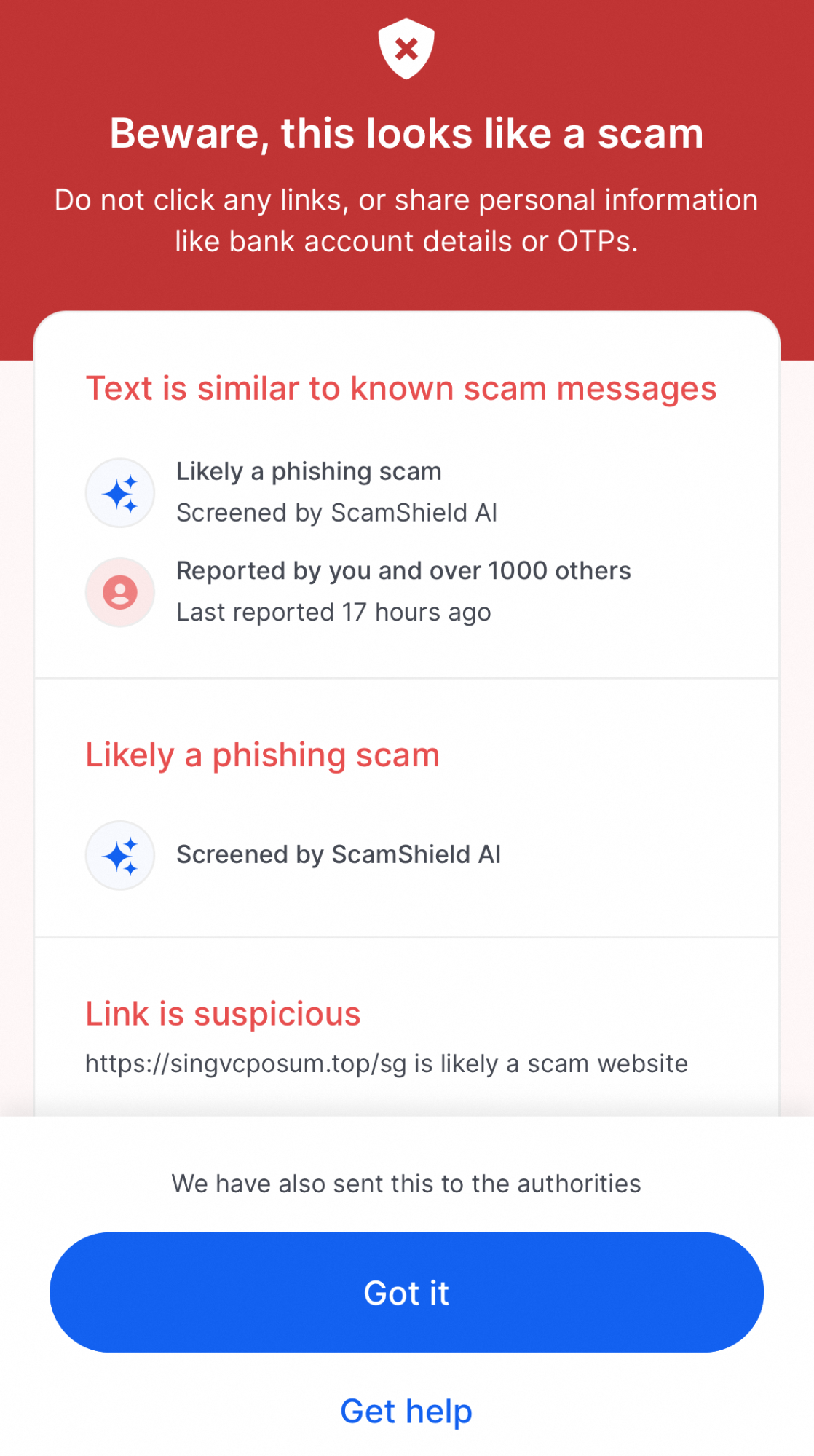 Screenshot from ScamShield app.
Contribute to anti-scam efforts in Singapore
Reporting the message on the ScamShield app took just a press of the button, which was convenient.
An added benefit of making a scam report on ScamShield is that you'll contribute to anti-scam efforts in Singapore.
This is because authorities review scam reports from users, which in turn lets them add suspicious numbers to the blocklist.
ScamShield's AI-powered classifier also learns and improves from reports, making it more powerful the more the data it receives.
It heartened me that I could be helping the likes of vulnerable seniors in Singapore to avoid getting scammed, with a process that took me less than a minute.
The sense of satisfaction encouraged me to check and report other messages I received previously.
Such as this one from a non-local number, which ScamShield flagged up as a job scam.
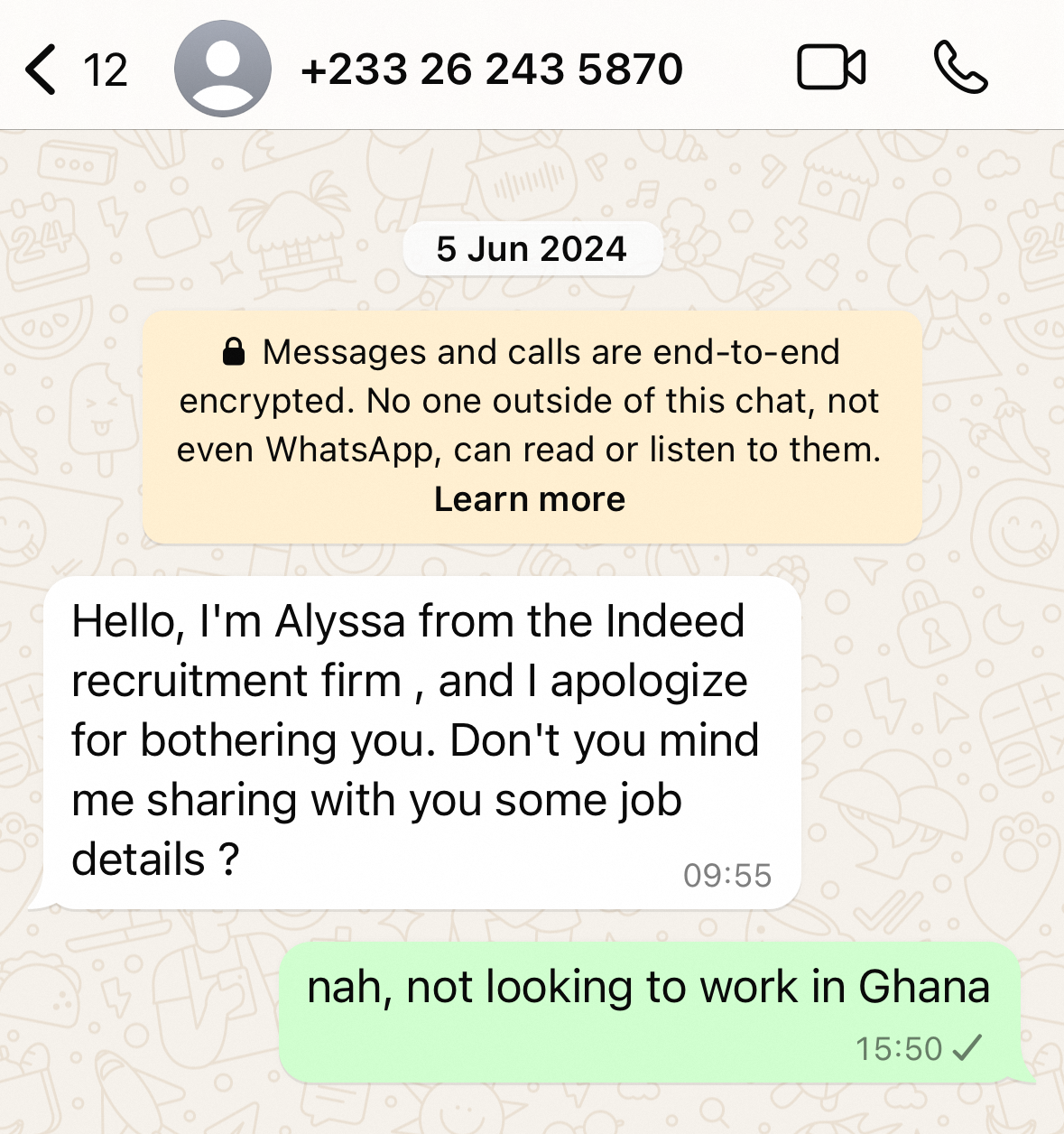 Image from WhatsApp conversation, by Daniel Seow.
Jokes aside, my experience with the ScamShield app showed me that it adds a useful layer of protection against scams, that doesn't take very long to set up.
While I did still receive some scam calls and SMSes after installing the app, I noticed the number of such fraudulent calls and SMSes I received had reduced significantly.
And for busy working adults or vulnerable seniors who might be targeted by scammers, it seems like a no-brainer to add to your arsenal.
Additional resources to combat scams
For those looking for additional resources to combat scams, the ScamShield app is part of a suite of four anti-scam products, called ScamShield suite.
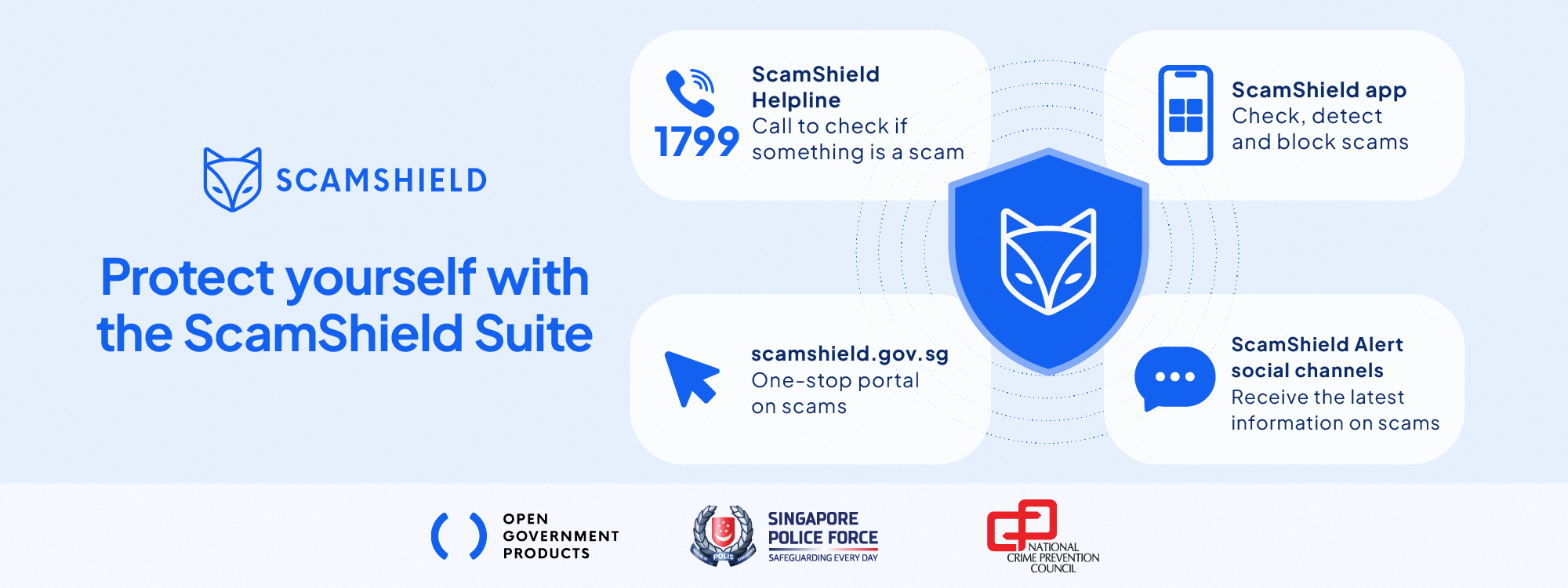 Image from ScamShield website.
Unsure if something is a scam and prefer to speak to someone?
You can call the ScamShield Helpline at 1799.
It is available 24/7, from Mondays to Sundays.
Calling the helpline to check about a suspicious caller was a smooth process that took just five minutes.
In a friendly and professional tone, the officer on the line invited me to share more details about the call.
She then calmly walked me through some of the red flags from the call, and advised me to manually block the suspicious number.
The call left me feeling more empowered to avoid scams.
Those who want to stay up to date with the latest types of scams used in Singapore can also join the ScamShield Alert channels on WhatsApp and Telegram.
From the Telegram group, I learned that scammers could piggyback on Black Friday and Cyber Monday sales to trick unsuspecting shoppers into downloading malware, or paying additional admin or delivery fees.
The group also shares helpful tips about how to avoid such common or trending scams.
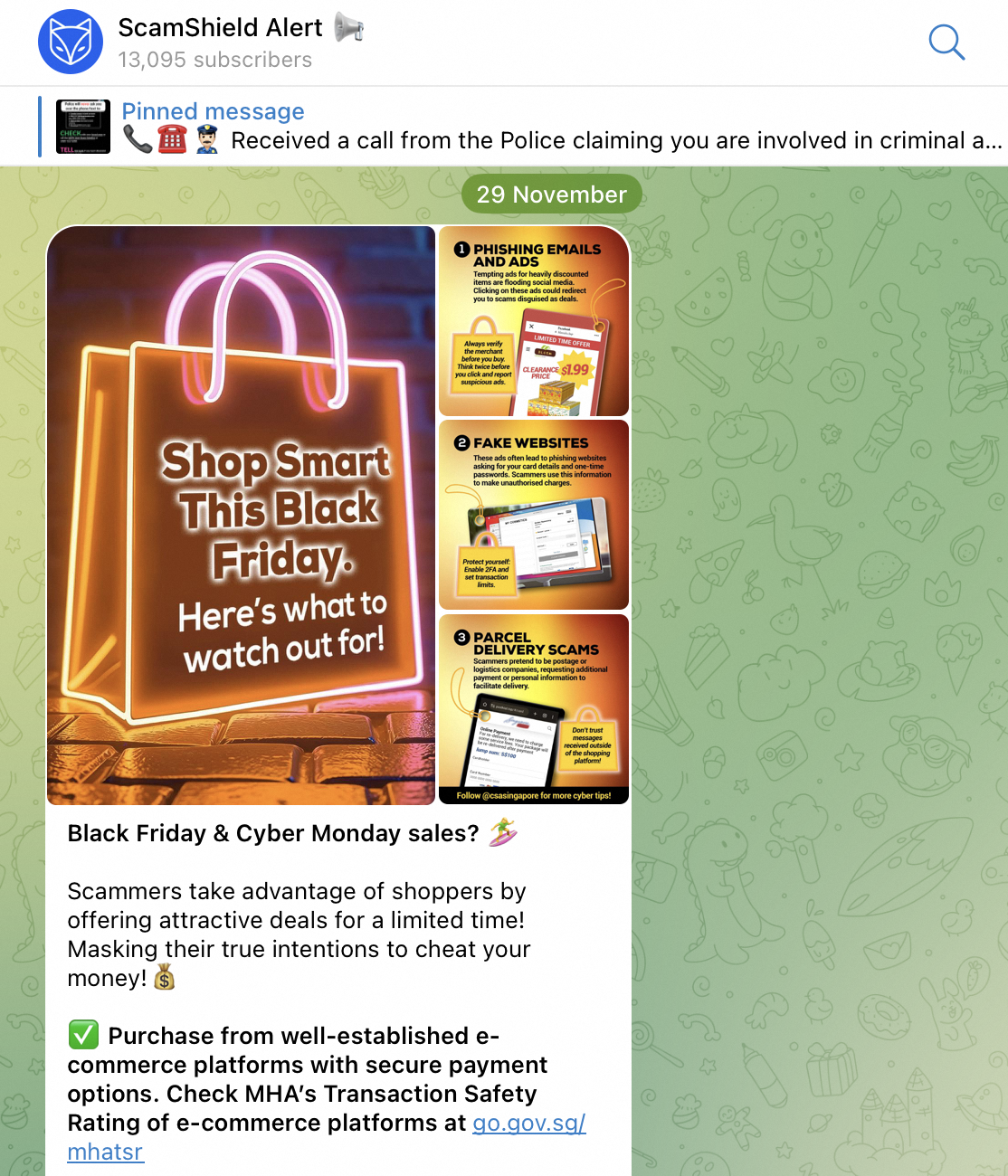 Screenshot from ScamShield Alert Telegram group.
Furthermore, the ScamShield website serves as a comprehensive resource hub for scam-related information.
This one-stop portal offers guidance for scam victims, and practical tips to help individuals safeguard themselves against scams.
The website also features an online chat function, enabling members of the public to chat with ScamShield Helpline operators directly to check if something is a scam.
It also has informative articles on how to protect oneself from scams, and the steps one should take when one has been scammed.
Learning about the Scamshield Suite encouraged me that there is a range of anti-scam tools available for everyone.
It’s also something that I’d be keen to share with my elderly relatives when I meet them over the Chinese New Year period.
Because honestly, we can never be too prepared against scams.
Top image by Daniel Seow/from ScamShield app
This sponsored article by the Singapore Police Force helped this writer feel less paranoid about scams.