News

Argentina's President Javier Milei pulls his country out of WHO after Trump orders US exit
The U.S. announced plans to leave the WHO in January.
February 06, 2025, 01:23 PM


Argentina’s president, Javier Milei, has announced that he will pull his country out of the World Health Organization (WHO).
"Nefarious Organisation"
On Feb. 5 (local time), Milei posted on social media that he was pulling the country out of the United Nations organisation, which he called a "nefarious organisation".
Perhaps the most surprising aspect of his announcement was that it had not happened earlier, as the self-styled Anarcho-Capitalist was famously critical of the WHO's Covid response.
He is also highly critical of the WHO’s parent organisation, the United Nations, using his 2024 General Assembly speech to criticise the UN's initiatives to combat climate change and gender inequality.
This scepticism was highlighted by Milei’s post announcing Argentina’s departure from the WHO.
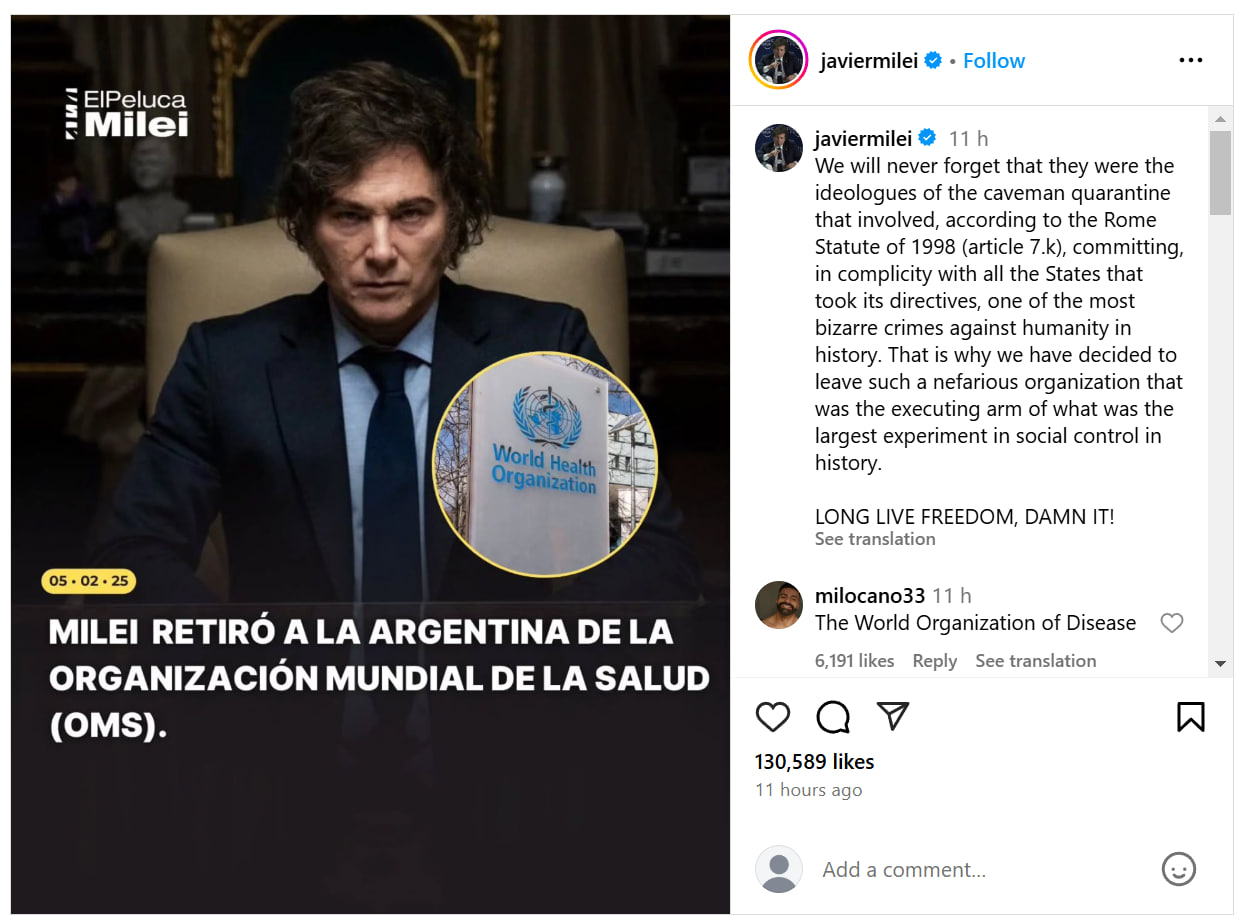 Screenshot via Javier Milei/Instagram
Criticising the WHO’s approach towards the Covid-19 pandemic, Milei called the quarantine initiatives that the WHO promoted to address the pandemic as “caveman”, and “one of the most outlandish crimes against humanity in history", as reported by the Guardian.
Pulling out
This aligns closely with United States President Donald Trump, who pulled the U.S. out of the WHO on Jan. 20, similarly accusing it of mishandling the pandemic.
However, the Guardian reports that Milei lacks the legal authority to unilaterally exit the WHO, quoting an Argentine academic as saying that the exit required the approval of Argentina’s congress.
Milei is in a similar situation to that of impeached South Korean president Yoon Suk Yeol, in that while he was elected to the presidency, his political coalition is a minority in the legislature.
Because of this, it is not clear whether his declaration will result in Argentina leaving the WHO.
But the move has understandably been criticised from within Argentina, where former health ministers warned that such a move would deprive Argentina of the ability to coordinate internationally during a potential health emergency, as reported by Argentina newspaper Clarin.
Argentina's health ministry has claimed that leaving the WHO will "have no economic impact", but also told Clarin that the announcement to leave had triggered investigations into potential impacts, rather than vice versa.
Importing criminals, and other ways to align with a new administration
The move to exit the WHO is yet another instance of alignment between Milei and Trump, who have seemingly formed a mutual appreciation society, frequently complementing each other and their governance styles.
It appears to be the latest indication of the impact that Donald Trump is having in his near abroad regions.
CNN neatly rounded up several instances of how the first few weeks of Trump's presidency have impacted the Americas, both North and South.
Trump has threatened 25 per cent tariffs on the U.S.’s closest neighbours, Canada and Mexico, although this was suspended for a month after both countries agreed to assign 10,000 personnel each to their borders to combat drug trafficking and illegal immigration.
South America dynamics
Argentina is looking to impose harsher controls on its border with Bolivia, while Ecuador has also announced tariffs on Mexico; and Panama has withdrawn from its participation in China's Belt and Road intiatives, after Trump threatened to take control of the Panama canal.
Perhaps the most unexpected response is from El Slavador’s president, who far from seeking to keep criminals from crossing borders, is welcoming them… sort of.
President Nayib Bukele invited the U.S. to export criminals, including U.S. citizens to El Salvador, who would imprison them in their mega-penal facility for a fee.
The New York Times reported that El Salvador’s prisons and criminal system were accused of arbitrary arrests and overcrowding; but are credited as instrumental in dealing with high levels of gang violence in the country.
The NYT suggested that the offer was an attempt for Bukele to ingratiate himself with the new Trump administration.
Trump's foreign secretary Marco Rubio called the offer "generous".
As Milei and Bukele show, and to an extent, the leaders of Canada and Mexico as well, the Americas' leaders are each working to better position themselves and their countries for the second Trump administration.
Related stories
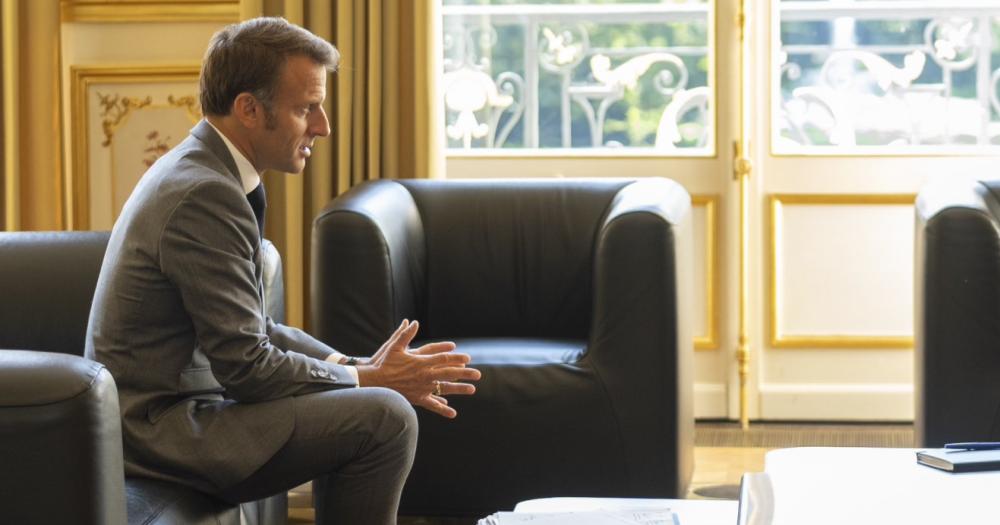
Top image via Javier Milei/Facebook