Abroad


Has Najib's pardon fractured M'sia's governing coalition?
Where will Najib get the money to pay the fine? And will there be other ministers resigning?
September 24, 2026, 11:38 AM
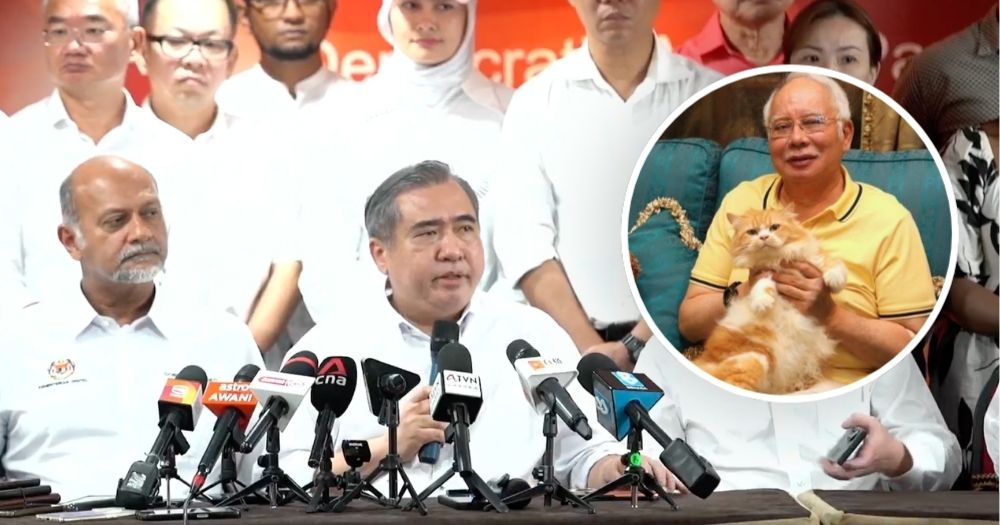
Image via Anthony Loke Siew Foke/Facebook & Najib Razak/Facebook


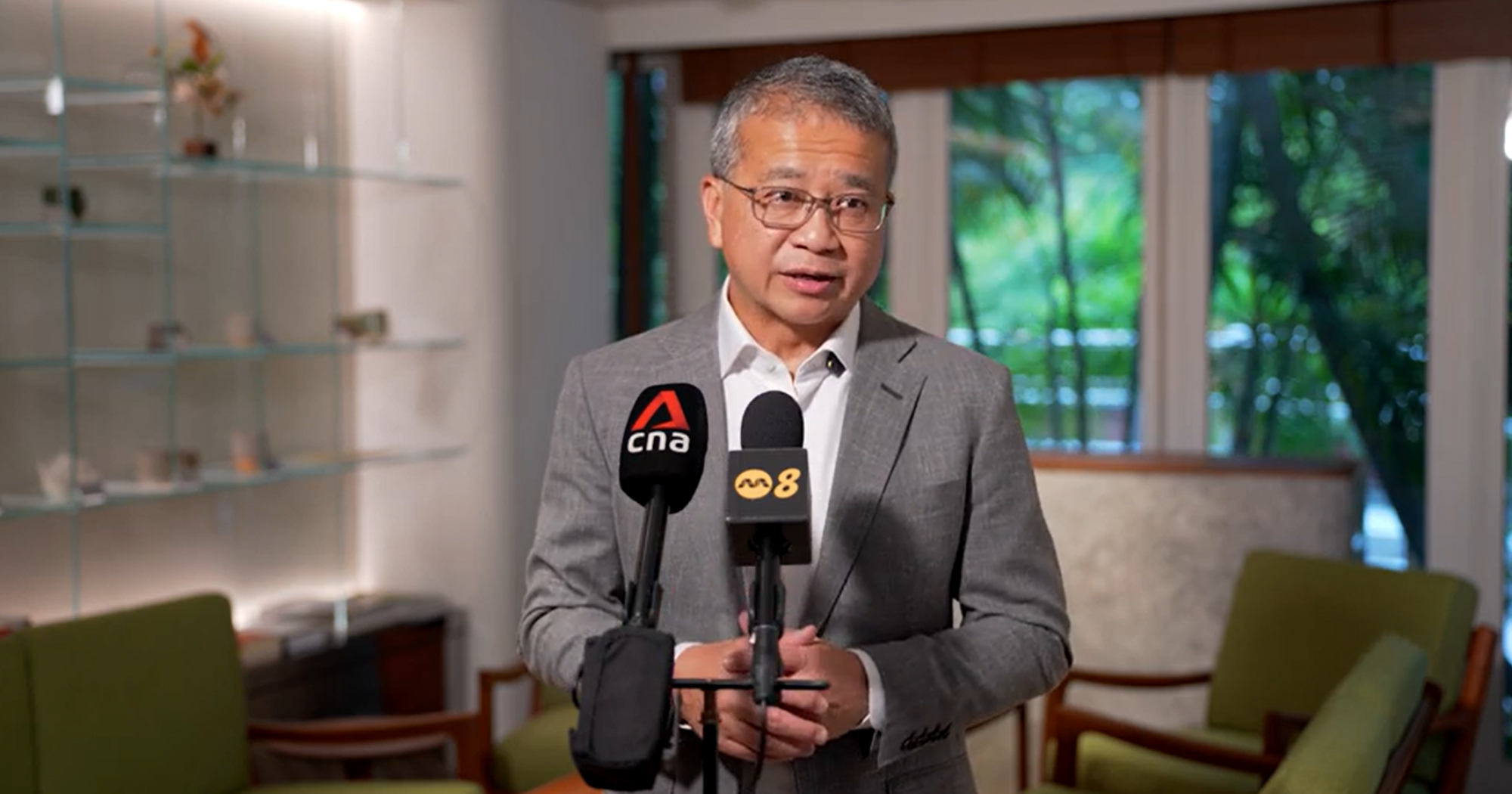
News of Najib Razak’s conditional pardon, which would move him from prison to house arrest, has caused waves in Malaysian politics, but perhaps none quite as consequential as the resignation of Minister for Transport Anthony Loke.
After it was announced that former Malaysian prime minister Najib Razak would be given a conditional pardon on Sep. 18, the DAP’s leader and Minister for Transport Anthony Loke reportedly resigned in protest.
But the situation surrounding Najib’s pardon is not as clear-cut as it might at first seem, nor is Loke’s resignation (which it turns out was an offer to resign).
So how did we get here, what was Najib actually granted, and what did Loke actually offer to do?
The Najib pardon
On Sep. 18, it was announced that former Malaysian prime minister Najib Razak had been granted a conditional pardon, which would allow him to serve the remainder of his jail sentence on house arrest.
This is subject to him paying a RM50 million (S$15.6 million) fine.
Najib had been sentenced to 12 years’ imprisonment in the SRC International case, but in 2024, his sentence was cut in half by the Malaysian Federal Territories Pardons Board.
Part of the sentence for the SRC International case was a RM210 million (at the time, S$59.3 million) fine, which was reduced to RM50 million (then S$14 million, now S$15.6 million).
This fine is important because it is the same fine that is conditioning his move to house arrest.
Controversial news
Understandably, the news has become very controversial in Malaysia, with supporters of Najib welcoming the news, particularly his family and his party, UMNO.
Parti Islam Se-Malaysia (PAS) also thanked the Malaysian king for granting the conditional pardon.
PAS’s secretary-general issued a statement praising Najib’s contributions and dedicated service to the nation, as well as hoping he would “contribute ideas, perspectives and experience for the good of the country, as reported by The Star.
This represents a turnaround from just over a decade ago, when the party criticised Najib for not sensing the problems being caused by 1MDB.
It is safe to say that Najib has become symbolic of either corruption or wrongful imprisonment, depending on which side one comes down on in the debate.
So releasing Najib, even to the confinement of house arrest, has come to symbolise the triumph of corruption or justice, two very stark and irreconcilably different positions.
Accountability and resignation
The conditional pardon of Najib has been seen as intolerable for many critical of the former PM and for those seeking accountability for the 1MDB fiasco.
One such group is the reform-minded supporters of the Pakatan Harapan coalition, currently in government.
PH, and its previous Pakatan Rakyat iteration, campaigned vigorously on a pro-reform, anti-corruption platform.
But since taking power in 2022, the coalition has been criticised for not moving fast enough on those reforms, with some suggesting that it has instead spent too much political capital in keeping its odd bedfellow government partner UMNO, Najib’s party, onside.
It has suffered in recent state elections, with PH taking severe beatings in those elections, and no component party has had to bear the brunt of its own supporters’ criticism more than the Democratic Action Party.
So harsh was the rebuke after their poor showings that the party felt compelled to take a vote on whether to remain within the government at all.
While the vote was overwhelmingly in favour of remaining in government, the Sep. 18 conditional pardon has forced the DAP to question whether its political goals were being met in government.
What did Loke say
It has come to the point where the DAP’s leader, secretary-general, and the federal Minister of Transport, Anthony Loke, has offered his resignation after a three-hour meeting on Sep. 20.
In a press conference, flanked by party bigwigs, Loke said that he would offer his resignation to Prime Minister Anwar Ibrahim at the “soonest time possible,” and this was the DAP's response to the pardon, as reported by The Star.
CNA quoted Loke as saying, “As a party, we have a stand; we feel this is difficult for DAP and many Malaysians, hence we have discussed for three hours and debated; we have reached a decision.”
But Loke and the DAP were careful not to insult the royal institution, saying that while Najib’s conditional release to house arrest was unprecedented, “we respect the power of the Yang di-Pertuan Agong to make that decision.”
There appears to have been initial confusion about what exactly Loke was offering, although it soon became clear that Loke was going to offer to resign.
As of Sep. 23, Loke remains in office and has travelled to China to participate in the APEC Transport Ministers Meeting.
Final decision
But Loke is not the only DAP minister; four others hold ministerial positions, not counting others who hold more junior roles.
At the time, Loke specifically said that there was no intention for those ministers to resign, suggesting that doing so could cause the collapse of the federal government.
Of note is the position of Hannah Yeoh, who is Federal Territories Minister and a member of the Pardons Board.
In the run-up to Najib’s pardon, Yeoh said she had expressed her views “honestly, guided by my conscience and in the country’s interest”.
But she noted that according to the federal constitution, “the authority and final decision rests with the Yang di-Pertuan Agong.”
Out of office
Anwar has said that he will meet with Loke before making a decision on his resignation.
The Malay Mail quotes Anwar as saying, “I have to listen to his views, and I understand because he is a principled person.”
“From the beginning he has been consistent in opposing measures that could give the impression that we are weak or lenient towards corrupt practices, especially when action is taken against many others, including those involved in petty corruption.”
He confirmed that Loke had told him of his intentions, but they would only meet after their respective travel itineraries allowed them to.
Loke, however, intends to remain as the DAP’s secretary-general.
He would also retain his seat in the Dewan Rakyat, even as he has lost his state-level seat in the Negeri Sembilan State Legislative Assembly.
A fine mess
As for Najib, things are not quite so clear-cut either.
The conditional pardon still raises the question of where he will find RM50 million to pay his fine.
UMNO is passing around a collection plate to raise money for him to pay his fine, with social media commentators suggesting where the money could otherwise come from.
The University of Tasmania’s James Chin, a noted Malaysia watcher, posted on social media that “Najib could still raise RM50 mil from ‘friends’ without much trouble”, suggesting that Najib’s frozen assets would pose little problem for the former PM.
Chin also noted how much direct influence Najib still had, with three of his children holding senior positions within UMNO.
Another case
But there is also the question of what becomes of his 1MDB conviction.
In December 2025, Najib was sentenced to 15 years’ imprisonment after being convicted in a separate case relating to the 1MDB case, which he is currently appealing.
As the New Straits Times reports, the conditional pardon relates only to the SRC International conviction, not the 1MDB conviction.
Furthermore, the 1MDB sentence is scheduled to begin only upon completion of his SRC sentence.
So there is a chance that, should the conditional pardon go through, his time at home will only be a brief interlude before beginning a more serious sentence for an arguably more serious crime.