News


New AI workforce co-lab launched to train over 80,000 S'pore workers in AI skills by 2028
23 pioneer financial institutions are partnering in this Co-Lab.
September 24, 2026, 07:49 PM
Images via Gan Kim Yong/Facebook & Canva (For illustrative purpose)


A new artificial intelligence (AI) workforce Co-Lab has been launched to help financial institutions train their staff in critical AI skills.
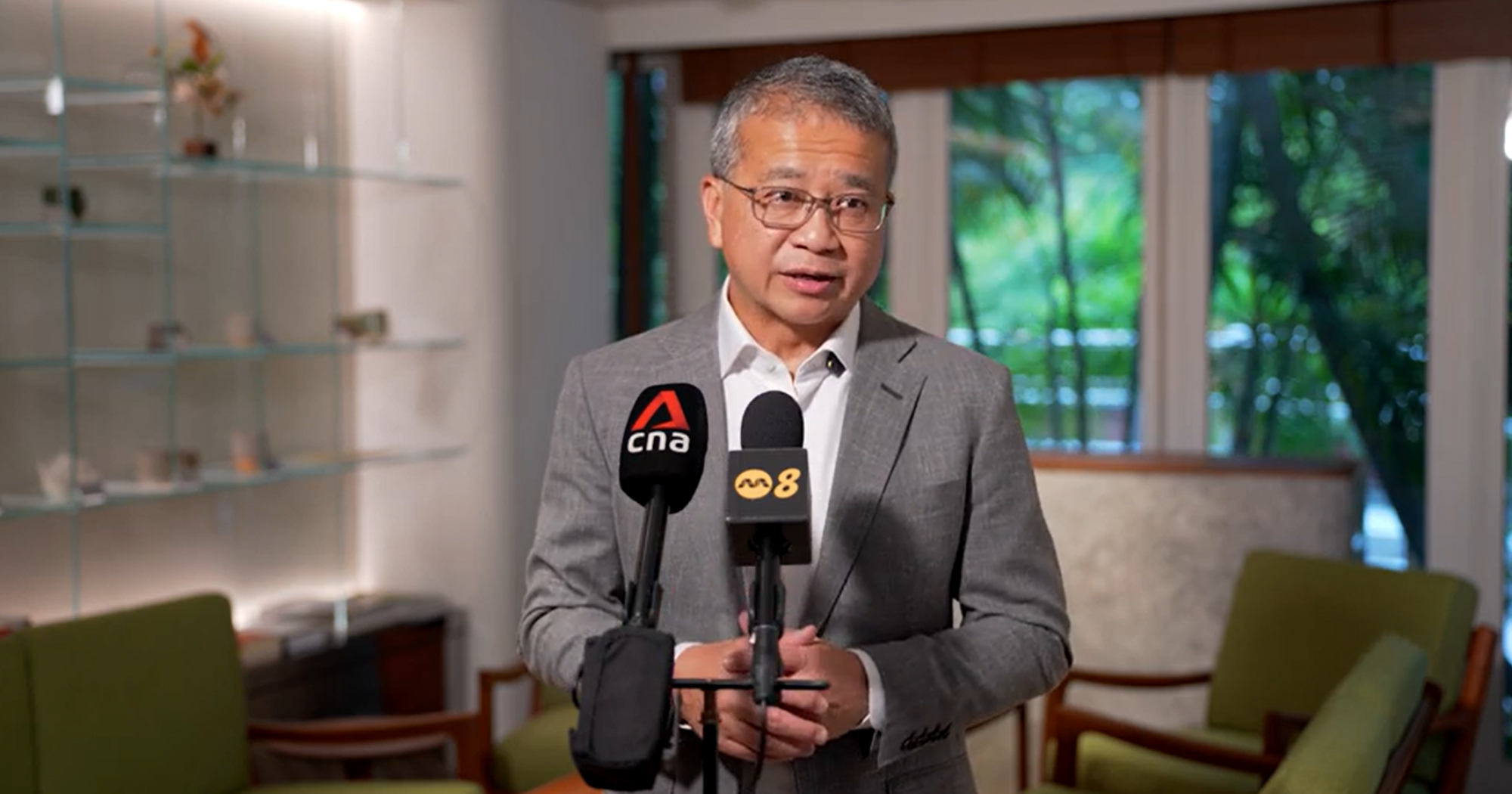
The Co-Lab, launched by the Institute of Banking and Finance (IBF) and 23 pioneer financial institutions, was announced by Deputy Prime Minister and Minister for Trade and Industry (Trade) Gan Kim Yong on Sep. 24.
It brings together employers and partners to assess how jobs are changing, and test practical approaches to training and job redesign, said DPM Gan in his speech at the IBF's Distinction Evening.
As part of the Co-Lab, the 23 pioneer institutions have committed to equipping their entire workforce in Singapore, which totals about 80,000 employees, with critical AI skills by 2028 through IBF-recognised programmes.
Over half of these employees have been trained to date.
The Co-Lab will lay a common foundation in AI usage for employees across different functions, DPM Gan said.
At the same time, employees will need skills suited to their particular roles and combine them with the use of AI, he added.
He further encouraged more financial institutions to join the collaboration.
Three pathways
Three Co-Lab pathways were launched: Co-Lab@Leaders, Co-Lab@Wealth Managers and Co-Lab@Operations.
Co-Lab@Leaders is designed to enable leaders to lead AI workforce transformation, help them identify valuable applications of AI and establish sound governance.
By considering which jobs will change with the rise of AI and preparing their employees, these leaders' decisions will also help shape business performance and their employees' prospects.
On Co-Lab@Wealth Managers, DPM Gan said the rising demand for wealth management across Asia creates opportunities for Singapore.
AI can help relationship managers analyse information faster and spend more time with clients, he said.
As they continue to provide tailored advice to clients, there will also be a need for stronger advisory expertise.
10 private banking employers have committed to upskill their relationship managers, DPM Gan revealed.
Co-Lab@Operations, meanwhile, will bring together major banking and insurance employers to redesign operational jobs and develop progression pathways, which will involve higher responsibilities in an existing role in many cases.
For others, staff may move to related roles or engage in new work involving AI.
It comes as AI gradually changes how routine processes are carried out, requiring staff to develop capabilities in areas like process improvement, exception handling, risk oversight and validating AI output.
Young talent programme
During his speech, DPM Gan also announced IBF's pilot Young Talent Programme for AI in Finance, designed to help undergraduates build skills both in AI and finance.
It also gives them first-hand experience with how AI is used in the finance sector, he said.
At present, the first cohort of students has completed their masterclasses and will soon begin project work under the mentorship of industry practitioners.
Job attachments at financial institutions are also open to others.
Tripartite collaboration
DPM Gan also announced that the tripartite memorandum of understanding (MOU) between IBF, the NTUC Financial and Professional Services Cluster of Unions, and seven industry associations across industries like banking, insurance and asset management will be enhanced.
This change will place an emphasis on helping the workforce adapt to AI through industry outreach and access to training and career support.
At the same time, it will create opportunities to develop programmes tailored to each sub-sector, he said.
Emergence of AI
"AI is already changing how financial institutions operate," said DPM Gan.
However, while AI adoption grows, some jobs will expand and others will change, he acknowledged.
"We want AI to translate into better careers for Singaporeans and a more productive workforce.
This requires commitment and action by financial institutions, as well as partnership and support from the Government and unions."