News


UK man who died on SQ321 suffered cardiac arrest due to 'physiological effect' of turbulence, inquest told
The coroner noted that the man had a history of heart disease, which could increase the risk of death during plane turbulence.
September 24, 2026, 04:04 PM
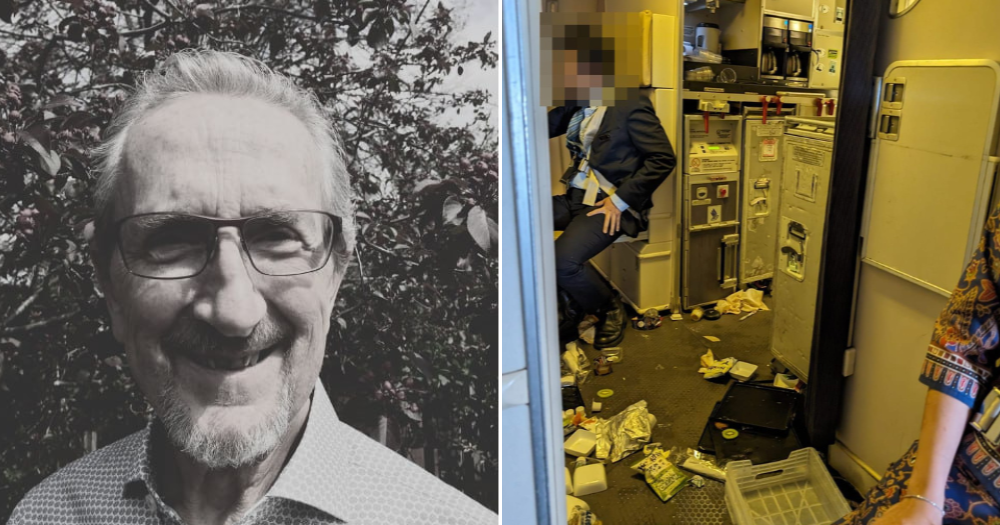
Photos via Geoff Kitchen / Facebook, Thairath.


An inquest in the UK was told by the local coroner that the British man who died during Singapore Airlines flight SQ321 in 2024 had suffered a cardiac arrest due to the "physiological effect" of the severe turbulence experienced by the plane, British media reported.
The conclusion was presented by an assistant coroner during a hearing at Avon Coroners' Court.
Last month, the widow of the man, Linda Kitchen, 74, initiated proceedings at Britain's High Court against Singapore Airlines over the death of her husband.
'Physiological effect' of turbulence precipitated cardiac arrest
SQ321 was flying from London to Singapore on May 20, 2024, when it experienced severe turbulence.
It experienced drastic changes in altitude within 4.6 seconds.
The late British man, Geoff Kitchen, then 73, was travelling to Singapore from London for a six-week holiday in Singapore, Indonesia and Australia with his wife.
He was the sole deceased in the incident.
The inquest was told earlier that Kitchen had a history of coronary artery disease, BBC reported.
He was cleared of health problems during a review in 2023, The Independent wrote.
A statement by a pathologist indicated that prior heart disease could increase the risk of sudden death during incidents of aircraft turbulence, owing to the stress caused by the release of adrenaline.
An assistant coroner, Peter Harrowing, took note of the pathologist's finding, but concluded that it was the "physiological effect" of aircraft turbulence that precipitated Kitchen's cardiac arrest and death.
According to the BBC, Harrowing noted that Kitchen was thrown from his seat and landed on an adjacent passenger during the turbulence.
Kitchen's wife, Linda, initiated the legal proceedings to seek damages in order to access specialist support for her back, BBC wrote.
As a result of the turbulence, Linda sustained spinal fractures and spent 10 days at a hospital in Bangkok, where SQ321 made an emergency landing.
She was eventually airlifted back to Bristol, where she spent another week in the hospital.
A report released by Singapore Airlines on the incident found that the reaction of the plane's pilots at the time was "understandable and appropriate".
It also found that it could not rule out the possibility that a malfunction of the onboard weather radar prevented the crew from detecting the presence of storm clouds along the plane's flight path.
Following the incident, Singapore Airlines' CEO apologised to SQ321's passengers.