News


China still emulating & learning from S'pore's 'useful experiences': Chinese diplomats
They believe that the two countries can offer other Asian countries a model for development.
September 24, 2026, 06:48 PM
Photos by Aiman Nadzri/Mothership and Canva


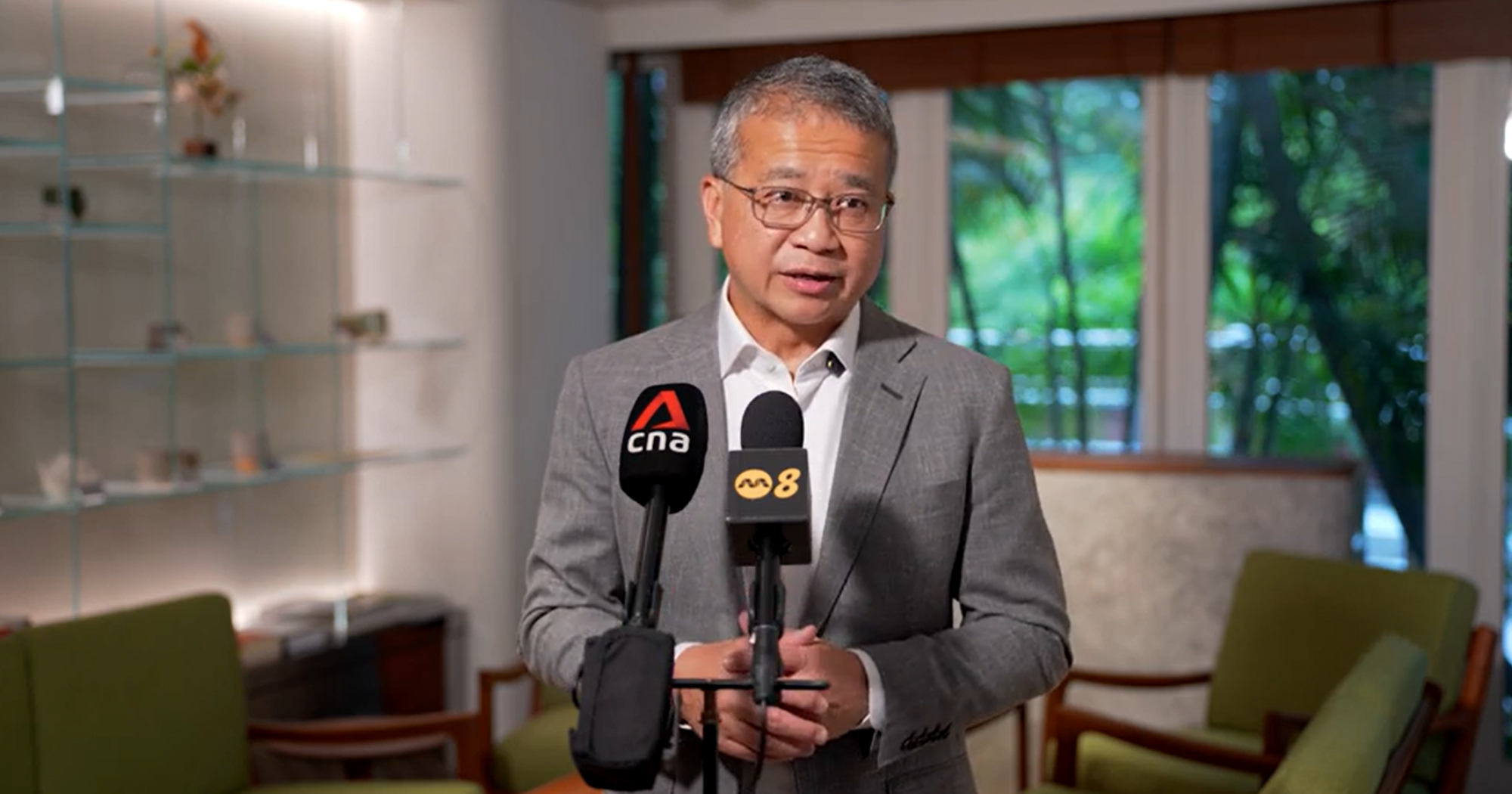
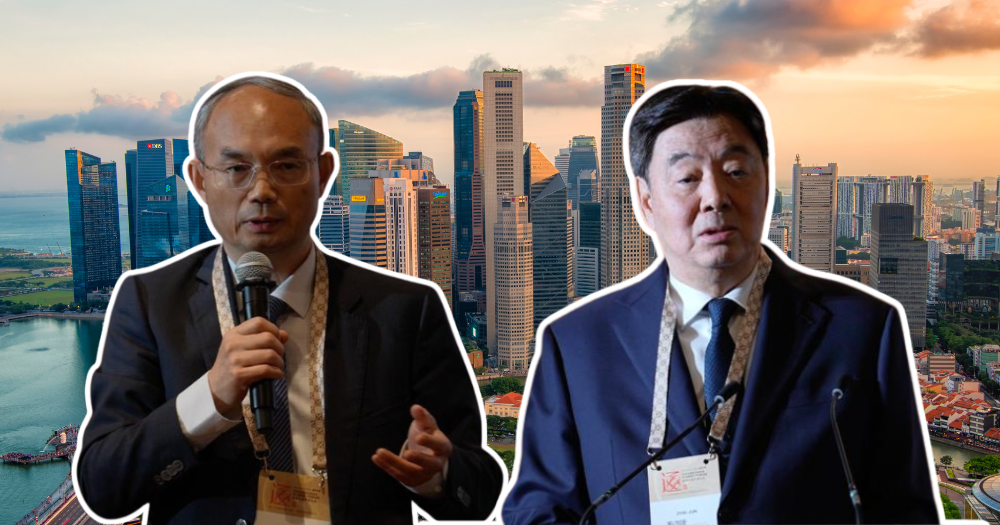
China has learnt a lot from Singapore on its journey towards modernisation, and continues to learn from it, said the Chinese Ambassador to Singapore Cao Zhongming on Sep. 24.
He described Singapore as taking the lead in modernisation, which he said is important for many Asian countries looking to become more developed.
As for China, he explained that China is not copying from Singapore, but rather emulating and learning from Singapore's useful experiences.
Bilateral cooperation
Cao was speaking at the Singapore-China bilateral relations session, held on the first day of the FutureChina Global Forum 2026 in Singapore.
He was responding to a question that a student in the audience posed to Zhai Jun, the Special Envoy of the Chinese Government on the Middle East Issue, who had also spoken at the forum.
As Zhai had highlighted in his speech that China and Singapore differ in their path towards modernisation, the student asked whether it was possible for the two countries to form a cooperation model that can be a reference for other developing countries in Asia.
In reply, Zhai recounted a trip to Singapore in 2010, when he accompanied then-vice president of China Xi Jinping to meet several Singapore leaders including Lee Kuan Yew, Goh Chok Tong, and Lee Hsien Loong.
He found that the leaders of both sides shared similarities in their views on governance, and had deep exchanges on the subject.
This demonstrated that the two countries have a solid foundation for bilateral cooperation, which can offer a basis for them to build a unique approach to it, Zhai said.
Similar development goals
Zhai then invited Cao to share his thoughts on the question, saying that Cao would have a deeper understanding about China—Singapore bilateral ties.
Cao began by saying that the two countries differ in terms of size and development stage, but have many similarities as well.
He pointed out that Singapore started its pursuit of modernisation earlier than China, which only started from 1978 with its reform and opening-up policy.
After that, China and Singapore worked together closely, and China has learnt a lot from Singapore, Cao said.
He laid out three features and goals that the two countries share regarding modernisation.
Both countries aim to achieve common prosperity for all, he said. They will not let their people end up on the streets, and will combat wealth polarisation.
Both also seek to strike a balance between their people's connection to the material and to nature.
Cao highlighted Singapore as an exemplar .in this area as a "city in a garden", and added China has followed by pursuing green development, including by tackling their air pollution.
Finally, the two countries strive for a peaceful path towards development.
He named a few projects between Singapore and China — such as the Suzhou Industrial Park and the Sino-Singapore Tianjin Eco-City — and said they have made a lot of success in cooperation, and have provided useful experiences for other countries to refer to.
More to learn from
Looking ahead, Cao believes both countries can do more to learn from each other in tackling today's challenges in modernisation.
He pointed out the changes in the global landscape that have brought to the fore issues such as an ageing population and climate change.
The two countries now have to focus more on enhancing the quality of their development, moving beyond economic gains to areas such as air quality, Cao said.
He added that Singapore has had great success in social governance and economic development, while China has worked towards development as a large country with a complex national situation. Both countries thus have experiences that can offer other countries an approach or model for their own development.
In this area, he also finds much potential for the two countries to cooperate.