



Abroad


S’porean woman, 33, says she finally understands what it means to be a ‘minority’ after living in Switzerland for 7 years, sparks discussion
Discussions.
May 06, 2026, 07:06 PM
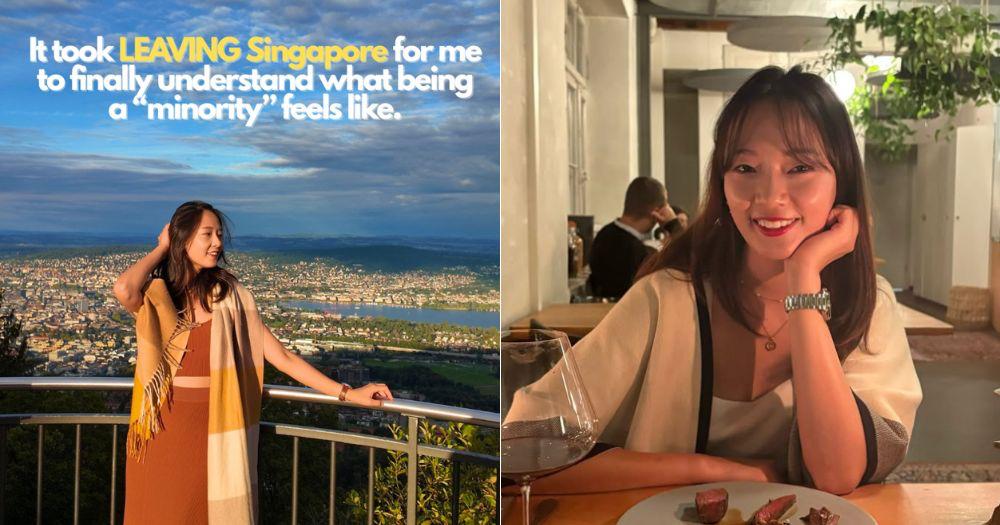
Image from Olivia Chin's Instagram


A Singaporean woman based in Switzerland has sparked some online debate after sharing a reflection that it took living overseas for her to understand what it means to feel like a “minority.”
The post, shared on social media by 33-year-old Olivia Chin, drew a mix of reactions, with some relating to her experience while others raised questions about her perspective.
In her post, Chin said she “never had to question” her sense of belonging while growing up as an ethnic Chinese, where she was part of the majority in Singapore.
She added that she grew up in a relatively homogenous environment, and that “belonging was not something she had to think about.”
After moving to Switzerland, however, she said she became more aware of how different she was, often being one of the few Asian women in spaces such as work, church and her neighbourhood.
She also described navigating language barriers and social situations where she struggled to follow conversations, leaving her feeling “outside the circle”.
Drew comparisons to experiences of exclusion
These experiences led Chin to reflect on how similar situations may play out back home in Singapore, particularly for colleagues from minority groups.
She cited examples such as conversations defaulting to a language not everyone understands, or humour built on shared cultural references that may not be universally accessible.
She added that living abroad had “expanded and humbled” her worldview, and changed how she thinks about inclusion.
Post sparked debate online
The post has since gained traction online, with some netizens relating to her experience of being a foreigner in a different cultural environment.
With one saying that as a "half-Filipina, half Sri-Lankan in Spain", now living in Switzerland, she never knew where she belonged.
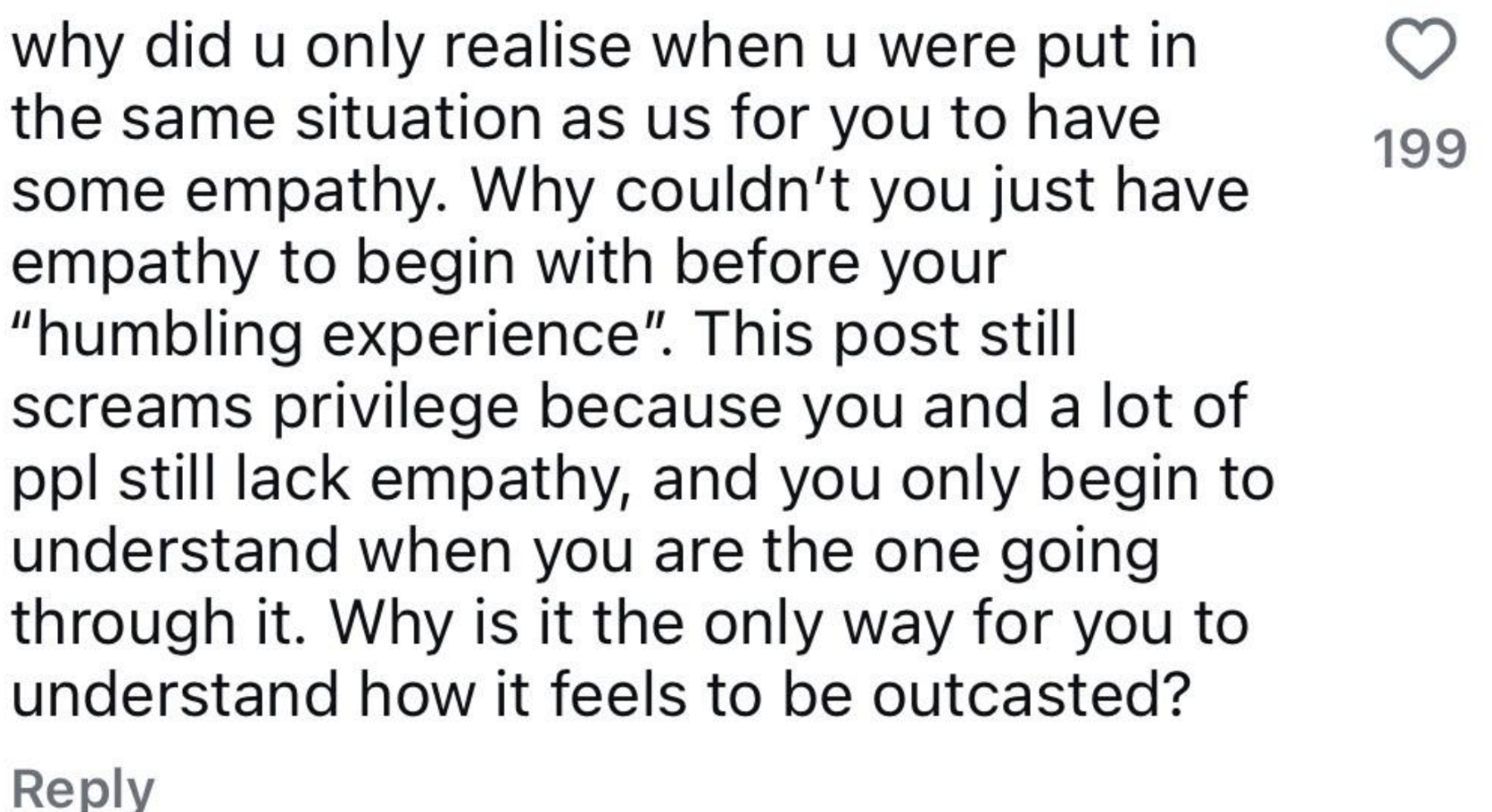
The post, however, attracted a lot of comments, mainly from Singaporeans, questioning a number of her points.
The main points of contention appeared to be questioning whether her current experience could compare to the experience of minorities back in Singapore, why it took so long to come to this perspective, and why it was necessary to go to another country to understand the situation of minorities.
These views were expressed by both Chinese and non-Chinese Singaporeans.
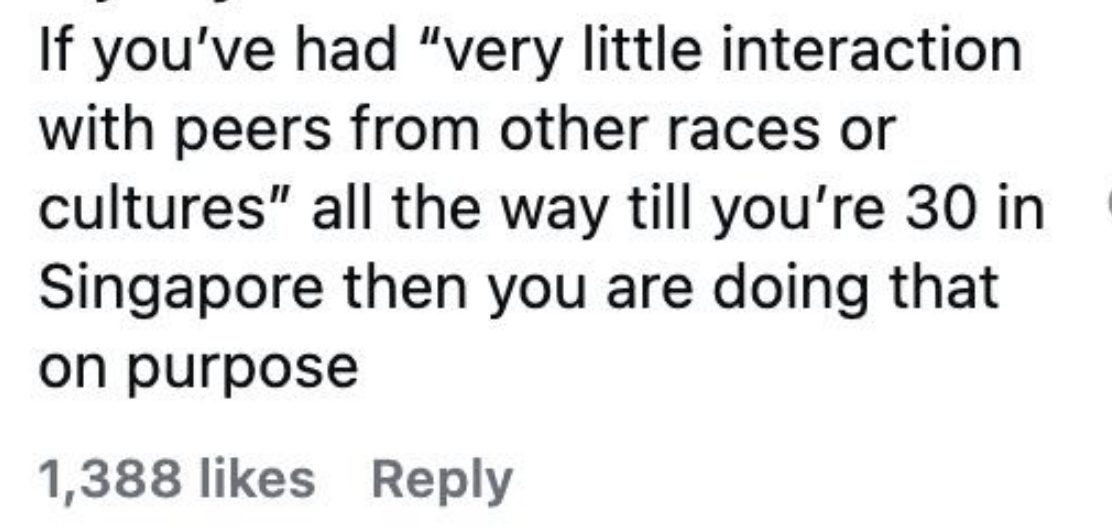

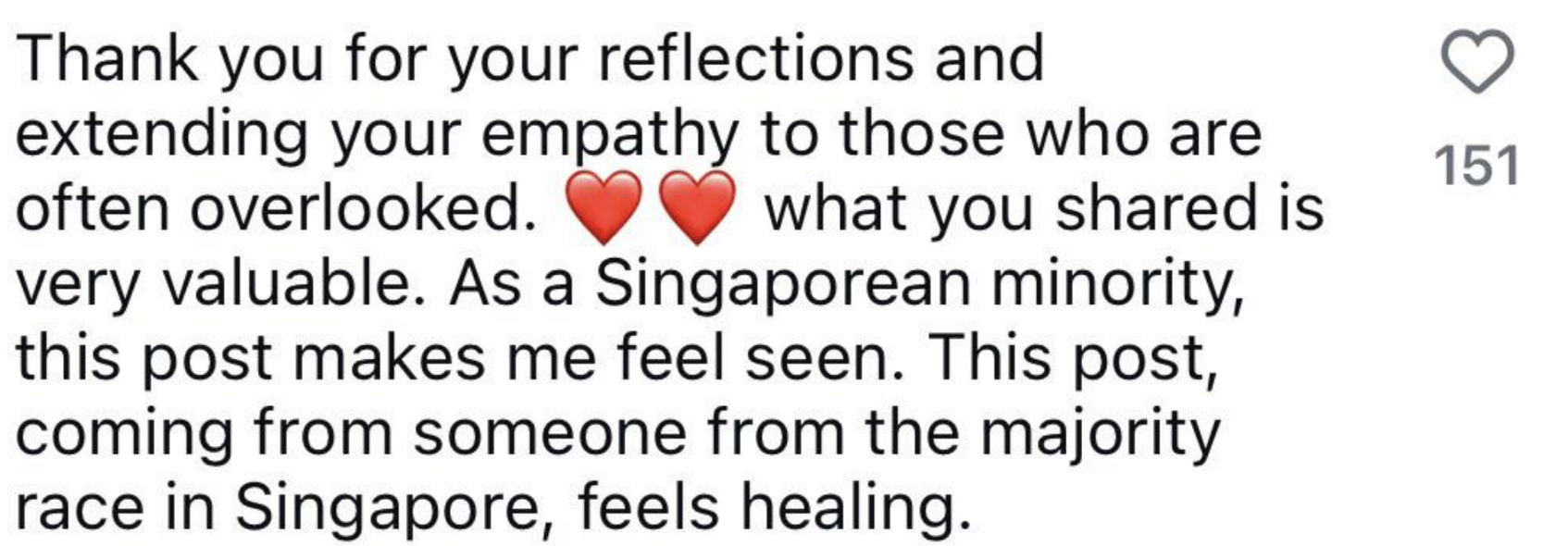
However, some were also appreciative of the reflection.
 Screenshots from Instagram
Says posts were a personal reflection
In response to Mothership’s queries, Chin said her post was based on “an accumulation of small experiences” over time, rather than a single defining moment.
She explained that her content has often focused on sharing the realities of adapting to life abroad and navigating cultural and language differences.
Chin said she used the term “minority” to describe the feeling of no longer being part of the dominant culture around her.
At the same time, she acknowledged that her experience as a foreigner is different from that of minorities within their own country.
“I was never trying to equate the two, because they exist within very different historical, cultural, and societal contexts,” she said.
She also noted that she remains in a relatively privileged position, as she chose to move abroad and continues to have a home to return to in Singapore.
“That is very different from people who face systemic or everyday discrimination within their own society and cannot simply step out of those realities,” she added.
She said her experiences have also influenced how she approaches inclusion in everyday situations, such as being more mindful of language use and social dynamics in group settings.
Response to criticism
Responding to the reactions online, Chin said one of the important things she took away was that for many minorities, there was frustration that conversations about race and inclusion can sometimes stay at the level of awareness, without leading to further action or change.
She added that her intention was to reflect on how lived experiences had deepened her perspective, rather than to suggest she had only just developed empathy.
She also shared an analogy by a commenter that had stayed with her:
"You can have empathy for a friend who loses a loved one without having personally gone through it yourself. But when you eventually experience grief or illness firsthand, that empathy often deepens in a more visceral and personal way. It doesn’t mean the empathy was absent before, it simply moves from intellectual understanding to lived understanding."
Chin also said that while there was criticism, some overseas Singaporeans and minorities reached out privately to share that they resonated with parts of her reflection.
Addressing online sentiments on why it took time for her to arrive at this perspective, Chin said that while people may be aware of social issues, lived experiences can deepen that understanding.
She added that growing up in a majority environment can make certain perspectives feel “normal” and that these may only become more apparent when one is placed in a different context.
“When you grow up in an environment where your language, culture, and identity are largely reflected around you, there are certain privileges and comforts that can become invisible because they feel normal. even well-meaning people can still have blind spots or unintentionally insensitive moments simply because they have never personally experienced what it feels like to move through the world outside of that majority position.
If anything, I hope the conversations sparked by the post encourage people,especially those of us who grew up within majority environments to think more intentionally about our blind spots, listen more openly to perspectives outside our own, and be more mindful in the way we include and engage with others.”