News


Masagos at St Gallen: S'pore's approach should be to ask what we can do with AI instead of what AI will do to us
He also said that AI was like riding a wild horse.
May 08, 2026, 06:17 PM
Top photo via Ministry of Social and Family Development


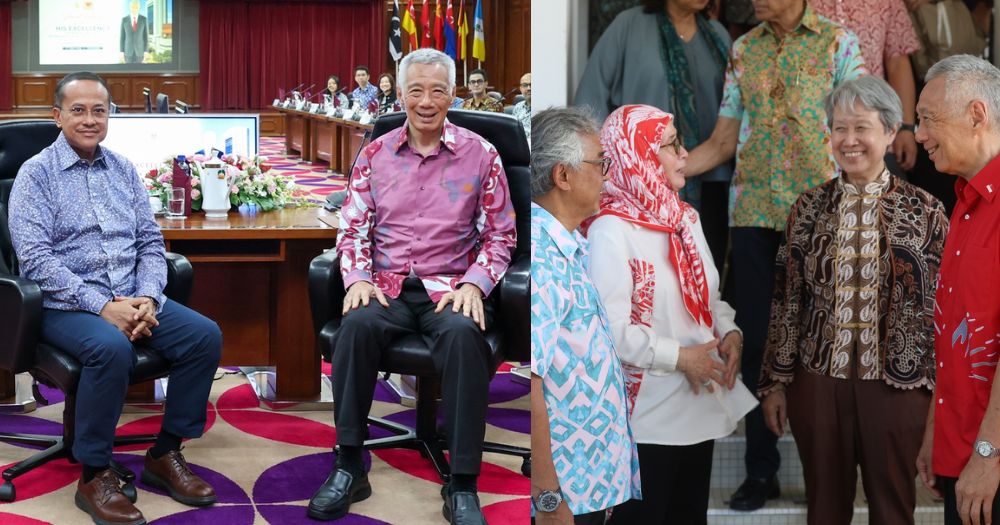
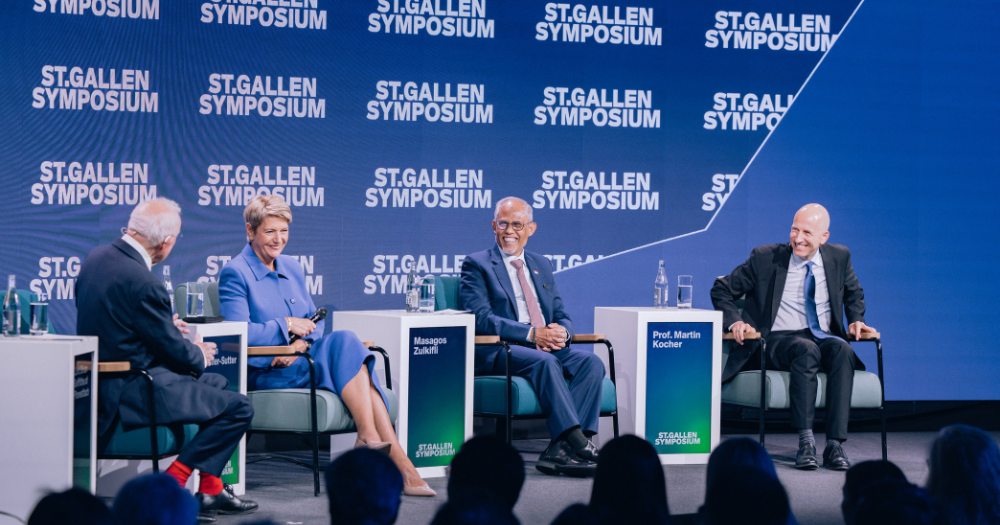
Minister for Social and Family Development Masagos Zulkifli spoke during a plenary dialogue titled “World Economy under Construction — Stability, Demographic Change, and Inclusive Growth” at the 55th St. Gallen Symposium in St. Gallen, Switzerland, on May 7.
The symposium, held from May 6 to 7, is an annual international conference that brings together young leaders, business leaders, academics and policymakers to discuss economic, political and social challenges.
This year’s theme was “Disrupted Age”, which explored technological, geopolitical and demographic disruptions, as well as how societies respond to them.
Ask what we can do with AI
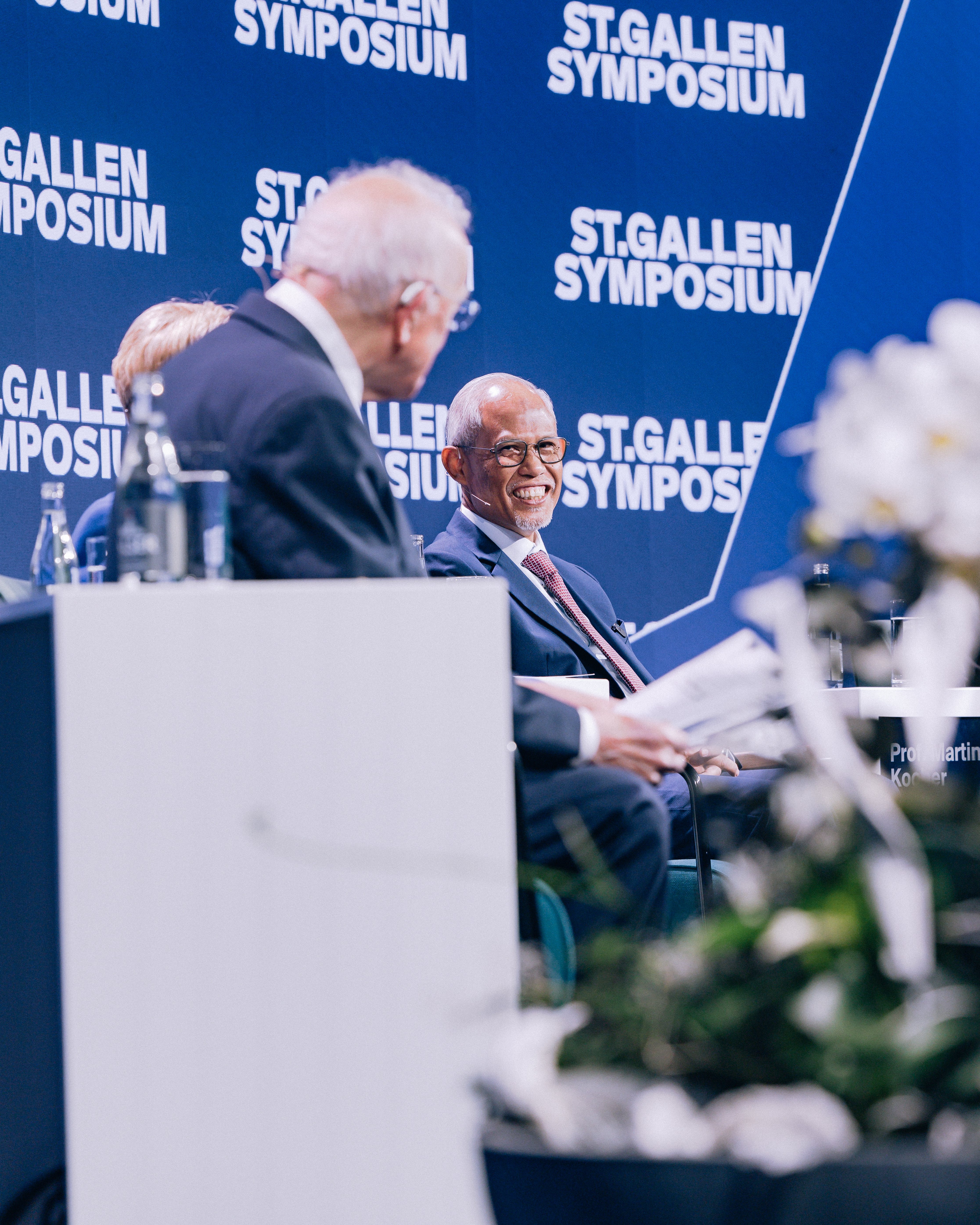 Photo via Ministry of Social and Family Development
During the dialogue, Masagos said that he thinks “half the world is worried about what AI will do to them”, but what Singapore wants to see is “what can we do with AI?”
Singapore’s school-going population was “adaptable” and could be trained, he said, but the larger concern was for people already working, who are also dealing with issues such as the cost of living.
“What we worry about is the stock of people who are in the workforce, and this is while we are navigating crisis that they have to go through cost of living and so forth... I think that is the political challenge to prepare the workforce for the changes that lie ahead."
Masagos also pointed out that he had grouped the uses of AI into six areas under an acronym he called “CREATE”.
The first was “Create” or “Compose”, which he said could include using AI to write songs or emails.
He also pointed to other uses of AI, including enhancing the lives of persons with disabilities, robotics, analysis, and using chatbots.
On helping persons with disabilities, Masagos said AI could potentially be used to “make the blind see” and “make the Deaf hear”.
“These are the exciting boundaries that we can move,” he said.
National AI Council chaired by PM Wong
Masagos also referred to Prime Minister Lawrence Wong’s recent announcement during Budget 2026 that a National AI Council would be set up, with Wong as its chairman.
According to the Singapore Budget website, the National AI Council will drive national AI efforts, while national AI Missions will be launched to transform key sectors.
These include advanced manufacturing, connectivity, finance and healthcare.
In his May Day Rally speech, PM Wong also said Singapore was taking steps to prepare for the AI era, while acknowledging that “not everyone feels ready” and that some jobs would change or disappear.
Facing crises is in Singapore’s DNA
Masagos also spoke about how Singapore has had to respond to crises and disruptions throughout its history.
He said:
“In Singapore, we are quite used to facing crisis, because it is in our DNA.
“We just have no choice, and the only way to do it is to be prepared and to make sure that you make the right bets.”
He cited the British military withdrawal from Singapore in the early 1970s as one such disruption, noting that a significant portion of Singapore’s gross domestic product had depended on the British military presence at the time.
Singapore then made the decision to industrialise and attract foreign investment. Masagos said Singapore later had to adapt again when labour costs rose, and companies began warning that they might have to relocate.
The key, he said, was to recognise trends early and not try to protect what could not be protected, such as specific industries or jobs.
Instead, echoing PM Wong's May Day Rally statement, Masagos emphasised that Singapore had to protect workers.
“So what we decided to do then was to diversify, to make sure that we can diversify and tell our workers and our citizens, you have to adapt," Masagos said.
“You have to be trained. You have to be retrained, because new jobs will come in, and you will have the jobs, but not the jobs that you have. And I think this adaptability of our workers has been the core essence of what we do."
Social cohesion and opportunity
Masagos said Singapore’s ability to get through repeated crises was also tied to its social compact.
He pointed to Singapore’s peace as a multiethnic, multiracial and multireligious society, saying this was not something the country took for granted.
He also noted meritocracy and multiracialism as principles that helped Singapore achieve peace and progress. However, Masagos added that meritocracy “cannot operate on its own in its pure form”.
Those who cannot afford to compete early should be helped so they are “well-resourced at the starting line”, he said.
He later highlighted ComLink+, a programme for lower-income families, as one way Singapore tries to prevent disadvantage from becoming entrenched across generations.
Under ComLink+, officers work with lower-income families, including by supporting children to attend preschool early.
MSF announced in March 2026 that around 11,000 ComLink+ families will benefit from enhancements to the scheme.
AI is like riding a wild horse
Masagos closed with an analogy that he said was especially for young people.
“I would like to encourage especially the young, to watch old movies. Especially those where you have the cowboys riding the mustang.”
He likened AI and technology to a wild horse.
“It is going to be a wild ride. It is going to be difficult, but if you keep staying on the horse, the horse will listen to you,” he said.