News


M'sian minister promises enough fuel for Hari Raya, as monthly subsidy quadruples to S$1.05 billion
Balik kampung.
March 14, 2026, 07:43 PM
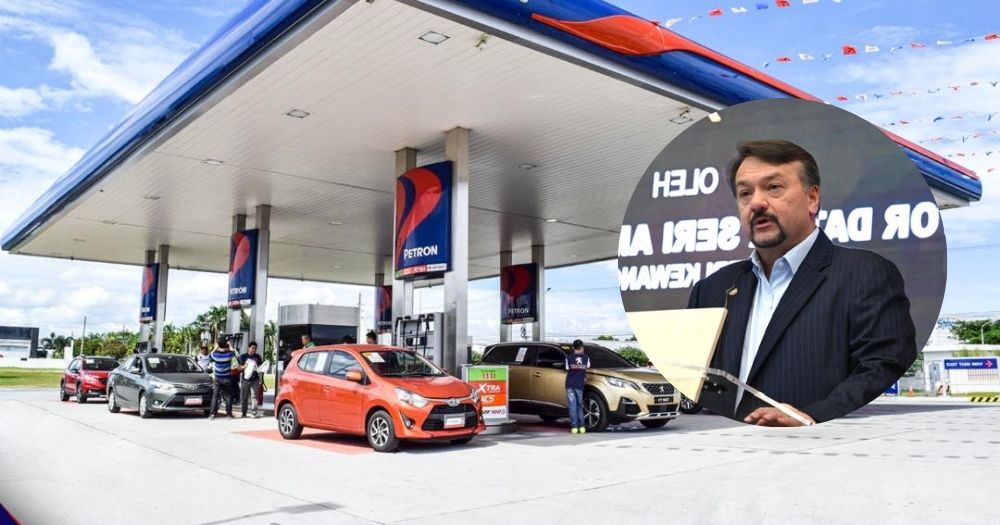

 Malaysia's fuel subsidies will cost its government RM3.2 billion (S$1.05 billion) a month, as the cost of oil and petroleum products rockets after the Strait of Hormuz was threatened by the war in Iran.
RM3.2 billion a month
Economists have warned Malaysia's government that the bid to continue consumer fuel subsidies is a necessary short-term buffer against global volatility, but longer term reforms are needed.
The Star reported that the cost of the Malaysian government's fuel subsidies will increase from RM700 million (S$228 million) to RM3.2 billion (S$1.05 billion) a month, nearly four times more.
Experts The Star spoke to chose to emphasise that while the subsidy would protect consumers from short-term price surges, it had the potential to affect the country's long term fiscal health.
In order to protect that, the experts recommended diversifying Malaysia's energy mix, encouraging a reduction in reliance on fossil fuels, and intensifying the use of renewable energy.
An economist The Star spoke to, Yeah Kim Leng of Sunway University said that the subsidies would “keep a lid on inflation”, but said that a more rational approach would be to “share the fuel subsidy burden with households and businesses”.
Malaysia, Yeah noted, was a net energy exporter, meaning that the higher petroleum and gas export earnings it would enjoy would provide a buffer against both an oil supply shock and a price shock.
Strait war
Motorists worldwide are increasingly worried about rising fuel prices, as the U.S. and Israel-initiated conflict in Iran continues to drag on.
In the past week, Iran has made good on threats to close the Strait of Hormuz, attacking shipping passing through the strait, but also as far north as the Port of Basra in Iraq.
The strait ordinarily sees about 20 million barrels of oil passing through it a day, according to the BBC.
Enough for Hari Raya
Malaysian ministers have sought to ally fears not just of rising costs, but also of insufficient supply.
On Mar. 13, The Star reported Finance Minister II Amir Hamzah Azizan assured commuters that there would be enough supply for the upcoming Hari Raya holiday season.
He said that Malaysia's oil companies were accustomed to annual Hari Raya travel, and have ensured sufficient fuel supplies.
He also said that the burden of higher subsidies is manageable due to other fiscal reforms.
Malaysia finally cut diesel subsidies in 2024, a move which Prime Minister Anwar Ibrahim said at the time would save RM4 billion (then S$1.1 billion) a year.
Subsidy will not subside
The Malaysian government has reassured consumers that the BUDI95 targeted subsidy remains in place.
The Malay Mail reports that while the price of RON95 and RON97 petroleum, as well as diesel will rise, the government has committed to keeping the BUDI95 subsidised petroleum at RM1.99 (S$0.65) a litre.
The BUDI95 subsidy allows Malaysians to buy up to 300 litres of RON95 petroleum at the subsidised price, as long as they present their identification card as proof of citizenship.
In recent weeks, the Malaysian government has said it was monitoring the global situation closely, assuring the public that maintaining the subsidy price was a top priority.
Top image via Petron/Facebook & Malaysia Ministry of Finance/Facebook