Branded


6 inventions used worldwide that were developed in S’pore
Homegrown products.
March 31, 2026, 07:00 PM
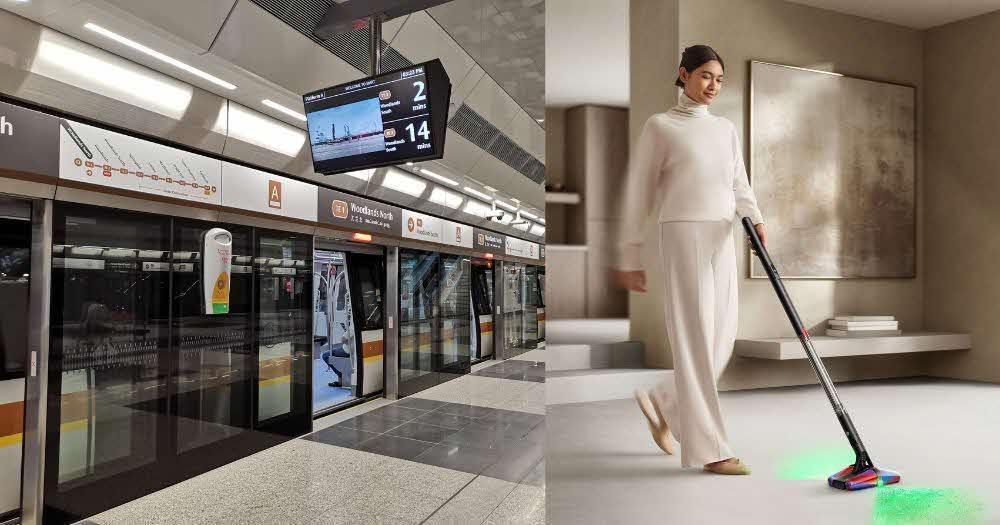
What do the world’s slimmest vacuum cleaner and the platform screen doors at our MRT stations have in common?
Answer: They were developed in Singapore. Along with latex printer inks, a multi-currency debit card, spectacle lenses that slow myopia progression, and a machine that supports your breathing during sleep.
Singapore is ranked as one of the world’s five most innovative economies, according to the latest 2025 Global Innovation Index.
Our country’s mix of skilled talent, advanced research and manufacturing capabilities, collaborative and trusted business environment, and connectivity with the Asia-Pacific region and the world has helped companies develop and commercialise new products and solutions at speed.
Here are six such innovations that global companies have developed locally, with the help of Singaporeans in their respective Research & Development (R&D) teams.
AGIL Platform Screen Door system by ST Engineering
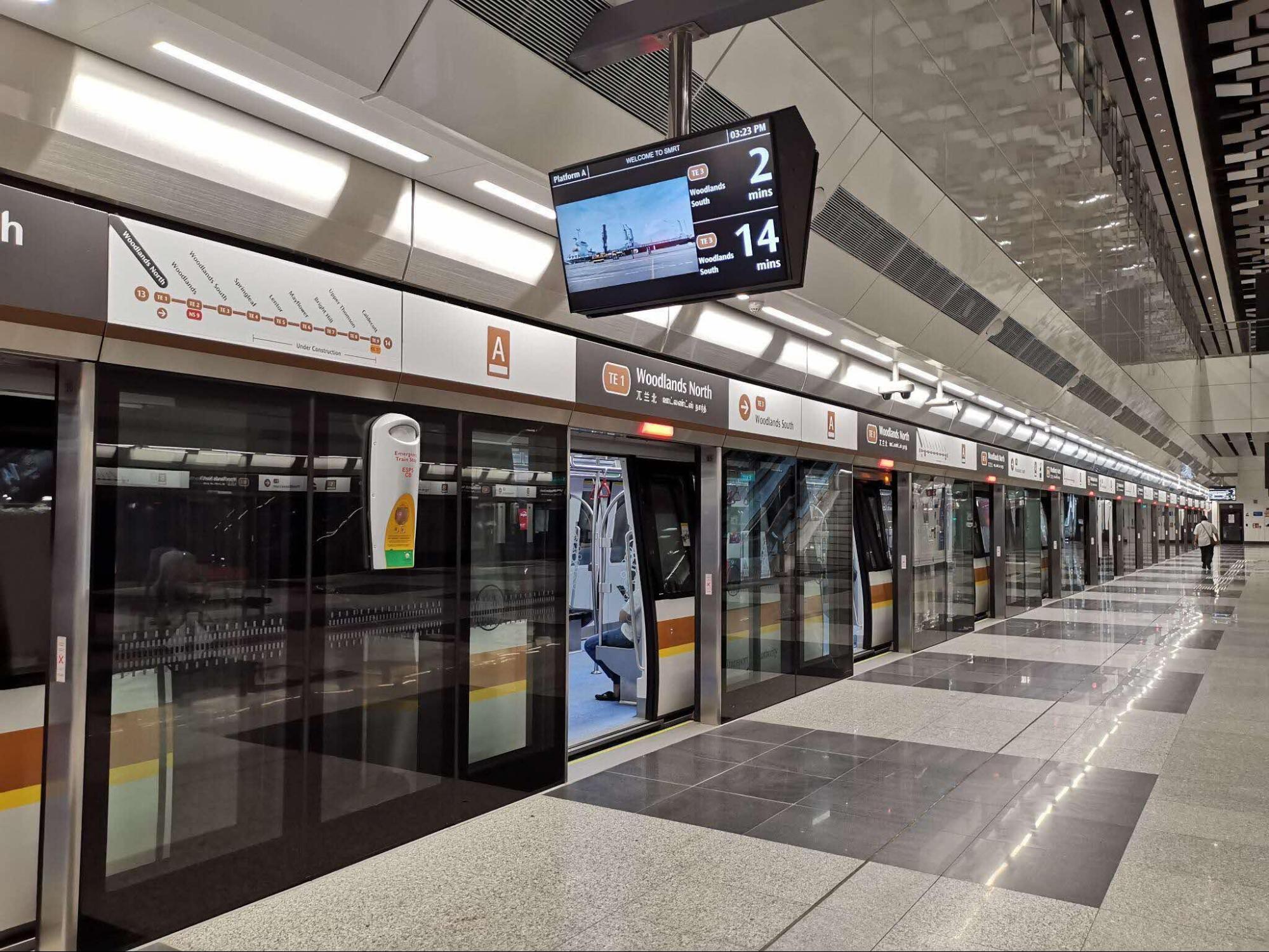 Photo by ST Engineering.
Deployed on the Thomson-East Coast Line (TEL) and selected above-ground stations on the North-South and East-West Lines, the AGIL Platform Screen Door (PSD) system by ST Engineering serves as a safety barrier, preventing commuters from accidentally stepping onto the tracks.
It remains closed until the train has fully arrived and opens only when the train’s doors are aligned.
The PSD also improves temperature control within the stations by preventing cool air leakage from air-conditioning systems to the underground tunnels, improving energy efficiency and reducing energy costs.
The AGIL PSD can sport smart capabilities such as passenger-counting and an AI-powered intelligent monitoring system that enables rail operators to monitor crowd flow and equipment conditions more effectively. Additionally, the AGIL PSD is certified to international safety and cybersecurity standards, underscoring its reliability and robustness.
ST Engineering’s PSD capability is driven by its Urban Solutions business unit at its Singapore headquarters, where access to a strong talent pool allows much of the development work – design, prototyping, testing, and refinement – to be done locally. This enables fast turnaround, tight quality control, and closer collaboration between engineering disciplines.
With Singapore providing the ideal environment for innovation and capability building, this has transformed the PSD system from a locally engineered solution into a globally recognised platform, now used in modern metro networks around the world – including in Canada, India, Saudi Arabia, Taiwan, and Thailand.
HP’s Latex Inks
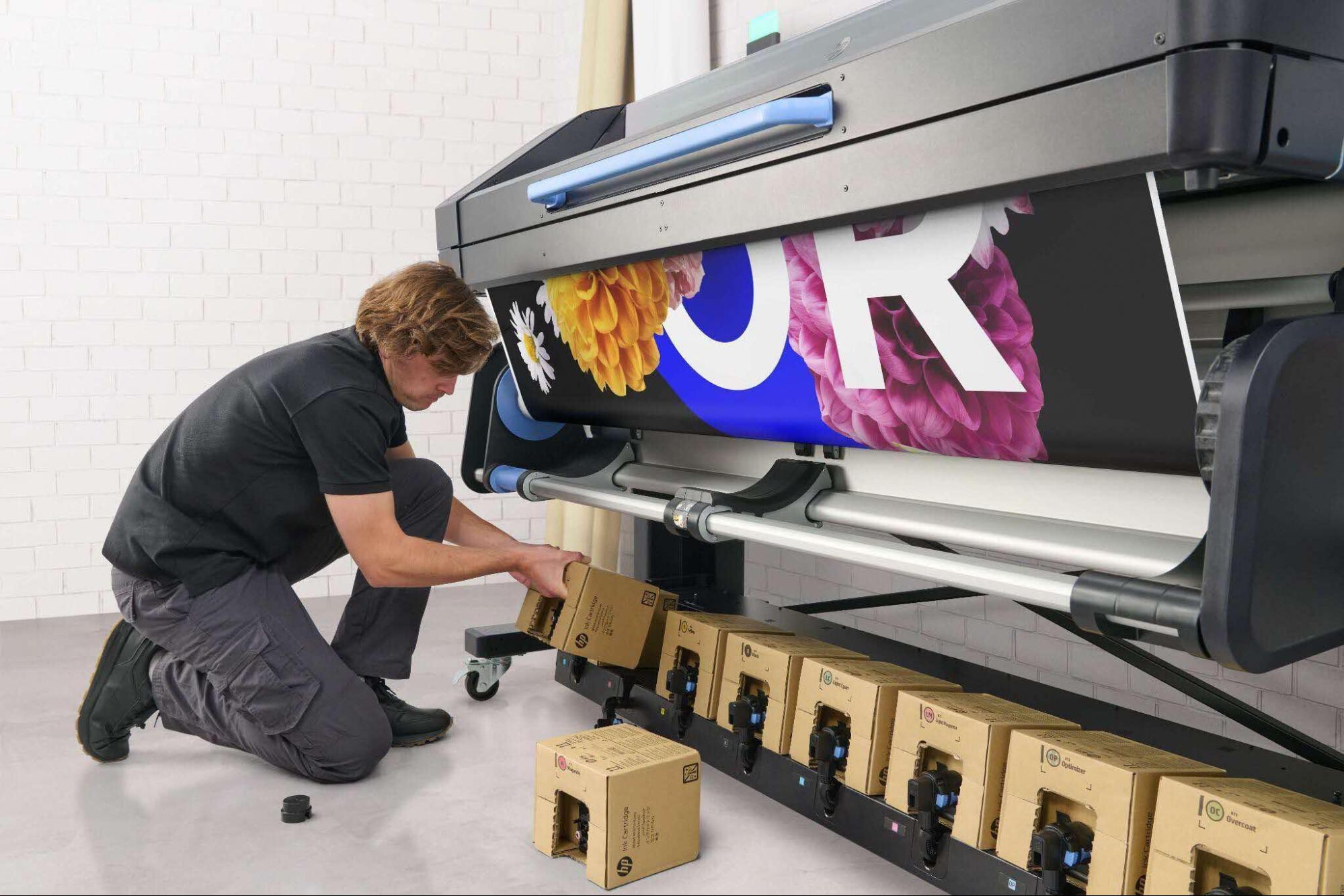 Photo by HP
HP’s Latex inks are known for producing sharp, vibrant colours while reducing their environmental impact compared to traditional solvent, eco-solvent, and some UV-curable inks. They are water-based, free from hazardous pollutants, and non-flammable, making them an environmentally conscious choice for businesses looking to adopt sustainable printing practices.
Singapore has long been an integral base for the U.S.-headquartered HP, serving as the location for its Asia Pacific headquarters and housing its first manufacturing plant in the region since 1970.
One of HP’s Singapore manufacturing facilities is recognised as a World Economic Forum (WEF) Lighthouse – an industry benchmark for manufacturing excellence.
This recognition highlights the facility’s leading-edge use of artificial intelligence (AI), automation, and sustainable practices.
The Tuas facility is particularly notable for its innovative approach to producing latex inks. It uses reclaimed water in the manufacturing process, contributing to the creation of inks that are up to 65 per cent water, non-toxic, and environmentally friendly.
Other world-firsts delivered by HP from Singapore include the Smart Manufacturing Applications and Research Center (SMARC), a pioneering effort in advancing smart manufacturing technologies.
The Wise multi-currency debit card
 Photo by Wise.
While UK-headquartered fintech company Wise was founded in London, it chose Singapore as the base for the product and engineering team that designed and launched its debit card in 2019.
The team brought the product to market in just six months – their progress enabled by Singapore’s strong regulatory environment and its role as a leading financial hub in Asia Pacific.
Being based within Singapore’s fintech environment enabled Wise to collaborate efficiently with key partners, including major payment networks like Visa and Mastercard.
This proximity allowed for quick technical and contractual agreements, speeding up the development process. As a result, Wise has been able to issue over 11 million of its debit cards to its customers across 42 countries since.
Singapore has been Wise’s Asia Pacific hub since 2016, with employees across functions that include Product, Compliance, People, Operations and Customer Service.
Wise has been steadily expanding its office – from a one-man setup to a 31,800 sqft space hosting more than 600 staff - to tap into Singapore’s diverse talent pool and global connectivity.
Beyond the Wise debit card, the Singapore-based teams have also launched several other products like investment and finance management solutions globally.
EssilorLuxottica’s Essilor Stellest 2.0 Lens
 Photos by EssilorLuxottica.
The Essilor Stellest 2.0 lens¹ was launched in Singapore on Mar. 31, 2026 by French-Italian multinational company EssilorLuxottica.
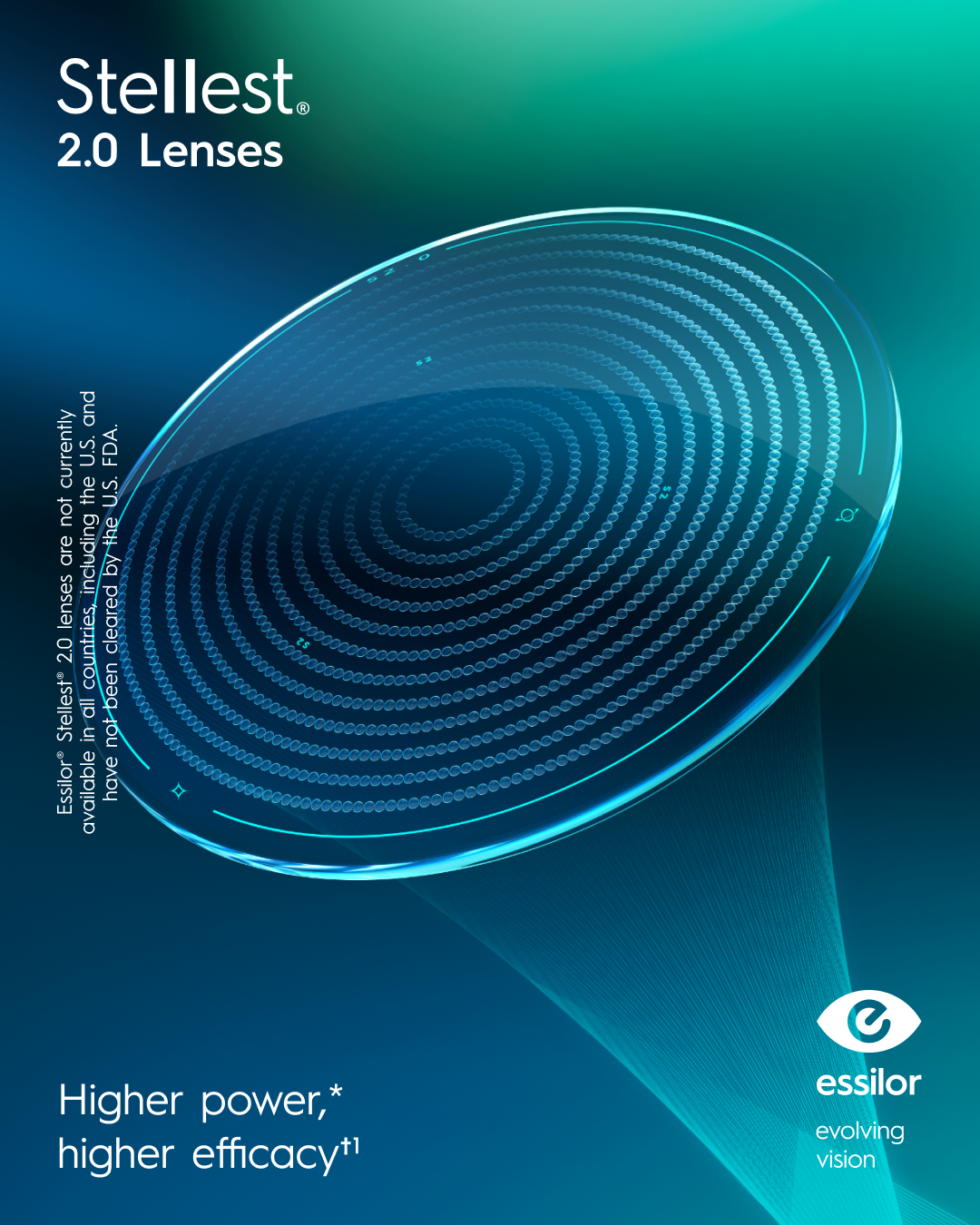
Millions of children around the world have benefited from the first-generation Essilor Stellest lenses, which are the first and only U.S. FDA market-authorised² spectacle lenses to slow myopia progression by 71 per cent over two years compared to single-vision lenses⁴⁵. The technology works by creating a volume of non-focused light in front of the retina and following its shape. This signal slows down eye elongation and therefore slows myopia progression.
Building on its strong legacy in myopia management, EssilorLuxottica has unveiled the Essilor Stellest 2.0 lenses, powered by advanced Highly Aspherical Lenslet Target (H.A.L.T.) MAX technology⁶ delivering higher power³, higher efficacy in managing myopia progression.⁷
A recent Singapore study showed that Essilor Stellest 2.0 lenses powered by H.A.L.T. MAX technology⁶ significantly slowed axial elongation (myopic eye growth) – 1.88 times slower – compared to Essilor Stellest lenses (first generation) with H.A.L.T. technology⁶ after 12 months.³⁷
This spectacle lens was conceptualised at the company’s Centre for Innovation & Technologies, Asia (CI&T Asia) in Singapore, in collaboration with EssilorLuxottica’s other international R&D hubs. Its prototypes were also manufactured at CI&T Asia for use in several clinical trials in the U.S. and China.
Set up in 2004, CI&T Asia is one of the company’s Asia Pacific hubs for myopia applied research and management solutions.
The facility features an ISO-compliant lens prototyping line that meets the highest international standards for medical devices, and is accredited by Singapore’s Ministry of Health (MOH) as a research institution, which allows CI&T Asia to conduct extensive in-house clinical trials and myopia research.
Resmed’s AirSense 11 CPAP machine
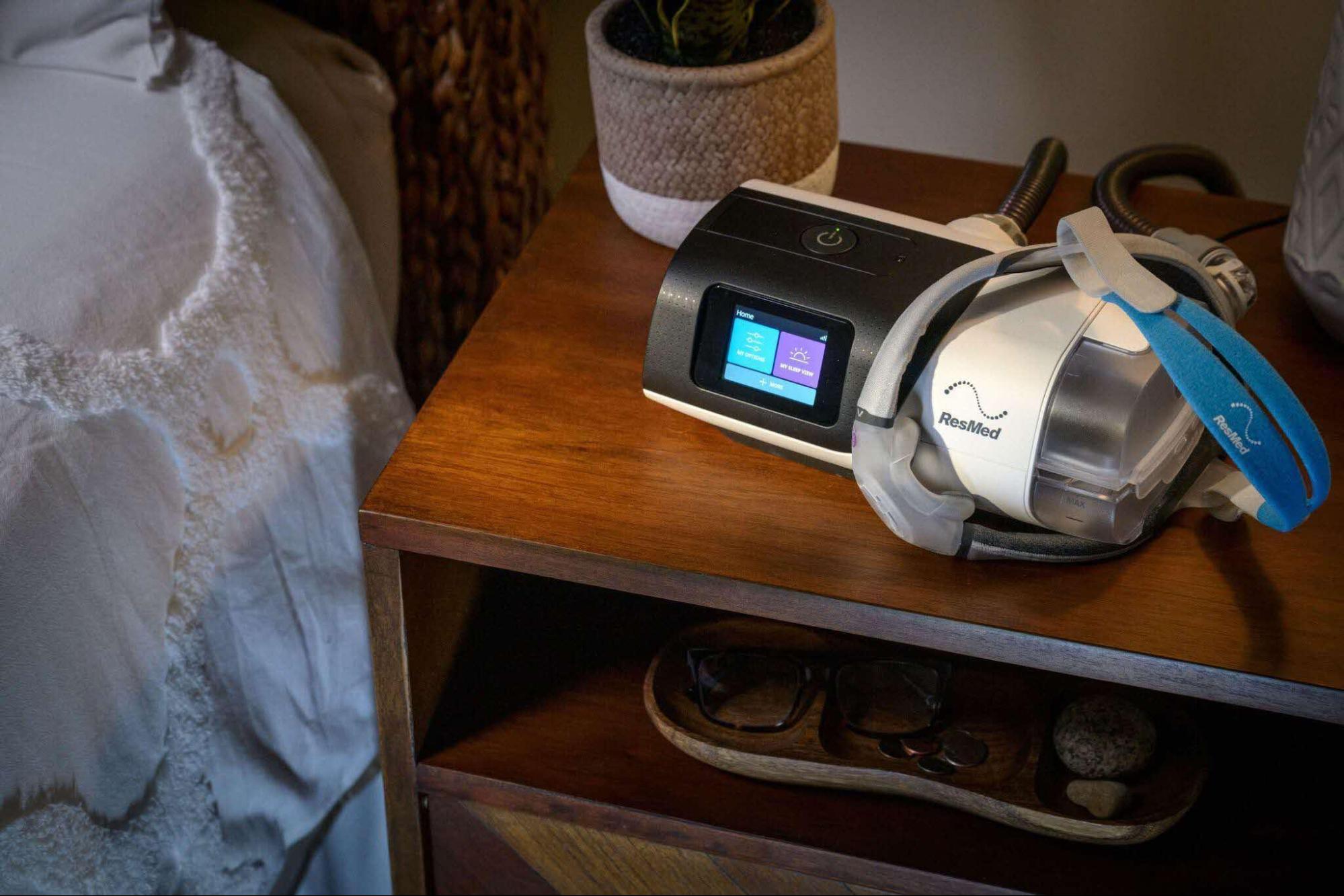 Image via Resmed
Designed to help those with sleep apnoea, Resmed’s AirSense 11* automatically detects and optimises pressure levels based on users’ breathing patterns, offering a more restful and healthier night’s sleep.
The AirSense 11 was developed through a global design collaboration, with expertise contributed from Resmed’s Engineering team in Singapore’s One-North district.
With its advanced features, the AirSense 11 sets a new benchmark for CPAP machines, and is a winner of the Good Design Award in the Medical and Scientific Product Development category.
Australia-founded and US-headquartered Resmed has had a steady presence in Singapore for nearly three decades, with its regional headquarters, R&D, and manufacturing functions all anchored here.
The company’s state-of-the-art Advanced Manufacturing Centre in Tuas, measuring 270,000 sqft, is its largest global manufacturing site and primary production hub for AirSense 11 devices.
This facility is equipped to scale production of Resmed’s devices and mask systems, and also pioneers advanced manufacturing processes and new technologies that are adopted across the company’s global sites.
With more than 1,300 staff – including over 150 researchers, scientists, and engineers at its Product Development Laboratory – Resmed’s Singapore operations have been key to its global growth.
Dyson’s PencilVac
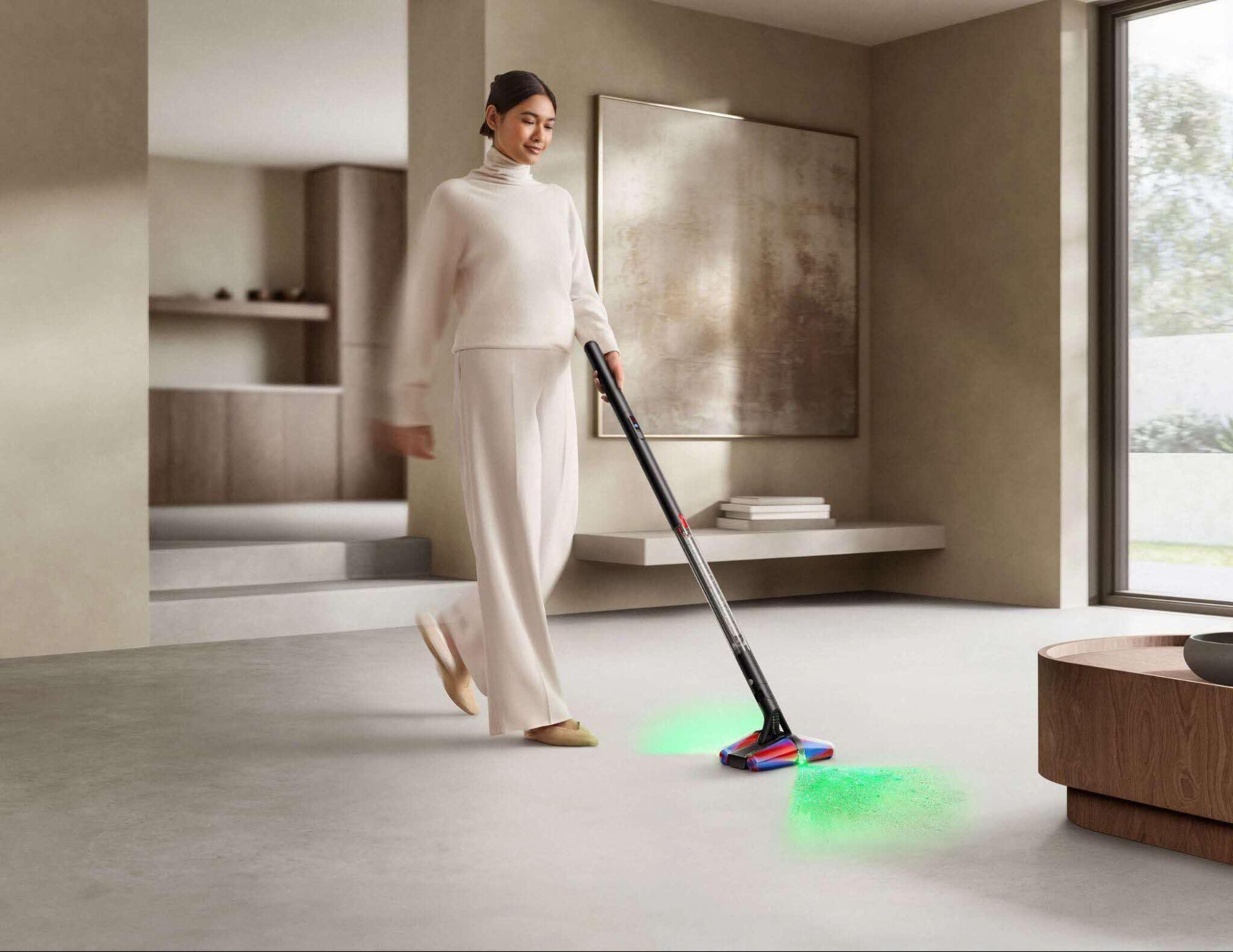 Photo by Dyson.
Dyson’s PencilVac – the latest cordless vacuum cleaner in the consumer electronics company’s range – is a slim and lightweight vacuum designed to address common user frustrations, such as limited manoeuvrability and cleaning hard-to-reach spaces and edges.
At the core of the vacuum is the Dyson Hyperdymium 140k motor, Dyson’s smallest and fastest motor to date.
Developed and manufactured in Singapore, this motor powers the vacuum’s high performance in an ultra-compact form.
This vacuum is also Dyson’s first connected cordless vacuum, pairing with an app to provide users with real-time battery and maintenance alerts. The software and user interface were developed by the company’s software team in Singapore.
Since establishing its global headquarters in Singapore in 2019, Dyson has built a significant ecosystem encompassing engineering, supply chain, finance, procurement, IT, and manufacturing operations.
Dyson operates nearly 50 research laboratories in total across its Singapore campuses. These laboratories explore diverse fields that range from software and machine learning, to robotics, sensing, and vision systems.
Dyson’s Singapore Advanced Manufacturing (SAM) facility, which houses seven fully automated production lines that produce one motor every two seconds, also plays a key role in the company’s operations.
The factory employs over 300 robots to assemble motors with precision.
Across Singapore, the company employs over 2,000 staff, half of whom are engineers.
These engineers have played a key role in developing the PencilVac and the Hyperdymium 140k motor, building on the first-generation motor made in Singapore in 2004.
Dyson marked a significant milestone of having produced 100 million motors – powering its vacuum cleaners and beauty technologies - in Singapore by the end of 2025.
Read more about Singaporeans who are developing products for the world, and the range of opportunities available here as part of the country’s innovation and R&D ecosystem.
¹Essilor Stellest lens regulatory status and product availability may vary by country. Data presented may be derived from one or more clinical studies. U.S. FDA authorisation and indications for use are based solely on U.S. clinical trial data.
² U.S. Food and Drug Administration. FDA authorises marketing of first eyeglass lenses to slow progression of paediatric myopia. September 2025. Available here.
(Note: Essilor® Stellest® lens regulatory status and product availability may vary by country. U.S. FDA authorisation and indications for use are based solely on U.S. clinical trial data.)
³ Based on 12-month results from a prospective, randomised, double-masked contralateral crossover clinical trial conducted in Singapore on 50 children.
⁴ Essilor International, data on file (2025)
⁵ Compared to single vision lenses, when worn 12 hours per day every day for two consecutive years.
⁶ H.A.L.T. is an acronym for Highly Aspherical Lenslet Target and does not imply a “halt” or “stop” of myopia progression.
⁷ Raveendran RN et al. Effect of increased power and asphericity of highly aspherical lenslets on myopia control efficacy: a contralateral crossover study. Translational Vision Science & Technology. 2025;14(11):9. doi:10.1167/tvst.14.11.9
* The AirSense 11 self-adjusting system is indicated for the treatment of obstructive sleep apnoea (OSA) in patients weighing more than 30 kg (66lb). The AirSense 11 self-adjusting system is intended for home and hospital use.
Top image via ST Engineering and Dyson