Environment


2 mynahs found struggling in rat glue trap behind Woodlands coffee shop, now under Acres' care
They were covered in oil when found, likely from an attempt to remove the glue.
February 05, 2026, 03:14 PM


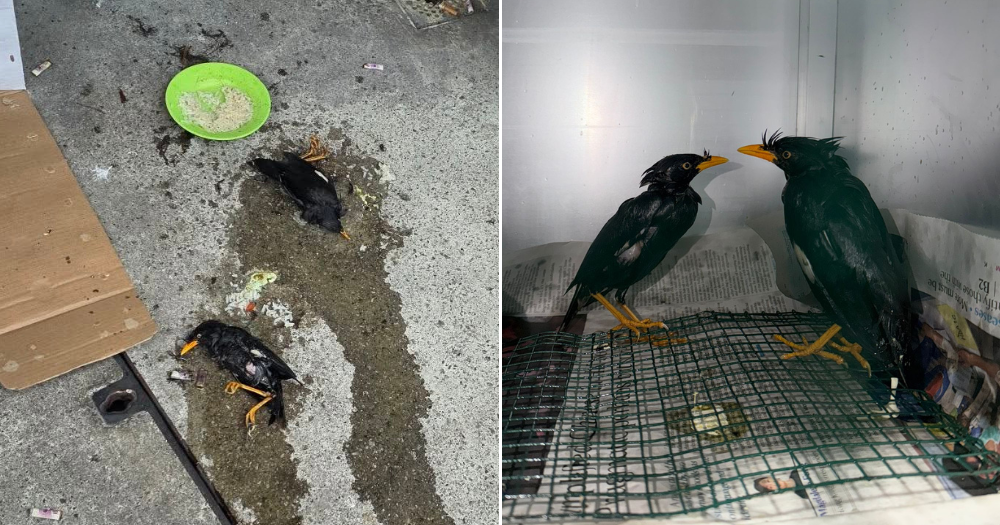
A pair of Javan mynahs were found struggling on the floor after they got stuck in a glue trap behind a coffee shop in Woodlands.
They were also covered in oil, after a possible attempt to free them from the trap.
Caught in glue trap
Autumn Foo, who shared about the incident in a bird rescue Facebook group on Feb. 4, said she found the birds behind a coffee shop at Block 166 in Woodlands.
Foo told Mothership she found the birds lying on their side, struggling and covered in what looked to be oil.
There was also a plate of rice placed near them.
Foo said that a witness told her the mynahs got stuck in a glue trap meant for rats.
Foo later placed the birds in a box and contacted the Animal Concerns Research and Education Society (Acres) for assistance.
In photos and videos shared by Foo, the mynahs could be seen immobilised with a slight sheen on their feathers.
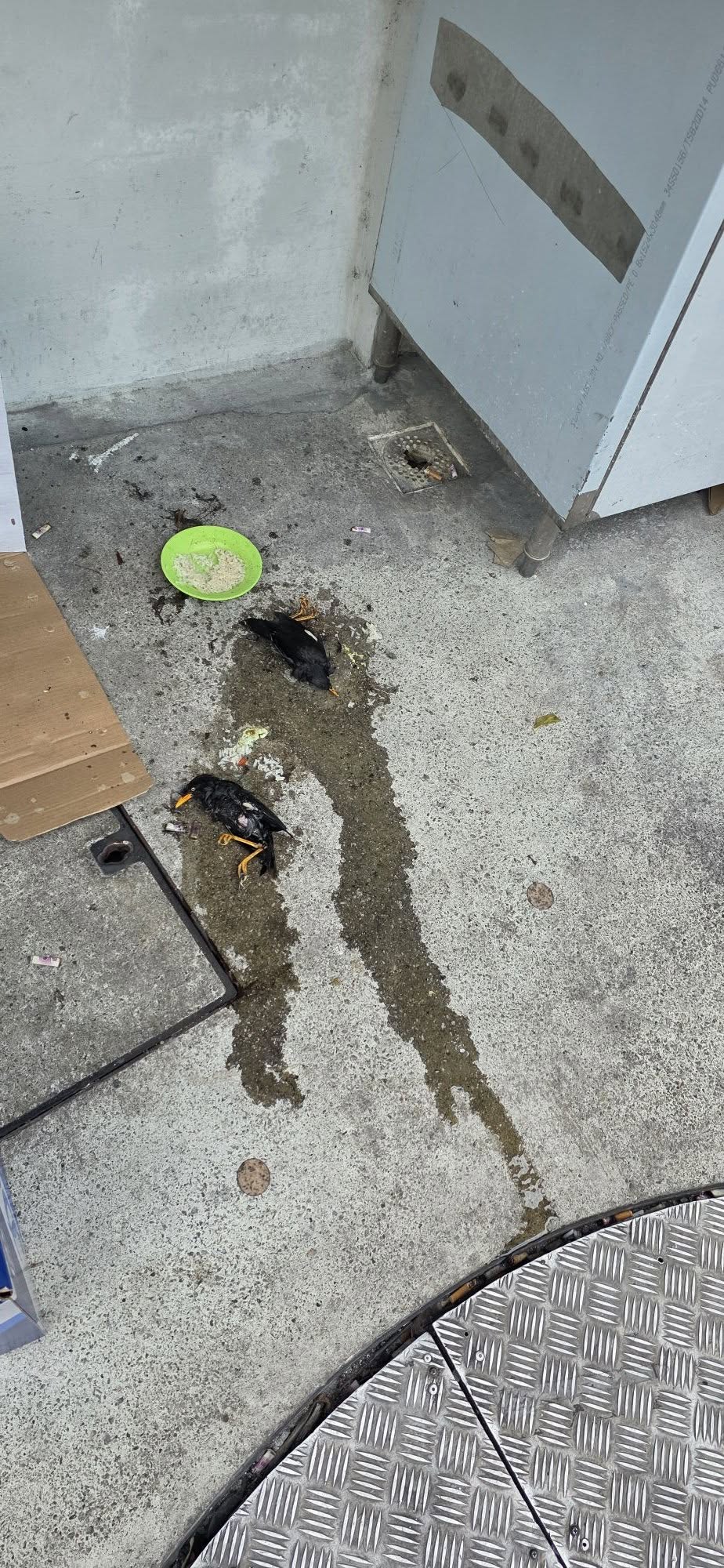 Photo via Autumn Foo.
 Gif via Autumn Foo.
Mynahs recovering under Acres care
Responding to queries from Mothership, Acres CEO Kalai Vanan said that the two mynahs are now under Acres' care and are going through treatment to remove the glue.
The birds are also currently standing and eating on their own, but they have a "long way to go", he said.
"We send our appreciation to the public for helping the two birds," Kalai said.
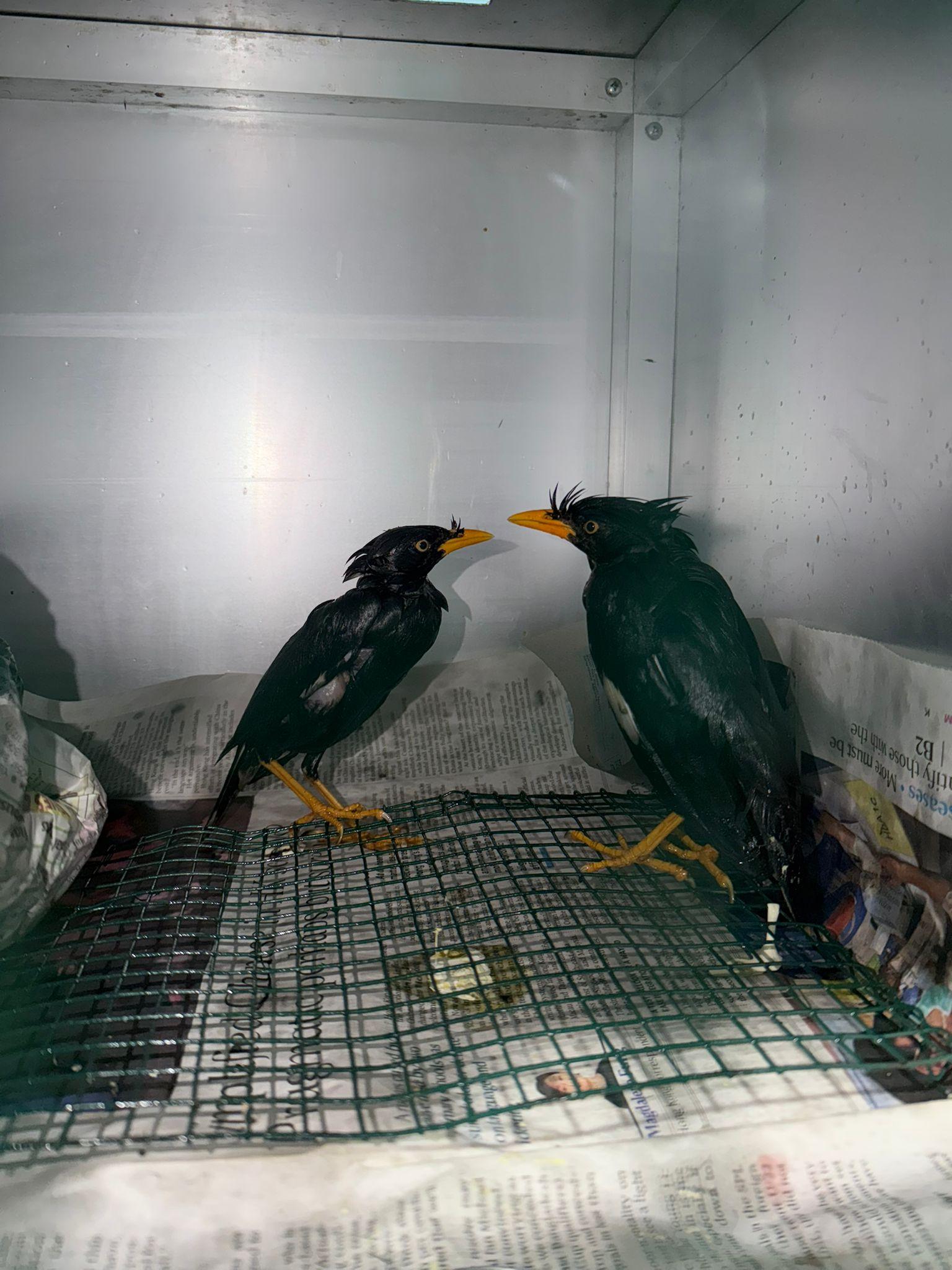 Photo from Kalai/Facebook
One glue trap victim a day: Acres
While glue traps are often meant for rats, other animals can get trapped in them, Kalai said.
He explained that Acres receives one glue trap victim a day on average, and they have rescued "countless" birds, reptiles, and mammals stuck in glue traps.
Sometimes, three to four animals are caught in a trap at a time, he said.
Calling the traps "cruel", Kalai explained that birds suffer the most as glue traps disable their ability to fly and the cleaning process is stressful for them.
"It is indeed very unfortunate that their sale is still allowed here," he said, adding that glue traps cause a "slow, painful death" for animals caught in them.
Alternative methods
To tackle rat-related issues, Kalai encouraged the use of covered glue traps where possible, as they can deter certain animals from getting stuck.
He also suggested focusing on measures to address the source of the problem, such as the proper disposal of leftover food and rubbish.
"Acres also hopes that emerging technologies will contribute more humane methods of trapping rats as alternatives, which can help pave the way for glue traps to become obsolete," he said.
Top image via Autumn Foo / Facebook