Parliament

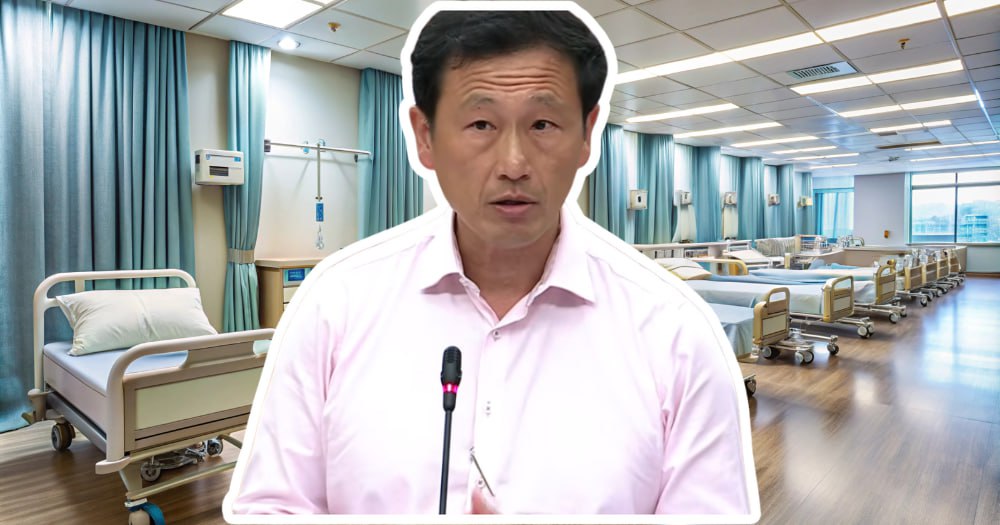
Changes to IP rider requirements will help mitigate shift of patients from private to public hospitals: Ong Ye Kung
"[The changes] would help restore health insurance to its original objective, which is to provide assurance against large, infrequent, often unexpected healthcare bills."
January 12, 2026, 02:36 PM


Patient load has been shifting from private hospitals to public hospitals, driven by the rising cost of private healthcare, Minister for Health and Coordinating Minister for Social Policies, Ong Ye Kung, said in Parliament on Jan. 12.
Rising costs of private healthcare
In 2010, the patient load between private hospitals and public hospitals was 15:85.
However, the gap has since narrowed further to 10:90.
Ong attributed this to rising costs of private healthcare, which has in turn been fuelled by Integrated Shield Plan (IP) riders that offer near-full coverage.
The riders have resulted in an over-consumption and over-servicing associated with non-essential hospital admissions or treatments, which has led to an increase in premiums, particularly for riders.
Rider premiums have risen by an average rate of 17 per cent annually over the past three years, Ong said.
As such, the Ministry of Health (MOH) is introducing new requirements for IP riders from April 2026.
How the new changes will affect policyholders
For affected policyholders, Ong said IP rider premiums under the new design are expected to be about 30 per cent lower on average as compared to existing policies with maximum coverage.
"This is a significant recurrent saving," he said.
However, the new riders will not cover the minimum IP deductibles and will also require higher co-payments.
Ong acknowledged the public's concern about patients’ out-of-pocket costs, especially for large medical bills, but stated that the changes are intended to refocus insurance on protecting against major, infrequent expenses rather than smaller, routine costs.
The current design of IP riders may no longer make financial sense for many policyholders.
As such, these changes "would help restore health insurance to its original objective, which is to provide assurance against large, infrequent, often unexpected healthcare bills," he said.
Responding to a question from Member of Parliament (MP) Poh Li San on support measures for families facing unaffordable out-of-pocket expenses, Ong stated that patients should consider their financial and healthcare needs when choosing where to seek care, including opting for subsidised care in public hospitals if they are concerned about affordability.
Surge capacity for selected treatments may be implemented
In the medium- to long-term, the changes are expected to influence the balance of patients between private and public healthcare, and affect waiting times.
Ong stated that the revisions are part of efforts to mitigate the shift of patients from private to public healthcare — by putting the private healthcare sector and health insurance on a more sustainable footing, while also ensuring that private healthcare remains accessible to Singaporeans.
In the short-term, some people on the new riders may choose to seek care at public hospitals to reduce their co-payment.
MOH will monitor the situation closely and implement surge capacity for selected treatments if necessary, Ong added.
Ensuring long-term sustainability of IP rider policies
MP Yip Hon Weng subsequently took to the podium to share that he has received much feedback from seniors in Yio Chu Kang SMC who are concerned about the new rider requirements.
Yip asked what safeguards would be in place to prevent an "indirect erosion of benefits", particularly for older policyholders with limited options, should insurers reprice or adjust coverage.
In response, Ong said the key safeguard lies in ensuring the long-term sustainability of IP rider policies.
"I think at the point of being sold the policies, [the] agent probably tell them, buy all these for peace of mind, ...for absolute peace of mind. Don't have to worry about paying anything or very minimal, but that went down a path of unsustainability. So I think while you enjoy it for a while, it is obvious through my answer that I explained, it's becoming unsustainable."
He stated that when "somebody else" is footing most of the bill, both doctors and patients tend to over-supply or over-consume.
"And the bill just keeps on going up at an unsustainable pace, and it still comes back to the consumer, to the patient, in terms of higher premiums," he said.
"Over-coverage just leads to wastage and cost increases," he noted, adding that the new revisions are aimed at addressing this.
He urged residents to review their options carefully, noting that the average savings of about 30 per cent on the premiums under the new rider design could often offset the higher deductibles and co-payments.
Top photos via Canva and MDDI