Branded
S'pore woman, 61, diagnosed with rare incurable kidney disease 6 months after having 1st child, reflects on 33-year journey to lead ‘normal’ life
She now goes for dialysis 3 times a week.
What constitutes a "normal" life?
That's what 61-year-old retiree Christine Chia has had to grapple with since she was diagnosed with polycystic kidney disease (PKD), a rare hereditary kidney disease, at the age of 28.
Chia, who now has end-stage kidney failure and goes for dialysis three times a week, has led a varied life in spite of her condition, going on to work for another 16 years, as an insurance agent and even a hawker.
She has also raised two children, who are both in their 30s and married.
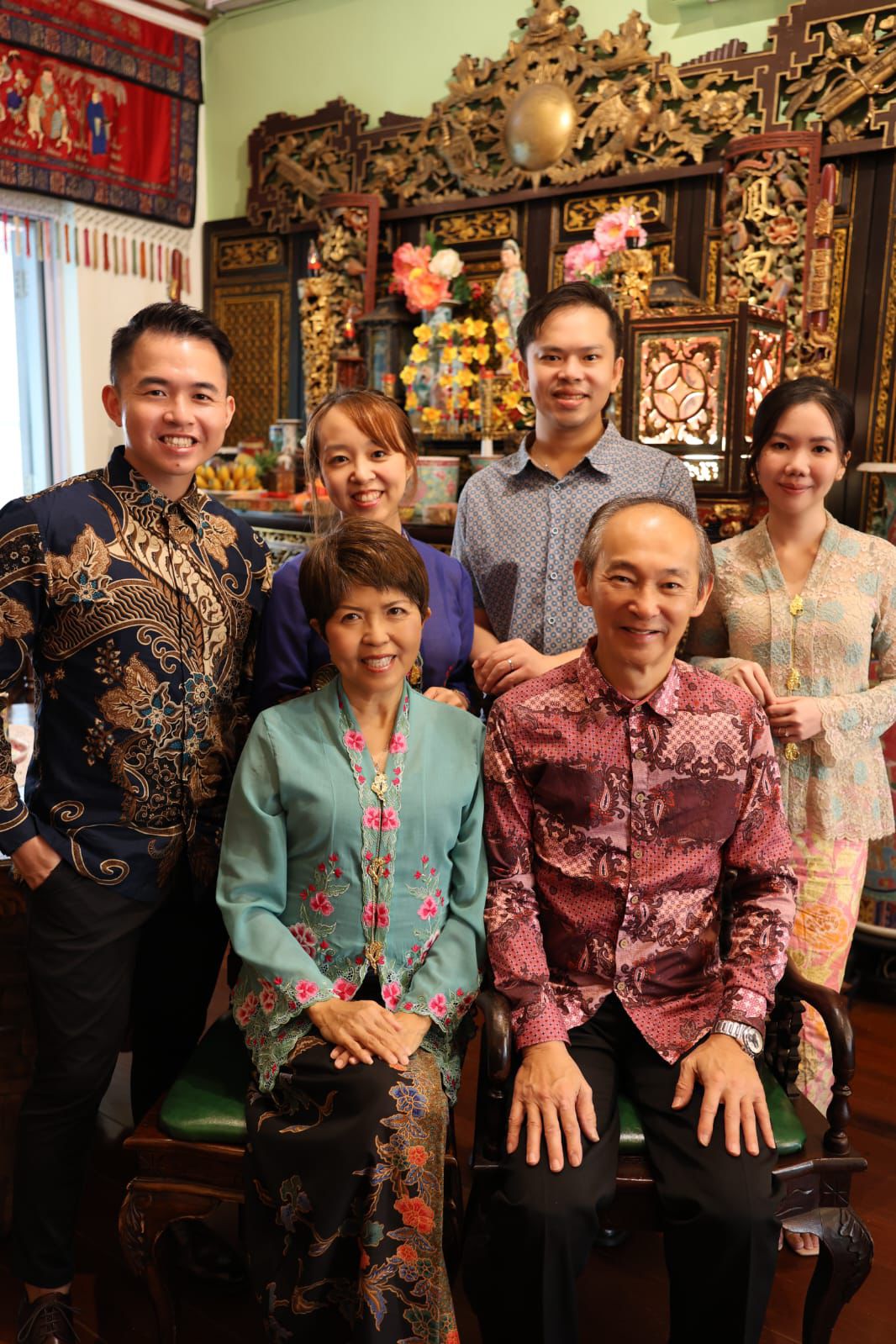 Chia’s family: Chia, her husband, son, daughter-in-law, daughter and son-in-law. Image courtesy of Christine Chia.
Chia sat down with Mothership to share about her 33-year journey with the disease, and why she's grateful that she discovered the diagnosis in her youth.
Warning signs
It was in 1992, six months after delivering her first child and working as an account executive, when warning signs first appeared for Chia.
She experienced a high fever for about two weeks, along with vomiting and diarrhoea, and lost about 12kg.
Thankfully, Chia's sister helped to take care of her newborn while her husband ferried her to checkups at various clinics.
Initially, doctors thought Chia had a bad case of the flu.
But when her fever persisted, Chia was referred to Singapore General Hospital (SGH), where she underwent various checks, like a thyroid examination, blood tests and an ultrasound test.
Diagnosis
She was subsequently diagnosed with PKD, an inheritable genetic disorder which causes cysts to develop in one's kidneys.
The cysts can enlarge the patient's kidneys, affecting their ability to filter blood.
About 50 per cent of people with PKD will have kidney failure by age 60, and about 60 per cent will have kidney failure by age 70.
Chia said she was shocked as at that point, she did not know any family members with kidney disease.
It was only five years later, when her grandmother passed away in her 90s from organ failure, that Chia realised she also had PKD.
As there is no cure for PKD, treatment can only slow the progression of the disease and its symptoms, such as through managing blood pressure or in later stages, dialysis or a kidney transplant.
"The doctor was telling me that I can live as normal a life as before, but it's just that I should [take on] less stressful work," said Chia.
Chia was also advised to abstain from alcohol to prevent the deterioration of her condition, which she obliged.
Trying to lead a ‘normal’ life for the next 30 years
Following her doctor's advice, Chia returned to work, although her condition would leave its mark for the next three decades.
Shaken by the health scare, Chia tried to buy insurance but was excluded due to her pre-existing PKD condition.
So in 1993, Chia decided to work in insurance herself to raise awareness about getting insured early.
She did this for about 10 years, before quitting her job as her condition deteriorated from "working too hard", Chia admitted.
Chia said she would experience chills, an inability to sweat and sporadic feelings of disorientation, such as when finding her bearings from her client's houses to the MRT.
After experiencing such symptoms almost on a daily basis, Chia was prompted to take a break to recuperate.
But in 2005, hoping to restore some normality, she went back to work, this time in the hawker business.
"I'm quite a workaholic," Chia admitted.
For about two years, she ran a coffee shop stall selling seafood soup and porridge, alongside an eating house at Chai Chee.
However, another warning sign came sometime around 2006 to 2007, when Chia experienced an "abnormal" sharp pain in her abdominal area.
Immediately, Chia sought treatment and was diagnosed with a kidney infection.
Unfortunately, she was informed by a doctor that her kidneys were operating at 30 per cent, and she had to go for regular follow-ups.
After the infection, Chia stopped work but was later informed that her kidney function had dropped to 13 per cent.
In 2009, she was advised to start dialysis.
Dialysis and a new ‘normal’
As someone who liked to travel and stay active, Chia hesitated on the decision for a year, hoping she could maintain the status quo.
But as her symptoms worsened, she decided to bite the bullet and started dialysis in 2011, at the age of 47.
Chia's children were schooling at the time, and her son and daughter would accompany her to the Kidney Dialysis Foundation (KDF) centre and stay at her side during the dialysis.
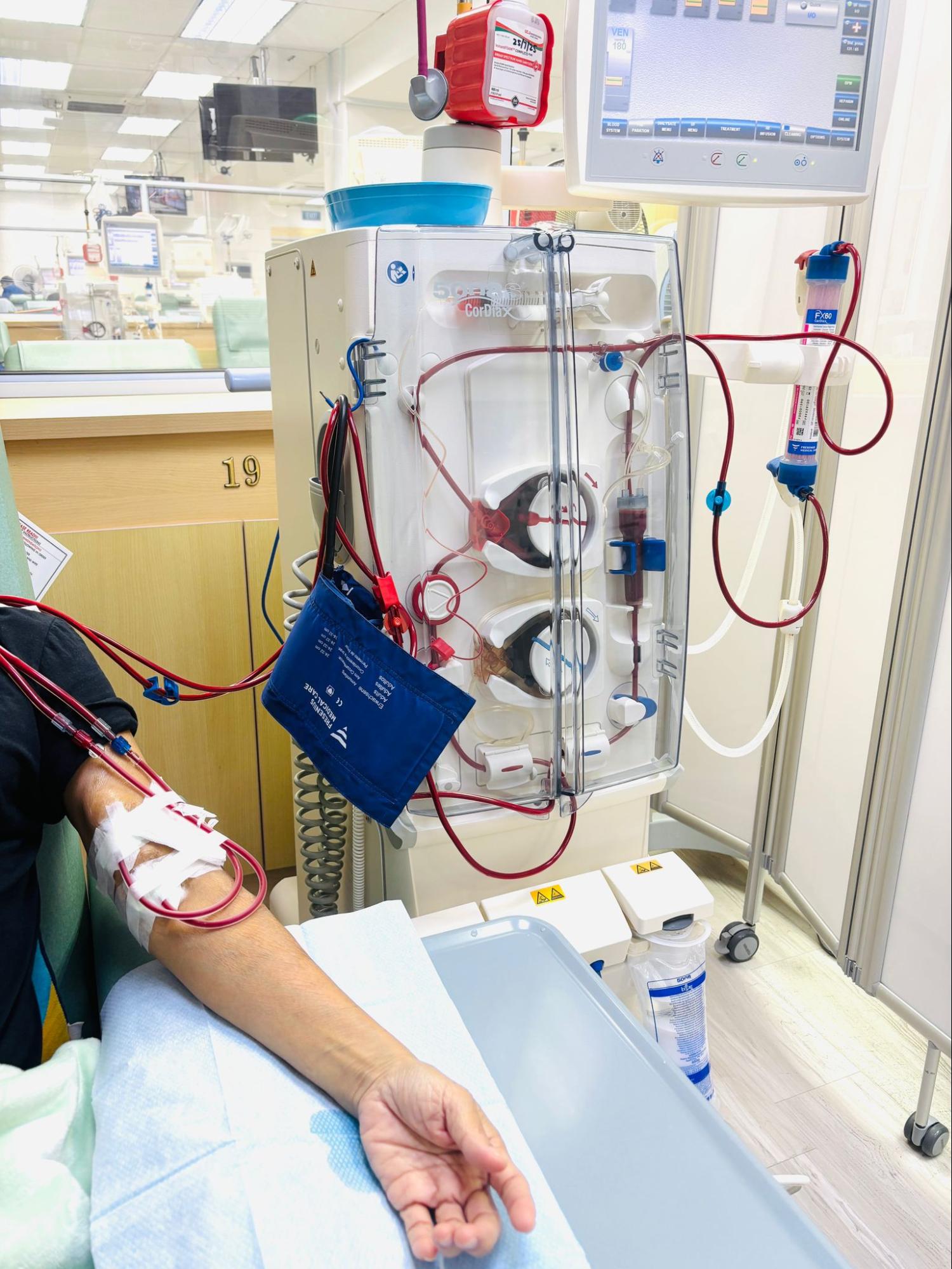 Chia at her dialysis treatments. Image courtesy of Christine Chia
“My family members were all very sad, but I told them not to worry. If something needs to be done, it needs to be done,” Chia said.
As PKD caused both her kidneys to swell up, Chia has had a kidney removed and is also on the transplant list.
Her husband also offered to donate his kidney to her, but was not found to be a suitable donor.
Going for dialysis has made Chia feel more tired on a day-to-day basis.
If she wants to travel, Chia is only allowed to travel for up to five days at a time, and has to get approval from her doctor to skip a dialysis session.
However, Chia said her faith has helped her to come to terms with her condition, and her friends in church have provided crucial emotional support.
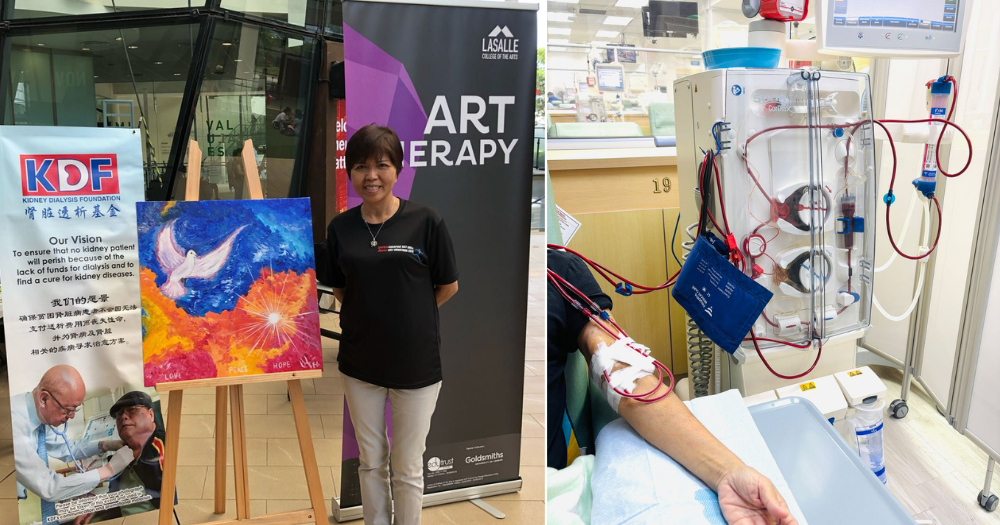
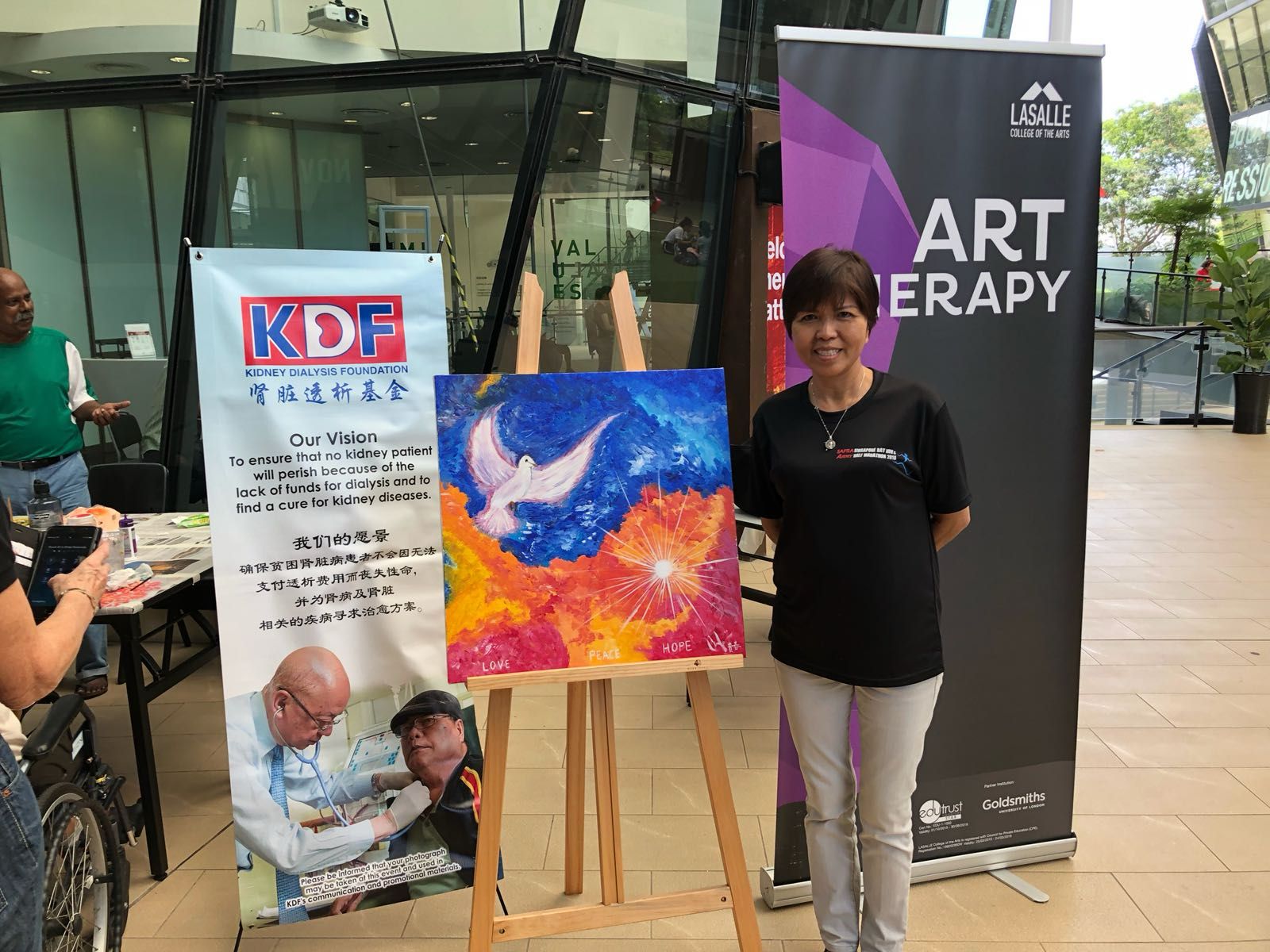 Chia participated in a KDF art therapy event guided by students from LASALLE College of the Arts. This was her painting. Image courtesy of Christine Chia.
And after going for dialysis on Mondays, Wednesdays and Fridays for the past 14 years, Chia’s attitude has changed towards the treatment.
"I take it as my rest time; four hours to rest in the dialysis centre three times a week. I don't [have to] drag myself there, because it’s comfortable and everyone there is very friendly," said Chia.
Some dialysis patients may experience discomfort in their bodies due to a build-up of toxins and water, but going for dialysis can help relieve them of it and serve to extend their lives, which was the case for Chia.
Chia added that she has formed bonds with the other patients, some of whom have been going for dialysis for more than a decade, as well as the nurses and staff who care for her.
Her husband, who now works as a private-hire driver, ferries her to dialysis treatments.
Apart from dialysis, Chia also takes part in the physiotherapy fall prevention programmes at the centre to keep her body strong, and tries to attend KDF patient activities, such as the art therapy event, to stay engaged.
It has become her new normal.
Why she’s glad to be diagnosed early
Despite the sacrifices made in her daily life, Chia sees the treatments as a commitment to prioritise her own health.
Two of Chia's maternal aunts had kidney failure, and her own mother died of a stroke at the age of 39.
Chia also recalled how a cousin in his 50s, who was diagnosed with kidney failure, put off dialysis treatments until it deteriorated to the end-stage level.
When Chia eventually managed to convince him to start dialysis, it was too late, and he passed on half a year later.
So in a way, Chia is grateful to have discovered her PKD condition at 28.
If not, she might not have made changes to her lifestyle, such as abstaining from alcohol or taking breaks in her career, and this could have led to her kidneys failing earlier.
She might have also put off the decision to start dialysis longer, just like her late cousin.
"It's important to not take our health lightly. If we need to do dialysis [or other treatments], don't drag it out," Chia said.
"I have seen my cousin's case, and I think it's a pity."
Benefits of early detection
PKD might sound rare, but it’s more common than most people think, said Kwek Jia Liang, a senior consultant at the department of renal medicine at Singapore General Hospital (SGH).
Kwek, who has personally managed around 70 to 80 PKD patients in his career, estimates that there are around 5,000 to 6,000 people in Singapore living with the condition — though many may not even know it.
PKD commonly leads to kidney failure when left untreated. But early detection can make a significant difference, said Kwek.
Some early warning signs to look out for include:
- High blood pressure before the age of 40,
- Discomfort or fullness in the abdomen, flanks or back,
- Blood in the urine,
- Kidney cyst or urinary tract infection, and
- Kidney stones.
“Timely screening and initiation of PKD-related treatment, such as lifestyle changes and medication, can slow down the progression to kidney failure.”
Similar to the case of Chia, lifestyle adjustments like abstaining from smoking, reducing salt intake, medication and maintaining a healthy weight can slow down the progression to kidney failure.
There are also treatments available which can delay kidney function decline and disease progression, such as by slowing kidney cyst growth.
Kwek advised patients with PKD to discuss with their renal physicians on the current treatment recommendation for PKD.
He added:
“If you have a family history of PKD, it is important to screen and confirm if you have the condition or not.
As the symptoms may not appear until you are in your 30s and 40s, timely screening, treatment and monitoring for its complications will help you manage your condition better.”
“The patient featured in this article is an independent individual sharing their personal experience with ADPKD. Otsuka did not directly engage with the patient or the healthcare professional in the preparation of this article. The views expressed are solely those of the individuals and do not represent those of Otsuka.”
This branded article is brought to you by Otsuka Pharmaceuticals (Singapore) Pte. Ltd.
Top image from Christine Chia