News

Child abuse cases in S’pore increased by over 15% in 2024: MSF
The Ministry of Social and Family Development (MSF) released the findings in a Dec. 10 report.
December 10, 2025, 10:02 AM


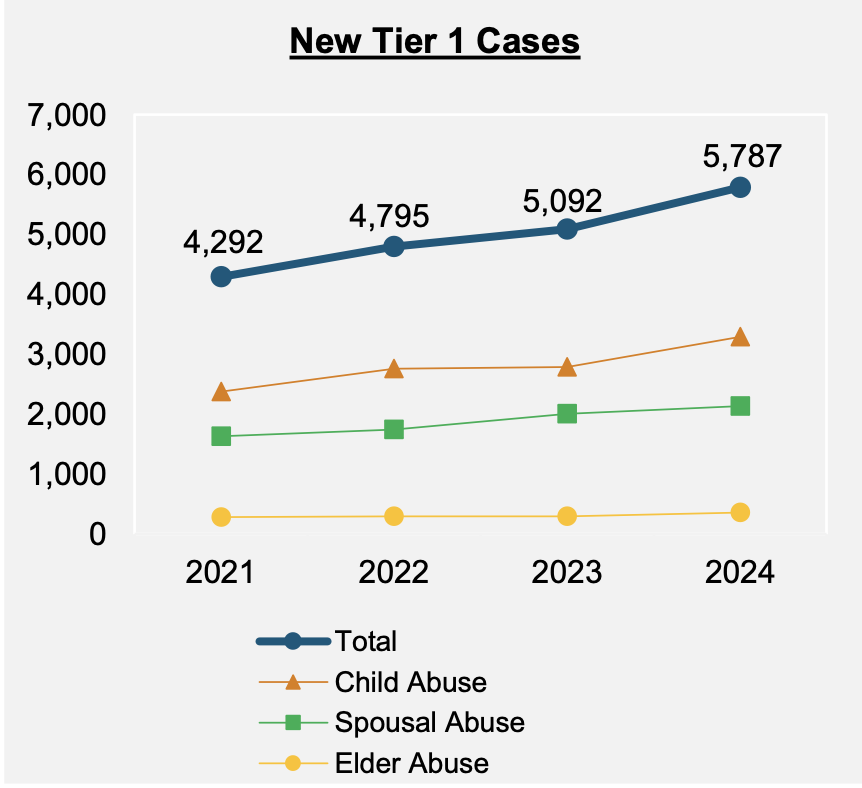
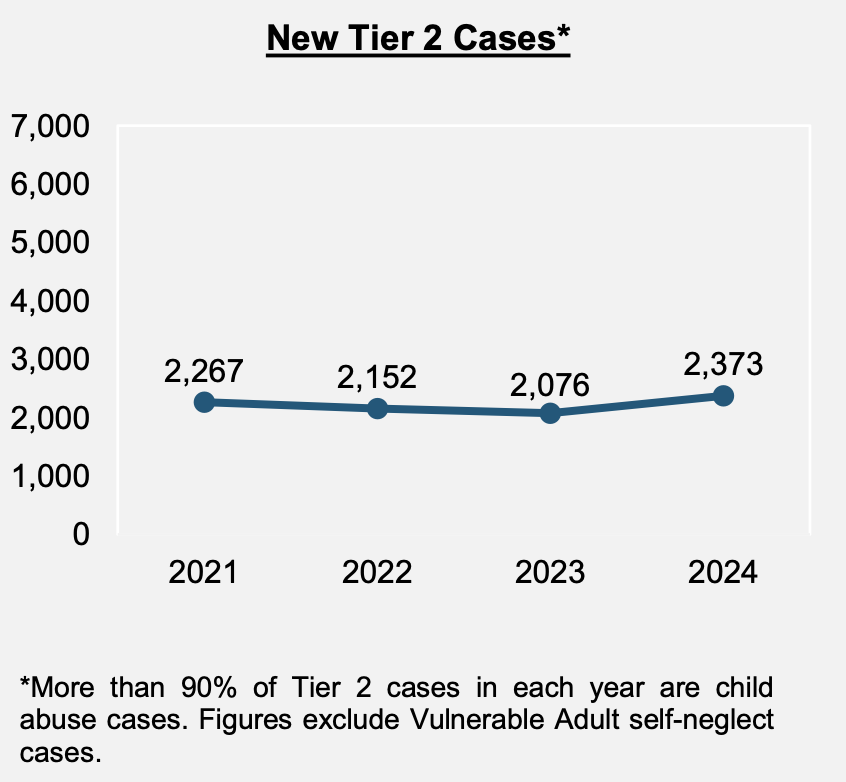
Singapore saw an increase in the total number of new Tier 1 and Tier 2 abuse cases from 2023 to 2024.
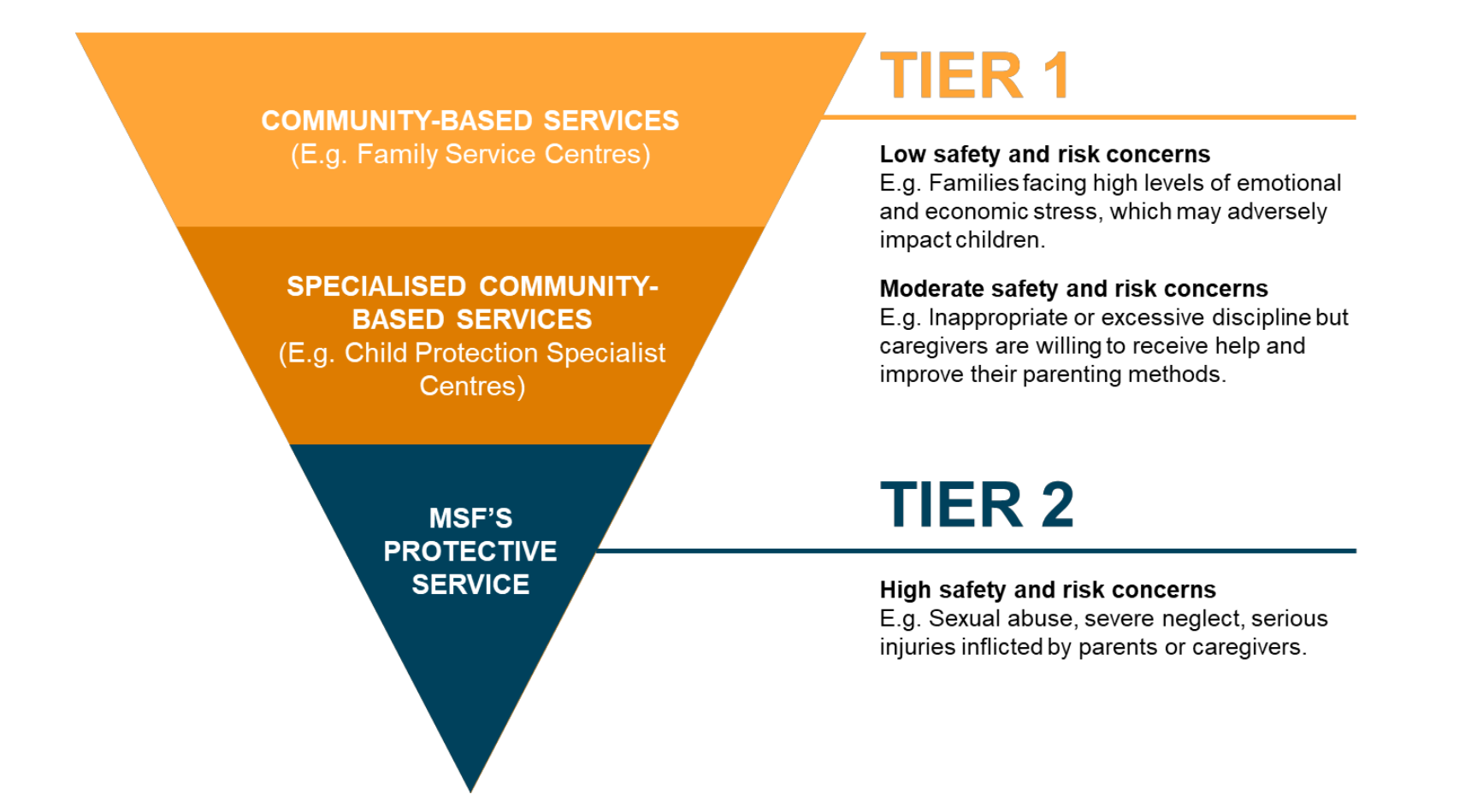
Tier 1 cases are those with low to moderate safety and risk concerns for the vulnerable person, community agencies oversee these.
Tier 2 cases involve high safety and risk concerns for the vulnerable person and may warrant intrusive statutory intervention to keep the individual safe. These cases are overseen by the Ministry of Social and Family Development's (MSF) Protective Service.
New Tier 1 cases increased from 5,092 in 2023 to 5,787 in 2024.
Tier 2 cases rose from 2,076 in 2023 to 2,373 in 2024.
MSF released these findings in its Domestic Violence Trends Report 2025 on Dec. 10, 2025.
Child abuse cases
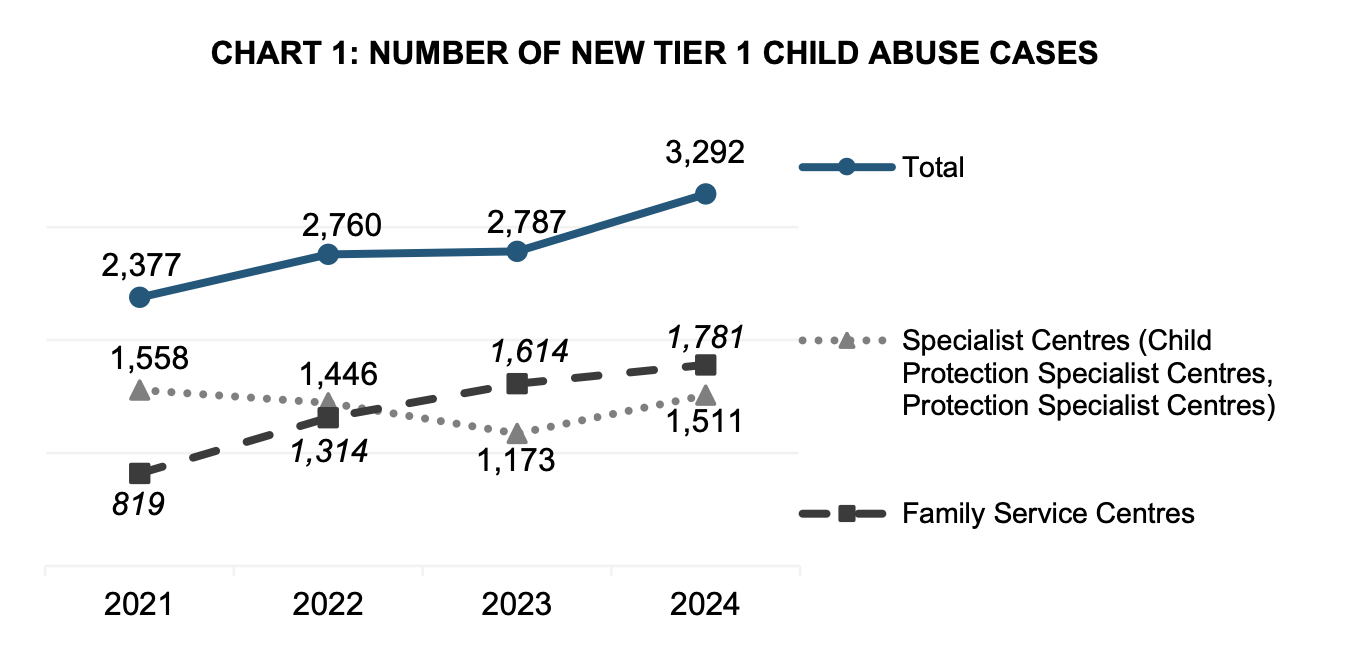
According to the report, Tier 1 child abuse cases increased from 2,787 cases in 2023 to 3,292 cases in 2024.
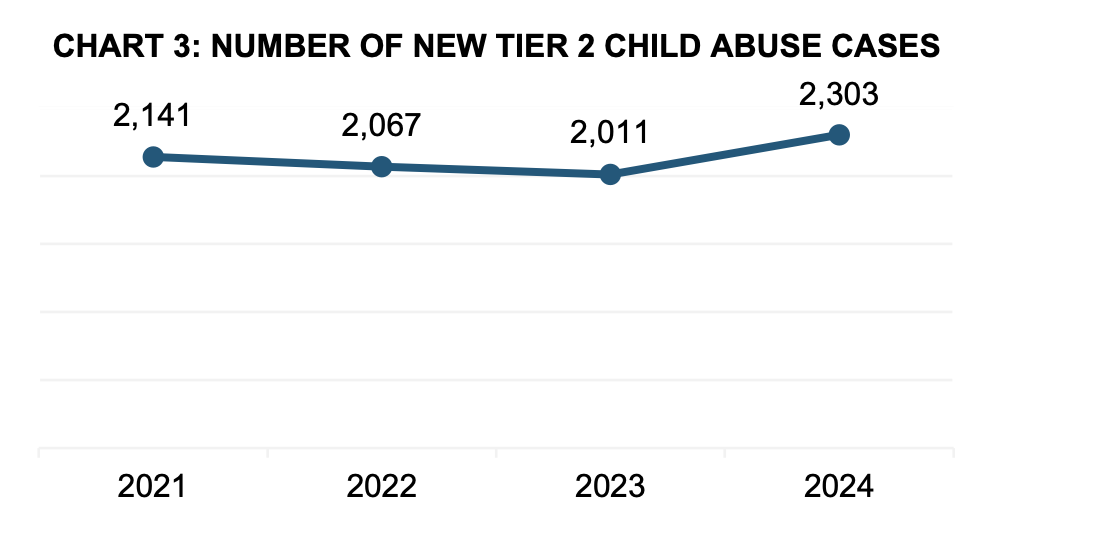
From 2023 to 2024, the number of new Tier 2 child abuse cases increased from 2,011 to 2,303.
An example of a Tier 1 abuse case is infrequent occurrence of verbal abuse, such as derogatory remarks, that does not escalate to physical violence or severe psychological abuse.
 Screenshot from MSF
Tier 2 cases include severe injuries, such as burns and fractures, inflicted on a child by the parents.
According to MSF, about 10 per cent of the Tier 2 child abuse cases in 2024 were reported by members of the public (neighbours, family members, bystanders), and 30 per cent were reported by the education sector (schools, preschools and ECDA).
They also said there are no records of any child death cases from 2021 to 2024 where the child was under the MSF Child Protective Service’s case management before the child’s death.
Spousal abuse cases
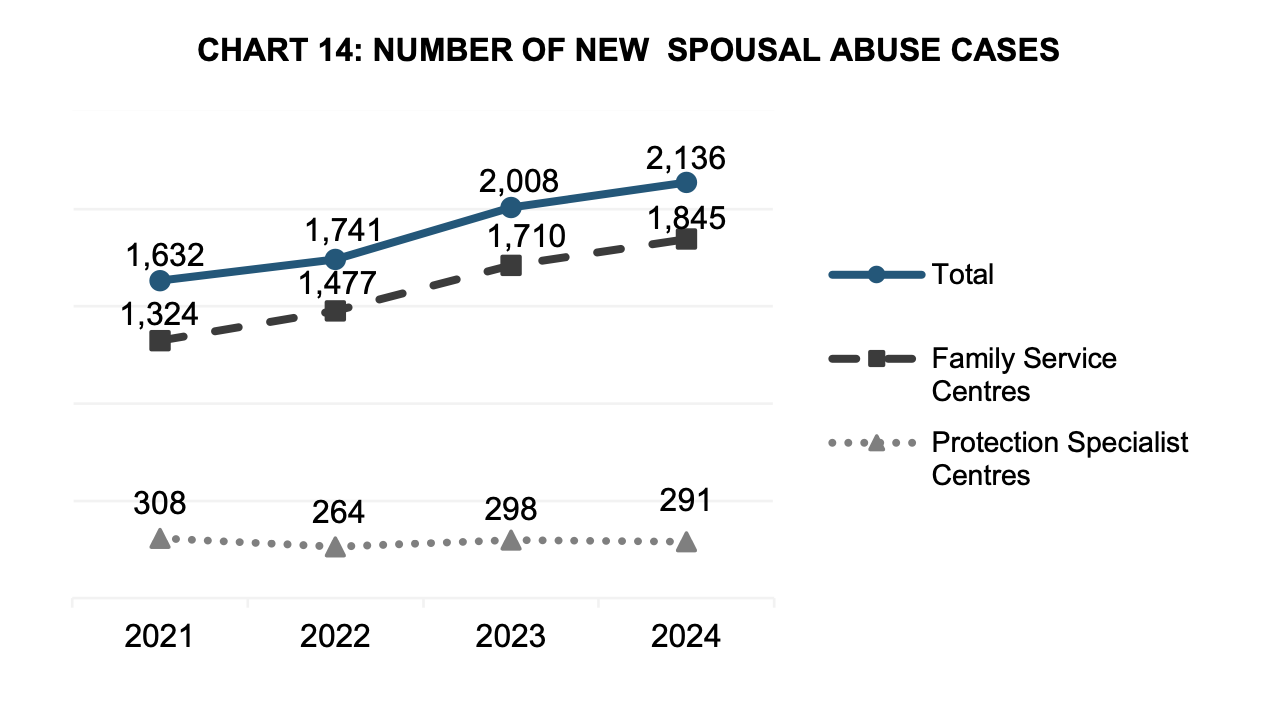
New spousal abuse cases rose from 2,008 cases in 2023 to 2,136 cases in 2024, continuing the upward trend observed from 2021 to 2023.
 Screenshot from MSF
Self-referrals, where people sought help on their own, accounted for a significant proportion of cases managed by Family Service Centres (FSC).
While some sought support primarily related to domestic violence, others initially sought support for issues such as financial difficulties or parenting challenges, with abuse concerns emerging after FSC engagement.
Elder abuse and non-elderly vulnerable abuse
The report classifies the elderly as 65 and above.
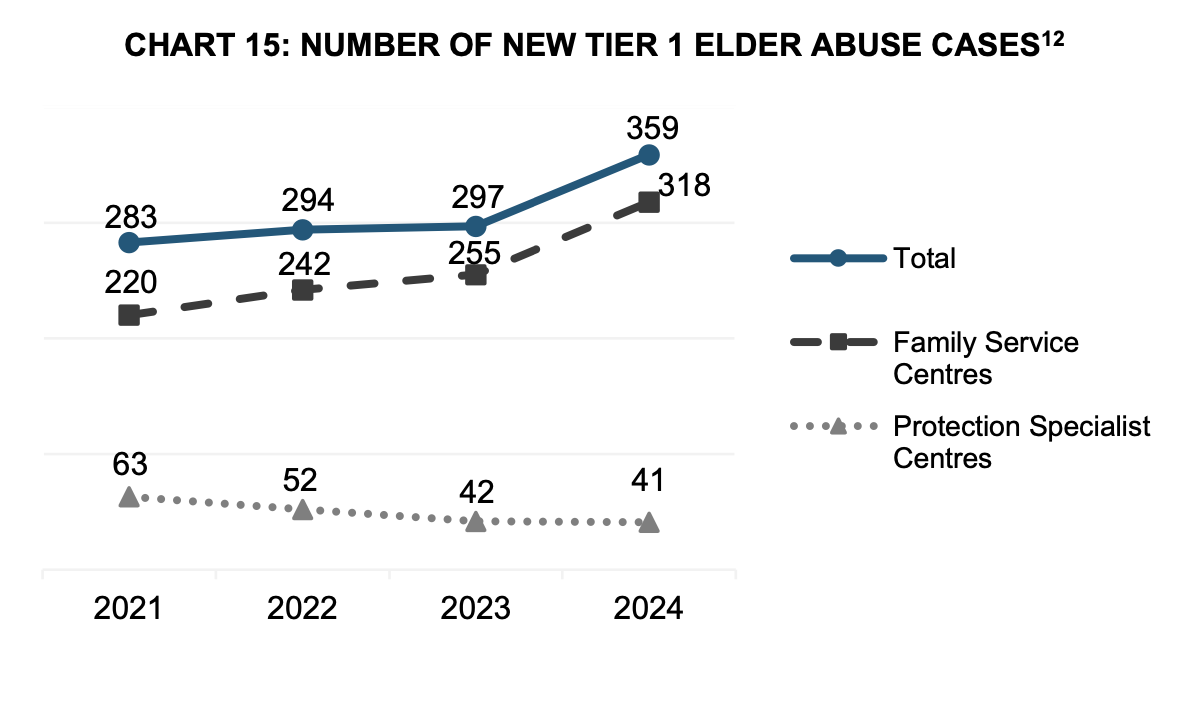
New Tier 1 cases of vulnerable elderly abuse increased from 297 in 2023 to 359 in 2024, continuing the upward trend from 2021 to 2023. The report said the increase could be partly attributed to an ageing society, alongside greater awareness of abuse involving elderly persons.
 Screenshot from MSF
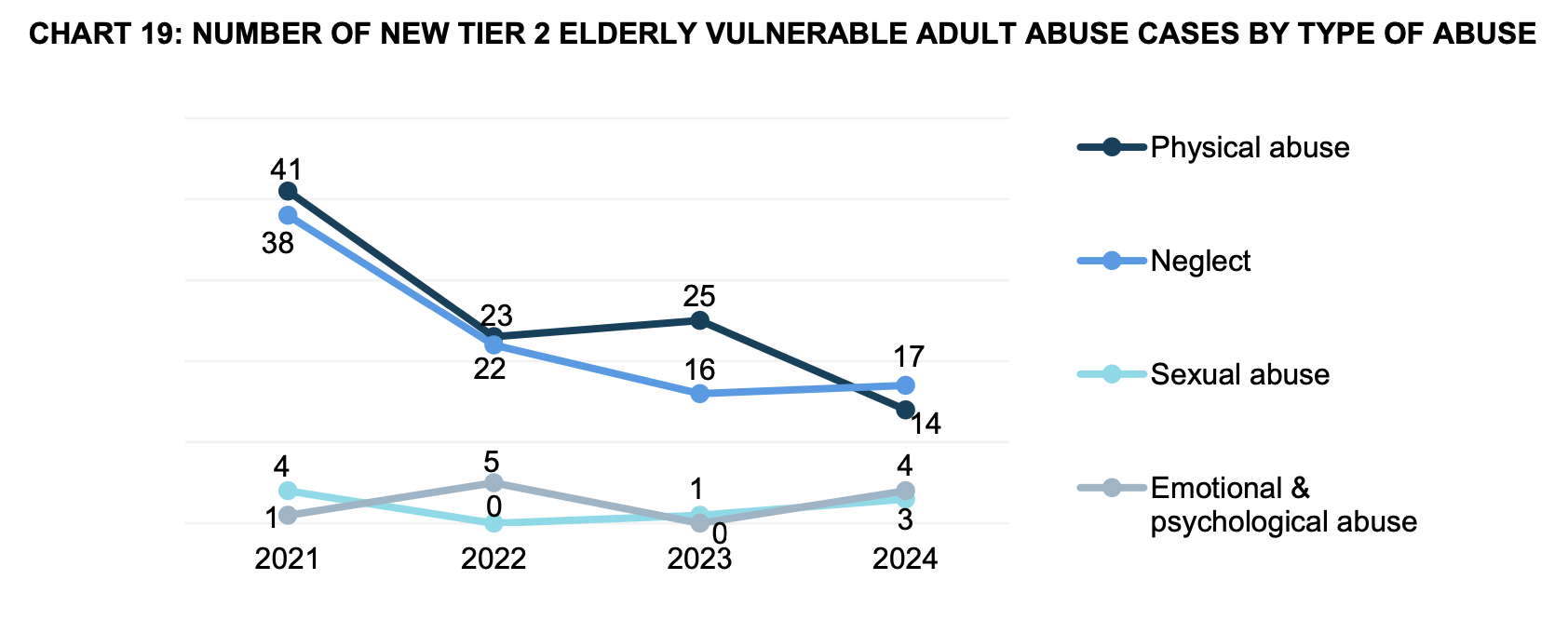
Tier 2 cases declined, continuing the trend from 2021.
 Screenshot from MSF
Neglect was the most common primary type of abuse among new Tier 2 elderly Vulnerable Adult abuse cases, surpassing physical abuse.
Physical abuse cases declined, while there were slight increases in cases of sexual abuse and emotional and psychological abuse.
Non-elderly vulnerable abuse went down from the previous year.
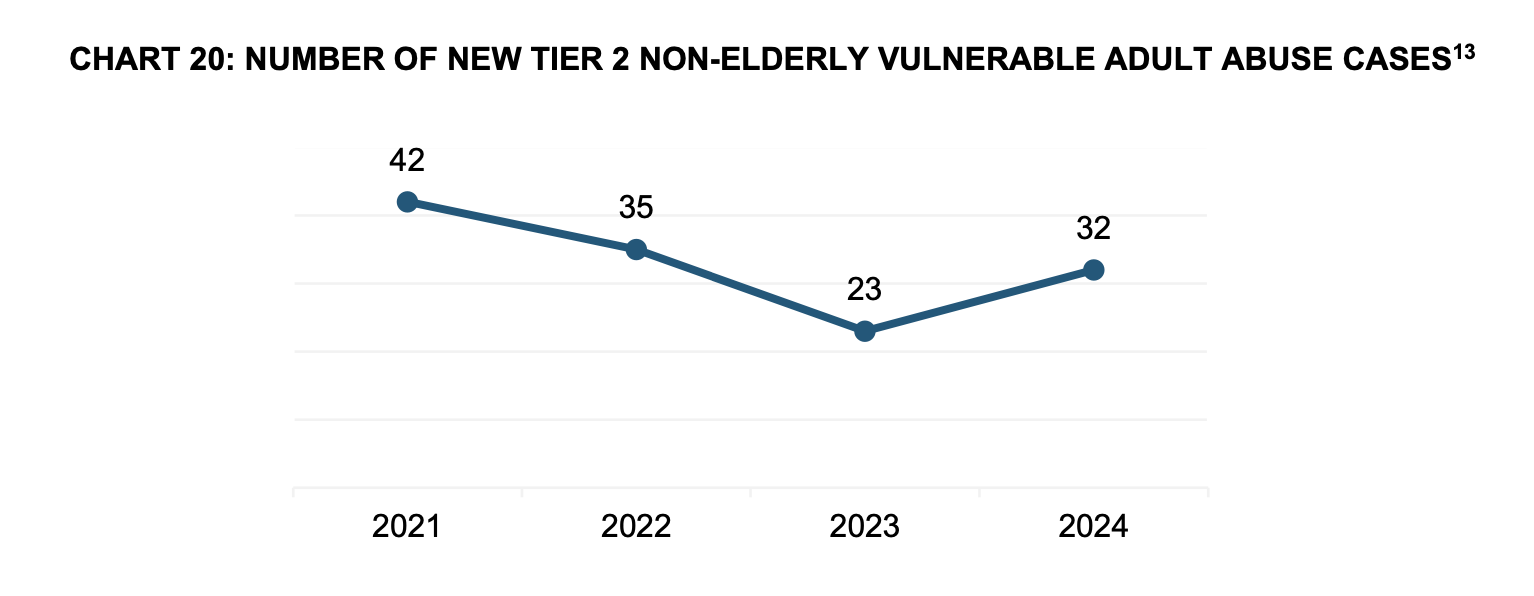
According to MSF, these are people with disabilities or impairments that prevent them from protecting themselves.
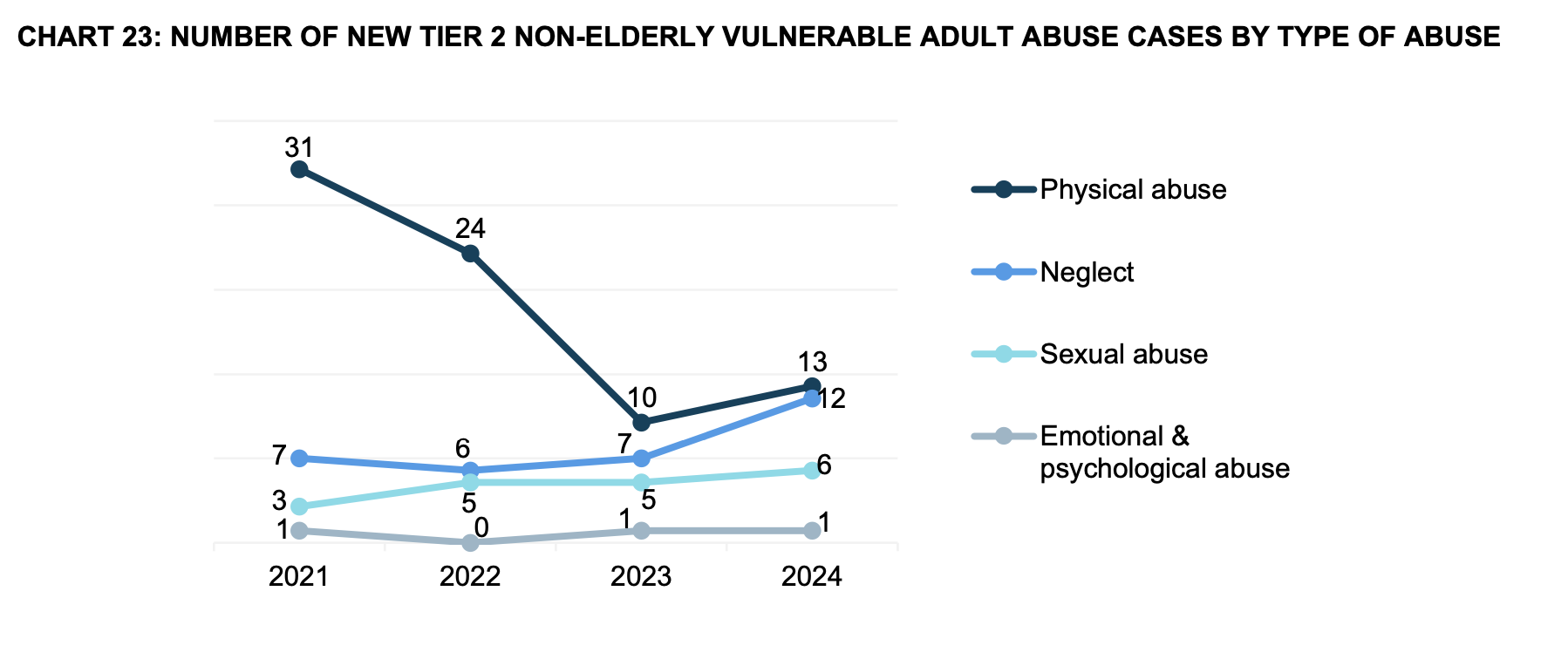
Physical abuse remained the most common primary type of abuse among new Tier 2 non-elderly Vulnerable Adult abuse cases in 2024. However, cases involving neglect also increased over the past year.
Vulnerable adults who neglect themselves
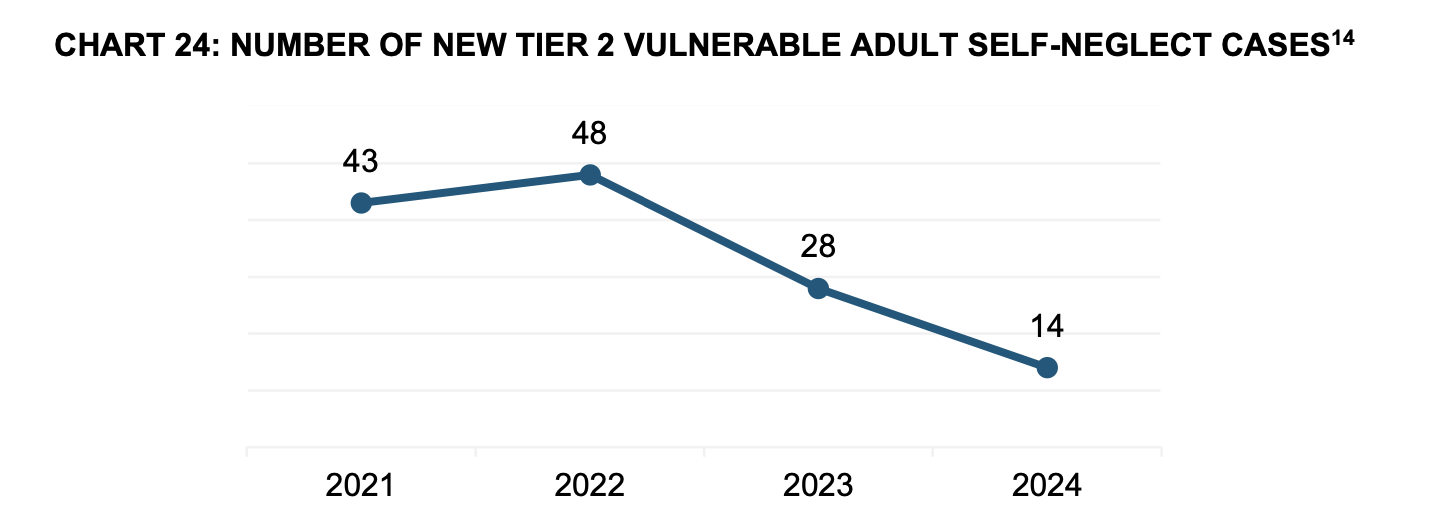
Cases of self-neglect involving vulnerable adults may lead to them living in extremely unsanitary or hazardous conditions, suffering from malnutrition or dehydration, or enduring untreated physical or mental illness or injury.
These vulnerable adults are unable to perform essential tasks of daily living or care for themselves, which impacts their safety and well-being.
Raise awareness and strengthen social attitudes
MSF said they would continue to raise awareness and strengthen societal attitudes against violence, while also making it easier to report abuse and access immediate help.
These efforts are expected to lead to an increase in the number of new cases in the medium term. Their longer-term goal is to stabilise and reduce these numbers as they "continue to fight against domestic violence".
They also said that the government could not do this alone, and that a network of "community agencies and services is needed to safeguard the interests and welfare of vulnerable individuals, families, and victim-survivors of domestic violence".
The report emphasised that domestic violence was not a "private matter" but something that is "unacceptable and must not be condoned", calling on "family members, neighbours, community partners and members of the public" to keep a lookout for those most at risk of abuse.
"Reporting abuse does not break up families; it can save lives and help families to heal relationships and reconcile."
Top photo via Canva