
News

US govt set to reopen after longest shutdown in history. What happened?
It has to do with the Senate's filibuster rule.
November 10, 2025, 05:32 PM
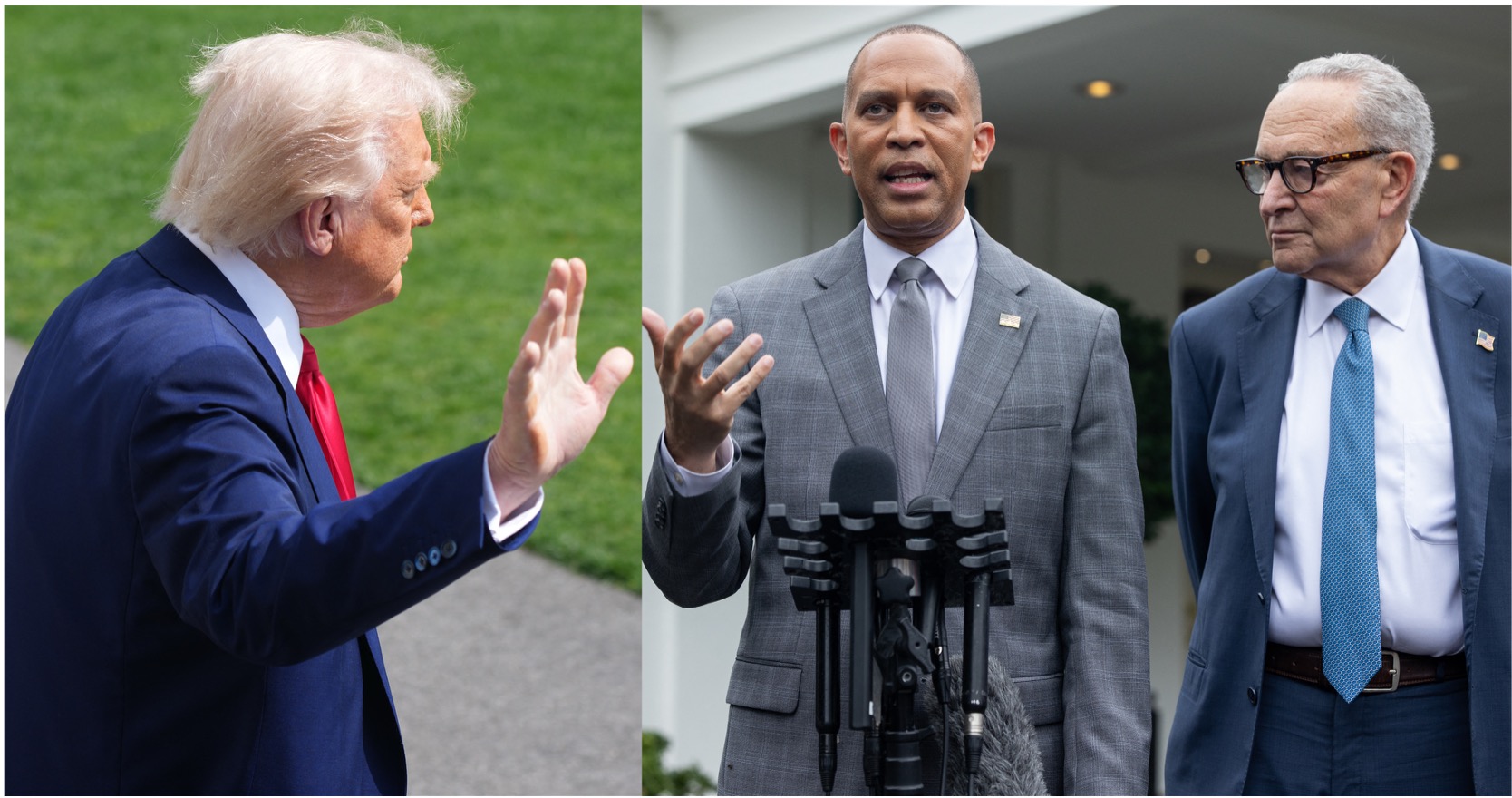


The U.S. government shut down on Oct. 1, 2025. It became the longest-lasting shutdown in U.S. history on Nov. 5, when it hit Day 36.
On the morning of Nov. 10 (Singapore time), the Senate voted 60-40 to pass a funding deal, paving the way for the government to be reopened.
But the vote comes after five weeks of a standoff between Republicans and Democrats, with U.S. President Donald Trump in the centre of it all. What led to the shutdown, and why did it reopen?
What is a government shutdown?
In the U.S., funding legislation must be passed to finance the operations of the federal government before the fiscal year begins.
Think of it as something similar to Singapore's Budget, which is introduced every year by the Finance Minister and must be voted on by Parliament before money can be spent on various projects and ministry functions.
Both chambers of the U.S. Congress, the House of Representatives and the Senate, must negotiate and agree on a merged funding bill to send to the president for his approval.
Without funding, the federal government cannot legally pay employees or finance its operations, excluding "essential" personnel who are largely responsible for protecting lives or property.
This is why during a shutdown, you will see things like national parks and certain museums (operated by the federal government) closed to the public, while not even all military personnel get paid.
The U.S. funding bill takes place on an annual basis, and is usually passed with little drama.
But "little drama" is a rare concept in a Trump Administration.
What happened earlier this year?
After the Nov. 2024 presidential and Senate elections, Trump won the presidency while the Republicans took control of the Senate with 53 seats, with 45 Democrats and two independents in opposition.
In Dec. 2024, Joe Biden, who was still serving as president, signed a bill to continue funding the government through to Mar. 2025.
After Trump assumed the presidency, his early moves, including allowing world's richest man Elon Musk to set up a government department to enact steep cuts to government spending, inflamed the Democrats.
They looked to the Mar. 2025 budget stand-off as a way to oppose Trump and extract concessions from him in return for passing a spending bill.
Schumer backs down
However, Democratic Senate leader Chuck Schumer refused to wade into a fight, and urged his fellow senators to pass a "continuing resolution" bill to fund the government until the end of Sep. 2025.
This kept spending levels more or less the same as previous bill that was passed.
Schumer had his reasons, but suffered enormous backlash from his own party members and supporters, who were spoiling for a fight.
Most legislation passed by the Senate requires a two-thirds majority, i.e. 60 votes to attain cloture, avoid a filibuster and advance.
With Schumer and other Democratic senators supporting the bill, it passed by a vote of 62 to 38.
The government secured funding until Sep. 30, 2025, and avoided a shutdown.
One Big Beautiful Bill
Emboldened by their victory, Trump and the Republicans moved to pass the "One Big Beautiful Bill", which made steep cuts to government spending programmes like Medicaid, while also enacting permanent tax cuts.
The Democrats opposed the bill, citing the impact of the spending cuts on the less fortunate.
They also opposed the cuts to healthcare insurance subsidies under the Affordable Care Act, passed by President Barack Obama, and expanded after the Covid-19 pandemic by Biden.
On Jul. 1, 2025, the bill went up for a vote in the Senate, also requiring 60 votes for a two-thirds majority.
However, the Senate may use a process called "reconciliation" to pass a bill that deals with budgetary or fiscal matters that only requires a simple majority vote to pass.
This reconciliation method can only be used once a year. Remember this, it will be important later.
Using reconciliation to get a simple majority vote
The Senate therefore used the reconciliation process for Trump's Big Beautiful Bill to overcome Democratic opposition. Three Republican senators even voted against it, citing concerns over Medicaid cuts.
This meant a 50-50 split, and the Republican Vice President JD Vance was therefore able to cast a tie-breaking vote to get the bill passed.
The bill was then passed by the Republican-controlled House in a simple majority vote on Jul. 3, as the House doesn't have the two-thirds majority rule of the Senate. It was then signed into law by Trump.
But while Trump and the Republicans celebrated, this sowed the seeds of yet another conflict.
Now there's a fight
Unlike in March, the Democratic party was in no mood to pass another continuing resolution as August turned to September.
They had demands in exchange for passing a spending bill in the Senate, including extending the healthcare subsidies that were set to expire at the end of the year.
Remember, the Republicans already used their one shot at reconciliation on Trump's Big Beautiful Bill.
Any other spending bill needed a minimum of 60 Senate votes to pass, which means Democratic votes.
Trump was in no mood to grant any concessions either, and told Republicans "don't even bother dealing with them."
The Republican Speaker of the House, Mike Johnson, passed a spending bill without the healthcare provisions and sent it to the Senate, gambling that the Democrats would not dare to vote it down lest they get blamed for a shutdown.
The Democrats meanwhile proposed their own spending bill with the healthcare part added, rejecting the Republicans' offer to negotiate healthcare subsidies separately from the bill, as they would have no leverage.
On Sep. 19, both bills failed to pass as both sides dug in their heels, with neither bill getting 60 votes.
Schumer and Democratic House leader Hakeem Jeffries then met with Trump at the White House, but failed to come to an agreement.
Trump then posted an AI-generated video of Jeffries wearing a Mexican sombrero hat with a large moustache, and a day later after yet another failed vote, the government officially went into shutdown.
2025 US elections
Both parties have sought to cast blame on the other for the shutdown. If one party feels they are taking more political damage from the shutdown, they would be more amenable to come to the negotiating table.
On Nov. 2025, voters went to the polls in a number of states for a variety of elections, ranging from who gets to be the Mayor of New York City to the Governor's race in New Jersey to a seat on the Public Service Commission of Georgia.
To some surprise, the Democrats won a vast majority of the races.
There may not be any surprise in a Democrat becoming the Mayor of New York City, but Democrats also won the New Jersey's governor seat in what was touted as a close race, replaced a Republican governor in Virginia and retained control of Pennsylvania's Supreme Court.
Democrats even won the Public Service Commission elections in Georgia, in a state where Trump beat Kamala Harris in 2024.
The results have left the Democrats looking with renewed confidence to the 2026 "Mid-term" elections, where every House seat and key Senate seats are up for grabs.
Now it may be premature to link the shutdown to the poor performance by the Republicans in these elections.
And a recent YouGov survey saw respondents place a roughly equal share of the blame on both Republicans and Democrats.
But as the shutdown dragged on, Trump's approval ratings began to sink and he pressured both parties into reaching an agreement.
Nuking the filibuster
In a series of posts, Trump urged the Republicans in the Senate to "nuke the filibuster".
This would entail the Republicans proposing a change to the Senate rules to pass all legislation by a simple majority vote, without requiring a two-thirds majority.
This could easily be done with the current number of Republican Senators.
However, the Republicans are well aware that if they do so, and lose their majority in a future election, the Democrats could pass their own legislation by a simple majority vote with the Republicans unable to stop them.
Republican Senator John Thune and others have come out, in a rare show of opposition to Trump, to state their support for the current filibuster rules.
Ending the shutdown
On Nov. 10, seven Democratic senators and one independent voted yes with the Republicans to reopen the government. One Republican (Rand Paul of Kentucky) voted against the spending bill.
Still, this was enough to pass 60-40, thereby avoiding a filibuster.
The bill does not contain the healthcare provisions sought by the Democrats, but contains a few other changes, such as restoring back pay for federal workers who were not paid during the shutdown.
It will fund the government until Jan. 30, 2026, about three months from the day of the vote.
The bill now goes back to the House for approval. While Jeffries has opposed the Senate move, the House just needs a simple majority vote to pass the bill, and Johnson should not face any issues in getting the votes he needs.
Related story:
Top image from AFP.