News

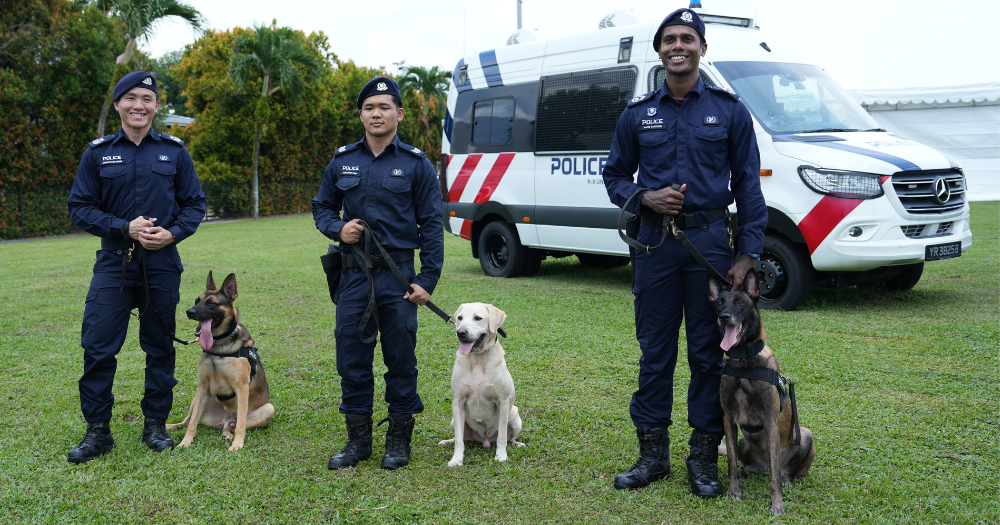
Meet Nero, Dracca & Heidi: 3 of the more than 250 police dogs who help keep S'pore safe
A round of appaws.
November 04, 2025, 12:07 PM


He has soft brown eyes, big floppy ears, and a perpetually lolling tongue.
But that nose can send drug smugglers shaking in their boots.
Dracca, a four-year-old Labrador retriever, has served in the Singapore Police Force (SPF)’s K-9 unit since he was around one-year-old puppy, fighting crime by sniffing out illegal drugs.
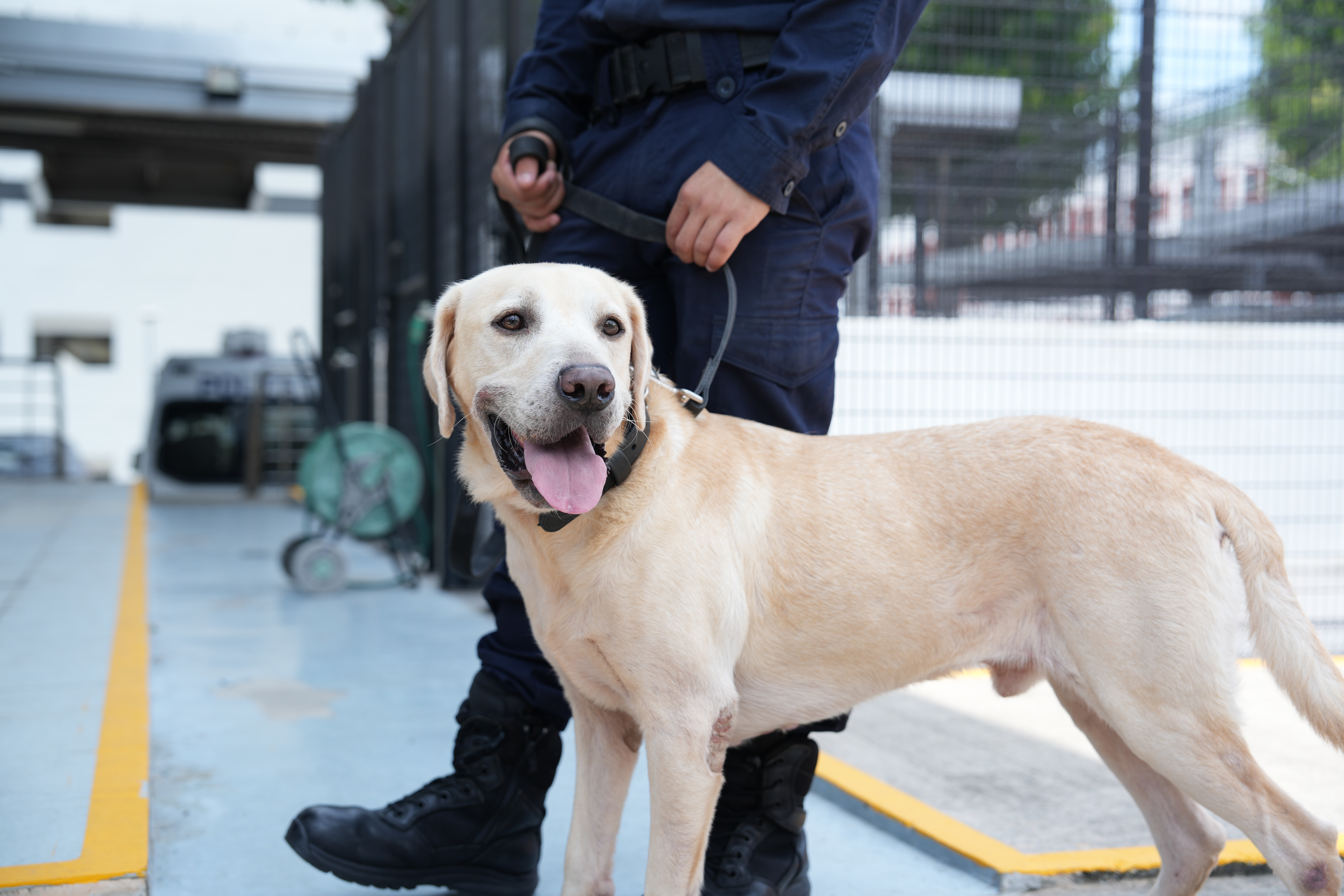 Photo by Javier Lim/Mothership
Since 1955, the SPF has trained and deployed dogs to assist in frontline law enforcement operations.
Starting out with just five dogs and five handlers, the police dog unit joined the Special Operations Command (SOC) in 1992, and has gradually expanded to employ over 250 dogs today.
In addition to narcotic detection dogs like Dracca, there are also dogs specially trained in explosive detection, victim recovery, locating missing persons, maintaining public order, and more.
On Nov. 3, the police K-9 unit celebrated its 70th anniversary with a ceremonial parade at its headquarters.
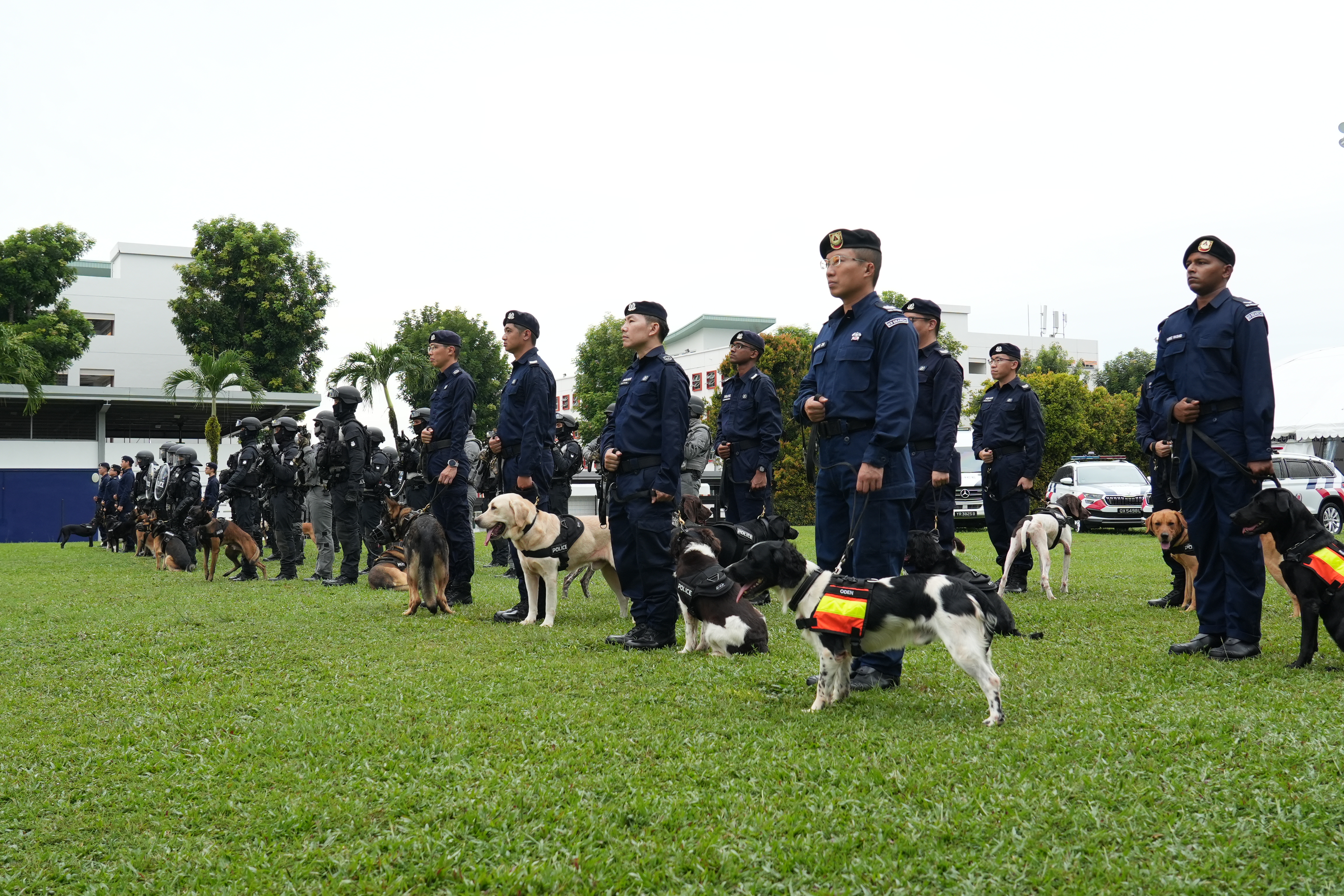 Photo by Javier Lim/Mothership
As part of the commemorations, Mothership visited the unit headquarters to get an inside look at how police dogs work with their handlers to keep the country safe.
Protecting our borders
Anyone attempting to smuggle drugs across Singapore's borders should hope to avoid Dracca.
Narcotic detection dogs are sometimes deployed at Woodlands and Tuas checkpoints, where Immigration & Checkpoints Authority (ICA) officers would do random checks for drugs on travellers, the police told Mothership.
A few would be asked to enter a room and stand behind a fence, while a police dog on the other side sniffs them out one by one.
In a demonstration of such a scenario, Dracca identified the person carrying a bag of drugs in almost no time at all.
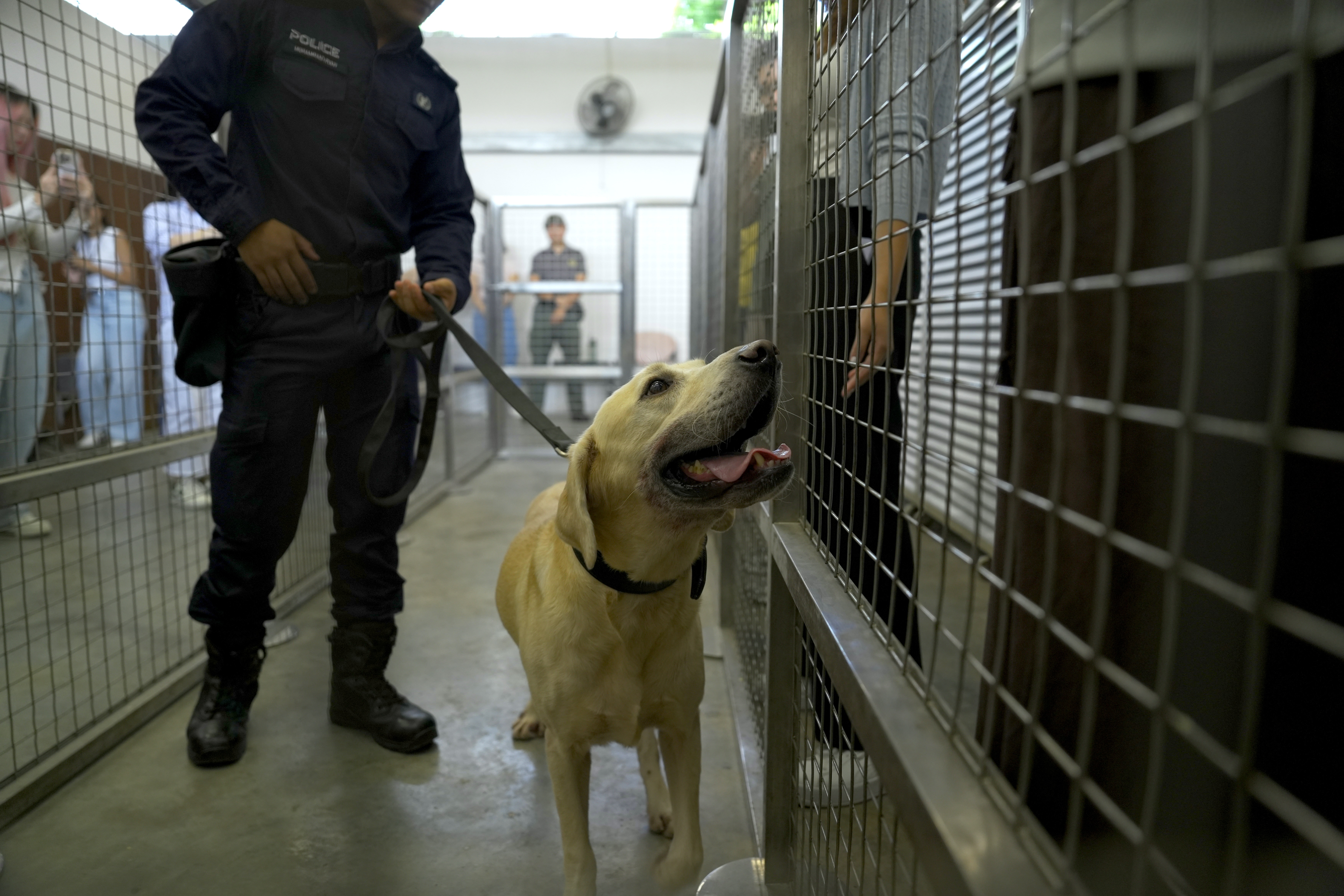 Photo by Javier Lim/Mothership
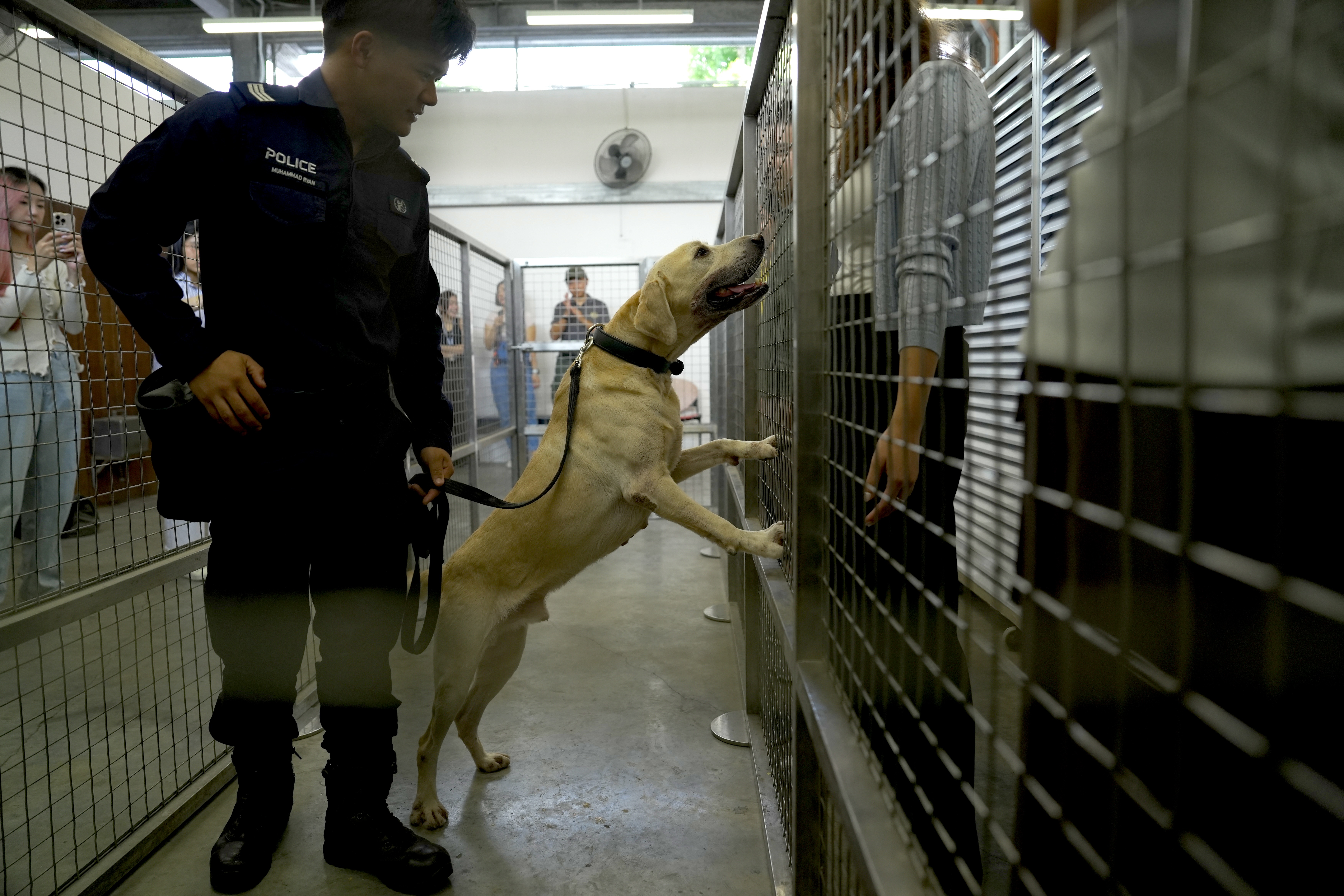 Photo by Javier Lim/Mothership
He started barking and hitting the fence in front of them.
At this signal, his handler, Special Constable Muhammad Ryan Sei M Yazid, would reward and calm Dracca down with a toy, then ask the potential drug smuggler to step aside.
Apart from people, Dracca can also search vehicles and warehouses for hidden drugs.
Before beginning frontline work, Dracca was trained for three months to recognise the scents of different narcotics.
An easygoing dog, Dracca can pick up new skills fast, Ryan said.
He would associate detecting a drug with being rewarded, motivating him to search and find drugs.
Don't worry, this process will not make him addicted to drugs, Ryan assured.
Dracca indeed looked more excited to play with his toy than to reach for the drugs.
Patrolling our streets
Police patrol dogs like Heidi and Nero help to strengthen police presence at major events and hotspots.
Nero, a two-year-old Belgian shepherd, was deployed during the 2025 general election and National Day Parade with his handler, Sergeant Chiam Chin Siong, to monitor large crowds.
An active dog who enjoys interacting with humans, Nero loves to play, Chiam said.
But when it is time to work, he knows how to focus.
To ensure they follow commands during patrols, the dogs frequently go through obedience training where they learn to respond to their handlers' different hand signals.
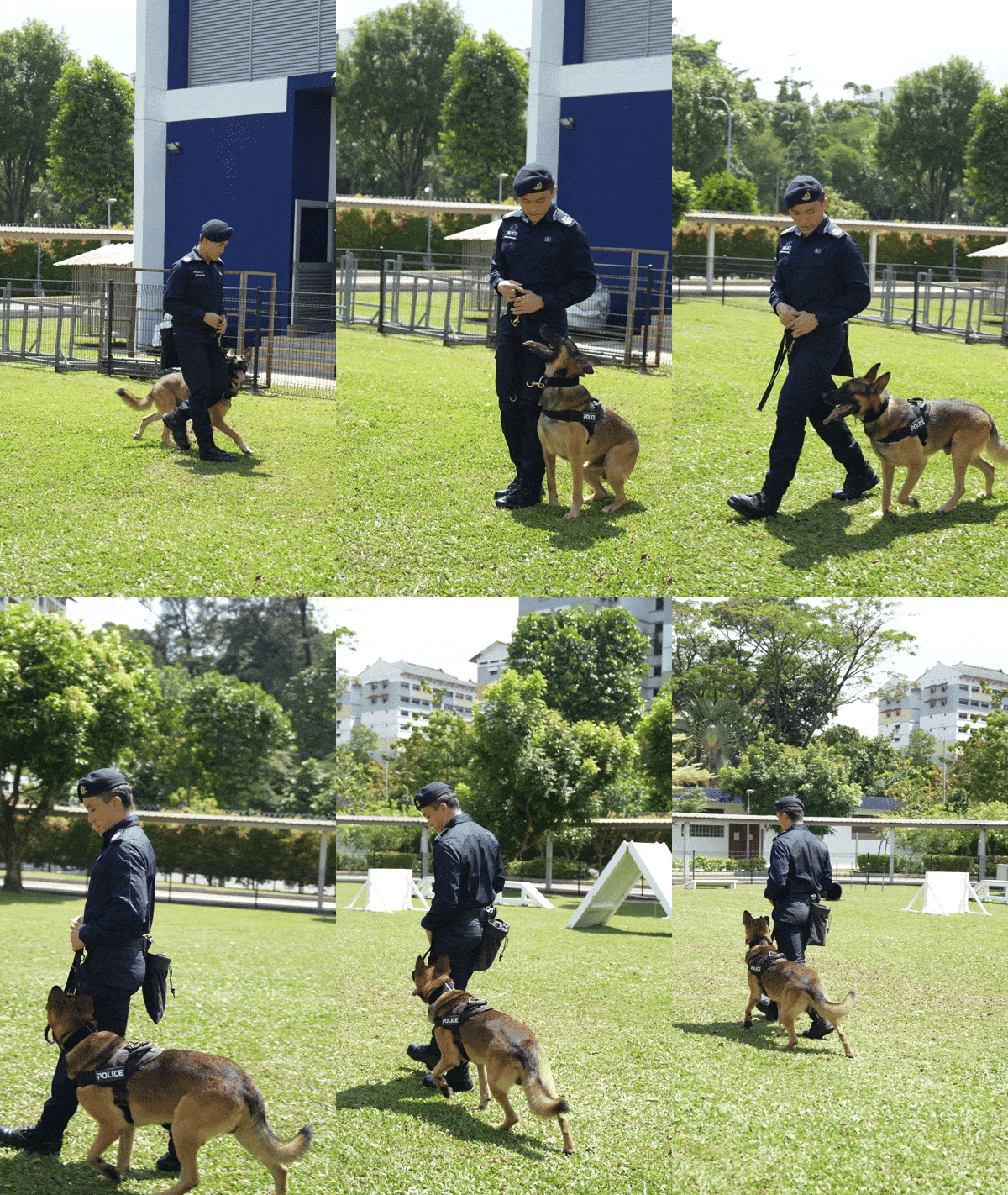 Nero and Chiam during obedience training. Gif by Javier Lim/Mothership
Seven-year-old Belgian malinois Heidi is a veteran after six years in the service.
Also trained as a victim recovery dog, Heidi's nose has been sharpened to various types of objects.
During anti-crime patrols with her handler, Station Inspector Hafiz Maideen, she has found a phone and even decomposed snakes.
If the police is chasing after a subject they suspect is hiding in a building, Heidi can help to search by sniffing out the subject's scent.
"I know I can trust her nose," Hafiz said. "She's very good at finding a lot of things."
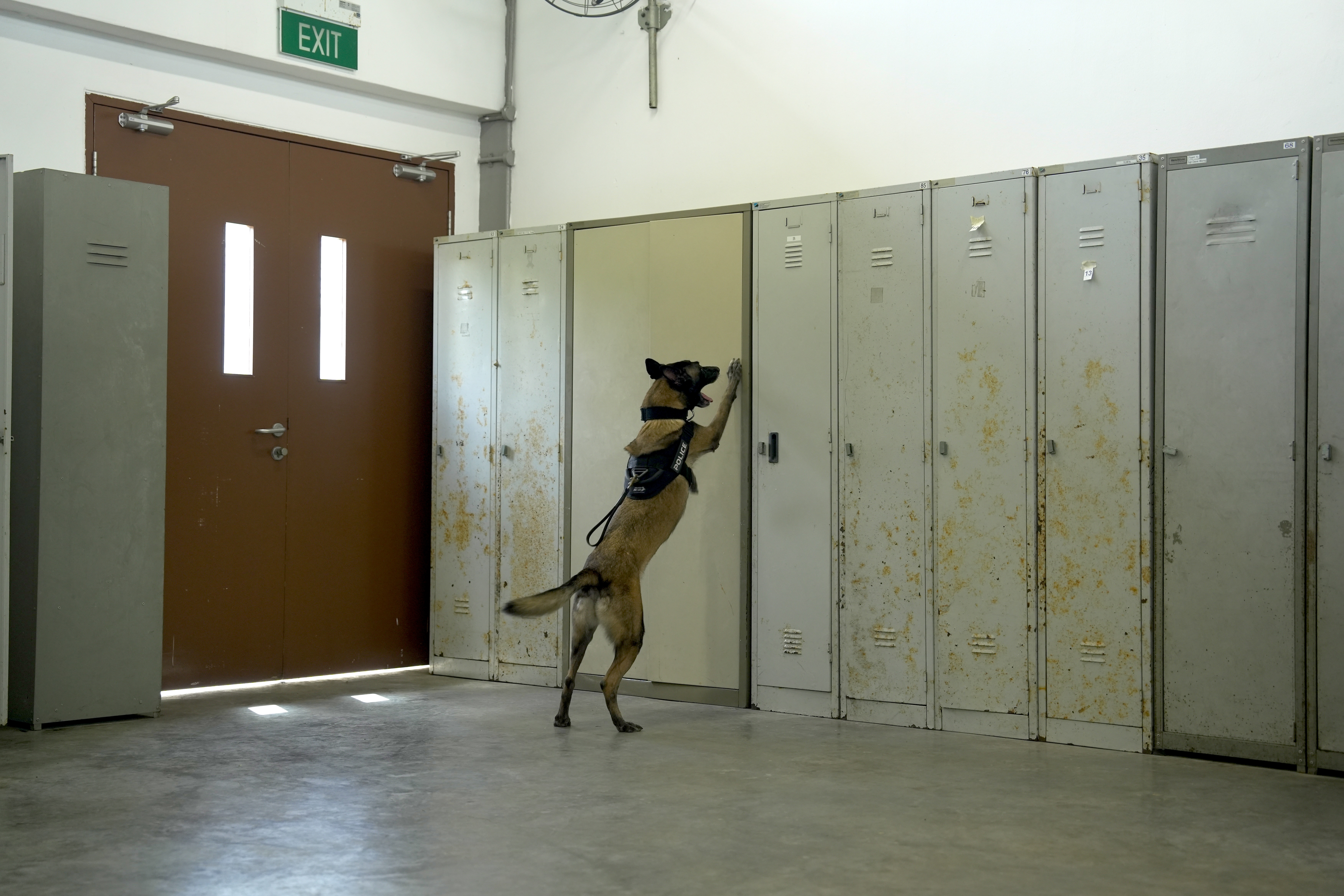 Heidi locating a person hidden inside the locker. Photo by Javier Lim/Mothership
Man's best friend
The partnership between the human and canine officers go beyond their daily work shifts.
Before they are deployed for operations together, each dog and handler pair go through an intensive three-month training programme together to help them develop a bond.
The handlers also care for their dog's well-being, by walking and grooming them daily, and keeping them hydrated during breaks.
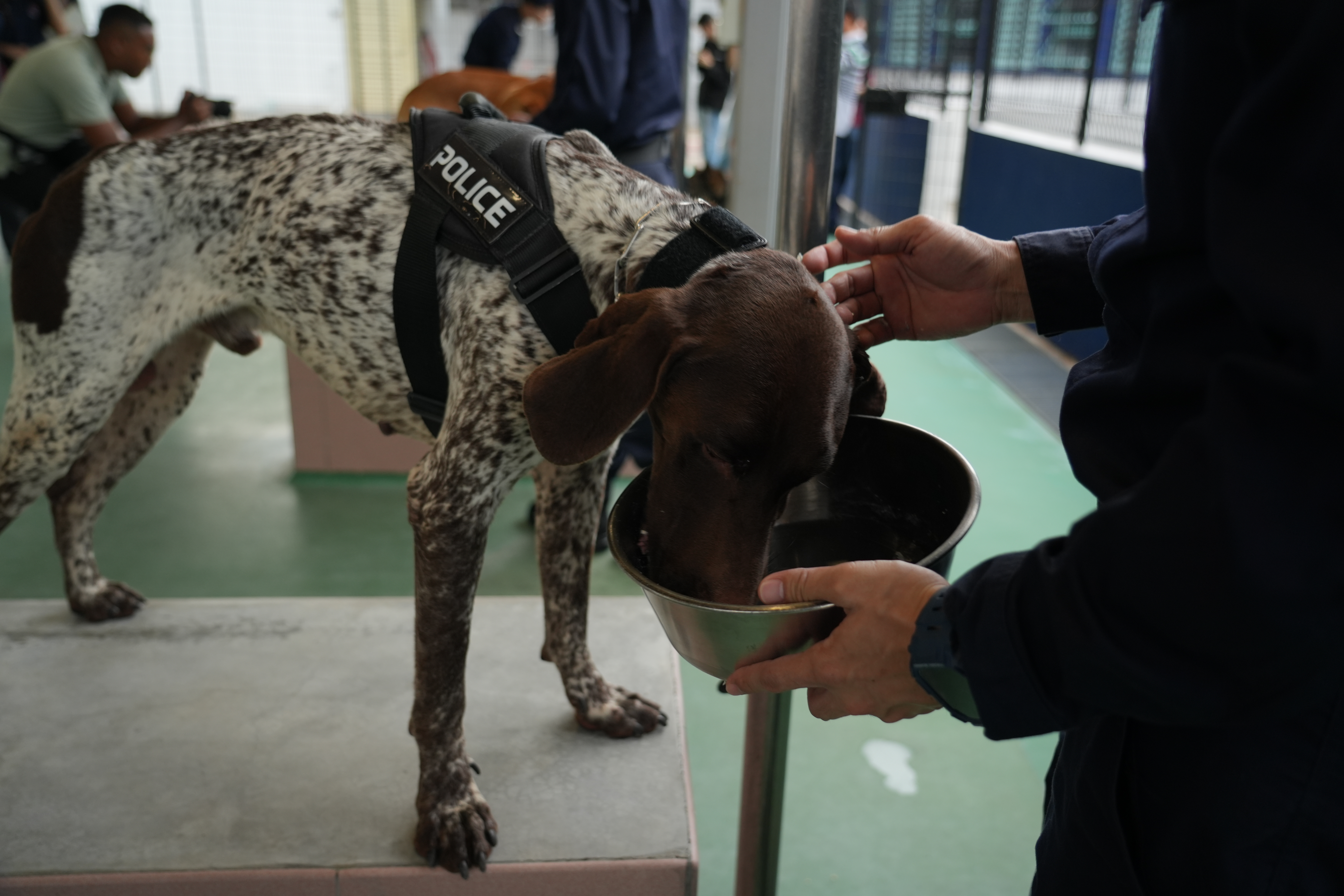 Photo by Javier Lim/Mothership
Just as the police dogs learn to recognise the signals of their handlers, the handlers also get to know their dogs' behaviour over time, understanding how a certain change in body language indicates that they have found something.
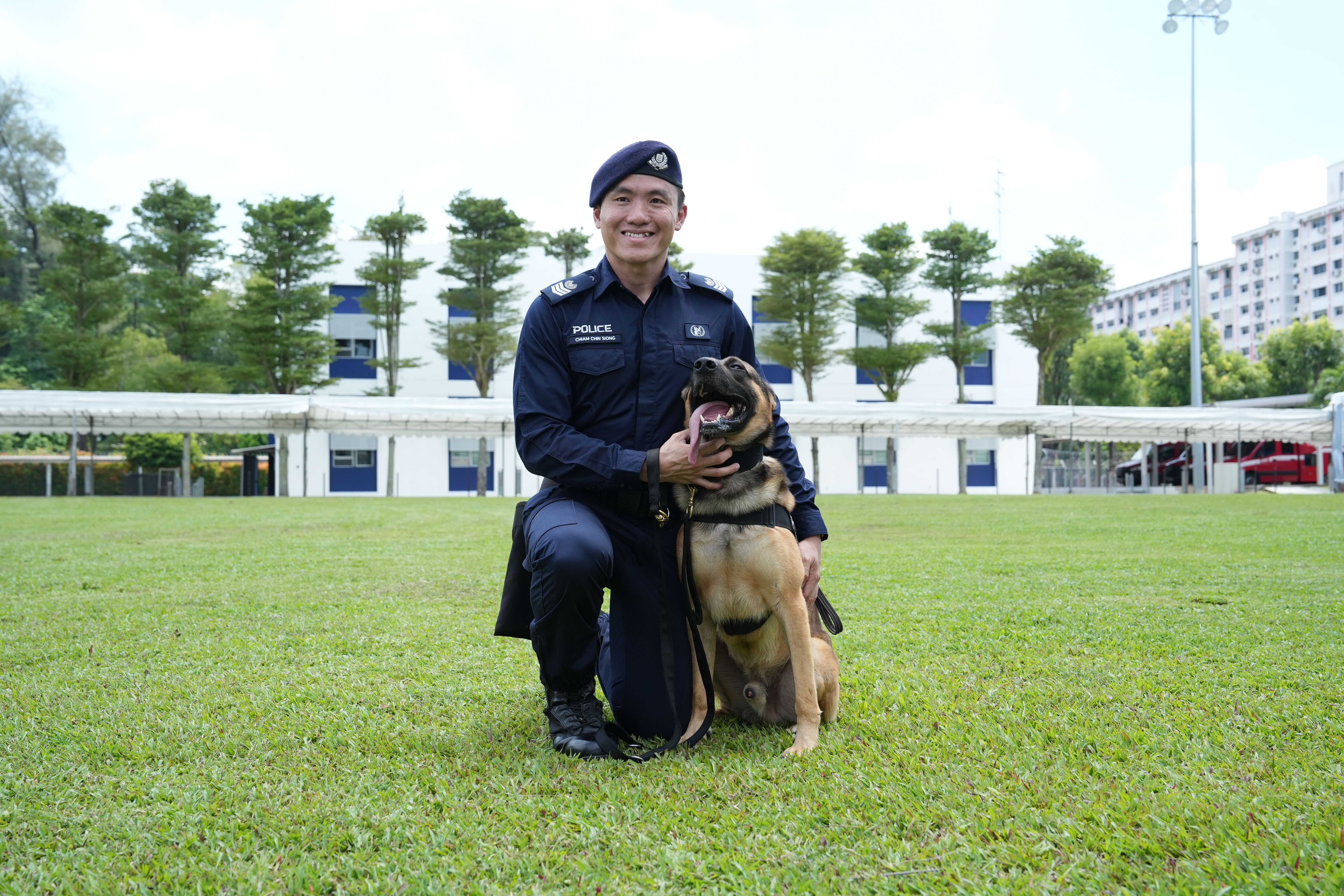 Photo by Javier Lim/Mothership
Hafiz, who has been working with Heidi for six years now, shared that she has helped him a lot during patrols.
"She looks small, but she's feisty," he said. "That's what I love about her."
"I'm not worried when I go for patrols. If I'm standing alone with her, I don't think anybody will come and disturb me."
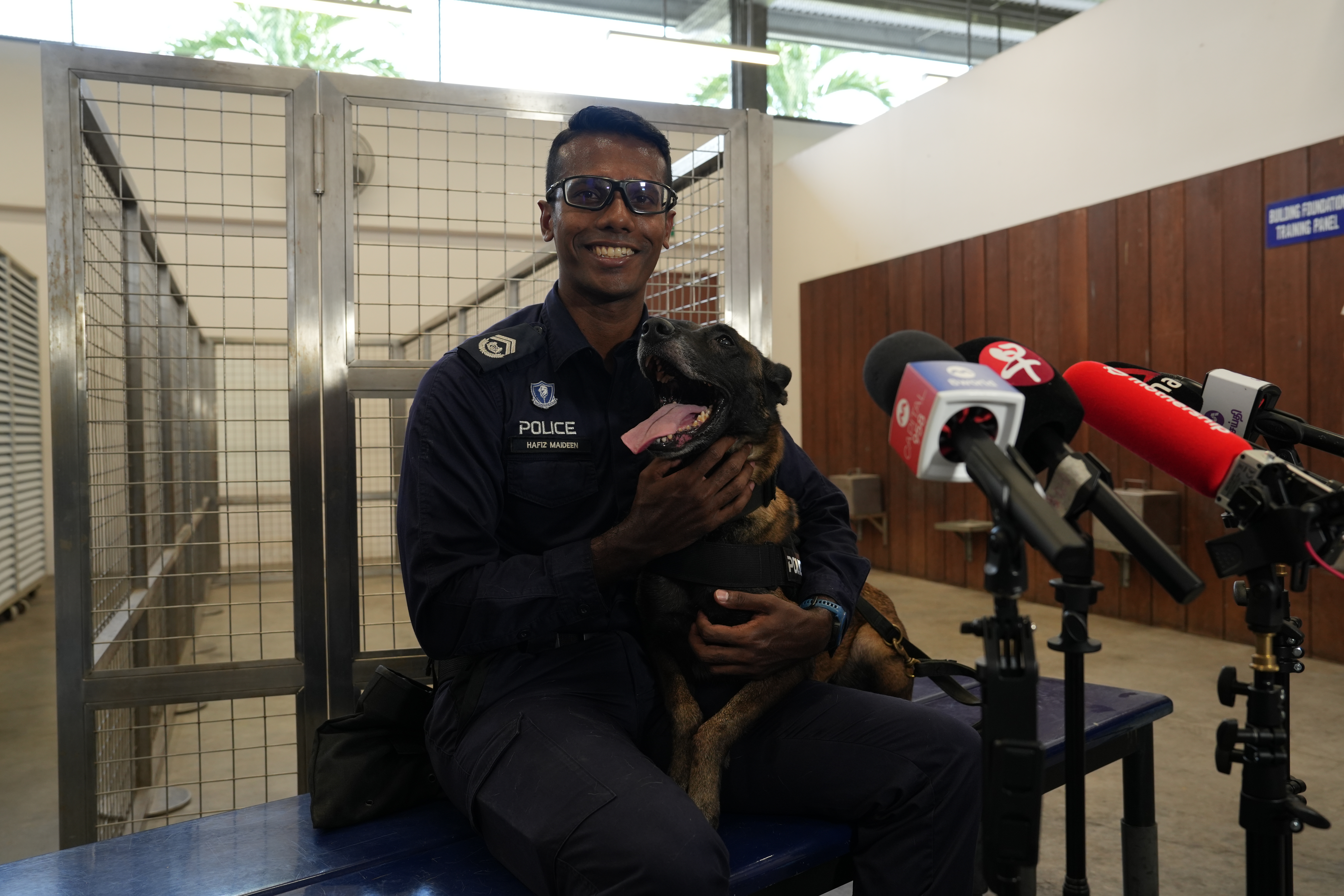 Heidi and Hafiz. Photo by Javier Lim/Mothership
Even though technology has advanced for SPF to use patrol robots, Hafiz believes that dogs are irreplaceable as a partner on the force.
A robotic dog may be more accurate in detection, he acknowledged, but there can be no emotion and bond for a robot.
"If I get into trouble or anything, I know my dog is there," he said.
Heidi will be retiring soon, as is the case for the police dogs typically when they turn seven, but that will not mean the end of her relationship with Hafiz.
After she retires, Hafiz plans to adopt her in his home — just as he took in his previous canine partner.
Top images by Javier Lim/Mothership