Perspectives

Comment: S'pore's NMP scheme isn't irrelevant. It's just due for reform.
"Because the health of our democracy is not measured only by how loudly we debate, but by how widely we listen."
November 14, 2025, 10:02 AM


The Nominated Member of Parliament (NMP) Scheme has become more controversial in recent times.
In the Parliament hall, theirs are the only voices that are purely non-partisan. But their means of entry — by appointment and not election — has called this "independence" into question. Some have also argued that NMPs delegitimise the need for a stronger opposition.
But former NMP and social entrepreneur Anthea Ong argues that the scheme is not irrelevant — merely due for reform. Recently, Ong worked with independent research firm OPPi to seek Singaporeans' views on the scheme.
Ong is the editor of “The NMP Scheme: Are Unelected Voices Still Necessary in Parliament?”, published by World Scientific and launched in Parliament by ESM Goh Chok Tong in 2022.
By Anthea Ong
Thirty-five years ago, Singapore introduced one of its most original political innovations — the NMP scheme.
It was, at its heart, an experiment in democratic imagination. The idea was to bring independent, non-partisan voices into Parliament, broadening representation without diluting electoral legitimacy.
First introduced as an act of Parliament in 1990, the constitution was amended in 2010 to make the NMP scheme a permanent feature with up to nine seats.
This year, as the scheme marks its 35th anniversary, we launched the first-ever nationally representative public consultation on the NMP scheme. We surveyed 500 citizens in August 2025, and released the findings in September.
Just weeks later, the public call for new NMP nominations opened. The timing feels apt: Singaporeans have spoken; now comes the test of whether Parliament will listen.
Wanting reform
For years, the NMP scheme has divided opinion.
Critics dismiss it as symbolic or redundant; supporters see it as a vital complement to party politics.
But this consultation provided the clearest picture yet of how citizens themselves see it.
A strong majority — 71 per cent — said NMPs provide needed alternative voices in Parliament. Yet only a third (32 per cent) felt the scheme remained relevant today.
The message is clear: Singaporeans value the intent, but question the execution. They are not apathetic, they are asking for a renewal of trust — through transparency, independence, and genuine participation.
Those most familiar with the scheme also expressed the highest confidence in it. Awareness, in other words, builds trust.
Yet awareness remains low: more than half of Singaporeans still rely on mainstream media as their primary source of information about NMPs.
If legitimacy is to grow, visibility must follow. Parliament should make selection criteria public, publish deliberations, and showcase NMPs’ contributions as a matter of record.
The independence premium
Perhaps the most striking finding was what I call the independence premium.
Respondents were 10 to 14 percentage points more supportive of former NMPs running as independents, than joining political parties.
This preference is not anti-establishment. It reflects a pragmatic instinct for political diversity and credible non-partisanship.
Singaporeans understand that some NMPs may later join parties — but when it happens immediately after their term, it feels transactional. A cooling-off period could preserve both integrity and public confidence.
This year’s political landscape has only reinforced that message. Two NMPs resigned mid-term to join the ruling party.
Meanwhile, two independent candidates — Jeremy Tan and Darryl Lo — ran spirited campaigns in the General Election, earning public respect without party backing or machinery.
Now, both have thrown their hats in for the NMP scheme. Whether or not they are ultimately selected, their candidacies reflect something important: a new kind of civic courage, grounded in conviction rather than careerism.
But I can’t help but wonder — could their appointment prove testament to the independence of the scheme that has been called to question recently?
Advocates not appointees
When the NMP scheme was designed in 1990, it made sense to invite functional groups — business, labour, academia, the arts — to nominate candidates. Singapore was still building institutions and expertise.
But 35 years later, that model feels increasingly out of step. The survey revealed growing scepticism that the process favours establishment figures over advocates with lived experience.
Over half of survey respondents (53 per cent) called for greater public involvement in choosing NMPs. Singaporeans today want NMPs who are advocates, not appointees — people who speak from communities, not just about them.
One survey respondent said it best: “It’s to present more opportunities for Singaporeans to participate in politics.” Another added, “Parliament should feel like ours.”
During my own term (2018–2020), I saw this first-hand. When I spoke up for migrant workers, sex workers, and LGBTQ communities, the responses were intense, ranging from gratitude to hate.
Because NMPs have no votes to protect, we can speak for those who have little political capital. That, to me, is the essence of the scheme.
Updating a 35-year-old process
Currently, NMPs are selected by a special committee of elected representatives from across the House.
This may have made sense when the scheme was an act of Parliament — each new Parliament could decide if it wanted NMPs.
But now that the scheme is a permanent feature of Singapore’s Parliament, the process should evolve. It would strengthen legitimacy to have nominations or shortlisting overseen by a non-partisan institution, as with the Elected Presidency.
If Singaporeans can vote for The Straits Times’ Singaporean of the Year, why not have a greater say in who speaks for them as NMPs?
Elected MPs on both sides of the aisle will understandably speak for those who gave them the mandate. But there will always be those who fall through the cracks of political convenience.
Their issues may not win votes: take for instance single parents, LGBTQ citizens, low-wage workers, and migrant communities.
But that is where NMPs must step up, with independence, empathy, and courage.
The future of representation
The first public consultation on the NMP scheme opened a door to reflection, and to reform. It showed Singaporeans are not cynical, but thoughtful and aspirational. They want a Parliament that feels like theirs.
The NMP application window has since closed on Nov. 6. This is not just a procedural milestone. It is an opportunity to live up to what Singaporeans have said they want: a Parliament that is more transparent, participatory, and politically diverse.
The NMP scheme began as a democratic innovation. With reform, it can continue to be one — not as a substitute for elected politics, but as its moral compass.
Because the health of our democracy is not measured only by how loudly we debate, but by how widely we listen.
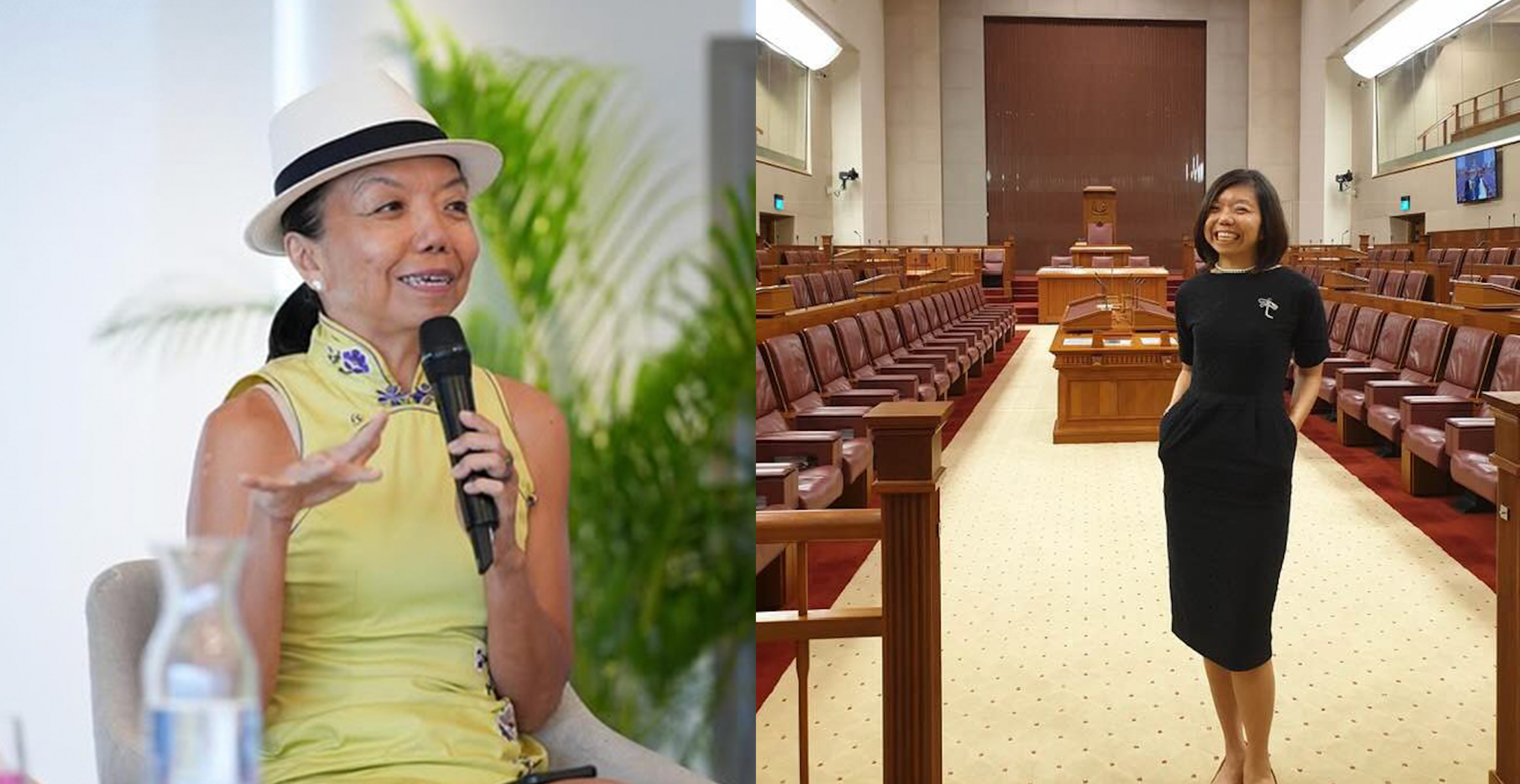
Top image from Anthea Ong/Facebook