News

Rhinoceros hornbill appears at Sungei Buloh, last wild one in S'pore reportedly sighted in 1800s
There were sightings between 2006 and 2009 around Eng Neo, but it was unlikely that the bird was wild.
October 30, 2025, 03:39 PM
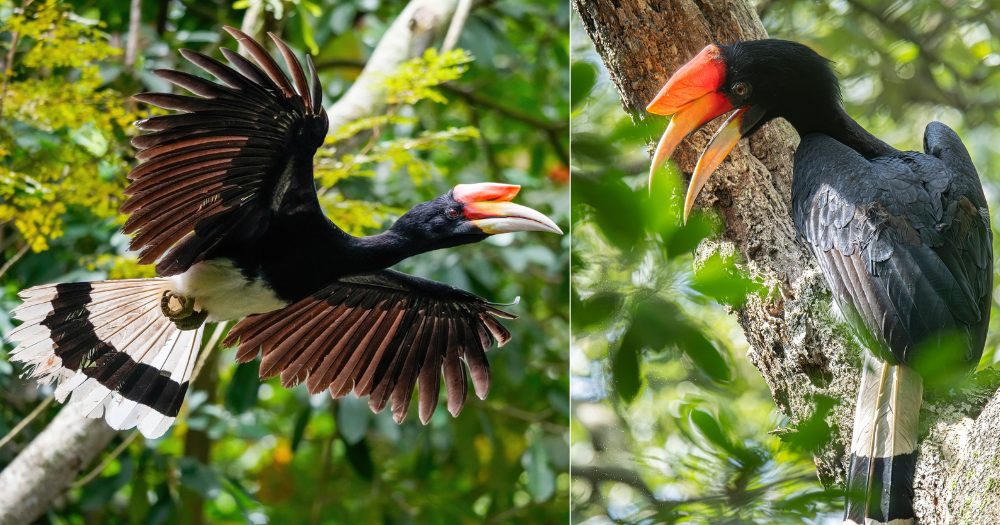


A rare rhinoceros hornbill was spotted at Sungei Buloh Wetland Reserve on Oct. 28, garnering the attention of local birdwatchers and wildlife photographers.
This species of hornbills has been classified as locally extinct, and the last time a wild individual was seen in Singapore was more than a century ago in the 1800s.
First spotted on Oct. 28
Andy Chew was one of those who managed to photograph the bird.
The wildlife photographer told Mothership on Oct. 30 that the bird's sighting was first reported three days ago.
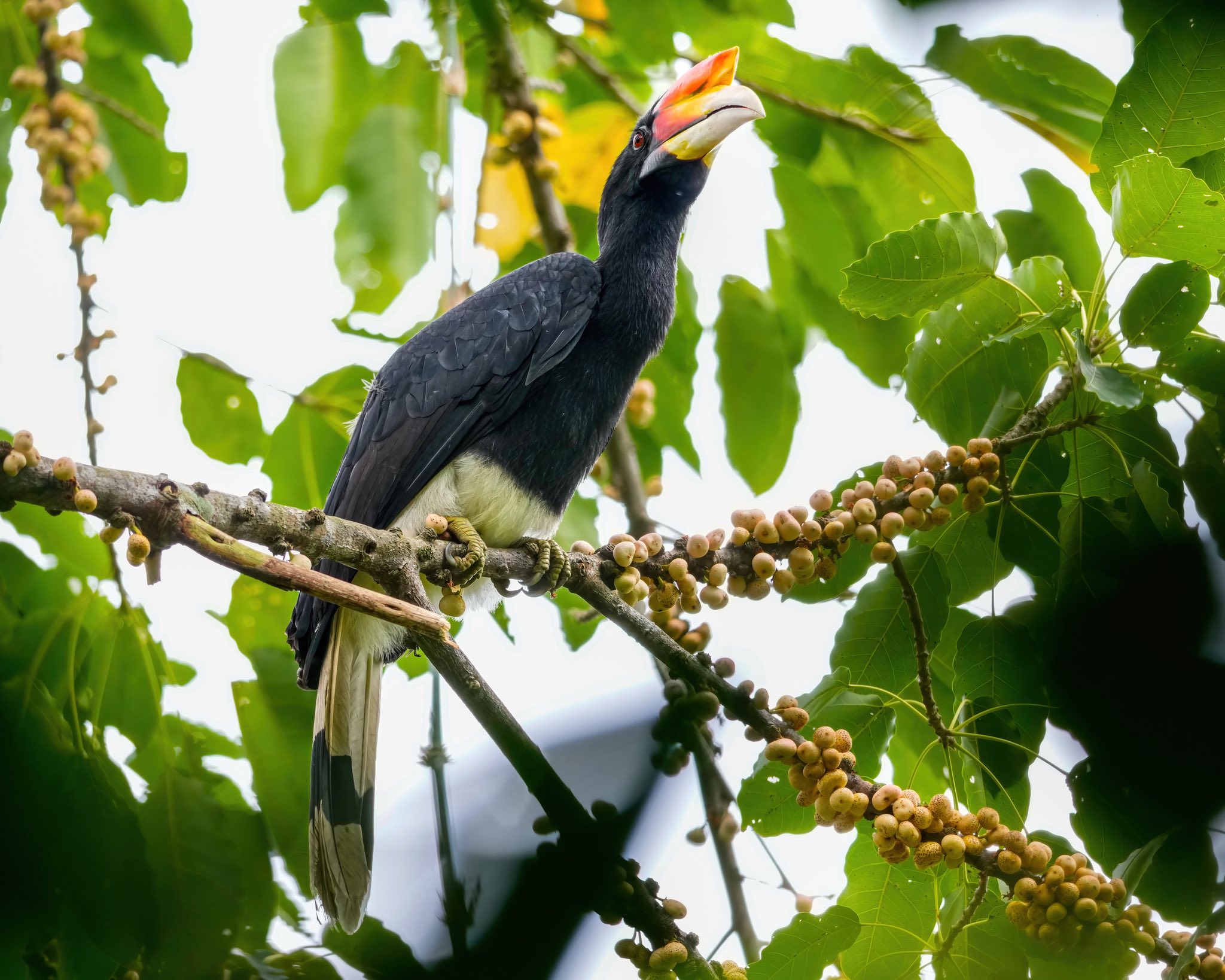 Photo via Andy Chew / Facebook.
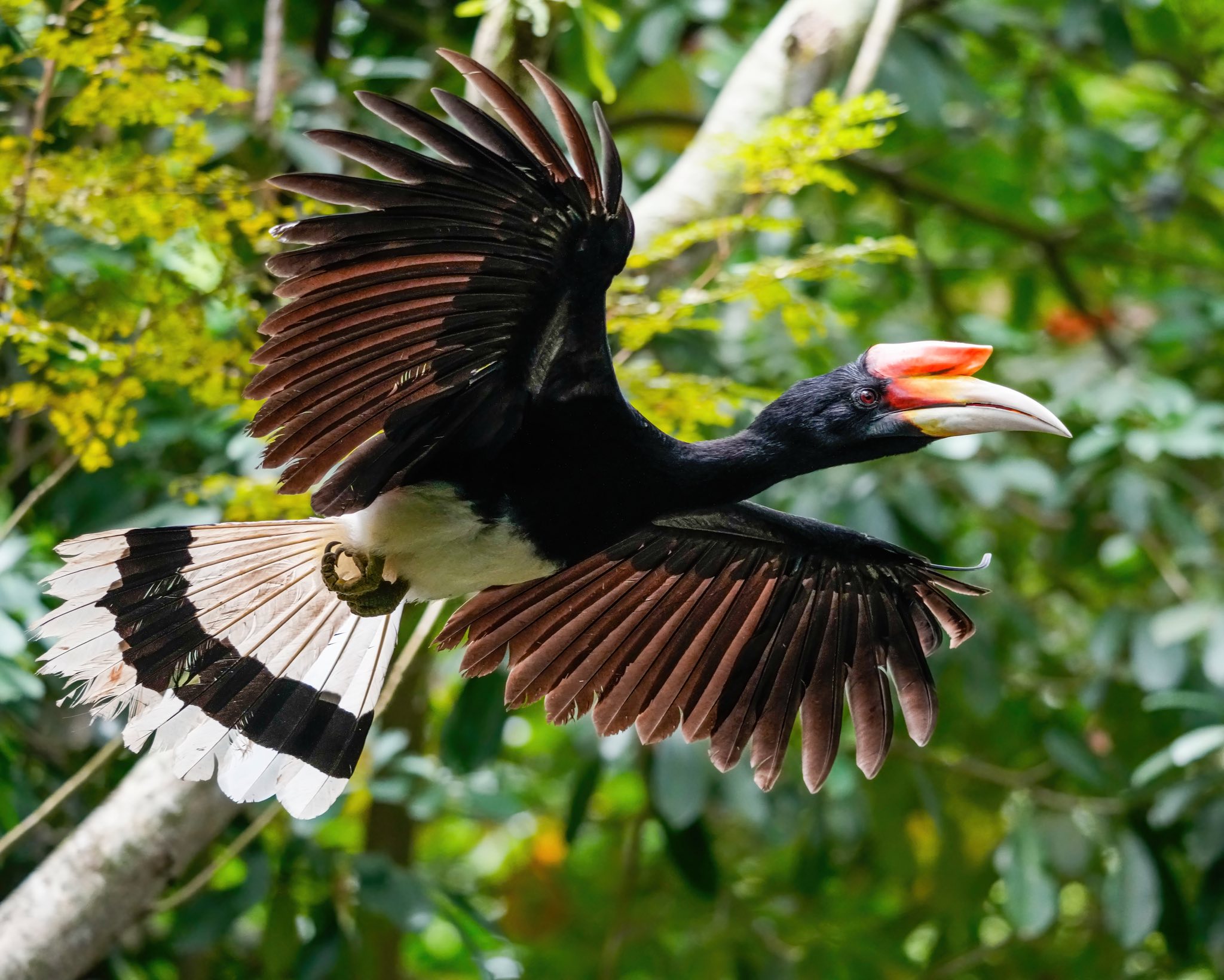 Photo via Andy Chew / Facebook.
Rhinoceros hornbills wear a red-orange casque on its beak, as opposed to the white-and-black casque of the oriental hornbill.
In a Facebook post, Chew wrote that he visited Sungei Buloh Wetland Reserve and managed to photograph the bird as he was "at the right time, right place".
The first photo he took was of the bird perched on a tree branch.
As he was heading back from the car park, he heard someone shout, "Fly!"
He took out his camera again and snapped the rhinoceros hornbill mid-flight, with wings spread.
The rhinoceros hornbill is the national bird of Malaysia and the state of Sarawak, Chew shared in his post.
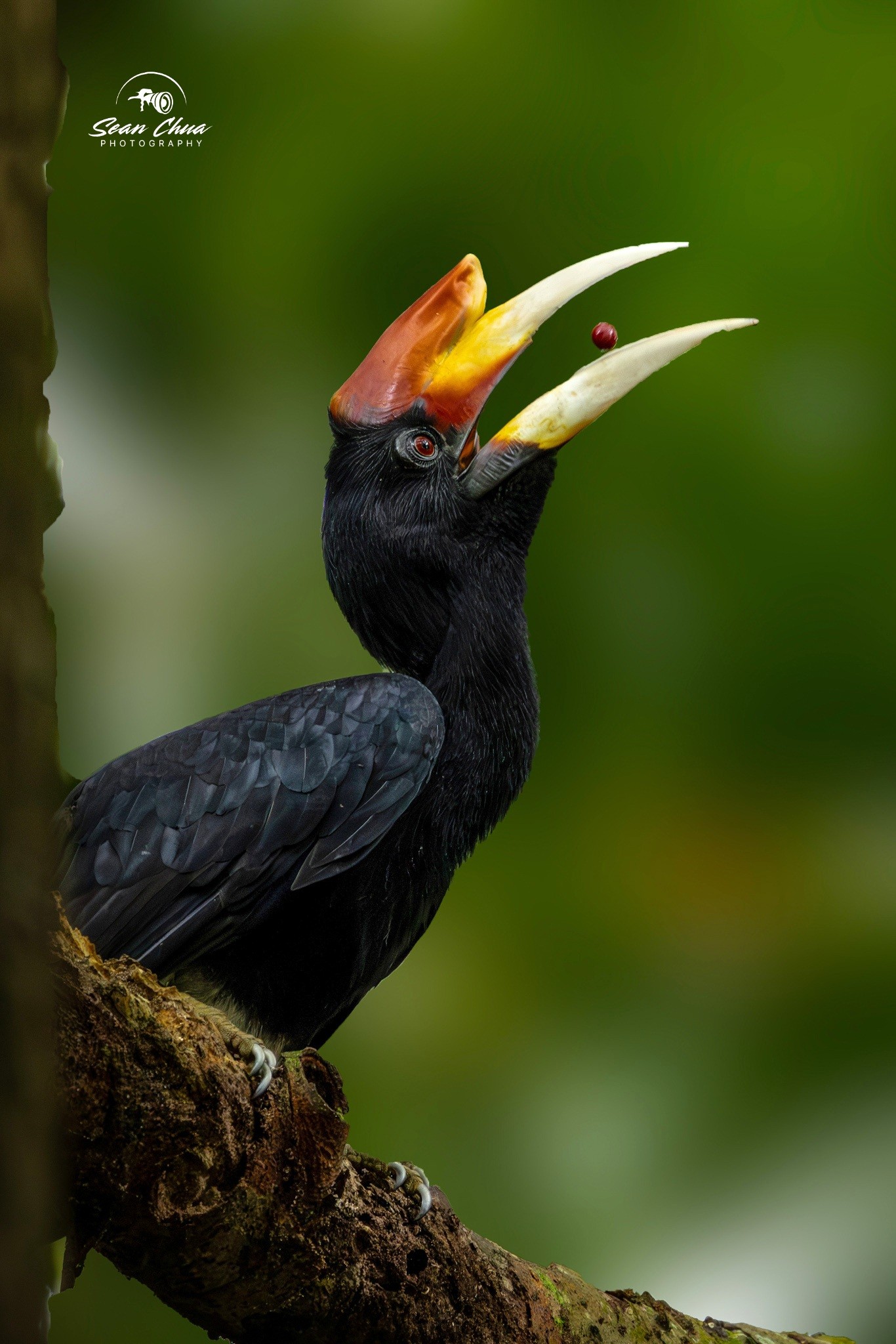 Photo via Sean Chua / Facebook.
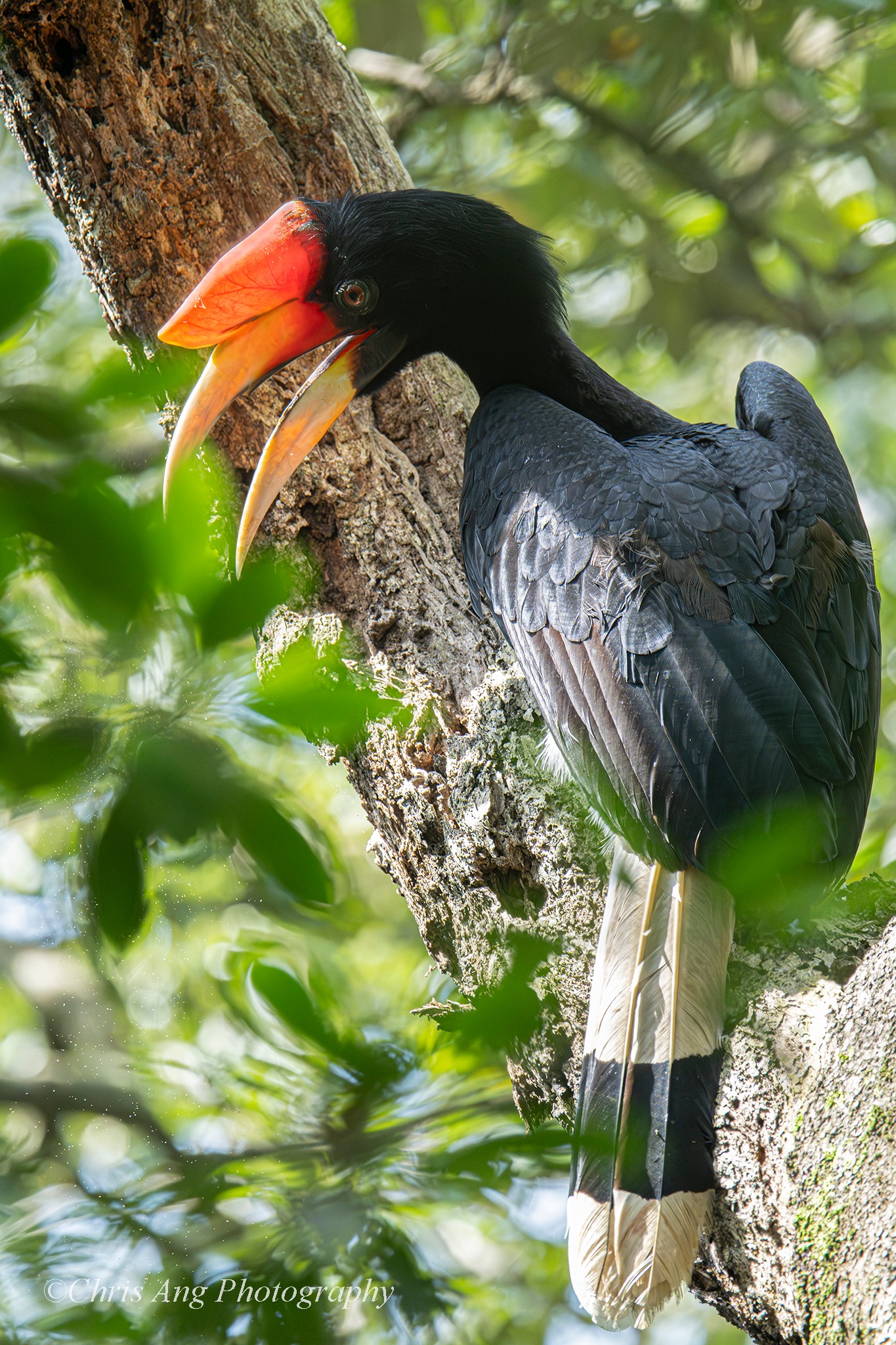 Photo via Chris Ang / Facebook.
Chris Ang, a wildlife photographer of 12 years, similarly shared that it was an exciting experience to photograph the bird as it was locally extinct.
He was alerted to the sighting by a fellow birdwatcher on the morning of Oct. 28 and spent 1.5 hours at Sungei Buloh photographing the rare bird.
He pointed out that there were about 30 other birdwatchers who had gathered there.
Most arrived as early as 7am that day and more showed up after he left the wildlife reserve.
Another photographer, Sean Chua, managed to spot the bird.
He got his shots within 30 minutes of his visit, thanks to the help of fellow birdwatchers.
"It's amazing to see such a beautiful giant bird here," Chua said.
Therese Ong spent six hours over several days searching for the hornbill, and around an hour to set up her shot.
"Although I’ve previously seen the species from afar in Malaysia, this was my first time photographing it up close," Ong said.
She shared that she felt a sense of "accomplishment and awe" seeing the bird in Singapore.
"I was also heartened to see it thriving in the wild and can only hope it continues to do so," she added.
Chew shared that the bird was still at Sungei Buloh Wetland Reserve as of Thursday morning, Oct. 30.
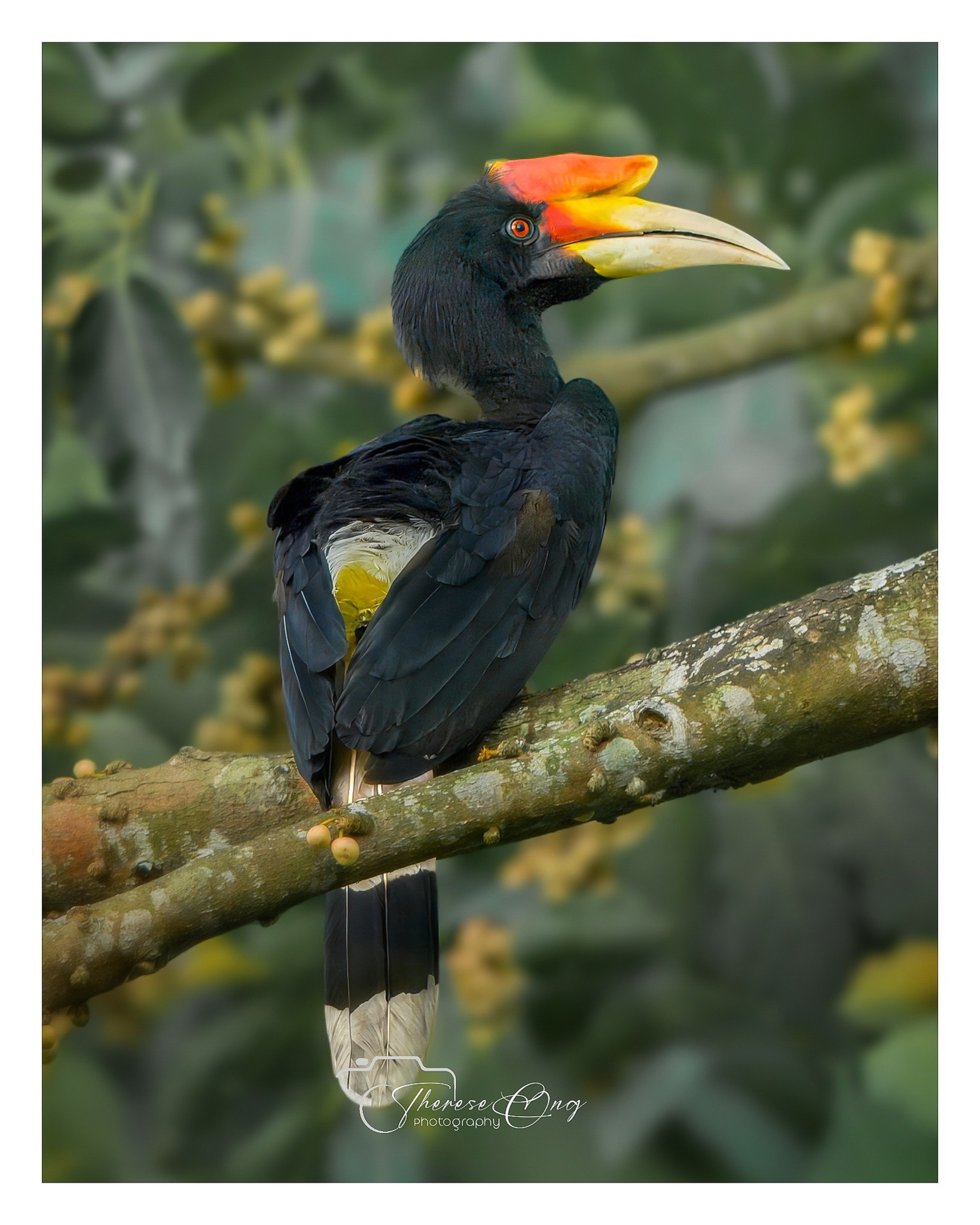 Photo via Therese Ong / Facebook.
First sighting of wild bird in Singapore in over a century
Responding to queries from Mothership, Richard White, Chair of the Singapore Bird Records Committee, shared that it is not known exactly where the bird came from.
The committee, made up of researchers and birdwatchers, assesses records in order to help the Bird Society of Singapore manage its bird database, which incudes local sighting records and species information.
"We've conducted enquiries locally, such as with [Mandai Wildlife Reserve's] Bird Paradise, to ask whether it might have escaped from their collection. It has not," White shared.
White also pointed out that the bird does not have identifying leg rings, which owners would use to mark their birds.
"This is another indication that it is likely not an escapee from captivity," he added.
This means that this is likely the first occurrence of a wild rhinoceros hornbill in Singapore for over a century, White explained.
Yong Ding Li, Head of Flyways and Species Conservation at BirdLife International, shared the same observation, noting that this individual is probably the first genuinely wild bird of its species in Singapore since the end of the 19th century.
Non-profit environment group Cicada Tree Eco Place wrote that the last sighting of a wild rhinoceros hornbill in Singapore was in the 1800s.
Likely from Johor
According to White, there are populations of rhinoceros hornbills in southern Johor, the closest ones being found at Gunung Pulai and Gunung Panti.
Yong shared Gunung Pulai is only 21km from Sungei Buloh as the crow flies, and her past surveys at the site revealed four adults there.
"They are likely to breed," Yong said, adding that movement from Gunung Pulai to Singapore was not difficult for a Rhinoceros hornbill.
This is the likely place of origin of the Sungei Buloh individual.
The individual is a young male, going by the size and shape of its casque and its dark eye.
Adult rhinoceros hornbills have casques which point upward, like a rhinoceros' horn.
Young birds are more likely to wander, White said.
"There will come a time when they will no longer be tolerated in the same territory as their parents. They'll be 'kicked out of home'. At this time they'll head off in search of their own territory," White said.
"If the forest patches or territories [neighbouring] to where they grew up are already occupied, which is increasingly likely due to the decrease in native forest habitat, then they will keep wandering until they find some space," he added.
That's likely how the Sungei Buloh individual ended up in Singapore, owing to the presence of ripe figs and absence of other rhinoceros hornbills.
Sighting between 2006 and 2009
White noted that there had been a rhinoceros hornbill sighting between 2006 and 2009 in the Eng Neo area.
However, it was widely considered that the bird was not of a wild origin, White elaborated.
"Rhinoceros hornbill have been seen in Singapore from time to time in the past 20-30 years, but most of these sightings behaved in such a way that suggested a captive origin," Yong further explained.
White confirmed that it was possible that the rhinoceros hornbill was originally native to Singapore, but became locally extinct sometime in the early part of the 20th century.
White also pointed out that it is unlikely that the individual seen at Sungei Buloh will settle in Singapore.
"As a young bird, without a partner, it is unlikely to settle and become a permanent resident of the Singapore avifauna so the significance of the sighting likely doesn't extend beyond sharing the enjoyment of this beautiful bird," White said.
Globally, the rhinoceros hornbill is classified as a vulnerable species, according to the International Union for the Conservation of Nature (IUCN) Red List of Threatened Species.
It's known geographic range spreads across Singapore, the Malay peninsula, Borneo, and parts of Indonesia.
Top image via Andy Chew / Facebook, Chris Ang / Facebook