News

Comet speeding towards inner solar system likely weighs over 33 billion tonnes, much bigger than expected
According to astronomers, the comet poses no threat to Earth.
September 28, 2025, 08:00 PM
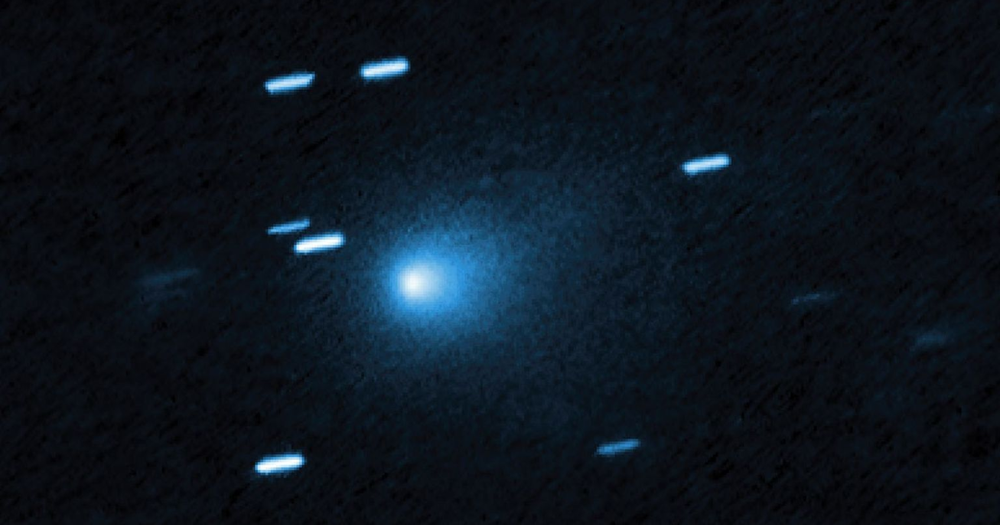


A comet speeding towards the inner solar system, where Earth is located, is significantly bigger than initially thought, astronomers said.
The comet named 3I/ATLAS likely weighs more than 33 billion tonnes, Harvard astrophysicist Avi Loeb said in a blog post on Thursday (Sep. 25).
Loeb's findings came after examining the trajectory of the speeding object. He compared the total mass loss rates alongside the outflow speed from its surface, based on Webb Space Telescope data from Aug. 6.
According to Loeb, the diameter of the nuclear of the comet probably exceeds 3.1 miles, larger than the other two interstellar objects previously documented.
Initially spotted in July
The comet was initially spotted in July through the Asteroid Terrestrial-impact Last Alert System (ATLAS), a NASA-funded asteroid impact early warning system based in Rio Hurtado, Chile.
The comet is likely to be composed primarily of carbon dioxide, as evidenced by the high concentrations of carbon dioxide gas detected in its coma, the expansive gaseous atmosphere surrounding a comet, and water ice in its nucleus.
According to astronomers, the comet poses no threat to Earth.
However, Loeb said that its unusual trajectory is likely to bring it close to Jupiter, Mars, and Venus.
This marks only the third recorded instance of an interstellar object entering the inner solar system.
Top image via NASA