



News

PAP landslide in S’pore’s first GE post merger: PAP 37, Barisan 13, Umno alliance 0
PM Lee called it a "vote of confidence".
August 03, 2025, 01:09 PM
Over the next few days leading up to National Day, follow along as Mothership retraces the events which led up to Singapore's separation from Malaysia on Aug. 9, 1965.
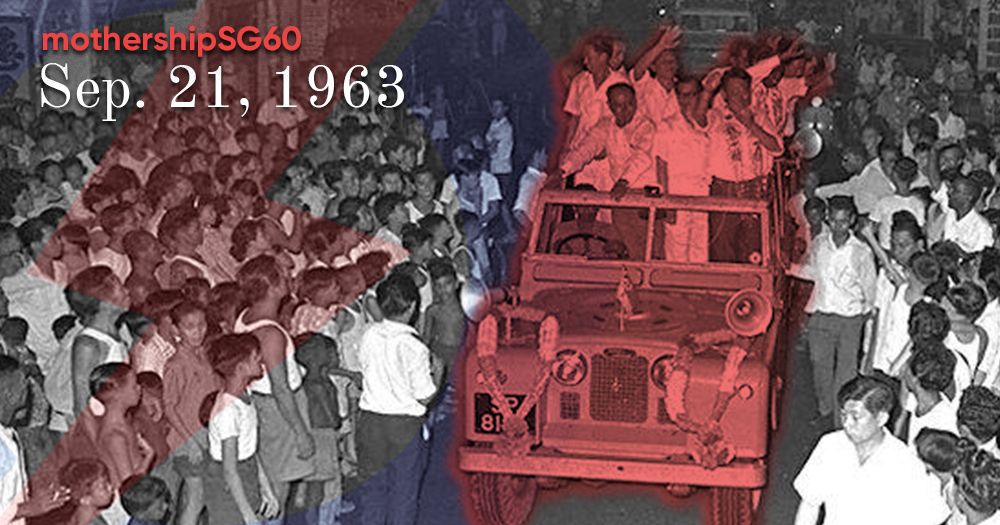
The People’s Action Party (PAP) won a resounding victory in Singapore’s first post-merger General Election on Sep. 21, 1963, sweeping 47 per cent of the popular vote.
This earned the party 37 of the 51 seats in the Legislative Assembly.
In a post-victory radio address at 2:45am, Prime Minister Lee Kuan Yew called it a “vote of confidence… which will resound throughout Malaysia”.
The results proved that critics, who believed Singapore, “lost to the Communists”, was not and had never been lost, PM Lee said.
“Let us always remember that — united, the people can build a prosperous, and an equal society.”
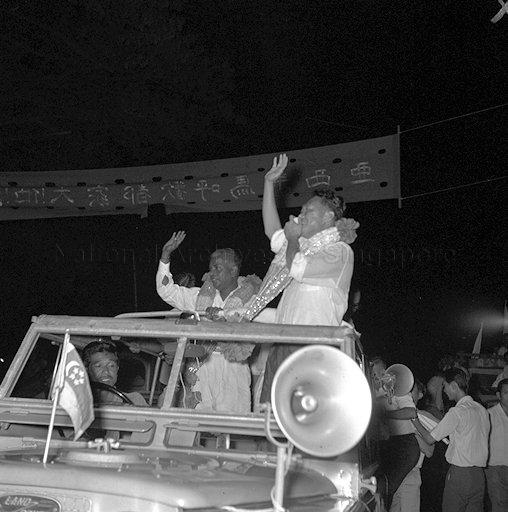 PM Lee on his tour of constituencies to thank voters. Image from National Archives Singapore
Alliance defeat
In a crushing defeat, the Singapore Alliance — the newly-formed Singapore chapter of the ruling Alliance Party in the former Malaya — failed to win a single seat and won only 8.4 per cent of the vote.
This was despite sending in 42 candidates, the third-most next to the PAP and opposition party Barisan Sosialis.
Barisan won 13 seats, losing one to the PAP.
While the United People’s Party won the remaining seat, with secretary-general Ong Eng Guan taking the constituency of Hong Lim.
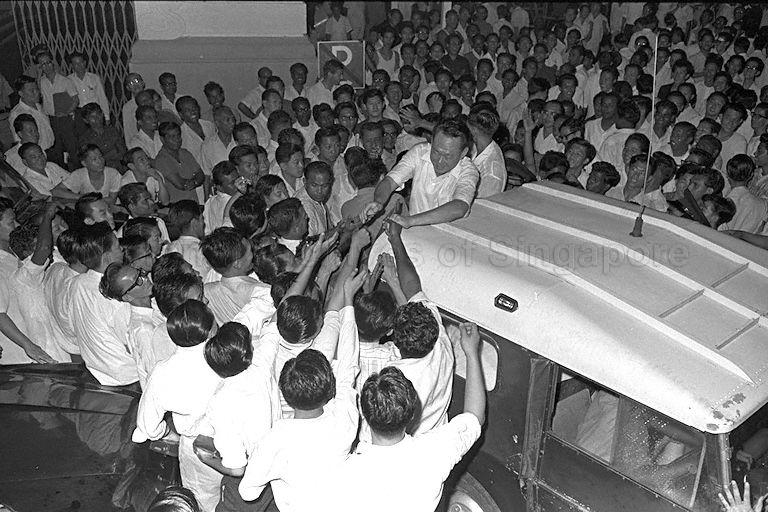 PM Lee congratulated by supporters after his election victory. Image from the National Archives of Singapore
Radical swing
Markedly, the Alliance’s devastating loss marked a radical swing in Malay voters towards the PAP.
It lost in all three of its stronghold constituencies: Geylang Serai, Kampong Kembangan, and the Southern Islands.
The Alliance initially intended to contest all 51 seats, but decided against it at the last minute.
They reportedly pulled out of nine because they were convinced that the seats would go to either the PAP or to Barisan.
In response to the defeat, Malaysia Prime Minister Tengku Abdul Rahman — who personally came down to Singapore to campaign for the party — expressed his shock.
“As far as I know, the Malays in Singapore have always supported UMNO and the change in their attitude has come to me as a surprise,” he said.
He blamed “traitors among the [party] members” for allegedly persuading the Malay voters into a change of heart.
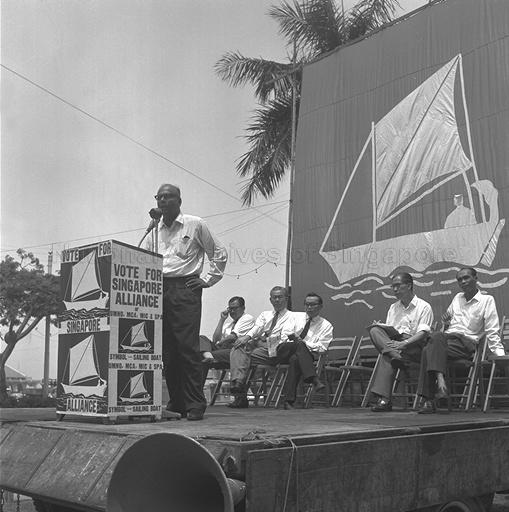 A Singapore Alliance Rally during the general elections. Image from National Archives Singapore
About the Alliance
Formed on Jun. 2, 1961, the Singapore Alliance is the local chapter of Malaya’s ruling Alliance Party.
It consists of local chapters of Malaya’s United Malays National Organisation (UMNO), Malayan Chinese Association (MCA), Malayan Indian Congress (MIC), and Lim Yew Hock’s Singapore People’s Alliance (SPA).
Before the election, the Alliance held seven seats: four by Lim’s SPA, and three by UMNO in Malay-majority constituencies Geylang Serai, Kampong Kembangan, and the Southern Islands.
The Alliance’s involvement in the election has been contentious.
It was criticised for violating an earlier agreement between Singapore and Malayan leaders that neither side would participate in the other’s elections, until Singapore becomes more politically mature.
Top image from National Archives Singapore