News

Japanese newspaper questions WWII Nanjing massacre, calls Chinese wartime film 'propaganda'
They also questioned the legitimacy of the photographs used in the film.
August 13, 2025, 10:19 AM


Conservative Japanese newspaper Sankei Shimbun has denied the 1937-1938 atrocities the former Imperial Japanese Army committed during the Nanjing Massacre in World War Two.
In an article published on Aug. 10, Sankei Shimbun criticised newly-released Chinese historical film "Dead to Rights" as "propaganda" of the Chinese Communist Party (CCP).
China states that 300,000 died from the atrocities in Nanjing.
Other estimates by a postwar Allied tribunal places the death toll at 142,000.
What is the film about?
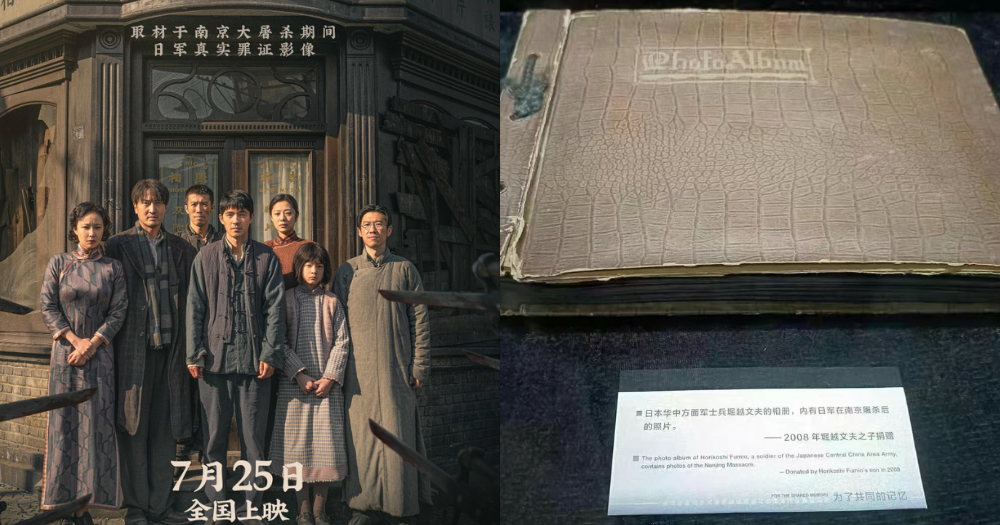
The film, based on the real-life 16 photographs China submitted to register the Nanjing massacre as a UNESCO Memory of the World in 2015, depicts Nanjing, China's occupation by the Japanese Imperial Army.
The film follows a group of Chinese civilians and soldiers who find refuge in a photo studio.
The protagonist is a postal worker who pretends to be a photo lab technician to develop photos for the Japanese.
While developing these photos, the survivors uncover images of the atrocities.
Some scenes feature Japanese soldiers brutally murdering Chinese citizens during the war.
The film was released in China on Jul. 25, 2025.
It was scheduled to screen before the "Victory over Japan Day" ceremony on Sep. 3, known as "V-J Day" in China, to commemorate the 80th anniversary of the end of the war.
Commemorative events of the Nanjing Massacre in China are usually held in December, the same month that the atrocities began in 1937.
The film was well-received in theatres, grossing over 1.5 billion yuan (S$268 million) within its first 10 days of release.
"Propaganda"
The media outlet blasted the film's depiction of the Massacre in an article headlined "The Lies told in the Screening of the 'Nanjing Massacre'".
"The film shows China's tendency to prioritise propaganda without regard for facts," the newspaper said in a post on X.
The article said that with the film's release, the Japanese Embassy in China warned Japanese residents to "particularly beware of rising anti-Japanese sentiment."
Challenged legitimacy of photographs
The article's author challenged the legitimacy of the 16 photographs in particular, saying that their inclusion in the UNESCO Memory of the World register helped solidify "the effectiveness of [their] propaganda effect".
"Westerners are well aware of the Japanese people's penchant for photography, so the explanation that 'we obtained photographs taken by Japanese people' increased the credibility of photographs of unknown origin," Sankei Shimbun said, quoting a researcher from Japan University's Institute of Humanities.
It then called for the removal of the photographs from the UNESCO register.
Previous controversy
The article also pointed out alleged inaccuracies in the film, including the uniforms worn by Japanese soldiers and the legitimacy of the bodies shown in a mass killing scene.
The CCP is "skilfully instilling anti-Japanese sentiments both at home and abroad through films and other means", it claimed.
This is not the first time that Sankei Shimbun, a conservative, right-leaning publication, has denied or downplayed Japanese war crimes.
They previously also accused foreign correspondents of being misguided by "anti-Japanese propaganda" being generated by China and South Korea on the highly-contested comfort women issue between the three countries.
Top image via Nanjing Massacre Memorial Museum and Wikipedia