News

Commentary: S'pore hawkers don't owe us cheap meals
Hawker culture isn't dead.
August 15, 2025, 09:46 PM


On Aug. 8, food critic KF Seetoh posted a scathing critique on hawker contracts at the new Bukit Canberra Hawker Centre.
Hawkers, he said, were "contractually obligated...to offer, at their own expense, 30 free meals per stall".
He denounced this as "atrocious".
"Hawkers seem to be the ones obliged to help the poor and disadvantaged...At 60, we ought to know how we can help the poor without exploiting those who struggle to sell affordable food."
But how did hawker stalls turn into an affordable food source in the first place?
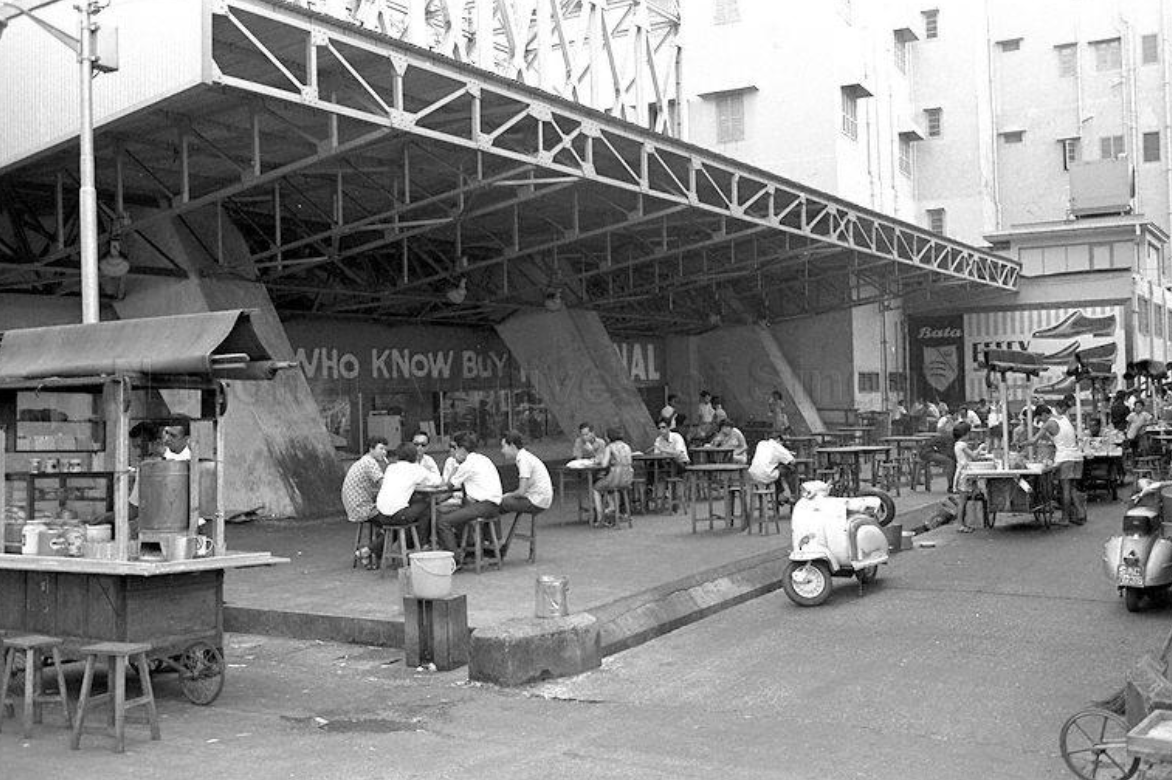 A hawker centre in 1966. Photo from National Archives of Singapore
History of hawkers
Hawkers are one of the oldest parts of Singapore culture, having been around since the 1800s.
The original hawkers were migrants: labourers from other countries, who plied the streets with food.
Because it required little capital, it was seen as an attractive way to earn a living with few barriers to entry. Early hawkers served satay, tok tok mee, and colourful desserts.
Some even had cows and goats walking the streets, to provide fresh milk.
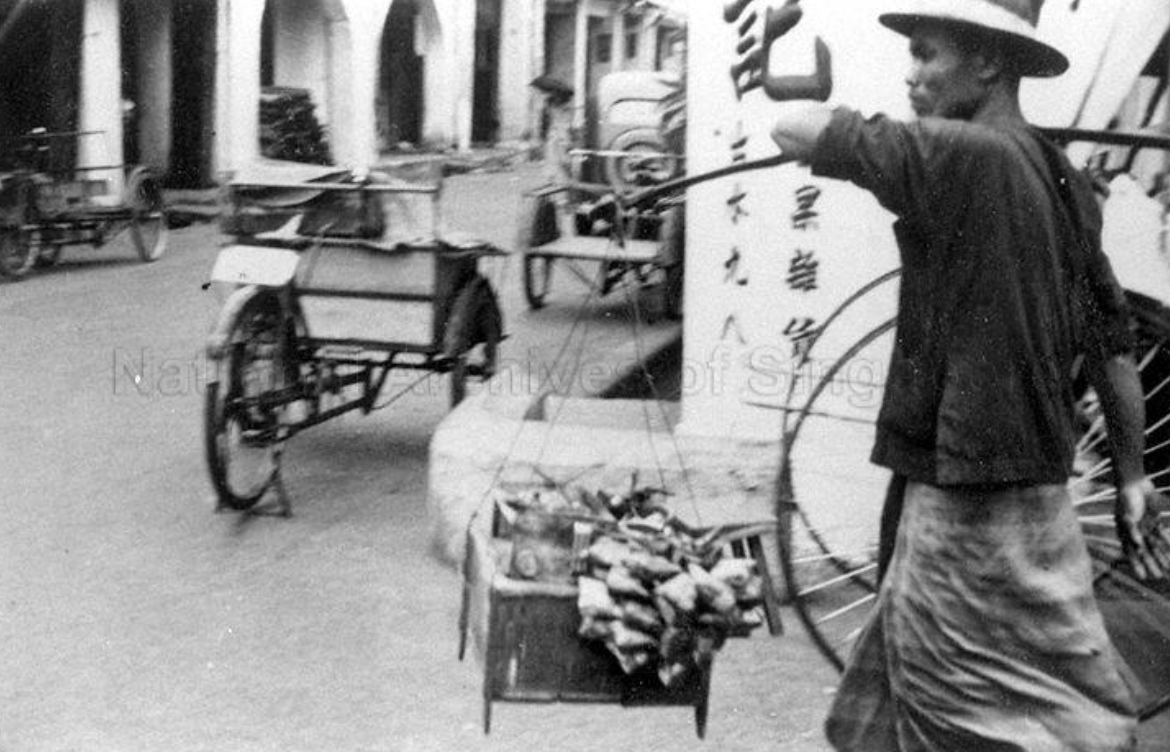 A satay hawker in 1939. Photo from National Archives of Singapore
As vibrant as this early hawker culture was, the lack of regulation brought about food contamination, hygiene issues, and obstructions to traffic.
So in 1968 and 1969, the government decided to clean things up. They ushered the street vendors into consolidated market spaces: safe, hygienic, and contained spaces, with proper amenities.
Aka, hawker centres.
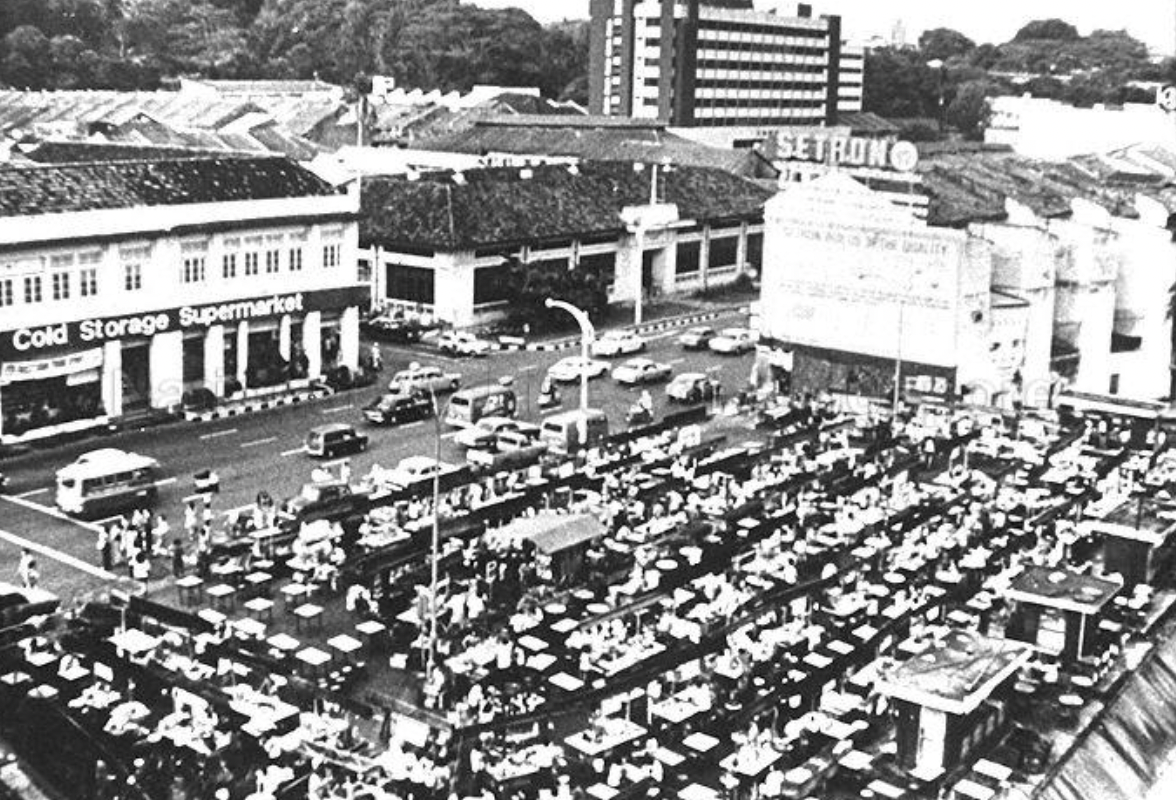 Street hawker stalls at the old Glutton's Square in 1970. It closed in 1978 and the hawkers were relocated to Newton Food Centre. Photo from National Archives of Singapore
Hawkers vs. coffeeshops
Cheap street food isn't unique to Singapore.
Early hawkers could provide cheap food because of the low capital: just their tools, not even a storefront.
When hawkers transitioned from the streets to the centres, the government subsidised their rent, so low prices largely remained.
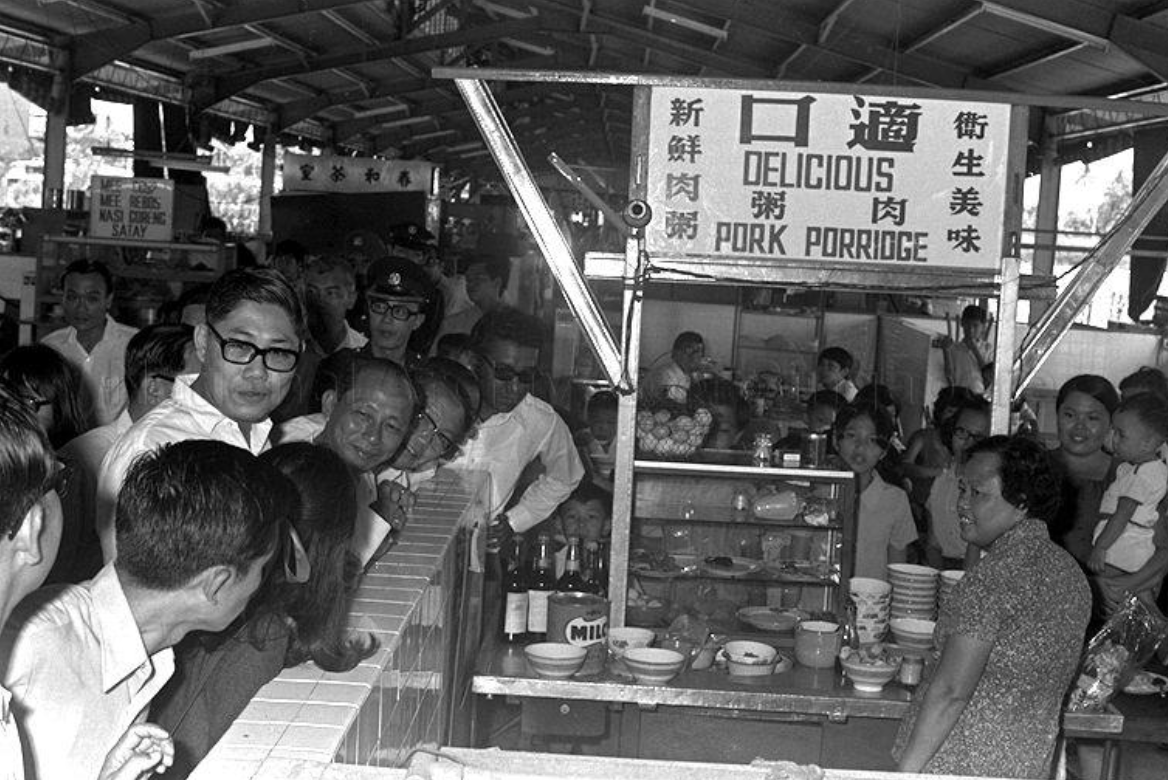 Then-Health Minister Chua Sian Chin touring MacPherson Hawker Centre in 1972. Photo from National Archives of Singapore
Given its history, it's unsurprising that rent rates at hawker centres continue to be cheaper than at commercially-run food courts or restaurant spaces.
Those OG hawkers continue to benefit from subsidised rent. And there are new schemes — such as the Incubation Stall Programme for aspiring hawkers — that offer (temporarily) subsidised rent.
The result? The median rent for cooked food stalls across hawker centres was about $1,800 in 2023, according to the National Environment Agency (NEA).
In comparison, rents at coffee shops — owned by commercial landlords — can be much higher. A stallholder told CNA in 2024 that rents could go up to S$9,000 a month at good locations.
The myth of 'cheap and good'
But things are changing, and have been for a while.
Hawker stall rents may still be below-average compared to other F&B outlets. But that doesn't mean other costs aren't increasing.
Labour and ingredients, for instance, are getting more expensive. That means costs must rise.
As it is, the price of hawker food has been artificially depressed for the longest time, cushioned by government subsidies and low-wage workers.
But as living standards and median incomes have soared, it's unrealistic to expect the price of hawker food to continue to be depressed.
In his 2024 Parliament speech, Member of Parliament Edward Chia pointed out that hawker meals in Singapore are, comparative to median income, cheaper than in Hong Kong and even neighbouring Malaysia.
In Kuala Lumpur, a street food meal may cost about S$2.90 (RM9.53) — 0.26 per cent of the median S$1,901 (RM6,247) income.
Where in Singapore, a typical hawker meal costs S$5, which is 0.1 per cent of the median S$5,197 monthly wage.
Chia said:
"I am aware and empathise with residents who think of affordability based on what they used to pay, rather than what others in other countries have to pay.
However, such economic data points across cities provide a clear reality of our comparative situation."
Hawker centres were always meant to feed the masses. When the population consisted mainly of the poor and vulnerable, S$3 meals made sense.
But in first-world Singapore, that's no longer the case.
Hawker centres aren't charities. And stallholders don't owe us cheap meals.
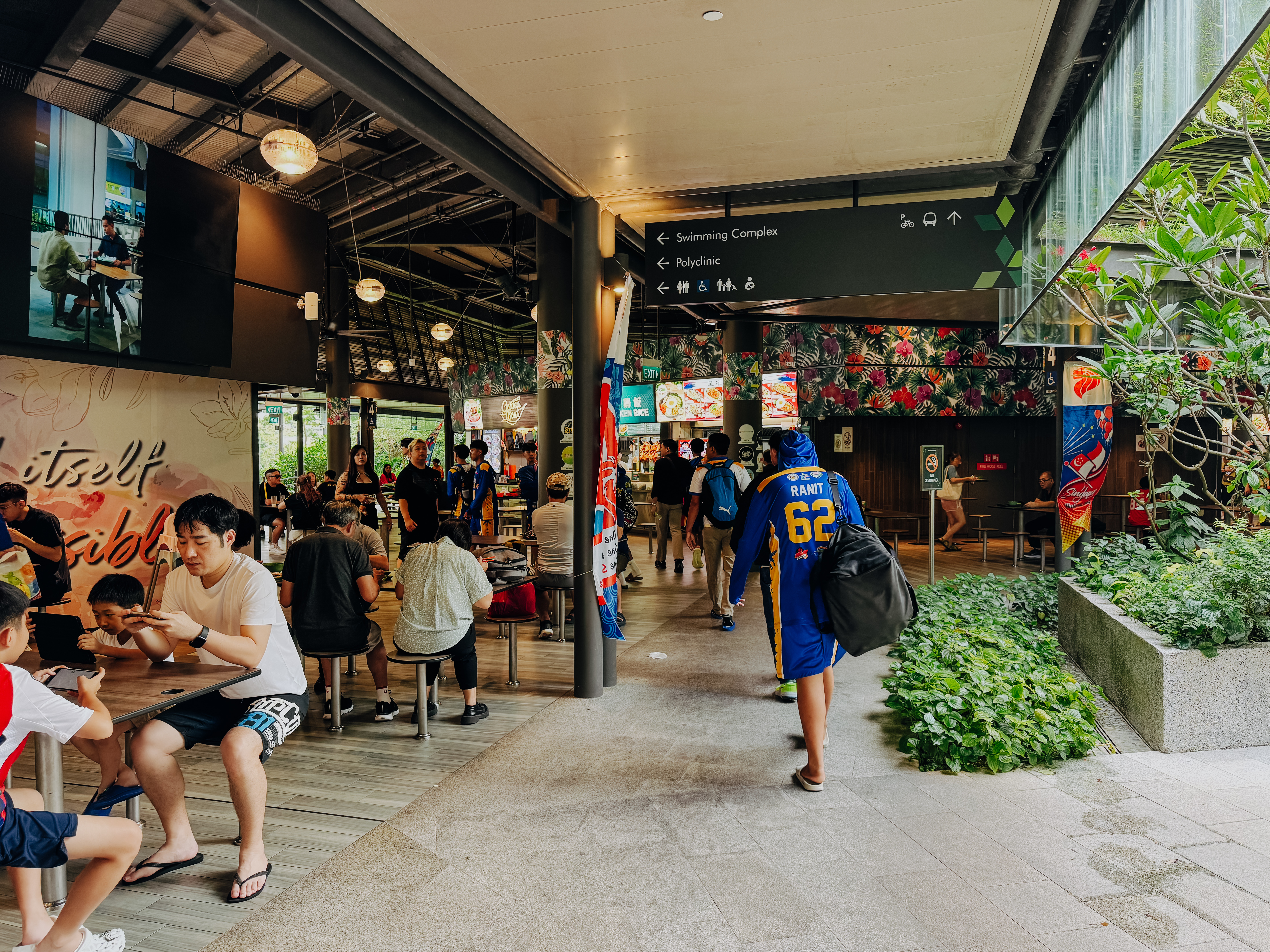 Bukit Canberra Hawker Centre. Photo by Ilyda Chua
A vibrant F&B culture
Now for my hot take: it doesn't have to be a bad thing.
Without the pressure to provide unsustainably cheap food, hawkers in Singapore can focus on what's arguably the more important goal: to serve great food for the masses.
The Incubation Stall Programme is an example of what I believe to be the future of hawker stalls.
The idea is that aspiring hawkers, without prior F&B management experience, can come in, learn the trade on subsidised rent, and figure their business model out.
Singaporeans can benefit from their creativity and experimentation. Young hawkers can adopt or adapt their parents' recipes, or develop new ones altogether.
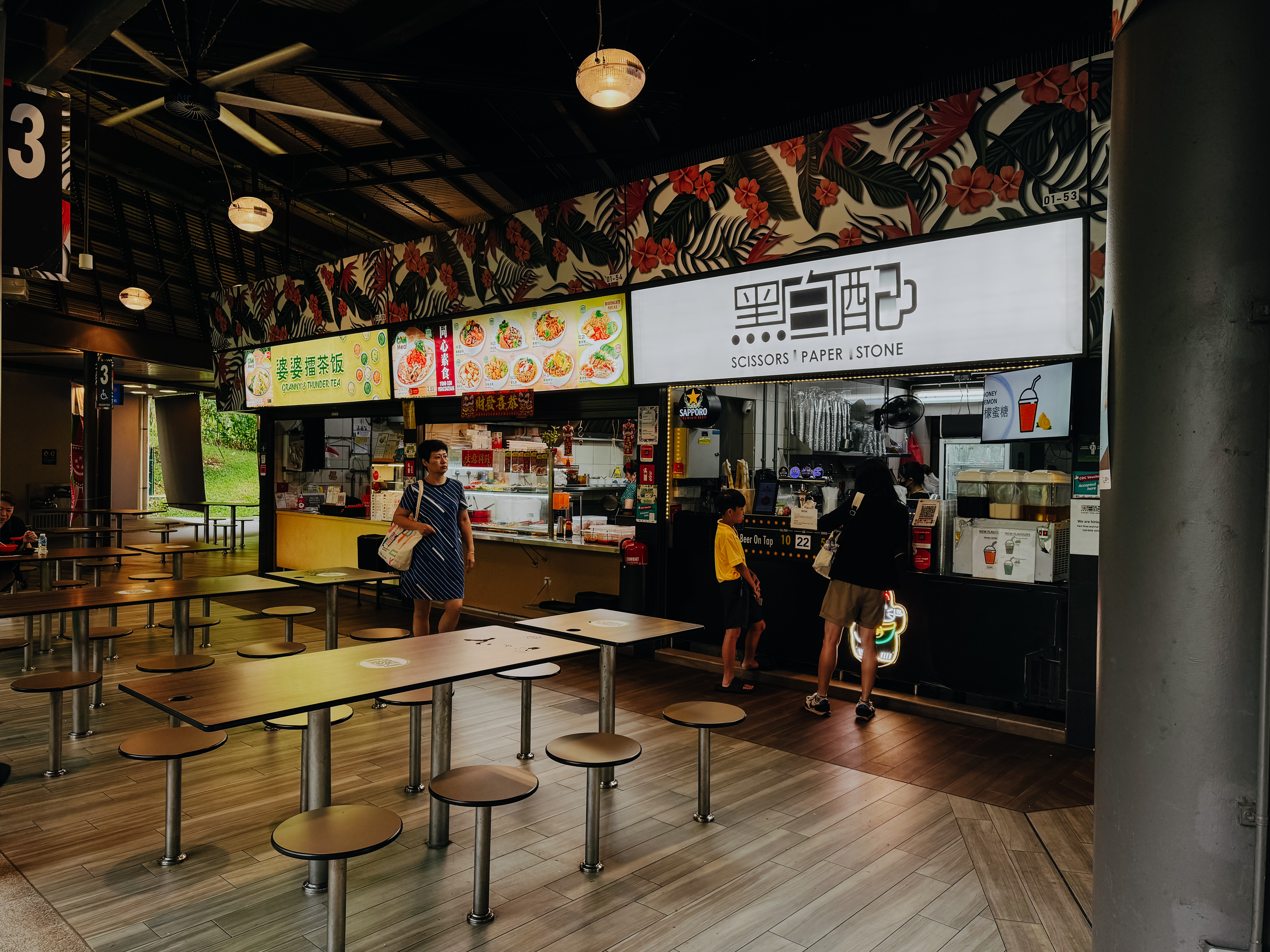 Photo by Ilyda Chua
Market pressures, not legal minutiae, will keep prices at what the majority of people can afford.
Once they're successful, they can either continue operating at a small scale that's comfortable for them, or opt to move out into the larger F&B industry entirely.
We're already on that track, in fact. Last year, there was a debate on why hawkers have to personally operate their stalls.
In a parliamentary reply, NEA explained this is because hawker centres are intended to "[provide opportunities for Singaporeans to run small food businesses]".
SMS Koh Poh Koon separately said hawkers with hopes to scale their businesses can and should do so.
But "they may have to give up that stall in which we are giving them, to some extent, a lower rent and a lower barrier to entry, to someone else who may need the space more".
A bright future
Social media is filled with complaints about rising prices and disappearing stalls, and how all this sounds the death knell of hawkers.
But hawker culture doesn't need to die. We just need to be willing to pay more.
Sure, the current hawker culture — the one with S$3 chicken rice built on the oppressed and downtrodden — may be on its way out.
But hawking was always supposed to be a means for people to earn a living. So in a way, we're going back to our roots — our real hawker culture.
There is a strange sort of pain in watching old hawkers retire. We feel relief that they're getting some much-deserved rest, but we see their stalls shuttered, those painstakingly-crafted recipes forgotten, and we know something precious has been lost.
Those are the ones that go out with dignity, that choose to leave. Not everyone has that grace.
With a new, more sustainable way of doing things, things can change. We might lose that S$3 chicken rice, but we'll keep our Unesco-recognised hawker heritage.
Hawkers will find it easier to attract successors to their business. Children can choose to follow in their parents' footsteps, not just out of duty but out of a knowledge that they can earn a living too.
And us? We'll have the continued pride of calling our country a foodie paradise — without the guilt of knowing it's built on poverty.
There's an ecological term called "extinction debt". It's what happens when a population is down to a few remnant survivors — enough to live, not enough to sustain a future generation.
That doesn't have to be us.
Singapore's hawker story doesn't need a sad ending. It doesn't need to end at all.
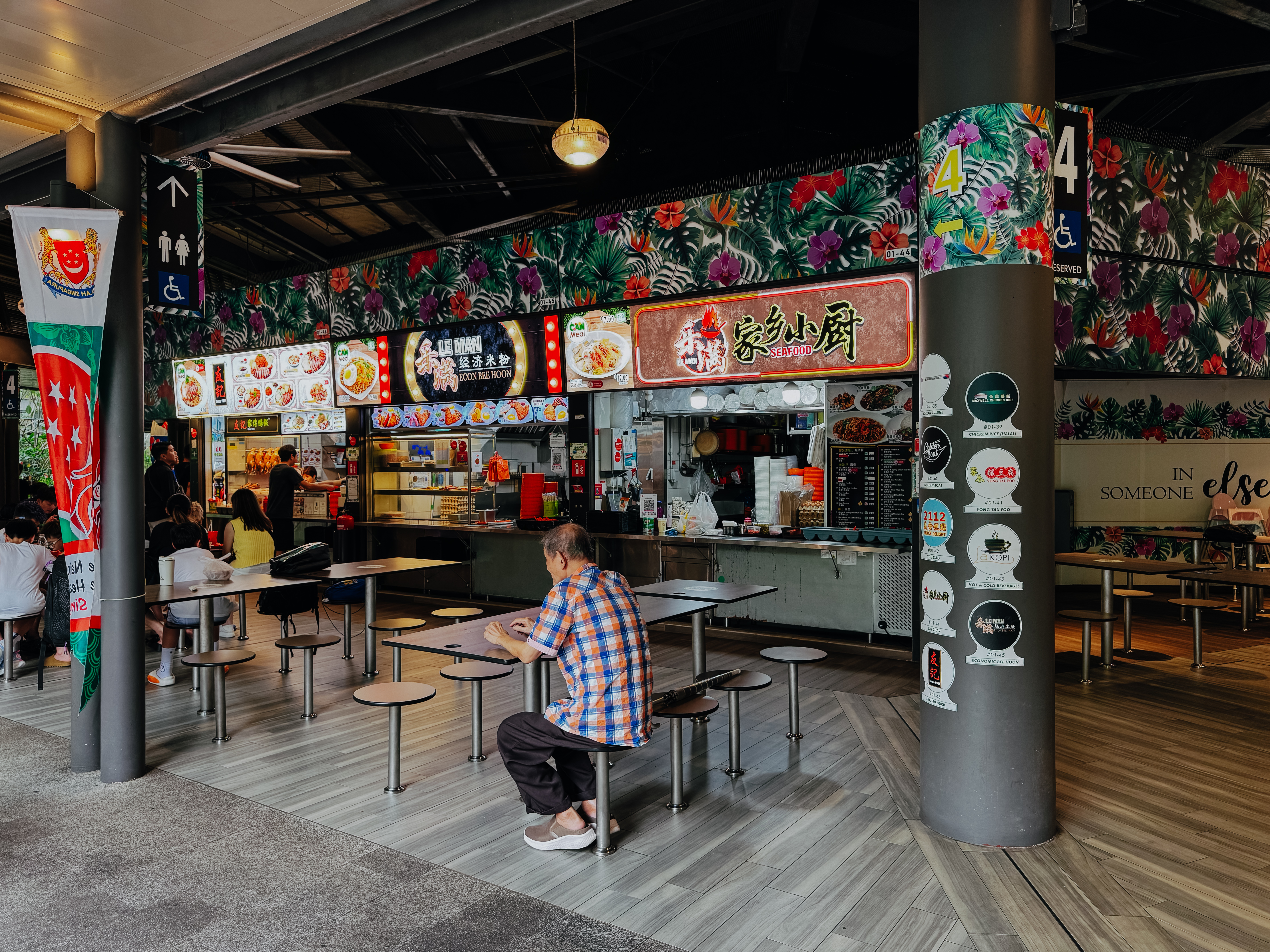 Photo by Ilyda Chua
Top image by Ilyda Chua