Branded
I spent a day at the Peranakan Museum discovering my heritage & batik style
Read till the end to find out how to get a free gift.
Although I grew up with an awareness that my family was Peranakan, I never really understood what that meant.
Sure, the food we ate at home was different, and my dad and his parents spoke English and Baba Malay instead of Chinese, yet the details of Peranakan culture were mostly lost on me.
Perhaps it’s a result of getting older, but I’ve recently become increasingly interested in understanding my own family's heritage.
And that means exploring what it means to be Peranakan.
One obvious starting point in Singapore is the Peranakan Museum on Armenian Street.
That’s where I found myself one Tuesday afternoon.
Exploring Peranakan culture
The museum explores Peranakan life and culture of the Peranakan communities of Southeast Asia through interactive installations, multimedia displays, and its comprehensive collection of Peranakan objects.
For example, it was through a large projected digital map on the ground level of the museum that I learned about the existence of the diverse Peranakan communities that exist alongside those with Chinese ancestry.
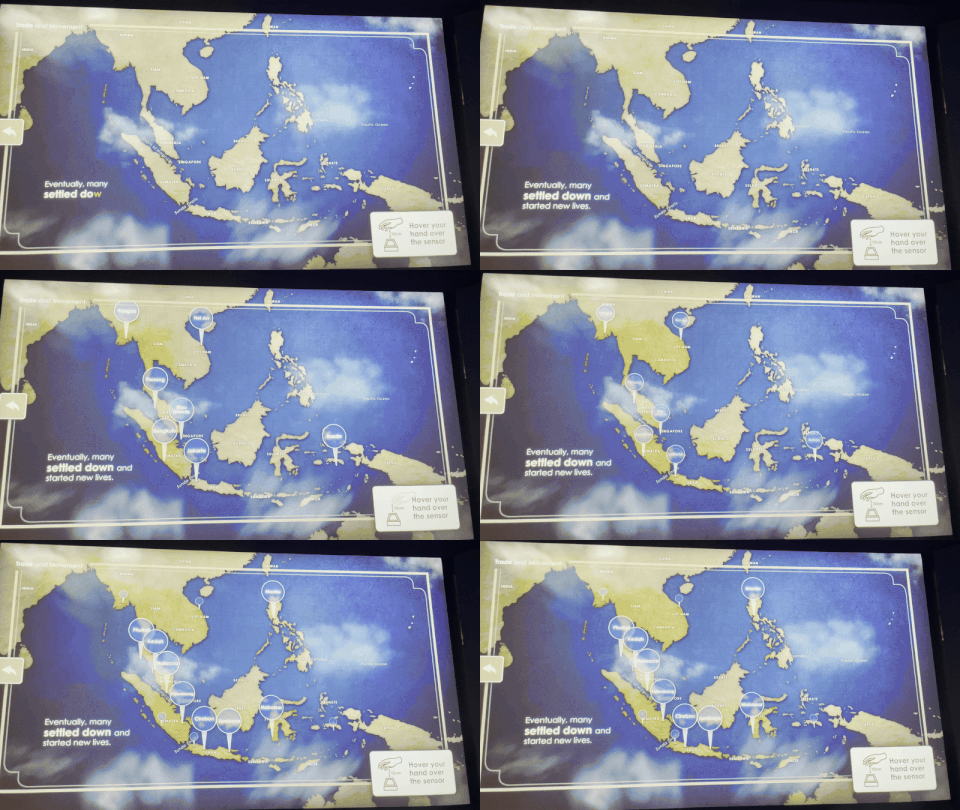 An interactive display tracing the roots of Peranakans. Image by Andrew Koay
In fact, the term Peranakan refers to a range of mixed heritage communities descended from merchants and travellers from China, India, the Middle East, Europe, and others who melded their culture with the indigenous cultures of the Malay-Indonesian archipelago.
The displays of furniture and ceramics which filled the second floor of the museum gave me a glimpse into things that could be found in a Peranakan home. I even managed to spot a few pieces that wouldn’t have looked out of place in my grandparents’ old house.
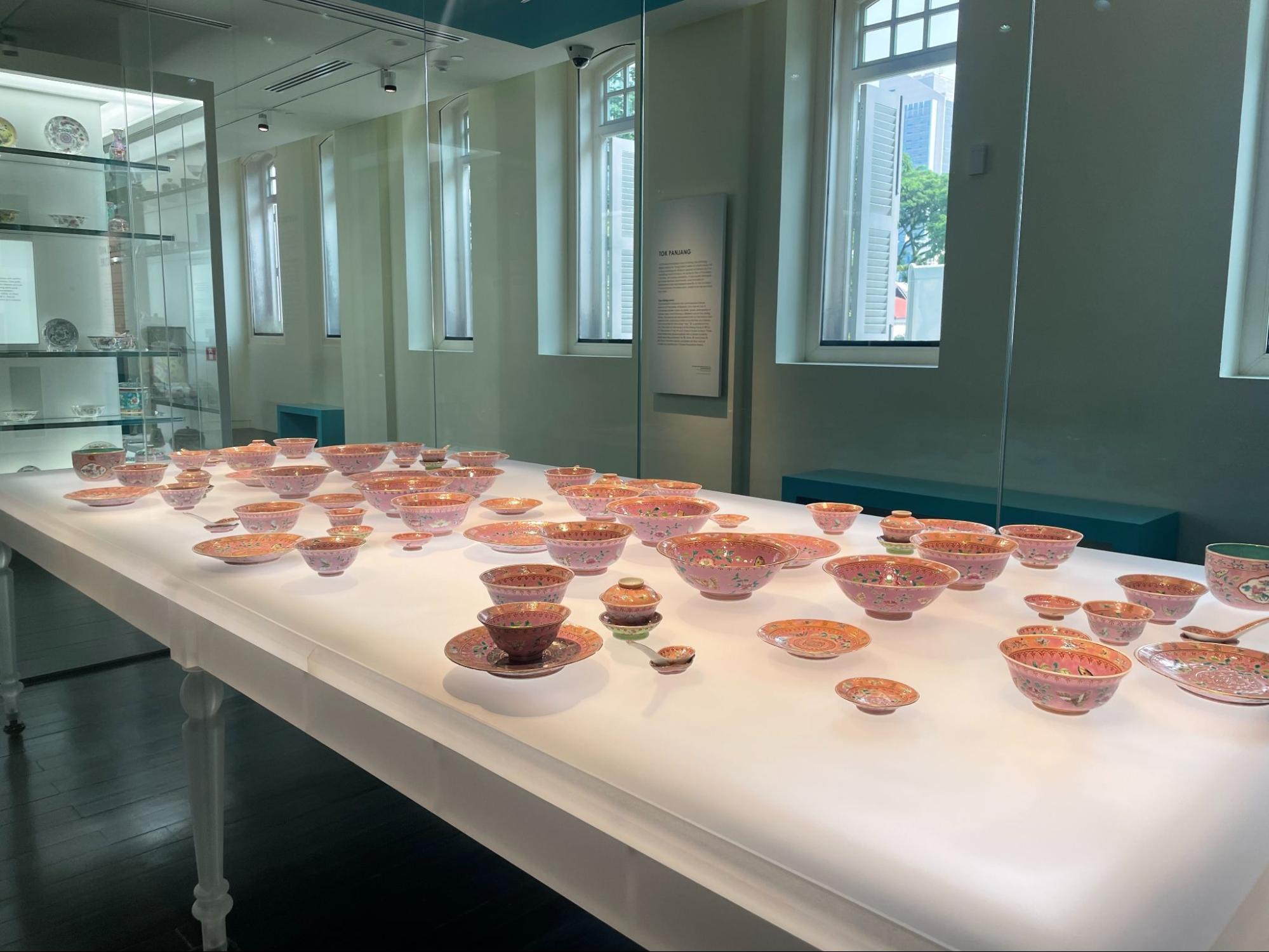 Image by Andrew Koay
The third level houses the museum’s colourful collection of batik, decorative textiles, and jewellery — a must-see for any fashion enthusiast.
Batik Nyonyas
Those interested in a more immersive experience into the world of batik should check out the special exhibition, "Batik Nyonyas: Three Generations of Art and Entrepreneurship", from now till Aug. 31, 2025.
I arrived at the museum just in time to join a complimentary guided tour, conducted by a volunteer docent who took us through the lives and work of three remarkable women from Indonesia.
The tour began with a look at the works of Nyonya Oeij Soen King (1871-1950), who lived and made batik in Pekalongan — Indonesia’s Batik centre for batik making since the late 19th century.
Nyonya Oeij Soen King’s cloths were painstakingly hand-drawn (Tulis) and are characterised by her use of natural dyes and traditional motifs; she worked with a small team to make batiks that were commissioned by elite-clients.
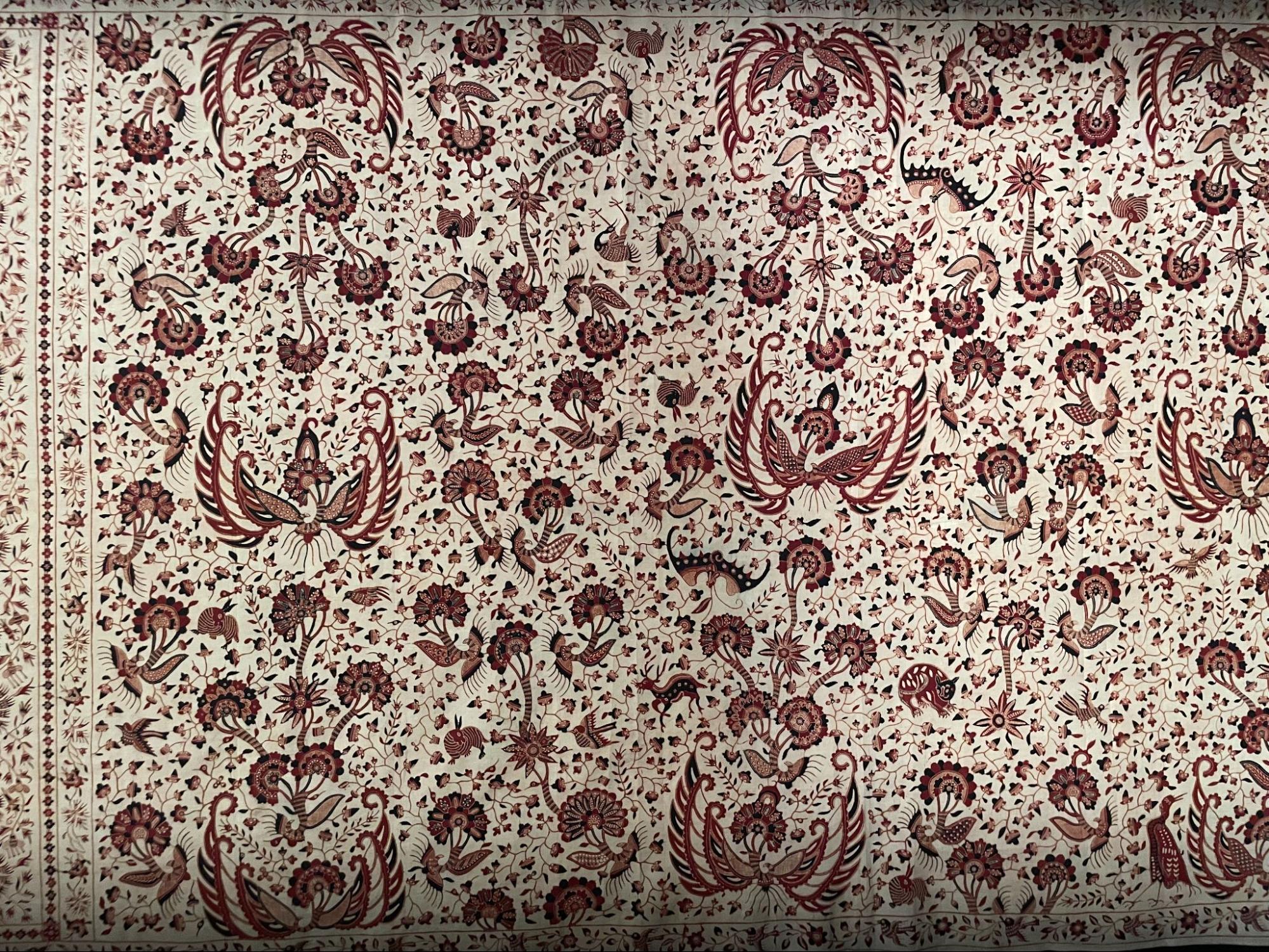 One of Nyonya Oeij Soen King’s batiks, demonstrating her use of traditional motifs and natural dyes. Image by Andrew Koay.
As we examined the cloths up close, the docent drew our attention to the flawless-ness of Nyonya Oeij Soen King’s work. The intricate patterns featured finely drawn lines — all without any bleeding of the dyes onto the white background.
One thing I found particularly interesting is that Peranakan women in Indonesia took on their husband’s name after marriage. Nyonya Oeij Soen King was actually born Liem Loan Eng before marrying a man named Oeij Soen King, with the word “nyonya” actually an honorific equivalent to “Mrs”.
While this hints at the patriarchal nature of Peranakan society in the early 20th century, it didn’t stop Nyonya Oeij Soen King’s daughter-in-law, Nyonya Oeij Kok Sing, from eventually rising to become the family’s matriarch.
Nyonya Oeij Kok Sing — who lived from 1895 to 1966 — had apprenticed under her mother-in-law before taking over the family workshop in 1929.
Her work is characterised by her use of brilliant colours and bold combinations that were enabled by advances in synthetic dyes.
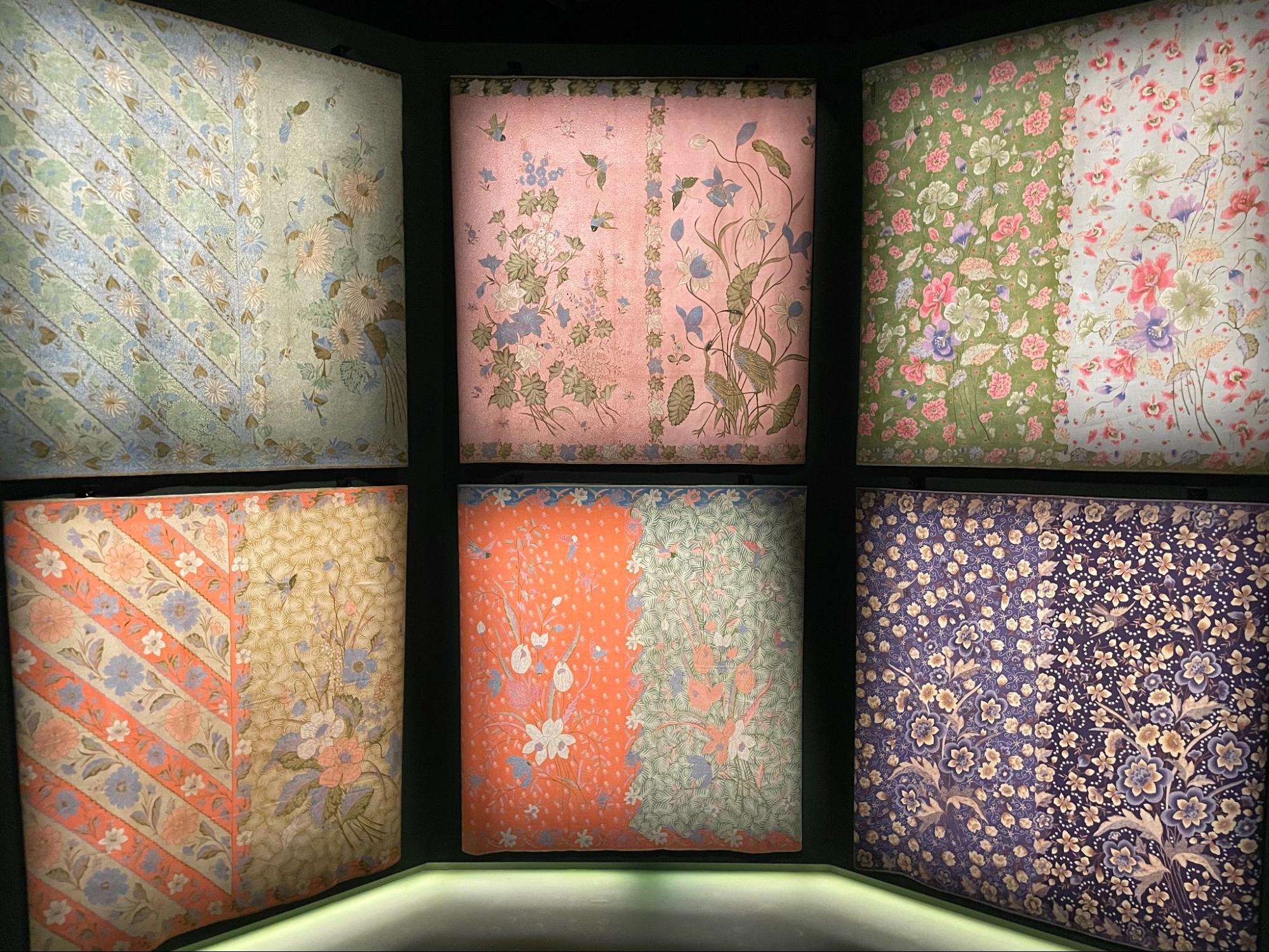 A range of Nyonya Oeij Kok Sing's batiks. Image by Andrew Koay
I particularly enjoyed observing the evolution of Nyonya Oeij Kok Sing’s work and seeing how she experimented with negative space and patterns.
One piece that caught my attention was a green and brown sarong placed at the end of the section on Nyonya Oeij Kok Sing’s work.
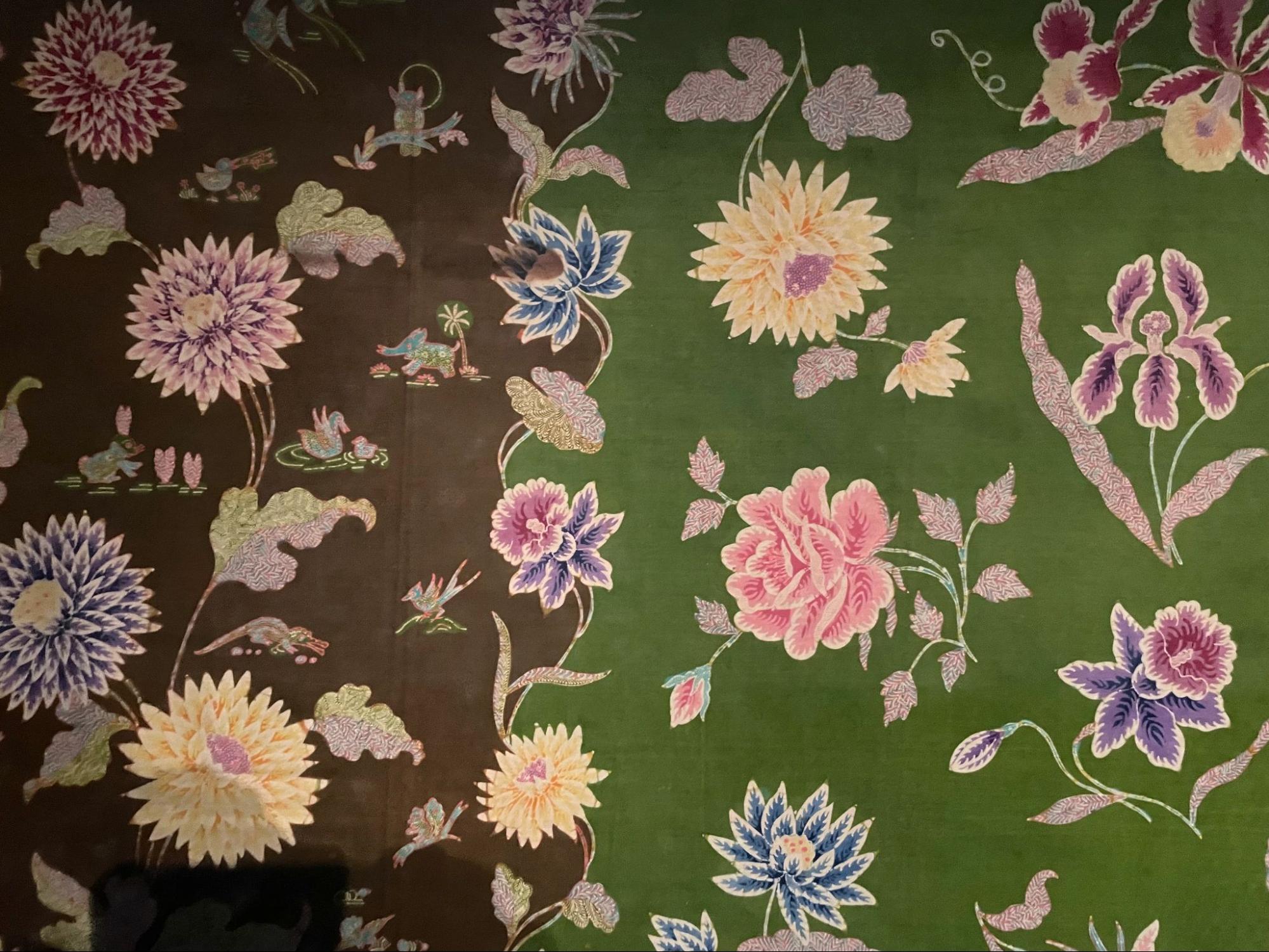 Image by Andrew Koay
A closer inspection showed that it featured several small motifs of animals.
This piece was in fact a collaboration between Nyonya Oeij Kok Sing and her youngest daughter Jane Hendromartono, and the latter had been the artist behind the cute creatures.
Jane Hendromartono’s works take up the majority of the “Batik Nyonyas” exhibition, as her career spanned close to five decades.
Her batiks showed a woman adapting to political and cultural shifts; I appreciated the docent’s efforts to draw our attention to various changes in the details of Jane’s work.
This included changes to the way she signed off on the batiks, first with her husband’s name (as would have been customary of the time), then under her business name — Hendromartono’s Batik Art “Unique” — before finally, as shown on a sarong at the end of the exhibition, with her own name; it was like watching an artist come into her own.
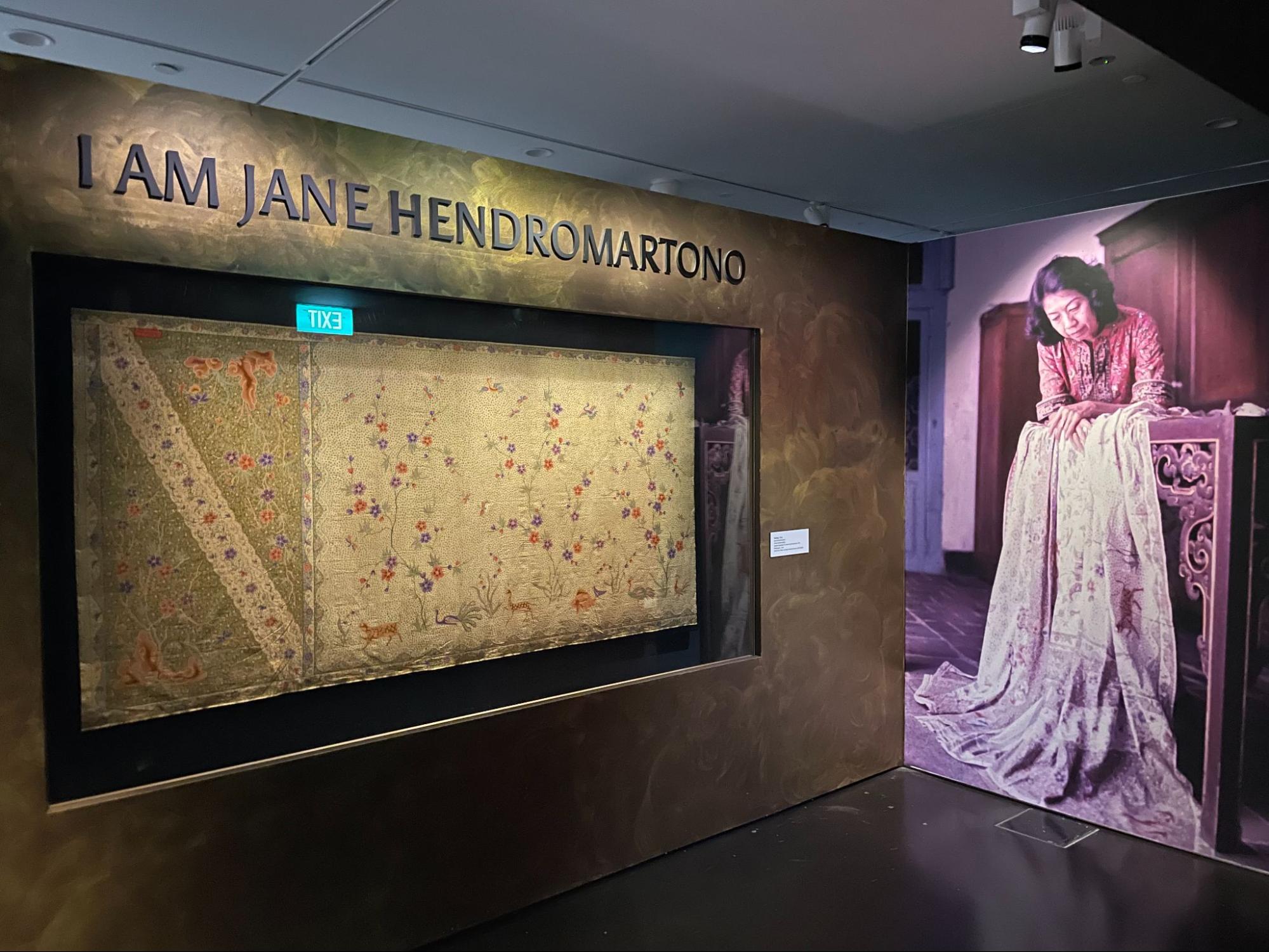 A batik cloth bearing Jane Hendromartono's name. Image by Andrew Koay
What’s your batik style?
Apart from viewing beautiful batiks, “Batik Nyonyas” also has interactive discovery corners where you can learn about the process of batik-making as well as a mobile quiz that you can do to discover your very own batik style.
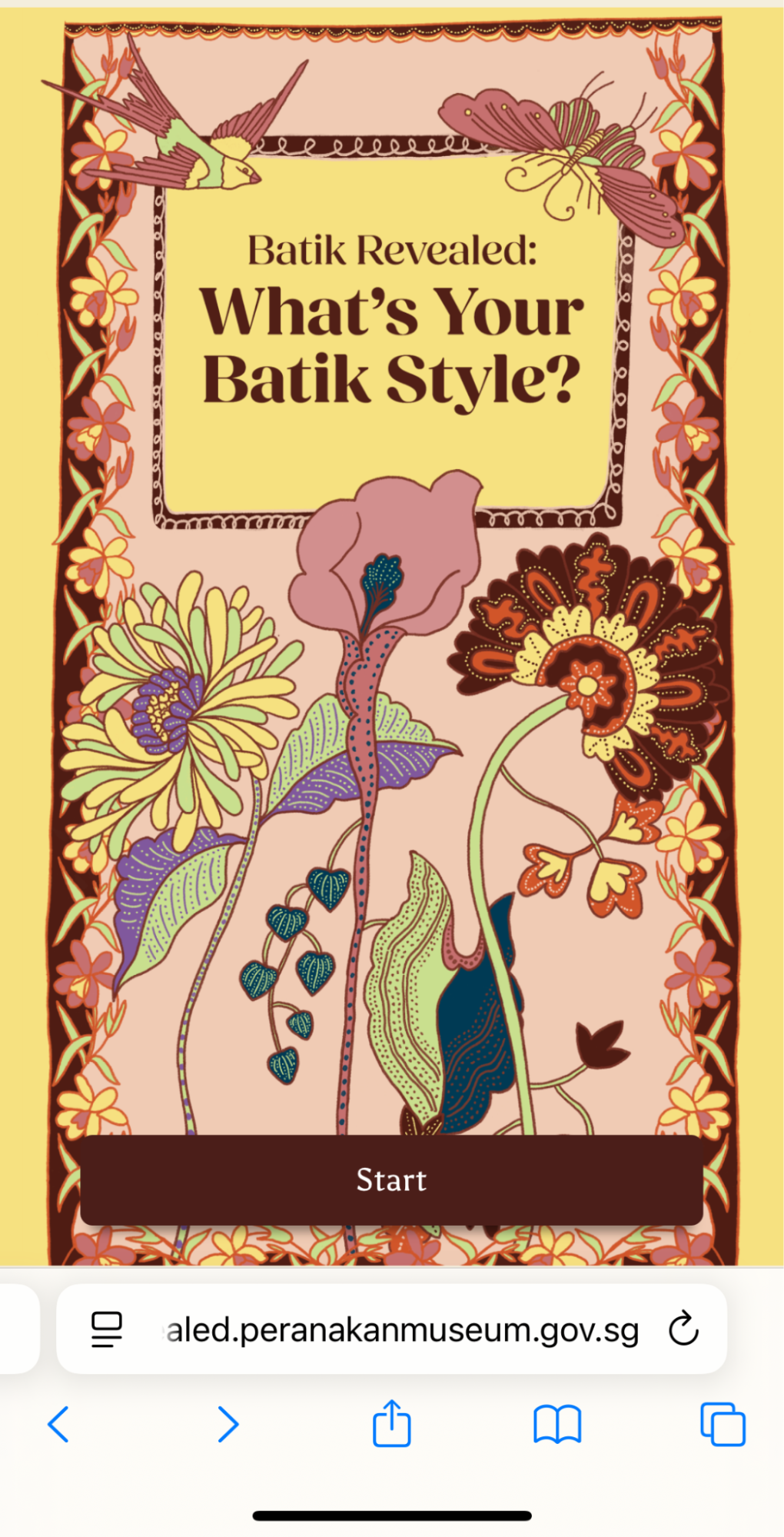 Screenshot of the "Batik Revealed" quiz. Screenshot by Andrew Koay
The quiz is really just a short and simple questionnaire that’ll take you a minute or so to complete.
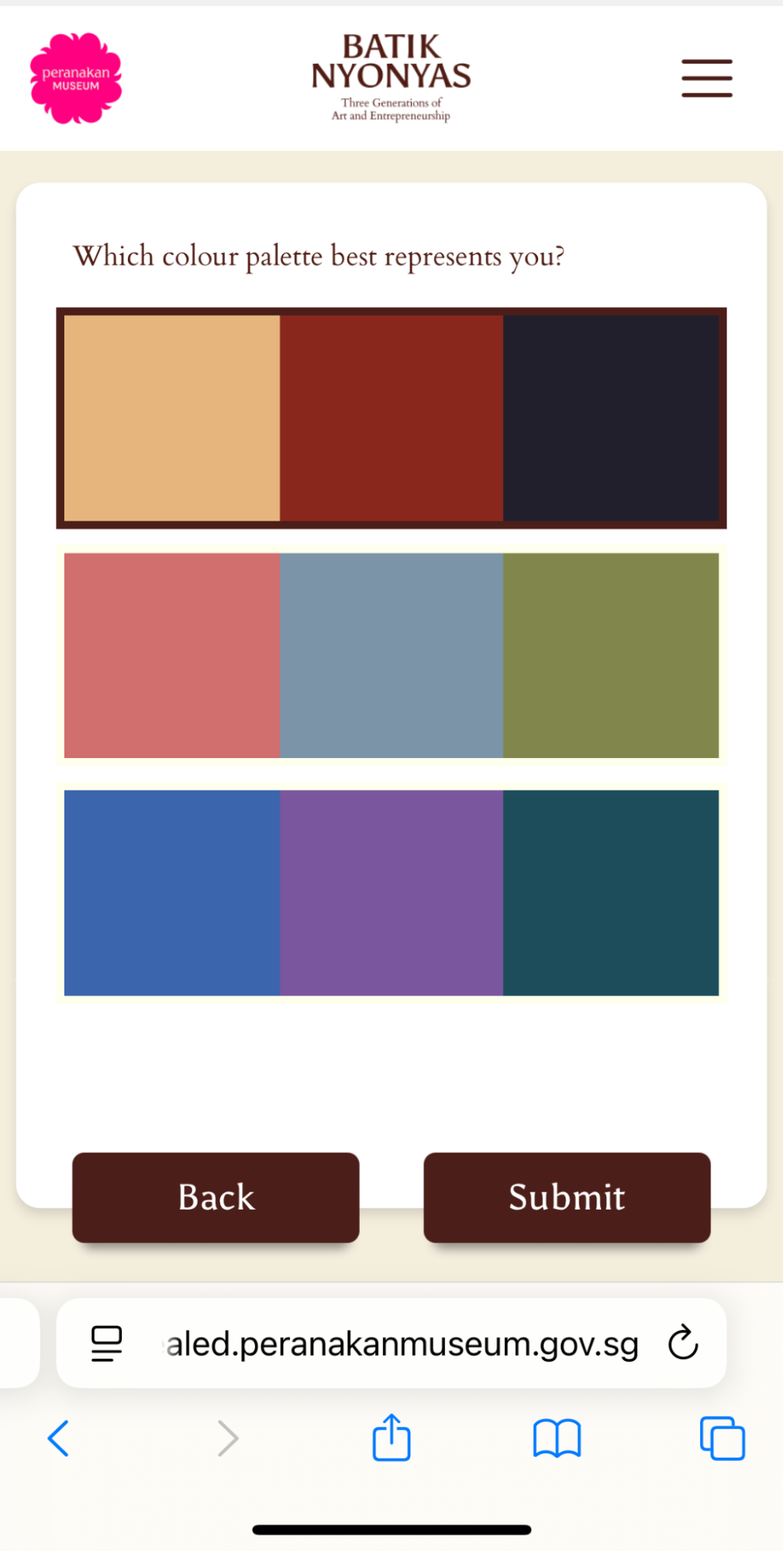 Screenshot of the "Batik Revealed" quiz. Screenshot by Andrew Koay
Once completed, I was given a QR code that will reveal your batik style, which you can then use to redeem a souvenir to commemorate your visit.
Okay so back to what I started this article with — wanting to learn more about my own heritage.
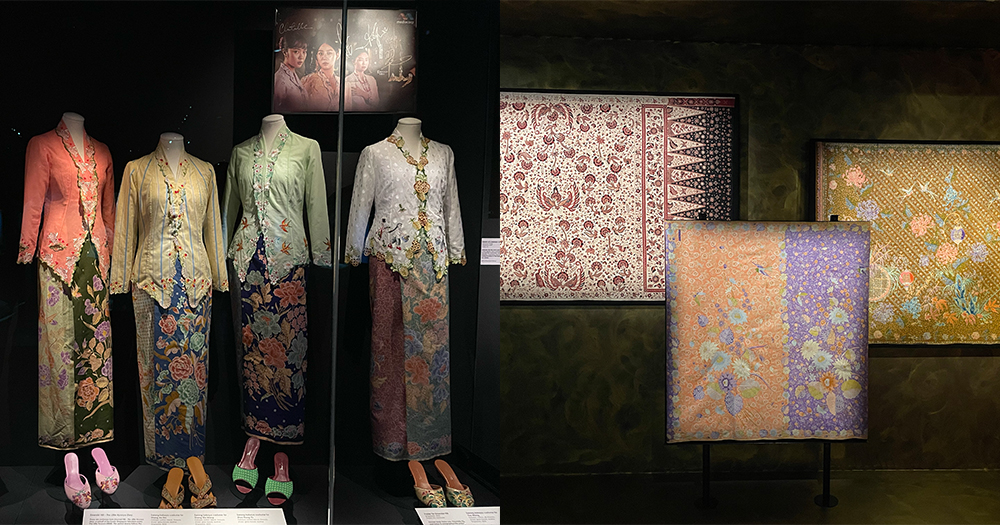
A trip to the Peranakan Museum is definitely worthwhile for anyone curious about Peranakan culture. You can expect to learn more about the things you saw on shows like “Little Nyonya” and “Emerald Hill” (and even see a selection of sarong kebaya from the show on display!) while also discovering something new about things that you see around Singapore we normally take for granted.
Best of all, there’s a little free gift waiting for you at the end of it all!
Peranakan Museum
Address: 39 Armenian St, Singapore 179941
Opening hours: 10am to 7pm daily, 10am to 9pm Fridays
Tickets to the permanent galleries are free for Singaporeans and PRs.
Special exhibition tickets (such as Batik Nyonyas) cost S$6.00 for adult Singaporean and PRs.
More information here.
Top image by Andrew Koay
This branded article by the Peranakan Museum gave the writer a greater appreciation of his own heritage.