News

There is a rationale behind Trump tariffs, whether one agrees: Gan Kim Yong's ELI5 on tariff goals
Maybe it was more like "Explain it like I'm 15" than five.
July 30, 2025, 02:24 PM

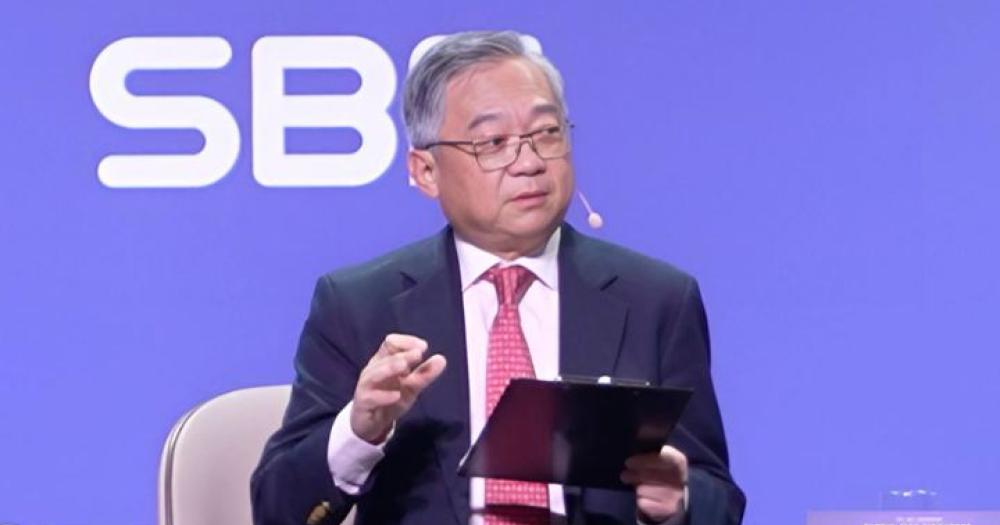
 Deputy Prime Minister and Minister for Trade & Industry Gan Kim Yong shared his insights into the thinking behind U.S. President Donald Trump's tariff policies, and what Trump hopes to achieve with them.
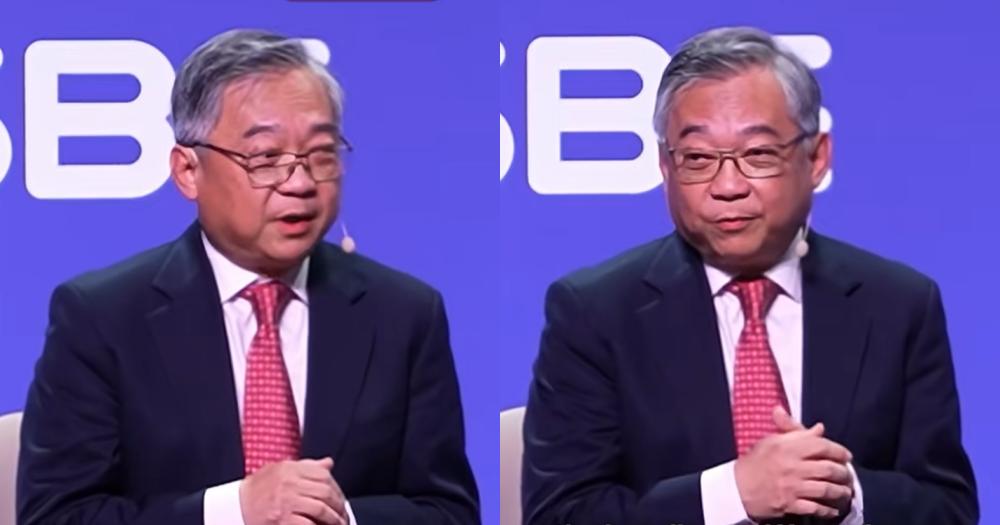
Gan was speaking at the Institute of Policy Studies’ and Singapore Business Federation’s SG60 conference, entitled Global City Singapore: SG60 and Beyond, on Jul. 29, having returned from a working visit to the United States the same day.
Working visit
During his U.S. trip, Gan had spoken to several U.S. officials on trade issues, especially in light of the fact that Singapore had yet to iron out a trade agreement with the Trump Administration.
In particular, he had spoken to legislators in the U.S. from both sides of the political divide, Republican and Democrat, U.S. business leaders, and members of the current administration of President Donald Trump.
So it was to be expected that the vast majority of the questions asked of him during the more than hour-long question and answer session were about trade, the U.S., and what could be expected of the current geo-economic situation.
While Gan’s speech before the session largely confirmed that the situation was still very much in the balance, he was able to shed some light on the considerations that the U.S. had when addressing the current state of its trade with Singapore and the world at large.
He gave a succinct three-point answer about the three different natures of the tariffs faced by the U.S.’s trading partners, and what he thought were the motivations driving them, sharing what he had learnt in the U.S. with his audience.
Gan said that regardless of whether one agreed or not, “there is a rationale to what the U.S. is doing”.
Three considerations
He highlighted three main considerations that he believed Trump’s administration had:
The baseline tariff acted as a revenue instrument, the reciprocal tariff was a tool to balance U.S. trade, and the sectoral tariff was meant to help return manufacturing to the U.S. as an instrument to onshore manufacturing.
Baseline
The baseline tariff was initially due to be 10 per cent, but Gan warned that the ultimate figure was far from set in stone, with Trump himself implying that the number could range from 15 to 20 per cent.
Gan said he believed the baseline tariff’s purpose was to act as a revenue instrument for the U.S. administration, “partly to fund their tax incentives” as well as other expenses.
These tax incentives were part of Trump's signature “One Big, Beautiful Bill”, which offered tax incentives for companies, as well as other initiatives with high revenue demands.
The baseline tariff would apply to any country that intended to trade with the U.S., but many others would be required to pay an additional reciprocal tariff.
Reciprocal
The reciprocal tariff rate, Gan believed, was a country-specific instrument for the U.S. to try to balance U.S. trade.
If a country had a large trade surplus with the U.S., the U.S. was likely to impose a higher reciprocal tariff to balance trade, to discourage a country from selling more to the U.S. and to encourage them to buy more from the U.S.
Onshoring
The third instrument was that of sectoral tariffs, targeting critical industries like semiconductors, pharmaceuticals, steel, and aluminium.
The Trump Administration has expressed a desire to return manufacturing of heavy industries such as steel or automobiles to the U.S., partly to boost employment, and partly to decrease reliance on other countries.
It was using heavy tariffs on those sectors to bring back manufacturing in these sectors to the U.S., and encourage investment in domestic manufacturing.
The overlap
The three objectives were not mutually exclusive, Gan said, but they broadly explained the purpose of the different tariff types.
Pharmaceutical
The pharmaceutical sector has been highlighted as an area of particular concern for Singapore in outlets such as Nikkei, which suggested that sector-specific tariffs might pose an equal or greater concern for Singapore than the baseline tariff.
It was not surprising then that Gan fielded questions on the topic, and he was asked what he thought the U.S.’s primary concern about it was.
Gan demurred slightly, saying that as negotiations were still ongoing, it was inappropriate for him to share too much due to confidentiality concerns.
Nonetheless, he offered a broad answer to try to help the audience make sense of what was going on.
Disruption
Gan explained that the U.S. had a generally negative experience during the Covid-19 pandemic, particularly where pharmaceuticals were concerned.
The U.S. had seen supplies of critical pharmaceuticals disrupted, and now wanted to ensure they had a secure supply line of pharmaceuticals in the future, and sought to onshore the sector so they could produce more for themselves.
But Gan said that the U.S. knew that it was not possible to onshore everything, as some of the raw materials for production lay outside of the U.S.
“So they do need to think about how they can work with partners, trusted partners, to make sure that their supply chain is secure and reliable.”
This comment by Gan was mirrored by comments that Trump had made on Jul. 28 during a press conference with UK Prime Minister Keir Starmer.
Trump had said that the U.S. “certainly feel(s) a lot better with (the UK) than with other countries” when it came to working on pharmaceuticals, and that the UK would not use its pharmaceutical industry as a “cudgel”, suggesting that reliability and partnership were key considerations for the Trump administration.
Tripartite
Gan was also eager to emphasise that his ministry, and the broader government, was committed to working with businesses and workers to help them through an uncertain time.
To underline this point, he answered a question about available assistance by giving the audience his email address and assuring them that he would read messages sent to him or at least ensure that they would be sent to the appropriate ministries.
He also emphasised the importance of Singapore’s Tripartite relationship, between government, workers, and businesses, and that it allowed Singapore to bring together key stakeholders to work together, rather than against each other.
Related stories
Top image via Mothership