News

Taiwan blacklists China's Huawei & SMIC, makers of advanced AI chips
China responded saying that this will only "hurt and ruin Taiwan’s interests”.
June 18, 2025, 06:08 PM
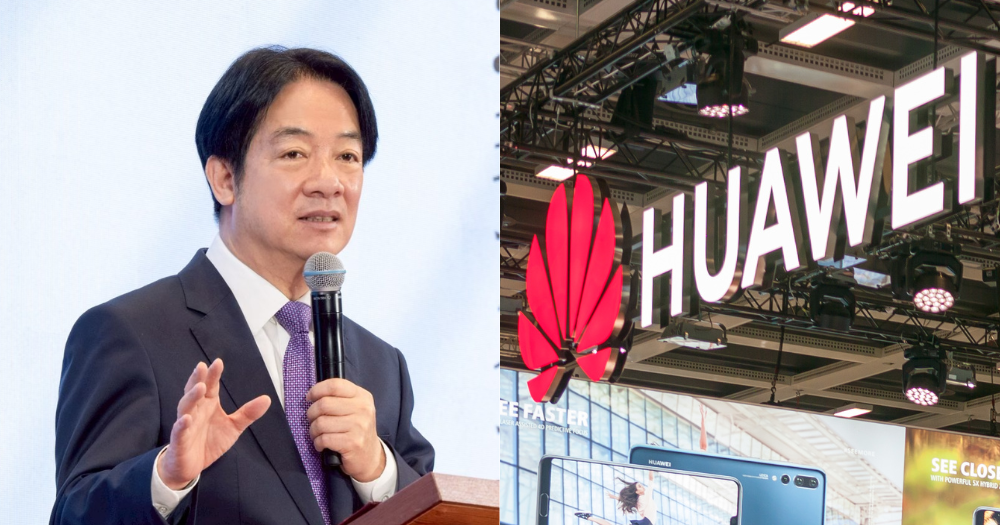


Taiwan has imposed export controls on two of China’s top artificial intelligence (AI) chip developers, Huawei Technologies and Semiconductor Manufacturing International Corporation (SMIC), aligning with U.S. policy on the same.
First use of entity list
The South China Morning Post reported that on Jun. 15, the International Trade Administration of Taiwan added Huawei, SMIC and many of their subsidiaries to its Strategic High-tech Commodities Entity List, which prohibits local firms from shipping to them without licensed government approval.
According to Bloomberg, this marks Taiwan’s first time using the entity list to sanction major Chinese firms.
It is also the first official semiconductor restriction by Taiwan after President William Lai Ching Te committed in April to “strengthening bilateral cooperation in manufacturing and innovation” with the U.S.
Huawei and SMIC have yet to make an official statement, as of time of writing.
On Jun. 17, the Chinese government responded to the blacklist.
A foreign ministry spokesperson said, “China opposes the U.S. politicising tech and trade issues, overstretching the concept of national security, abusing export control and long-arm jurisdiction, and maliciously blocking and suppressing China.”
“The DPP authorities’ kneeling and ingratiating themselves with the U.S. will only hurt and ruin Taiwan’s interests,” he added, referring to the ruling Democratic Progressive Party (DPP) in Taiwan.
Aligning with U.S. policy
Following the recent blacklist, a select committee within the U.S. Congress focusing on U.S.-China competition said that Taiwan remains a “critical partner in protecting our technology”.
“We must continue working with our partners to ensure the (Chinese Communist Party’s) attempts to illegally transfer tech are stopped cold.”
According to Bloomberg, citing insider sources, the Trump administration has urged the Taiwanese government to take a firmer stance towards chip restrictions on China.
An analyst cited by the news agency said that the move may signal Taiwan’s gradual shift away from reliance on China.
As of 2024, Taiwan’s annual investment in China has seen a nearly year-on-year decline, plummeting from its record high of US$14.6 billion (S$19.7 billion) in 2010 to less than a quarter of that.
TSMC and the “chip war”
Until 2020, Huawei had sourced chips from Taiwan Semiconductor Manufacturing Company (TSMC), the world’s largest contract chipmaker that also supplied tech giants like Apple and Nvidia.
However, TSMC uses U.S. technology in its chipmaking, placing it under the scope of U.S. export controls, despite its factories being in Taiwan.
As such, Huawei later had to turn to Shanghai-based SMIC, after a U.S. sanction imposed under the first Trump administration prevented it from continuing to source chips from TSMC.
According to Reuters, the U.S. Department of Commerce broadened restrictions in November 2024, ordering TSMC to cease shipments of certain advanced chips to Chinese customers.
TSMC reportedly notified Chinese companies that it would halt the export of certain chips, namely those that are 7-nanometer or below, used in AI and Graphics Processing Unit (GPU) development.
However, despite Taiwan's move, the latest blacklist may not drastically impact business operations, as the Taiwanese government lacks jurisdiction over subsidiaries of Taiwanese chipmakers that operate in mainland China, Bloomberg reported.
Third party
In an annual report released in April, the chipmaker said there was “no assurance” that it could abide by the U.S.-imposed regulations, because it had limited knowledge and ability to prevent unintended use of its semiconductors further down the supply chain.
Bloomberg reported that based on estimates from researchers, TSMC unintentionally contributed 2.9 million AI processor chips to Huawei.
In this case, an intermediary had incorporated into devices made by Huawei, which was a third party.
“TSMC’s role in the semiconductor supply chain inherently limits its visibility and information available to it regarding the downstream use or user of final products that incorporate semiconductors manufactured by it,” the chipmaker said.
Top image via 賴清德/Facebook & Wikimedia Commons