
News

S'pore clinic's claim that Pap smear causes loss of virginity is 'medically inaccurate', says medical society
Stay informed.
June 23, 2025, 02:32 PM


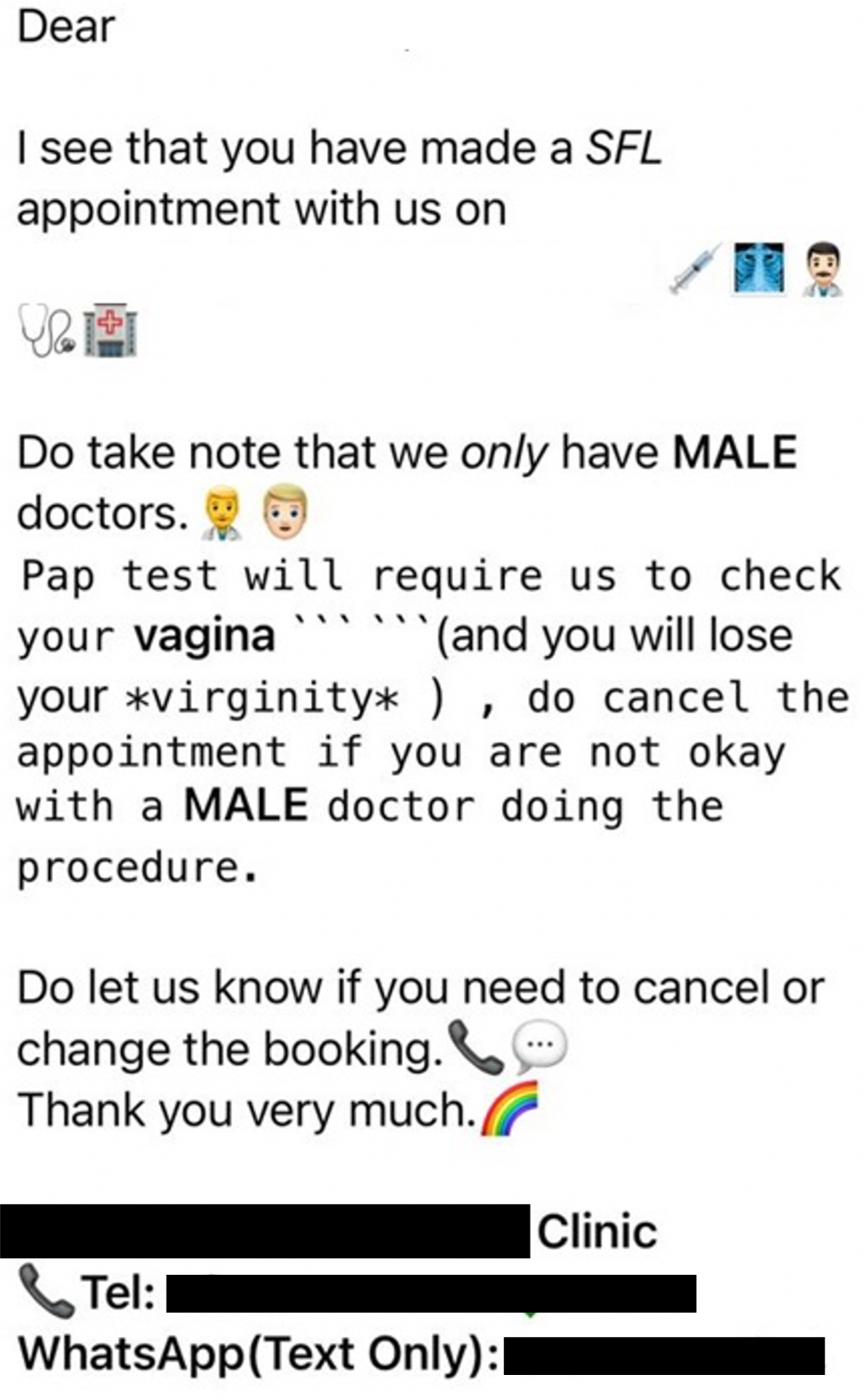
A text message sent by a Singapore medical clinic, in which a patient was warned that a Pap smear would cause her to lose her virginity, is "medically inaccurate and deeply concerning".
Ida Ismail-Pratt, president of the Society for Colposcopy and Cervical Pathology of Singapore (SCCPS), called it "misinformation".
Pap smears are screening tests for cervical cancer. The national cervical cancer screening programme only recommends screening for women who are sexually active, the obstetrician and gynaecologist told Mothership.
Women who have never had sex are ineligible for Pap smears, as their risk of cervical cancer is "extremely low".
Ismail-Pratt added that such assertions undermine public trust in screening programmes, and deter eligible women from seeking preventive care.
"We urge all healthcare providers to adhere to national guidelines and communicate with patients accurately and sensitively."
Background
The message came to light after a woman tried to book a Pap smear test with a Woodlands clinic.
"Do take note that we only have MALE doctors. Pap test will require us to check your vagina (and you will lose your virginity)," it read.
Speaking to Mothership, the woman said that she had done Pap smears before, both with male and female doctors.
"But this was the first time I received such a weird message stating that I will lose my virginity if I proceed."
The clinic explained that it wished to avoid the scenario of a patient who did not understand the full details of the procedure, which involves a speculum inserted into the vagina.
"We explain this to the patient as we do have incidents where patients came in without knowing the procedure," the clinic said in response to Mothership's queries.
A Pap smear test is a nationally-recommended screening test for cervical cancer.
It involves taking cells from the cervix, located at the end of the vagina.
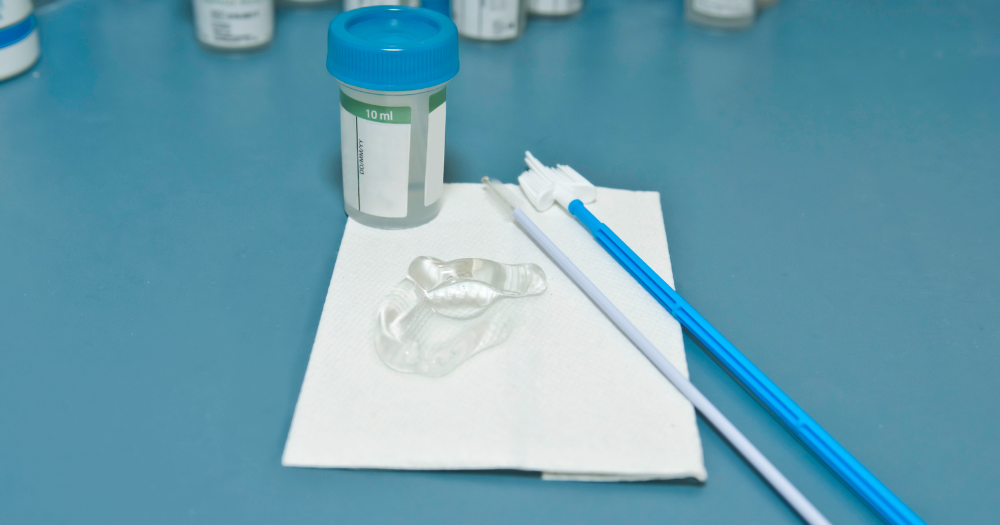
A speculum is placed in the vagina to reveal the cervix, and a brush is then used to gently collect the cells.
While cervical cancer is a preventable disease, screening uptake among women in Singapore remains low at 43 per cent.
This is even as it is of the top 10 most common cancers and causes of death among women in Singapore, said Ismail-Pratt.
Top image from Canva