News

S'pore govt takes multiracialism 'very seriously', approach is a work in progress: WP's Pritam Singh on M'sia's Khairy podcast
Singh said it was important to tell Singapore's ethnic communities that "important and that everybody has a place at the table".
June 26, 2025, 04:47 PM
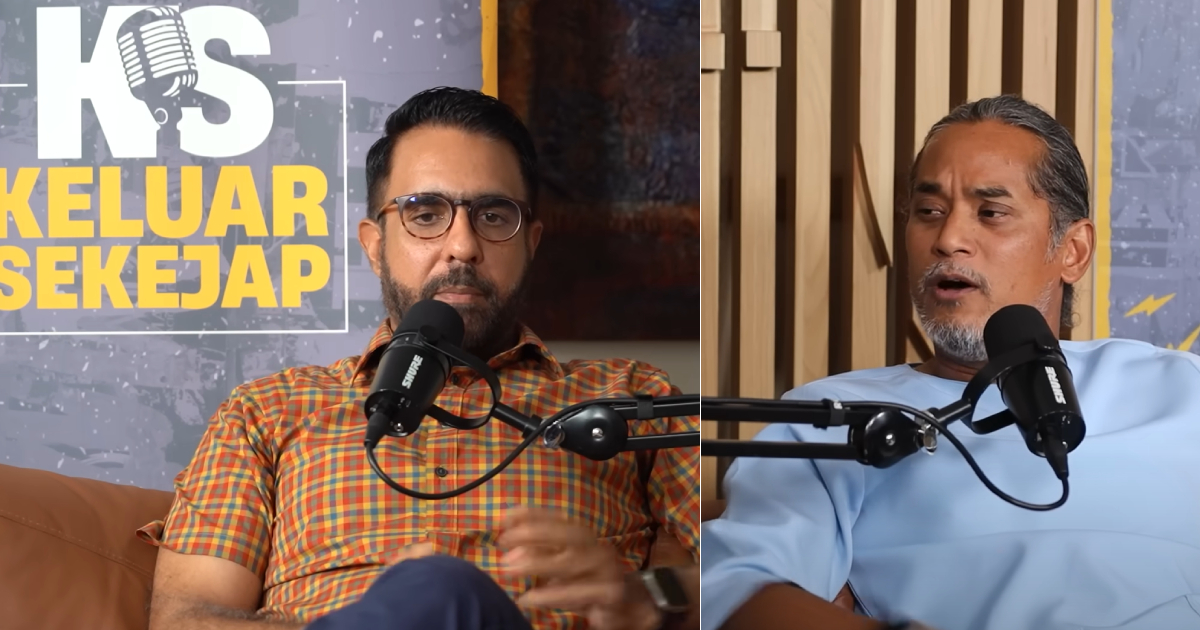

 Pritam Singh, who will be Leader of the Opposition once parliament sits, made his first podcast appearance on Keluar Sekejap, a Malaysian politics podcast hosted by former Malaysian Health Minister Khairy Jamaluddin and former UMNO Information Chief Shahril Hamdan.
During the nearly two-hour-long podcast, the trio discussed various aspects of Singaporean politics, including the role of Singapore's opposition, the opposition leader, and the relationship between the two countries.
However, they also discussed at length the role of multiracialism in Singapore, as well as how seriously the Singapore government approached it.
Taking multiracialism seriously
Singh reiterated his belief in Singapore's approach to multiracialism, saying that Singapore's government "takes multiracialism very seriously".
He said that he could not think of managing Singapore, a society with so many different races, without telling all communities that they were "important and that everybody has a place at the table".
He said that as a member of the opposition and not the government, he did not have insight behind closed doors, where many of Singapore's discussions on race and religion take place.
But as a citizen, he would "be very disappointed if my government worked in any other way".
While Singh spoke of his own positive experiences as a minority in Singapore, having developed good relationships with people of other races and also new citizens, he acknowledged that Singapore's approach remained imperfect and that it was always a "work in progress".
While stating that he personally tried to be as race-neutral as possible, allowing him to interact with people from different communities, Singapore acknowledged that it had to recognise spaces where individuals maintained their own traditions.
Fair comment
Khairy brought up an episode that occurred during Singapore's general election period earlier in 2025, in which Malaysian politicians appeared to comment in favour of particular Singaporean candidates and cast aspersions on Singapore's race relations.
Khairy opined that they were rightly called out, while caveating that "fair comment should exist between neighbours".
He asked how Singh balanced his race-neutral approach to politics in the face of the various considerations and issues that ethnic communities in Singapore face.
Singh, again acknowledging that Singapore's multiracialism was a work in progress, said that his personal race-neutral approach did not mean that he ignored the "reality that we come from different races".
Giving an example of how Singapore had to work through race issues; Singh referenced the debate regarding how, in the early days of Singapore's independence, members of the Malay community were rarely deployed to the Army for their national service, a situation that was changing.
However, he said that "some things take time".
Trajectory
Khairy pressed him, asking if he meant to say that Malay Singaporeans were represented in all branches and units of the Singaporean armed forces.
Singh said he could speak definitively on this and confined his comments to his personal experience in a combat engineer unit.
He said that when he did his national service, there were no Malay soldiers in his unit, but it is no longer the case today.
Singapore has had high-ranking Malays in the SAF, including Ishak Ismail, who served as a Brigadier General in the Army and is today the High Commissioner to Pakistan.
Khairy asked if the situation in the early days was by "design or supply", whether the situation was circumstantial or intentional.
Singh literally held up his hands, saying he had no special knowledge of the reasons.
He said that if "this is the trajectory that we're going on, where we are coming to a situation where we're better off today than we were yesterday, then may we continue along that trajectory".
But the situation was an example of the realities that Singapore had to negotiate and was "reflective of the complexities".
"But certainly, how do you expect a citizen to be loyal if he or she doesn't feel equal?"
This was something that Singapore continues to work on, and Singh said that as a member of the opposition, he wanted to be part of the solution.
To him, that meant constantly restating the importance of multiracialism, believing in it sincerely and honestly, and not just paying lip service to it.
Elections and race
Khairy pivoted, asking about the role that race played in politics, specifically in elections, and whether there was data on how specific ethnic groups voted in elections.
Singh said, "It's just not done", and that it was next to impossible to get such data.
Saying that "we also don't do internal polls and… break it down", although it was not clear if he meant Singapore or specifically the Workers' Party, he questioned what the potential accuracy of such polls would be in any case.
Making the case that Singapore's elections were truly anonymous, he stated that it was impossible to determine a voter's ethnicity from the ballot paper.
Having briefly spoken about the Ethnic Integration Policy in an earlier part of the podcast, Singh referred to it again, stating that Singapore's residential areas are quite well-mixed.
This is in contrast to the situation in Malaysia, where the polling districts can be heavily weighted towards particular ethnic groups. For example, rural areas tend to have a higher percentage of ethnic Malay voters.
Singh said that it was more important to have a "feel" for the place and that it was not possible to tell how a particular community voted.
Not scoring political points
Singh's final comment of the segment said that in regards to Singapore's government, "we don't have very public conversations about race and religion in Singapore", such conversations were usually behind closed doors.
But Singh speculated that if one were part of the Singaporean government, one tried to manage the situation as "respectfully as you can".
Even as an opposition politician, race and religion were something that "we don't really want to bring into the political realm" or to "score political points on a race or religion aspect".
"I think that's generally the approach that politicians in Singapore want to, and ought to, take."
&
Top image via Keluar Sekejap/Youtube