News

2 NTU students who allegedly used GenAI appeal 'academic fraud' penalty
Some instructors however may disallow the use of GenAI for "specific pedagogical reasons", NTU said.
June 26, 2025, 04:53 PM


Two students from Nanyang Technological University (NTU), who were failed over alleged generative AI (GenAI) usage in a graded essay, have submitted appeals.
Both had received zero marks and penalties for academic fraud.
One student is having her appeal considered, while the second student has had her appeal request rejected, NTU said.
However, the second student told Mothership that she still intends to try and appeal again, and will escalate the matter to NTU's management.
The course in question was HA4040/HA3026 (Health, Disease Outbreaks and Politics), run by Sabrina Luk from the School of Social Sciences.
The first case
The first student, A, told Mothership that she had used a citation sorter — an online tool that organises academic references in alphabetical order.
This was flagged as GenAI use, and the professor gave her a zero mark, as well as a penalty for "academic fraud".
This goes on a student's permanent record.
In an update, A said she had paid S$40 for a university-level appeal.
The panel concluded that the citation sorter was not a form of GenAI, she said, and assured her that there would be no permanent record on her transcript.
A added that the hearing "went well", but that the appeal is still ongoing and will take approximately three weeks to complete.
"So my grades for the essay is still 0, but I received a fair hearing and the assurance that I won't get a permanent record," she told Mothership.
A spokesperson from NTU clarified that the panel consultation was not intended to "make any conclusions about the specifics of her case".
"An appeal review panel that will include AI experts will be convened by the university to assess and review the student’s appeal. We are unable to provide more details while the appeal process is ongoing," the spokesperson said.
The second case
But the second student, B, had her appeal request rejected.
The 21-year-old was accused of two citation-related errors — one "fake statistic", and "false citations" in her bibliography.
The "fake statistic" was a general Covid-19 case estimate from World Health Organisation (WHO) data, and the "false citations" were just mistakes in her titles, she said.
When questioned, she admitted that she used ChatGPT — but only to alphabetise her citations, and for background research.
B also received a zero mark and an academic fraud warning.
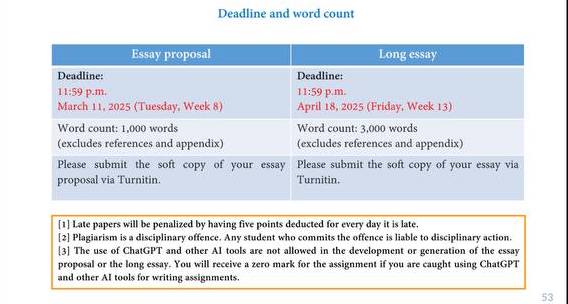
However, she pointed out to Mothership that the professor had specified that the use of AI tools was prohibited in the "development or generation of the essay", and students were told they would receive a zero if they used such tools "for writing assignments".
She did not use AI tools to write or generate the essay, she said.
Due to her admission of using ChatGPT, her appeal was rejected.
B argued that this was a way of punishing her for her transparency.
The original issue was with her bibliography, but she now feels like she is also being "punished" for admitting that she used ChatGPT for background research.
"How are you going to fault every student for [using AI for research]? You only found out about me because I was upfront... [I'm] being punished for honesty."
In a voice recording shared with Mothership, apparently of B at a prior panel hearing, B could be heard being questioned about using ChatGPT for background research.
A man was heard calling it "problematic".
"Why do you have to use ChatGPT for this?", he could be heard asking, as B countered that she did not use the specific numbers and cases in her essay.
B now intends to also pay the S$40 for the university-level appeal as well, and take the matter to NTU management.
In response to Mothership's queries, the NTU spokesperson said the university rejected the previous appeal request "because the student had admitted to using GenAI for the essay and had shared how it was used prior to the preliminary inquiry in April".
NTU's AI approach
NTU does not have an overarching approach towards GenAI.
In general, students are allowed to use GenAI in their assignments, but this has to be declared "as part of academic integrity", the spokesperson said.
Students must also take responsibility for the content generated, and ensure factual accuracy and proper citations.
Some instructors, however, may disallow the use of GenAI for "specific pedagogical reasons".
"In this case, the professor had disallowed AI use for a specific written assignment to assess students’ research skills, and their originality and independent thinking," the spokesperson said.
"NTU remains committed to our goal of equipping students with the knowledge and skills to use AI technologies productively, ethically, and critically."
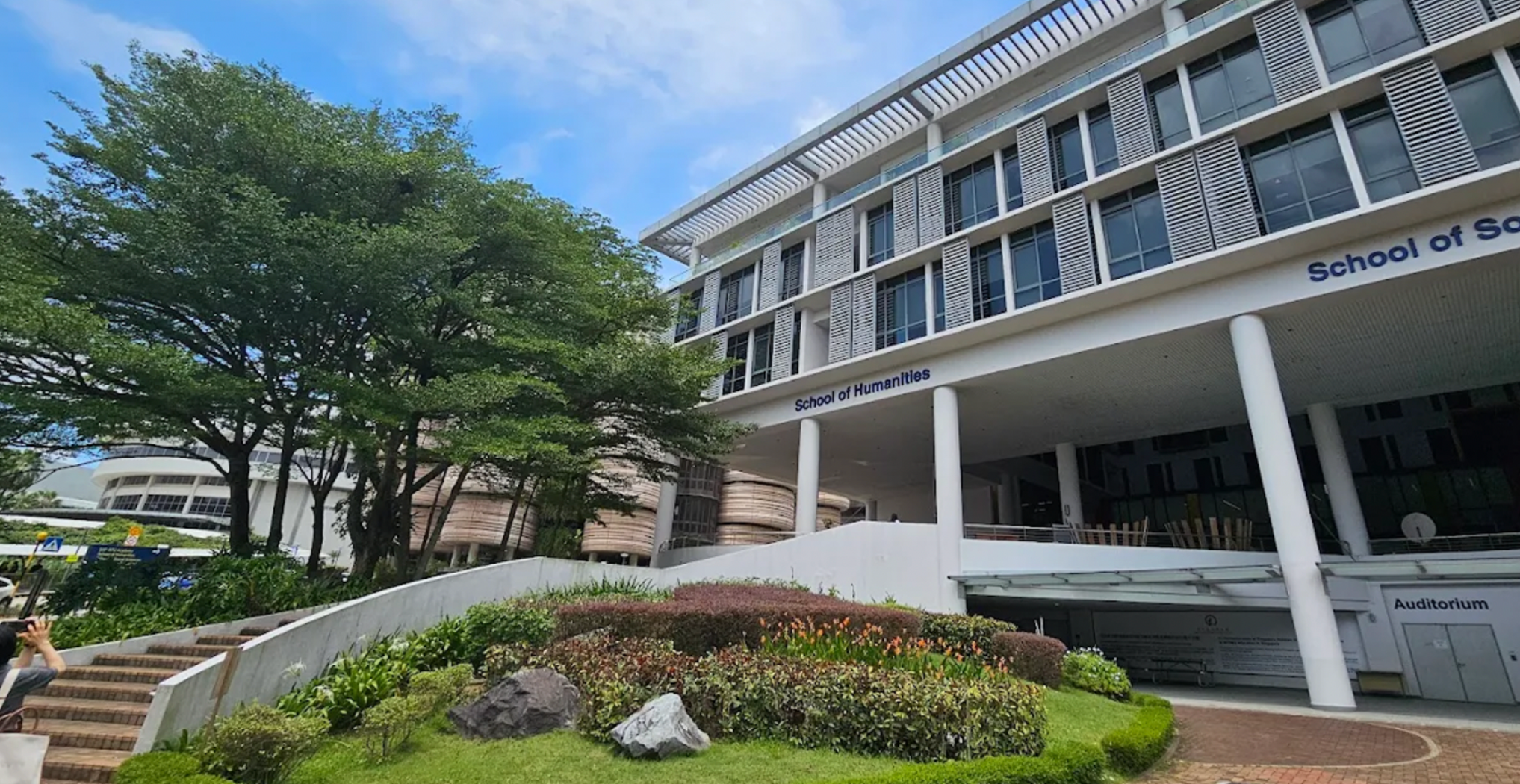
Top image from Google Maps