News

Man, 53, stung by box jellyfish at Sentosa Cove, almost goes into cardiac arrest
He described the initial sting to be like being "bitten by a shark".
June 24, 2025, 01:26 PM
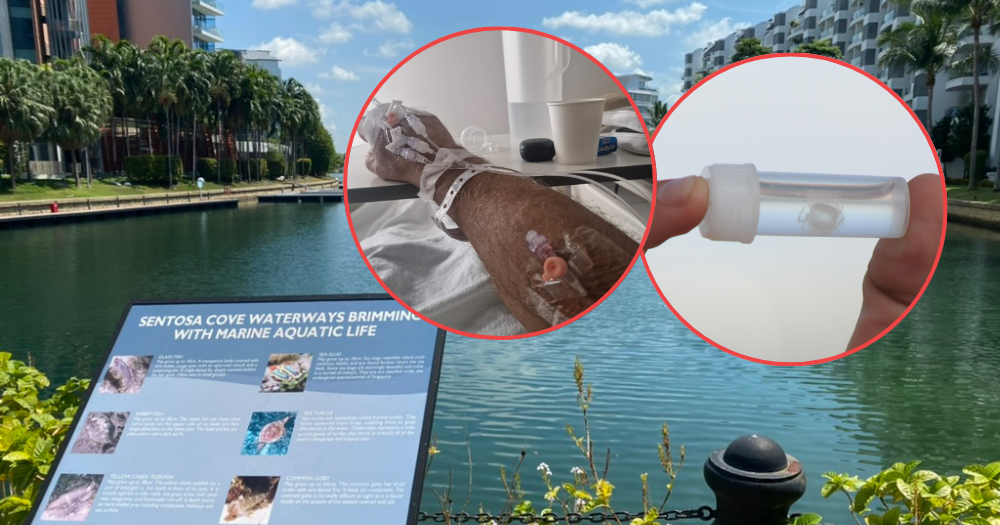


Michael Connell, 53, had jumped into the water to carry out repairs on his moored boat in Sentosa Cove when he was suddenly stung by a box jellyfish.
According to Connell, it felt like being "bitten by a shark".
Twelve hours later, he began experiencing stabbing pains all over his body, which rapidly progressed to a pain so intense he had to be admitted to the Intensive Care Unit (ICU).
Doctors believe that the man may have been stung by an Irukandji jellyfish, which is the common name used to refer to several rare and extremely venomous species of box jellyfish more commonly found in northern Australia.
Very intense, sharp pain near his upper leg
Connell shared with Mothership that the incident occurred at around 3pm on Jun. 15.
He had gone into the canal behind his Sentosa Cove condominium to perform repairs on his boat—checking the propellers and rudders and doing some general cleaning—when he suddenly felt a very intense, sharp, and isolated pain near his upper leg.
Connell jumped out of the water, where he found no blood nor puncture wound on his leg, but a lot of redness.
Though he did not see the jellyfish, he knew he was stung, as he had been stung before by jellyfish and bluebottles in the past while growing up in Australia.
His wife, who is a nurse, immediately gave him some pain relief, antihistamine pills, and prednisone gel.
As his injury appeared to have subsided from the remedies, Connell assumed he was fine, and he went with his wife to a friend's house for a barbecue that night.
It got worse
However, things took a turn for the worse in the early hours of the next morning, when Connell began experiencing stabbing pains all over his body roughly 12 hours after his initial sting.
Six hours later, the pain only intensified to a point where his leg was burning and cramping.
"It is an experience I will never forget," he recalled.
After rushing to the hospital, Connell ended up being admitted to the ICU after the pain continued to intensify.
At one point, he was at risk of cardiac arrest.
"I like to think that I have a pretty high tolerance to pain, but they ended up calling in an anaesthetist to sedate me, as even the high doses of IV morphine they were administering to me didn’t touch the sides," he said.
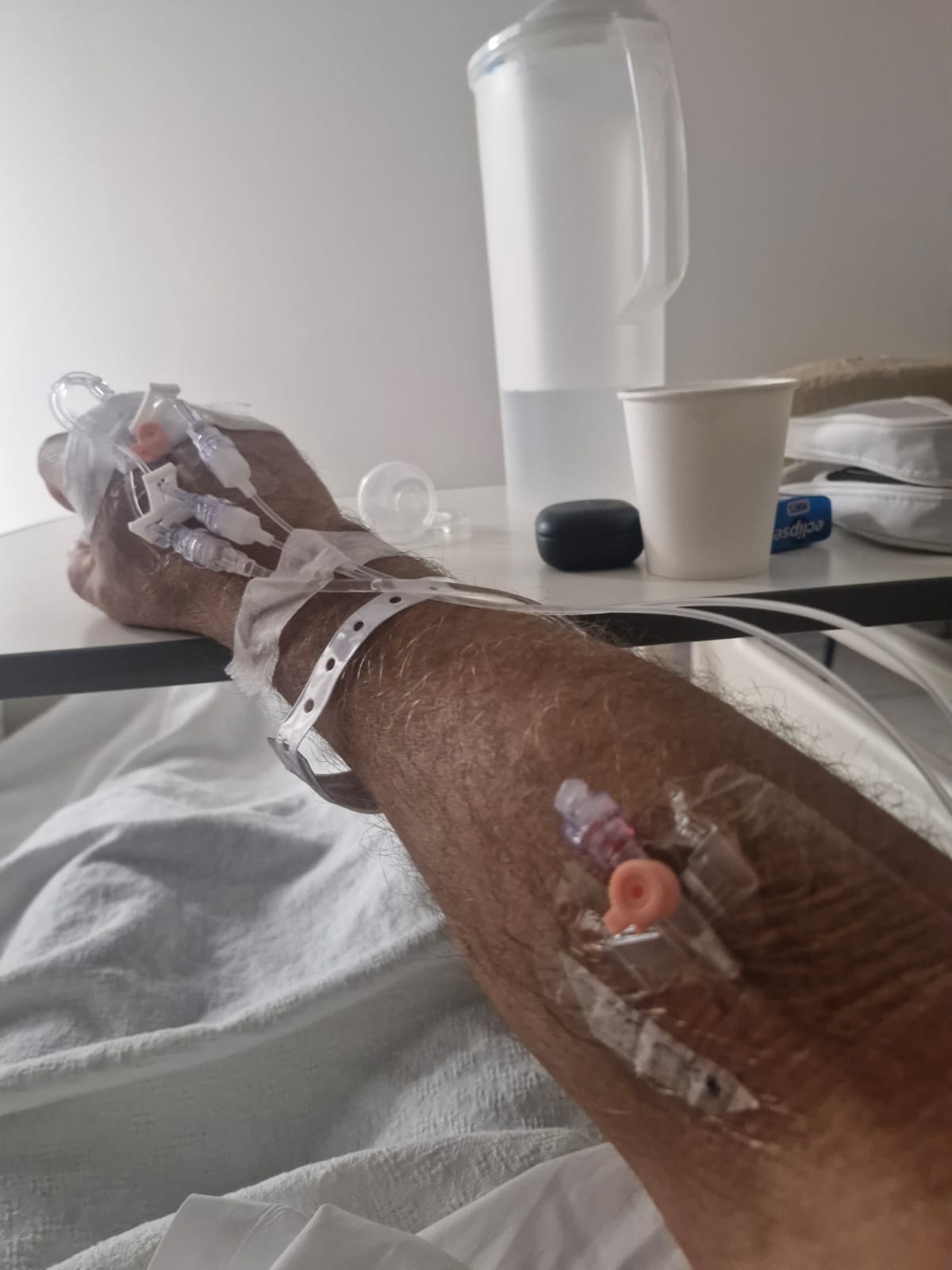 Connell being infused with IV fluids. Photo courtesy of Michael Connell.
"I feel like all of my energy has been drained from me."
Saying that he feels okay now and is resting at home, Connell noted that he still feels the occasional pinprick.
"I feel like all of my energy has been drained from me," he admitted.
Connell said he had a similar experience around 30 years ago, when he was stung in Australia by a variant of the box jellyfish.
Similarly, the sting was an instant pain similar to being bitten by a shark.
The jellyfish back then had long tentacles, and he still has the scars today from that incident.
He said that while he had seen the jellyfish during the previous incident, he did not see it this time.
"I am not surprised, as they are the size of a small finger," he remarked, adding that he was "really unlucky" to have this happen twice to him.
Only swim in moving waters from now on
Connell said the experience would not deter him from swimming in Singapore, but he would only do so now in moving waters, as a jellyfish is unlikely to be in a place with a current.
"The issue with the canal is that it is still water," he said. "I will not be going in there again unless I wear a full wetsuit."
When asked if he believed there were enough warnings or safeguards in the area, Connell admitted he isn't sure if they would really help, as though there are signs, he does not know if they would be read or adhered to.
"I think what needs to be raised is how to seek treatment if you are stung. Do not mess around, go straight to A&E," he warned.
Previous sightings of box jellyfish at Siloso Beach
There were previous sightings of box jellyfish at Siloso Beach in 2020.
Back then, no swimming was allowed at Siloso Beach after a venomous box jellyfish was sighted in the waters.
Earlier that year, a jellyfish was sighted in the waters around Sentosa Cove, and a child was stung by a box jellyfish in the area nearby just two weeks later.
In January this year, a girl was conveyed to the hospital after she was stung by a jellyfish at Changi Beach.
Box jellyfish
Box jellyfish are highly venomous due to their deadly toxin, which helps them to instantly kill or stun their prey, thus reducing damage to their tentacles, according to National Geographic.
A sting from the box jellyfish is extremely painful and can cause severe hypertension, extreme lower back pain, nausea, and cardiac and respiratory arrest.
It can also be fatal.
What should you do if you are stung by a jellyfish?
According to the National Parks Board (NParks), those stung by a jellyfish should get onshore promptly and seek immediate medical attention by calling 995.
They are advised not to rub the wound or attempt to remove the tentacles with their hands, as these actions can cause the stinging cells to release more venom into their bodies.
Instead, they should flush the sting area with seawater for at least 30 seconds and remove the tentacles using a towel or tweezers.
Related article
Top image via Michael Connell, Singapore Marine Guide/Facebook, and Wikipedia