Branded
Cancer is the top killer in S’pore: Lung cancer is leading cause of death in men & 3rd in women
Learn more about this silent killer.
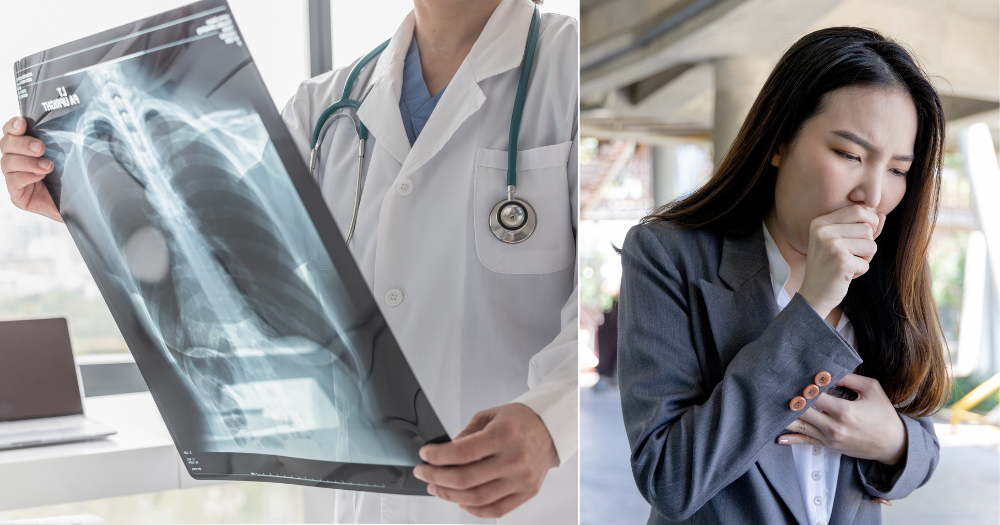
If we think about what’s most likely to kill us in Singapore, a heart attack, stroke, or a car accident may come to our minds.
But none of those are the leading causes of death in Singapore.
Turns out, cancer is the number one killer in Singapore, and it has been so for decades.
Cancer accounted for around 25 per cent of deaths in Singapore, according to Health Hub's latest statistics from 2021 to 2023.
Among all the different cancers? There’s one that often shows no symptoms until it’s too late.
The silent killer
Lung cancer has consistently ranked among the top cancers over the past 50 years locally. It’s the leading cause of cancer death among men, and the third for women.
Every year, more people die from lung cancer than colon, breast and prostate cancers combined, says senior medical oncologist Tan Chee Seng from OncoCare Cancer Centre.
When we think about lung cancer, most of us still picture that of a chronic smoker as tobacco smoking is a well-known risk factor.
Spoiler alert: Non-smokers are not spared either.
So, why do non-smokers suffer from lung cancers? And why is lung cancer so deadly?
A large majority of lung cancer cases in Asia are what's called non-small cell lung cancer.
Think of it as an umbrella term for a few types of lung cancer that grow and spread more slowly than the more aggressive kind, small cell lung cancer.
The difference between the two is that the non-small cell lung cancer is typically diagnosed late.
According to Tan, patients may experience “non-specific symptoms such as cough, loss of appetite, and shortness of breath”, which are often dismissed as minor issues.
As a result, many lung cancer cases are being detected at an advanced stage and by the time of diagnosis, it’s often too late for the most effective treatments.
Unlike general population cancer screening for colon, breast and cervical cancer, there is no formal nationwide lung cancer screening. This is because the smoking rate is low at 16 to 17 per cent, Tan explained.
However, there are on-going trials to identify the best way to conduct a robust lung cancer screening for non-smokers in Asia, Tan added.
If it’s not just about cigarettes, then what?
Tan shared that 50 to 60 per cent of Asian lung cancer patients, especially females, are found to have EGFR (epidermal growth factor receptor) mutations.
There is a rising number of female lung cancer patients who have never lit a cigarette in their lifetime, Tan added.
So what is EGFR? In simple terms, it acts as a switch in your body to tell the cells when to grow, which is important for normal cell repair or growth.
However, when a mutation occurs, the “switch” gets stuck in the “on” position, causing cells to grow uncontrollably, even harmful ones.
An EGFR mutation could lead to cancers, especially non-small cell lung cancer.
EGFR mutation is not inherited but has been postulated to be caused by air pollution, Tan explained.
Reading the above few lines may have killed some of your brain cells and you may wonder: why should we care about EGFR mutations?
That’s because knowing the enemy helps win the battle – and in this case, helps find a targeted solution.
Treatment options
Chemotherapy and targeted therapy are the mainstay of treatment for lung cancer patients.
However, patients with EGFR mutations can be treated with therapies that target the mutations.
“Unlike chemotherapy, these targeted therapies can inhibit the growth and spread of cancer cells with a more targeted approach, and have milder side effects,” said Tan.
Patients should speak to their doctors to decide on the appropriate treatment.
Being prepared, financially
While national health insurance schemes like MediShield Life provide essential coverage that helps defray large medical bills, such advanced or targeted treatments may not be fully covered and can still result in significant out-of-pocket costs.
“There’s a limit to insurance payouts for cancer treatments that are on and outside of MOH’s Cancer Drug List,” said Julian Tan, a branch director at Omega Financial Advisory, a group of authorised financial consultants representing Finexis Advisory Pte Ltd. He shared that it’s important to recognise the risk and to look into this at a younger age, as premiums are lower and individuals have lower probabilities of negative health conditions.
With that said, Integrated Shield Plans (IP) is a private insurance coverage component that provides additional coverage beyond MediShield Life.
An IP rider serves as an optional add-on and can be used to reduce the amount that you must pay out-of-pocket, such as co-insurance and deductible, when you are hospitalised.
“It’s never too late to obtain insurance coverage as long as one is insurable, as we never know when we might need the additional financial support.”
In order to not under- or over-insure, and to work within our means, we have to also take into consideration factors such as medical costs, outstanding liabilities, family and lifestyle requirements and more.
Being informed is important
If you’re reading this article and know someone who was recently diagnosed with lung cancer, it is important that they know what their current insurance coverage entails in order to make informed treatment decisions.
There are important resources online hosted on LEAP (Lung Cancer Education and Advocacy for Patients) website, for you to understand more about your insurance coverage of outpatient cancer treatment in Singapore.
Scan this QR code or click on the link to access the website.

Being informed and prepared helps us plan for a longer, better life.
This branded article is brought to you by Johnson & Johnson.
Top image from Canva.
CP-526947