News

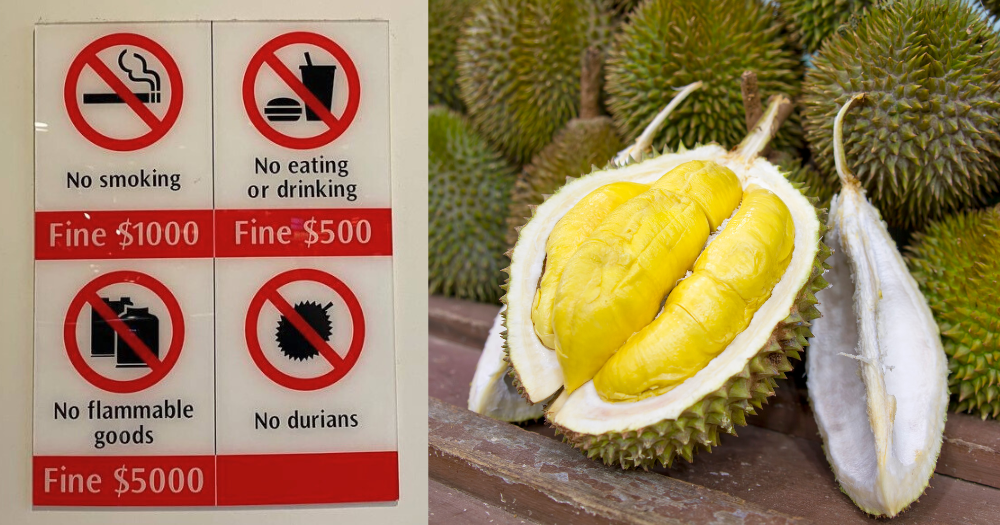
S'pore banned durians on MRT trains in 1988 because of the smell
The smell that could cost you.
May 31, 2025, 02:34 PM


Love it or hate it, durians make their presence known wherever they go.
The king of fruits recently made headlines in Singapore after a Chinese tourist was fined S$200 for apparently having durian in her hotel room.
She was unaware of the "No durian" rule beforehand, and was shocked when a cleaning fee was imposed on her the day after she consumed the fruit.
Similarly, in 2023, a family received a warning letter from a hotel in Sentosa after they brought the pungent fruit back into their room.
But why does our sunny island have this durian ban to begin with?
Too smelly since 1988
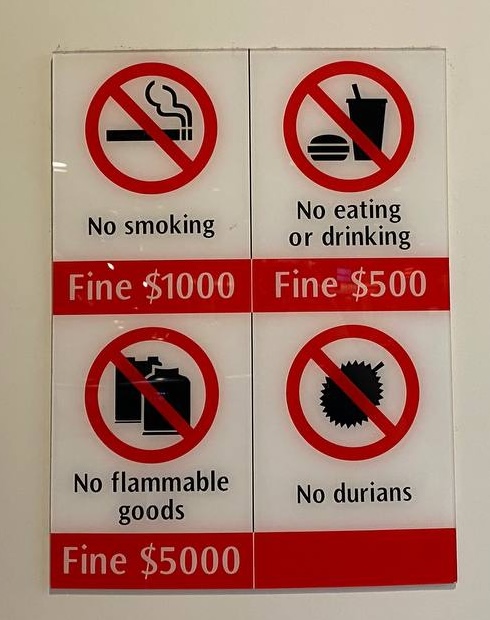
You may be used to seeing these signs on Singapore's public transport and train stations:
 Top image via Georgia Zhang/Mothership reader
An old news clipping showed that SMRT Corporation began implementing a S$500 fine in 1988 for bringing durians into the train.
An MRT spokesperson then explained that durians leave a lingering odour long after they are taken away, especially in an air-conditioned place.
"The smell is even offensive to those who love the fruit. They might like eating the fruit, but I don't think they like the smell too much," the spokesperson said.
According to the Rapid Transit Systems Regulations, anyone caught bringing prohibited items on board an MRT can be fined up to S$500.
SBS Transit also requests passengers not to bring items on board the buses that may offend others, such as durians and pets.
In 2023, a couple was asked to leave the bus when they were caught carrying durians onto the public transport.
Do you have to let it linger?
Similar to public transport, hotels have a similar ban to avoid the durian's pungent smell from lingering in rooms.
The tourist who was slapped with the S$200 fine for consuming the durian in her hotel room said the front desk explained that the fee was necessary as the room would need to undergo professional cleaning to get rid of the odour and may be out of service for several days.
It is unknown when exactly hotels began implementing this durian ban, though a quick search online found that many hotels in Singapore implement such rules.
InterContinental Singapore specified that they had a durian-free policy, explaining that the fruit's strong and distinct odour might inadvertently cause discomfort to fellow guests and affect the overall experience.
"Please be advised that should a durian be discovered within the confines of the hotel, a fine of S$250 will be imposed," as stated on its website.
Sentosa's Hotel Ora similarly said pungent food, such as durians, is not permitted within the hotel premises and added a cleaning charge will be imposed if found.
So, unless you want to pay a hefty fine, it's best to keep the durian off trains and out of hotel rooms.
Top image via Georgia Zhang/Mothership reader and Canva