



News

If China doesn't want NATO in Asia, they should stop North Korea engaging in Europe: Macron
Europe and Asia had many common challenges, and were more intertwined than they realised.
May 30, 2025, 11:38 PM


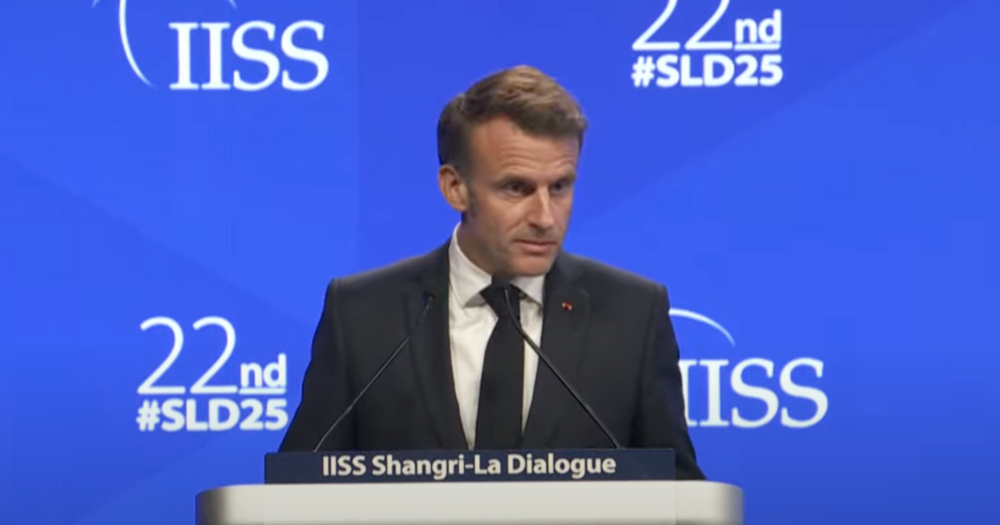
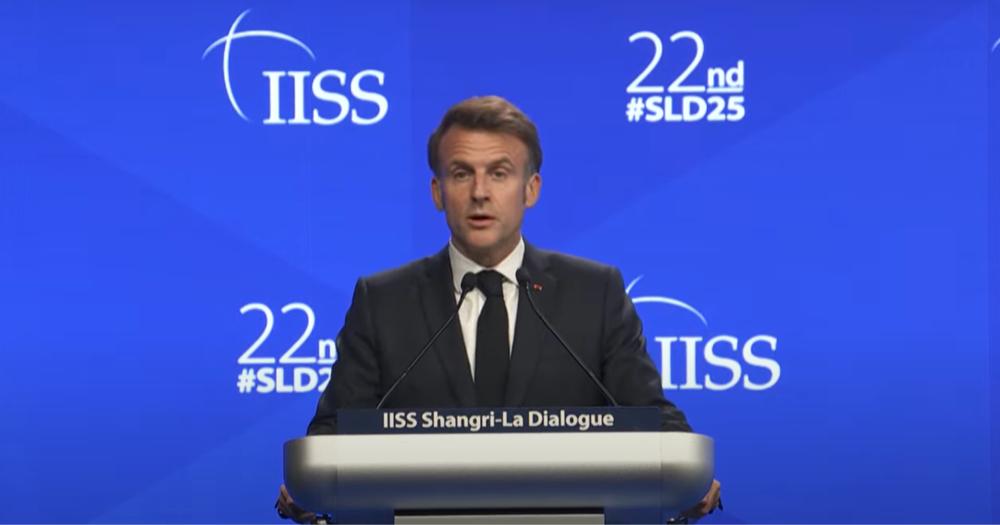
On May 30, France's President Emmanuel Macron delivered the keynote address at the 2025 Shangri-La Dialogue, advocating that European and Asian countries should develop their own "Strategic autonomy" from the superpowers of the United States and China.
Macron's speech, delivered in English rather than his native French, was an appeal to the Indo-Pacific countries to maintain independence and cooperation at the same time.
Strategic Autonomy
Macron spoke about the current moment in the world, where China and the U.S. were in competition for global leadership.
He acknowledged that the U.S. was an ally and a friend, even if there were, at times, disagreements and competition.
But France intended to remain so but with a "demanding approach (for) our own interest".
France was "no less attached to what is essential for herself", strategic autonomy and freedom of sovereignty, an approach that Macron said France defended for Europe and for the Indo-Pacific.
He defined it as "We don't want to depend. We want to cooperate."
"But we don't want to be instructed on a daily basis (on) what is allowed, what is not allowed, and how our life will change because of the decision of a single person."
Common interest
He believed that Europe and Asia had a common interest "in this very moment", to "follow this line of strategic autonomy".
He laid out four points of commonality between European and Asian countries.
First was a common challenge of "revisionist countries that want to impose, under the name of spheres of influence, in reality, spheres of coercion".
Macron said that these countries wanted control of areas "from the fringe of Europe to the archipelagoes of the South China Sea, at the exclusion of regional partners, oblivious to international law".
Secondly, Macron said both groups, Europe and Asia, faced the challenge of "terror and enduring mutual grievances", compounded by the "alarming propensity" of countries resorting to force, of which there were recent examples.
Thirdly, long-term alliances were potentially eroding, with their "credibility and clout under threat".
These alliances, "by the element of balance that they brought", were essential for stability in Europe and Asia.
Nuclear proliferation...
The fourth, was the threat of nuclear proliferation.
The example of Ukraine in recent years was troubling, as it had given up its own arsenal, only to be repeatedly invaded by its nuclear-armed neighbour Russia.
Macron then turned a critical eye on North Korea and its neighbours and allies, Russia, and particularly China.
He used North Korea to illustrate the interconnected nature of the challenges that Europe and Asia faced, saying that North Korea was "developing a massive nuclear arsenal, unconstrained by China".
At the same time, it had entered an alliance with Russia, a nuclear-armed state and both a European and Asian country due to its vast size.
... and NATO in Asia
North Korea and Russia shared a border, and reports indicated that North Korea was helping to arm Russia for its war with Ukraine on its opposite border.
"But what's happening with North Korea being present alongside with Russia on the European soil is a big question for all of us.
And this is why, if China doesn't want NATO being involved in Southeast Asia or in Asia, they should prevent, clearly, DPRK (North Korea) to be engaged on European soil."
Referring to recent initiatives to connect NATO with East Asia in recent years, Macron said that he had long objected to the North Atlantic alliance having any role in Asia.
But the linkage between Russia, North Korea, and China presented a "big question" for Europe.
"If China doesn't want NATO being involved in Southeast Asia or in Asia, they should prevent, clearly, DPRK to be engaged on the European soil.
Intertwined tariffs
But Macron spoke on challenges posed by non-security elements as well, warning that Asia and Europe were both impacted by the unpredictable nature of "the new tariff approach and the end of a rule-based order for our trade".
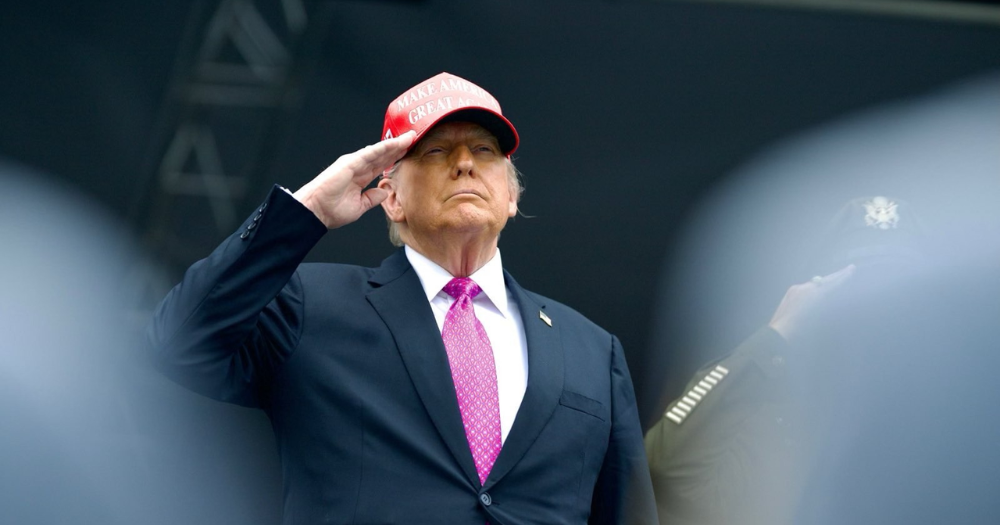
He was likely referring to the slate of tariffs that U.S. President Donald Trump had imposed on U.S. trading partners.
The U.S. and the EU are in the midst of a contentious tariff negotiation, while more muted than what had gone on between the U.S. and China, was still quite stark.
He warned that the new tariff approach would have wide-ranging impacts on "our prosperity, our capacity to finance our defence efforts".
The challenges illustrated that Asia and Europe "are much more intertwined than we thought".
He said that due to Europe and Asean's similar challenges, there were opportunities to work together.
Macron stated that France would issue a new Indo-Pacific strategic review in the coming weeks and that France aimed to take further action.
Macron said that a partnership between the EU and Indo-Pacific Countries could represent a region amounting to a third of global growth "and even more in terms of trade".
He suggested building a "positive new alliance" between Europe and Asia "based on our common norms, on our common principles" and that together, that "magnitude" would give such a partnership credibility and could convince others to join.
Related Story
Top image via The International Institute for Strategic Studies/YouTube