Environment

S'pore primatologist calls for more to be done to monkey-proof Punggol HDB estate
Residents have noted the recent presence of monkeys there.
April 02, 2025, 05:42 PM
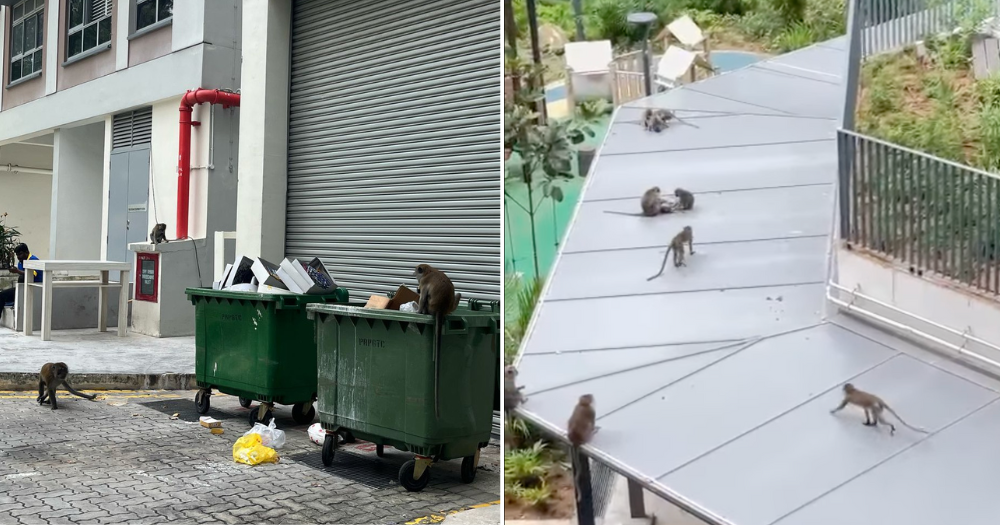


Local primatologist Andie Ang has called on the authorities to monkey-proof estates in Punggol after troops of long-tailed macaques were sighted there on multiple occasions.
In February, a large troop of monkeys was spotted loitering around a few blocks at Punggol Northshore.
And it appears that the monkeys are still frequenting the area.
Monkeys in the trash
Ang is the president of the Jane Goodall Institute Singapore (JGIS), which conducts nature walks and outreach talks to educate people on monkey behaviour and safe monkey-guarding techniques.
She shared that she and JGIS volunteers have been going down to Punggol more often in the past two weeks in order to monitor the monkey situation.
Ang observed that the monkey population appears to be more concentrated at the Waterway Sunrise estate.
A photo she shared with Mothership, taken at 657B Punggol East, showed numerous monkeys rummaging through uncovered garbage bins as a worker sat in the background.
The bin contained leftover Chinese New Year snacks, and the monkeys were "having a feast", said Ang.
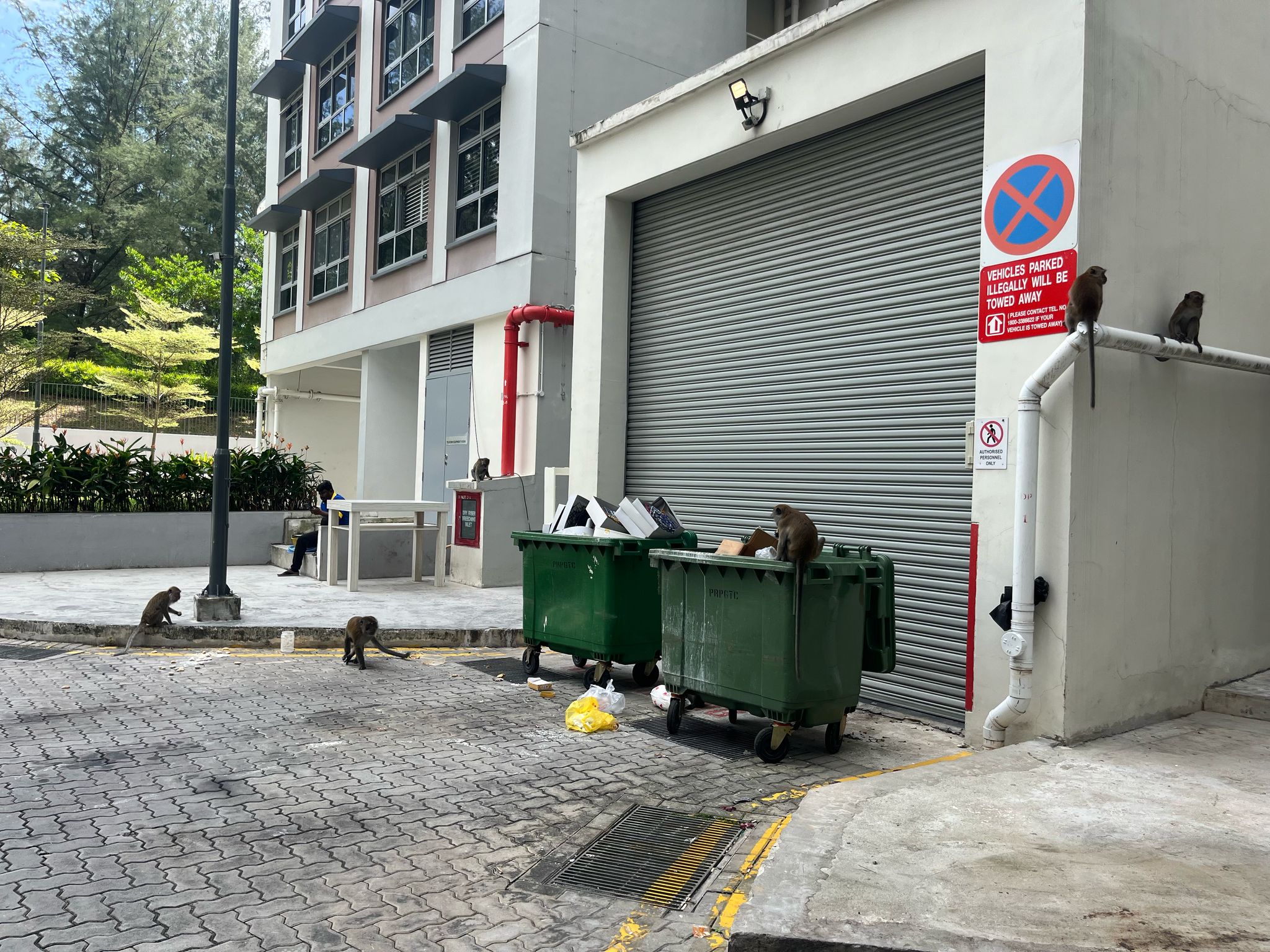 Photo courtesy of Andie Ang
Ang also noted that food in the estate was not properly disposed of — half-peeled oranges were seen lying on the top of rubbish bins.
This is "easy food access" for the monkeys.
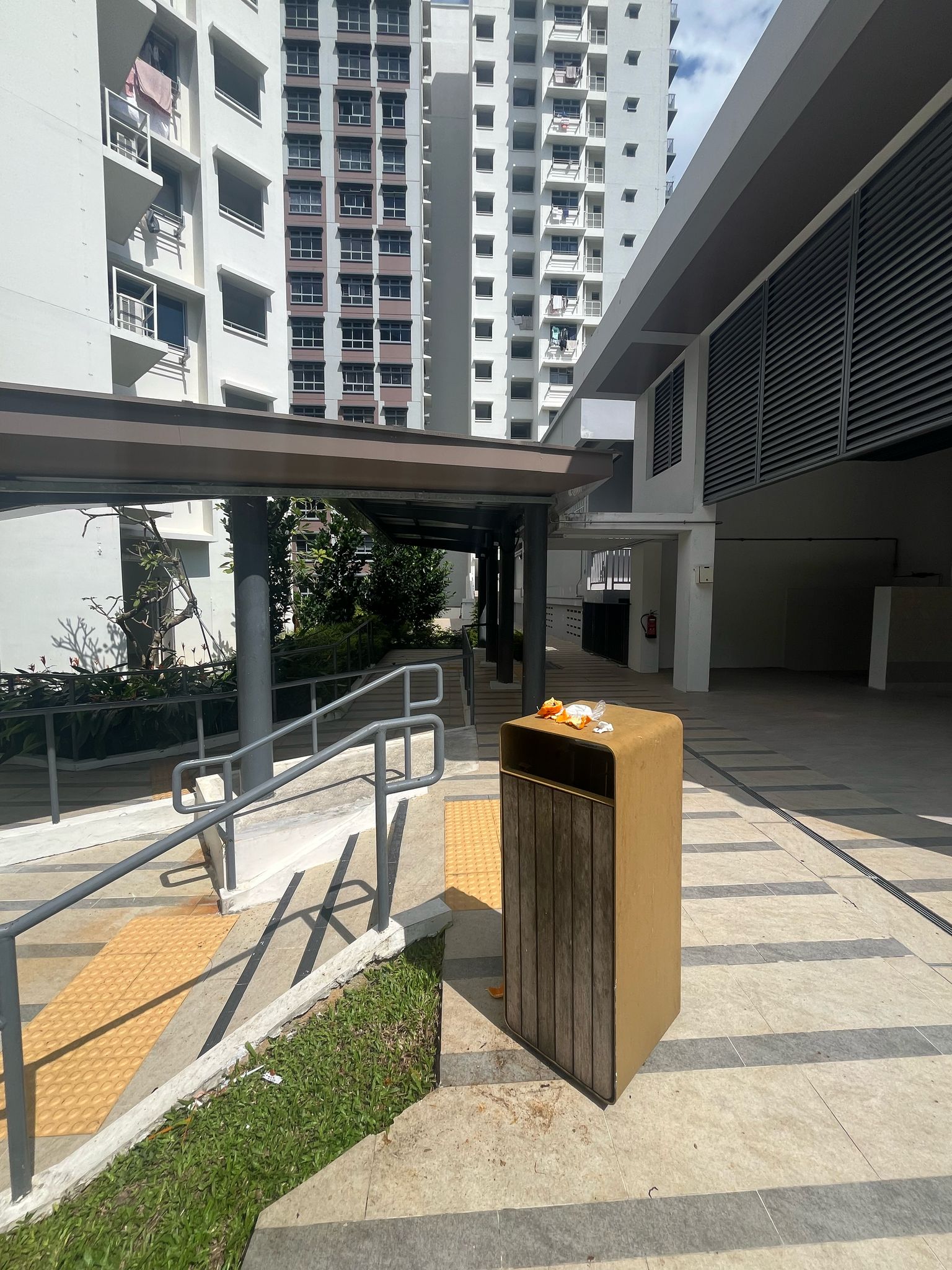 Photo courtesy of Andie Ang
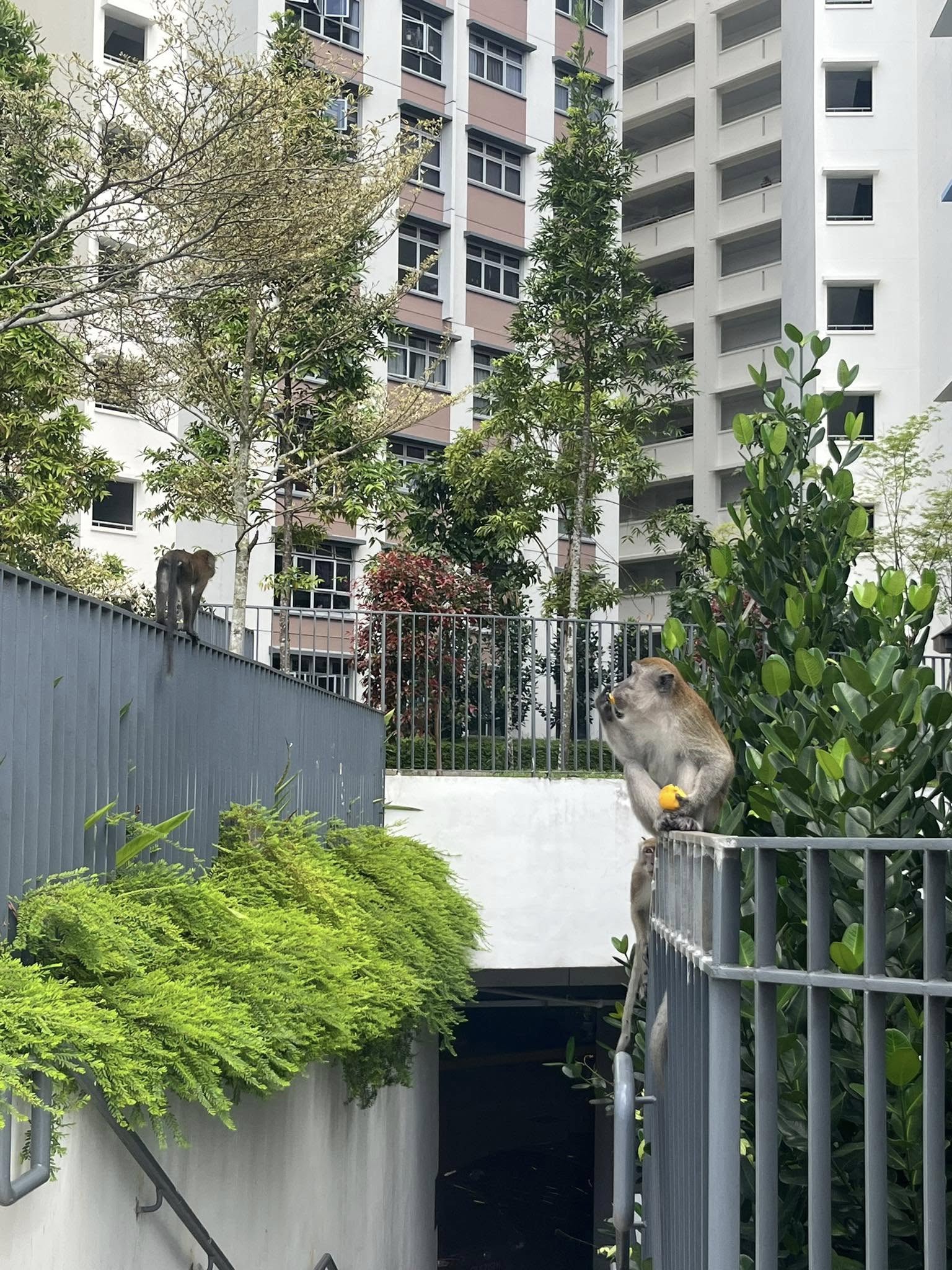 Photo courtesy of Andie Ang
Food sources
In a recent Facebook post, Ang called for the "need to address human behaviour and infrastructure problems" at Punggol.
The Animal Concerns Research and Education Society (Acres), who has also been conducting outreach at the area, filmed a video of pigeons in the estate being fed rice crisps.
Ang noted that this is yet another source of food drawing monkeys to the estate.
 Video courtesy of Acres
Acres and JGIS have been speaking to residents and advising them on ways to safeguard their homes against monkeys, such as by keeping their windows closed.
However, more can be done for the estate.
Ang pointed out the bins in particular, which are not monkey-proof.
Most of the bins there have large openings which the monkeys can climb into or fish food from.
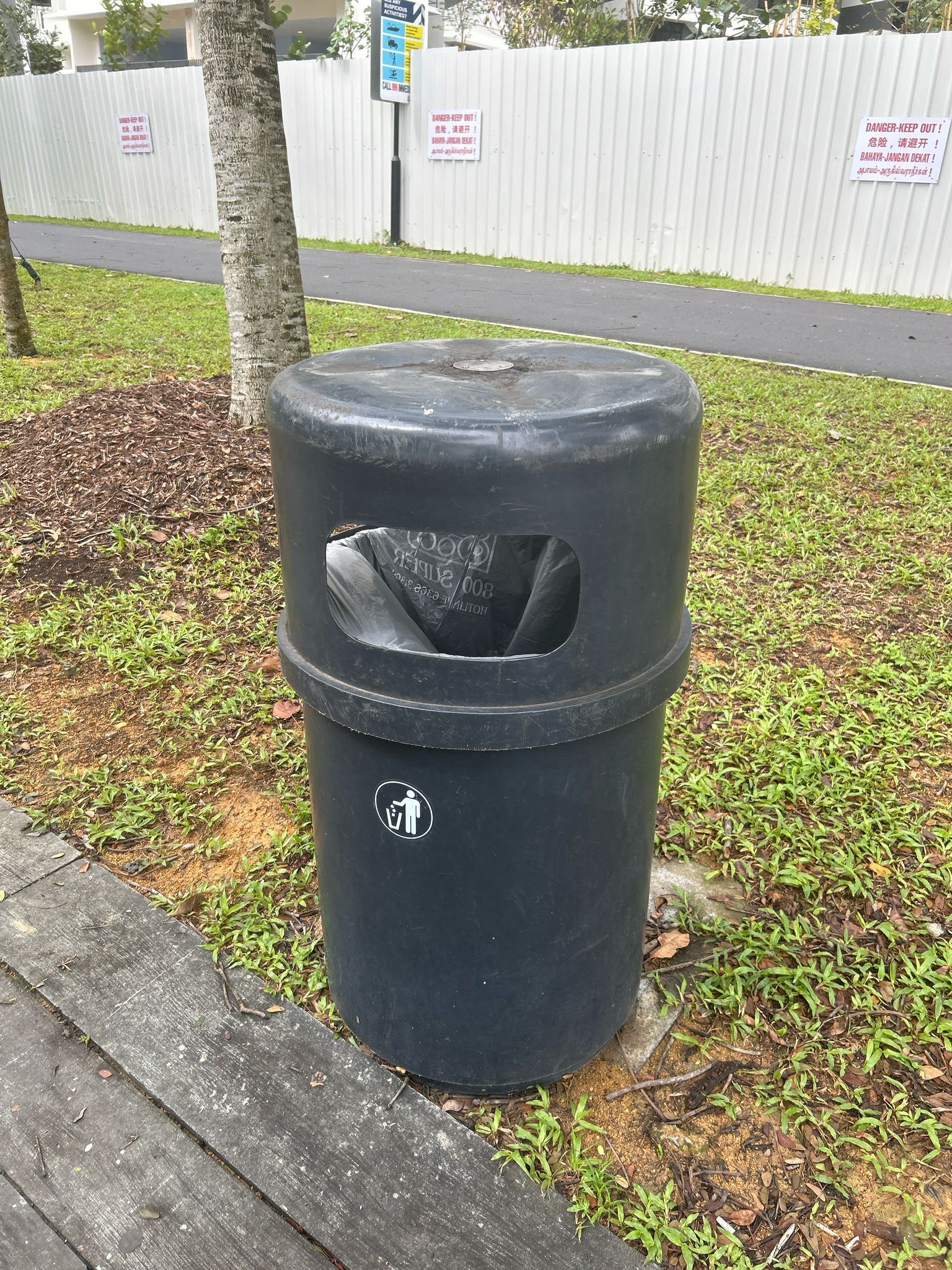 Photo courtesy of Stella Law
Monkey-proof bins include those that have lids which the monkeys are unable to lift.
Here are some examples of such bins at Rifle Range Nature Park and Mandai Wildlife Reserve.
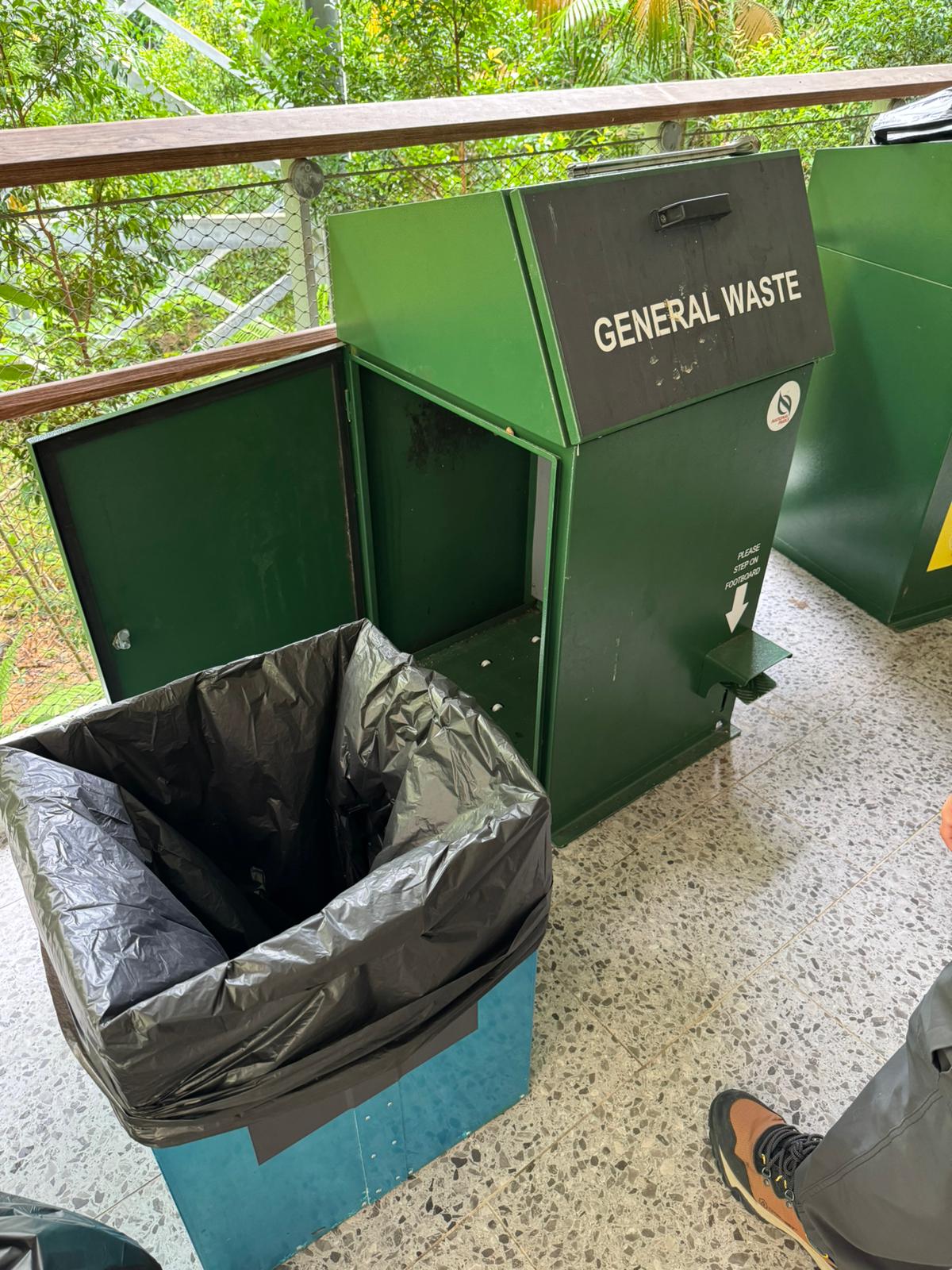 Photo courtesy of Carmen Choong
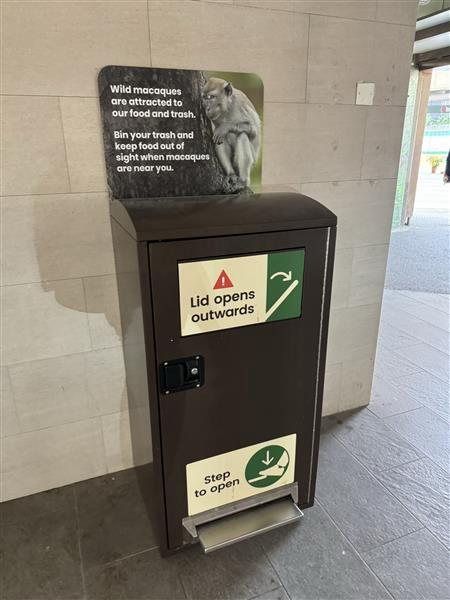 Photo courtesy of Carmen Choong
NParks working closely with town council
In response to Mothership's queries, the National Parks Board (NParks) said that it has been working closely with the town council to recommend measures such as increasing the frequency of estate cleaning and monkey-proof bin designs, as well as providing advisory posters.
Aside from this, NParks is also planting more native fruit-bearing trees at Coney Island, as they are natural sources of food for the monkeys.
To manage the macaque population in the long-term, NParks adopts a combination of the following measures:
- Undertaking studies to understand the population ecology of macaques,
- Minimising human sources of food by ensuring proper waste disposal and enforcement against feeding,
- Habitat modification, such as the removal of fruit trees,
- Guarding macaques away from human areas,
- Removal of intrusive animals from human dwellings.
Additionally, NParks is sterilising macaques at Coney Island Park and the Punggol vicinity.
The sterilisation programme in the area started in late 2023 following extensive research and science-based assessments, and will be monitored over time, NParks said.
A population viability analysis was conducted to manage population growth while ensuring the macaque population remains viable.
Do not feed macaques
Members of the public are strongly urged not to feed macaques, as it alters their natural foraging behaviour, habituates them to human presence, and leads them to rely on humans for an easy source of food.
Feeding wildlife is illegal in Singapore.
Under the Wildlife Act, first-time offenders could be fined up to S$5,000, and repeat offenders could be fined up to S$10,000.
NParks will continue to conduct enforcement patrols against feeders.
To further raise public awareness, NParks has installed educational signs to advise parkgoers and residents on what to do when they encounter macaques.
"We will continue to actively collaborate with grassroots organisations and volunteers on wider outreach efforts," NParks said.
If macaques approach you in the open, here's what to do:
- Remain calm and quiet, and do not make any sudden movements or maintain eye contact with them.
- Look away and back off slowly.
- Keep away from the area until they have left.
- Keep plastic bags out of the sight of macaques when spotted. Macaques have associated plastic bags with the presence of food and will try to snatch them when they see them.
Members of the public may also call NParks' 24-hour Animal Response Centre at 1800-476-1600 for wildlife-related issues.
Top photo courtesy of Andie Ang and Silas Silas/FB