News

Woman in her 60s who fell on double decker bus loses lawsuit against SBS Transit & bus driver
The judge said it was likely she missed a step and lost her balance.
February 13, 2025, 05:39 PM


A passenger in her 60s who was climbing the stairs of an SBS Transit double-decker bus fell after it moved off from the bus stop, and was injured as a result.
The woman, Tran Thi Phuong Nga, filed a lawsuit against SBS Transit and the bus driver for negligence, but subsequently lost the case.
According to a written judgment dated Feb. 3, district judge Samuel Wee assessed that contrary to what Nga alleged, the driver did not breach his duty of care.
Wee said it was unfortunate that Nga was injured in the fall, adding that he sympathised with the pain and suffering she experienced from the injuries suffered.
"Nevertheless, the fault does not lie with the second defendant’s driving," Wee wrote.
"Based on the video footage, it appears that the claimant missed a step, lost her balance, and fell."
The incident
According to the judgment, Nga was in her late sixties and described herself as strong and agile prior to the fall.
On Feb. 17, 2020, Nga had boarded the bus after her daughter.
While holding a bag of food in her right hand, Nga climbed the stairs to the upper deck with the aid of the handrails.
Two sets of video footage showed that as Nga reached the top of the stairs, the bus moved off from the bus stop and she fell shortly afterwards.
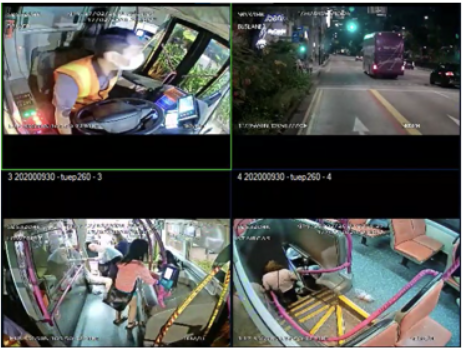 Image via court documents
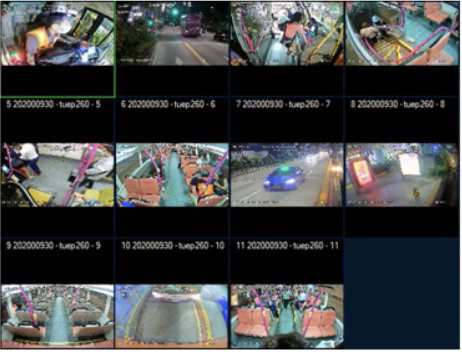 Image via court documents
The judgement noted that Nga was injured as a result, but did not specify the type or severity of her injuries.
In 2022, Nga filed a lawsuit against the driver, Lui Nai Yu, and SBS Transit, arguing that the transport operator was vicariously liable for Lui's negligence.
Nga alleged that Lui had not ensured she was properly seated on the upper deck before moving off.
She also claimed that the bus had been jerky when stopping or moving off, and that Lui could not control it well as he was steering with one hand.
Lui denied these allegations.
Passenger not considered 'vulnerable': Judge
On whether a bus driver had to wait for all passengers to be seated before moving off, Wee said that based on court judgments on the matter, "it is generally not necessary" to do so, except for the case of vulnerable passengers.
"This is a reasonable and realistic position to adopt, as requiring all passengers to be seated would put an unwieldy strain on the transport system," Wee said.
However, Wee said he did not consider Nga to be vulnerable despite her elderly age.
Wee pointed out that during cross-examination, Nga said that she was fit, robust and did not require any mobility aid to get to the upper deck of the bus.
Wee noted that footage showed Nga was able to board the bus and walk past the driver without visible difficulty.
Wee added that her choice to sit on the upper deck, when there were seats available on the lower deck, indicated she was not vulnerable.
Nga also did not alert Lui of mobility issues or ask him to wait for her to be seated before moving off, Wee said.
Nga had suggested that Lui had been distracted at the time of the incident as he was speaking to a lady standing at the front of the bus, and neglected to monitor the video feed of the stairs.
However, Wee found no merit to this argument, noting that Lui had told the court that he was answering the passenger's questions about the bus route.
As Nga was not deemed to be vulnerable, Lui had "no obligation to monitor the bus’s video footage to wait for her to finish climbing the stairs or be seated", said Wee.
Driver steered with one hand for 2-3 sec, but still in control: Judge
Wee also rebutted Nga's claim that Lui had let the bus move off jerkily, pointing out that video footage showed no other passengers lost their balance when the bus moved off or stopped.
On whether Lui should have driven with two hands on the steering wheel, Wee said a driver is "not automatically in breach of duty of care" if he does that.
Wee acknowledged that based on video footage, there was a period of "two or three seconds" that Lui used only his left hand to steer the bus, but asserted that he remained in control of the bus.
Wee also argued that there was no reason why Lui had to turn the steering wheel at the time as there was no other vehicle in the bus lane and the adjacent lane.
"I am therefore unable to see why the second defendant's momentary use of one hand to steer the bus was inadequate and unsuitable," said Wee.
Resultantly, Wee concluded that Lui did not breach his duty of care, and dismissed Nga's claim.
The judge added that he need not conduct a fact-finding regarding SBS Transit's liability in the case.
Top image from court documents