




News

Over 60 reports made regarding territorial behaviour from Bidadari dogs, 20 incidences of chasing: NParks
"We wanted to try and leave the dogs here for as long as we could...but now it's come to a time where there are public safety concerns, to a level that we can't ignore them."
February 13, 2025, 01:00 PM
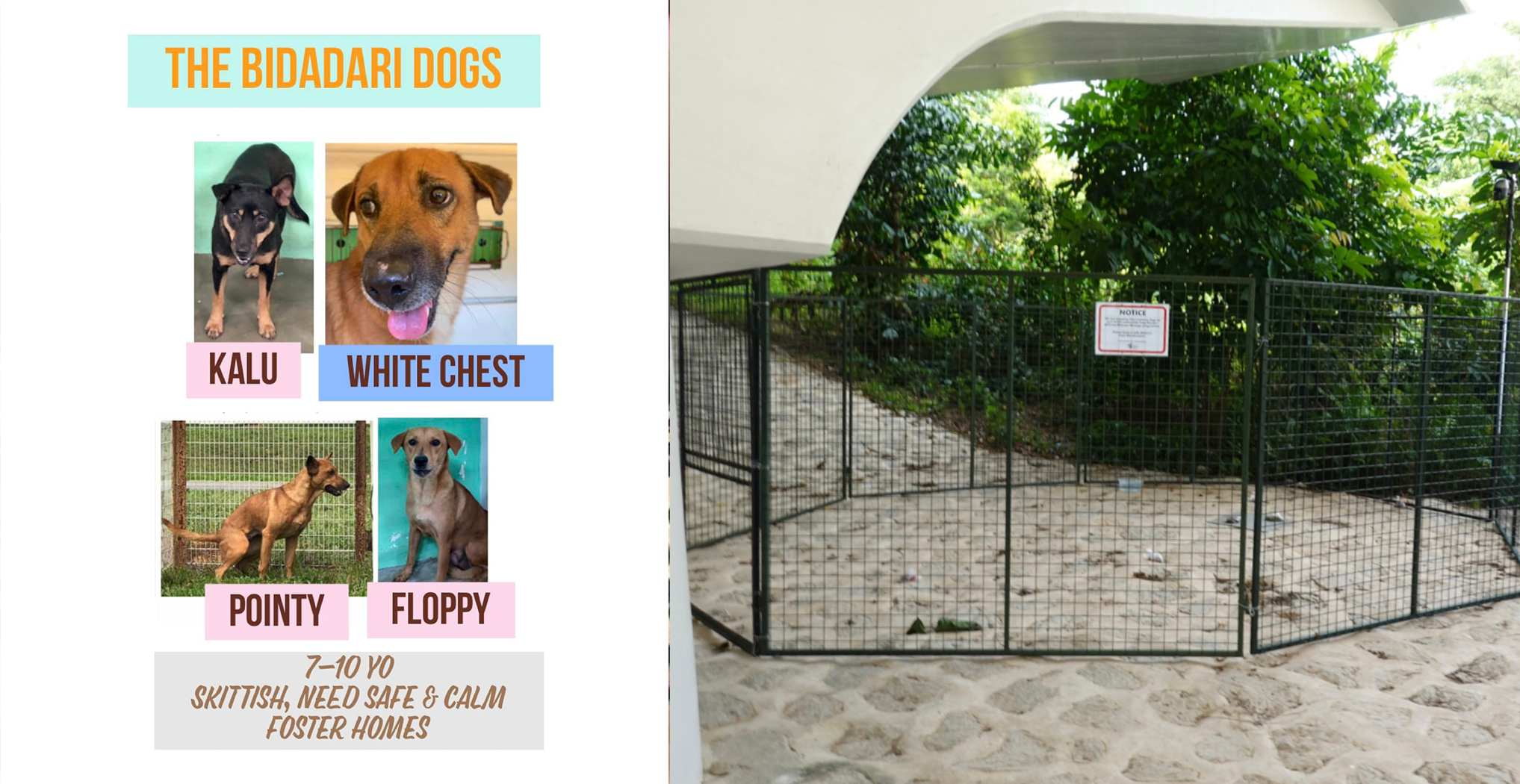


The National Parks Board (NParks) has received over 60 pieces of feedback regarding displays of territorial behaviour from the four stray dogs at Bidadari Park.
This includes around 20 reports of chasing parkgoers.
While no attacks have been reported so far, there have been cases of indirect injuries, such as with a young child who sustained injuries while running away.
Speaking to the media at Bidadari Park on Feb. 13, Lin Anhui, director of community animal management operations at the Animal and Veterinary Service (AVS), said that the dogs' territorial behaviour poses an "indirect safety risk".
The risk posed involves not just parkgoers, but also their dogs, as there have been reports of the stray dogs barking at pet dogs as well.
"I think if we do have a case of direct injury, that means it's too late. Our reaction has been too late [if] someone has got hurt, someone has got bitten," Lin said.
"As you know, the dogs were already here before humans. We wanted to try and leave the dogs here for as long as we could... but now it's come to a time where there are public safety concerns, to a level that we can't ignore them."
As such, NParks will remove the dogs and place them elsewhere as a precautionary measure, using "humane trapping methods", she added.
Humane trapping methods
Lin explained that several methods have been deployed so far to try and humanely capture the dogs.
All methods comply with the World Organisation for Animal Health — the international standard of humane capture — and are the same as those used in the Trap-Neuter-Rehome/Release-Manage (TNRM) programme that is typically used for the sterilisation of stray cats and dogs.
One of the methods involves setting up a corral, a playpen-type structure, near the dogs' regular feeding area.
Small packets of kibble and a bowl of drinking water were set up inside the corral, along with a surveillance camera.
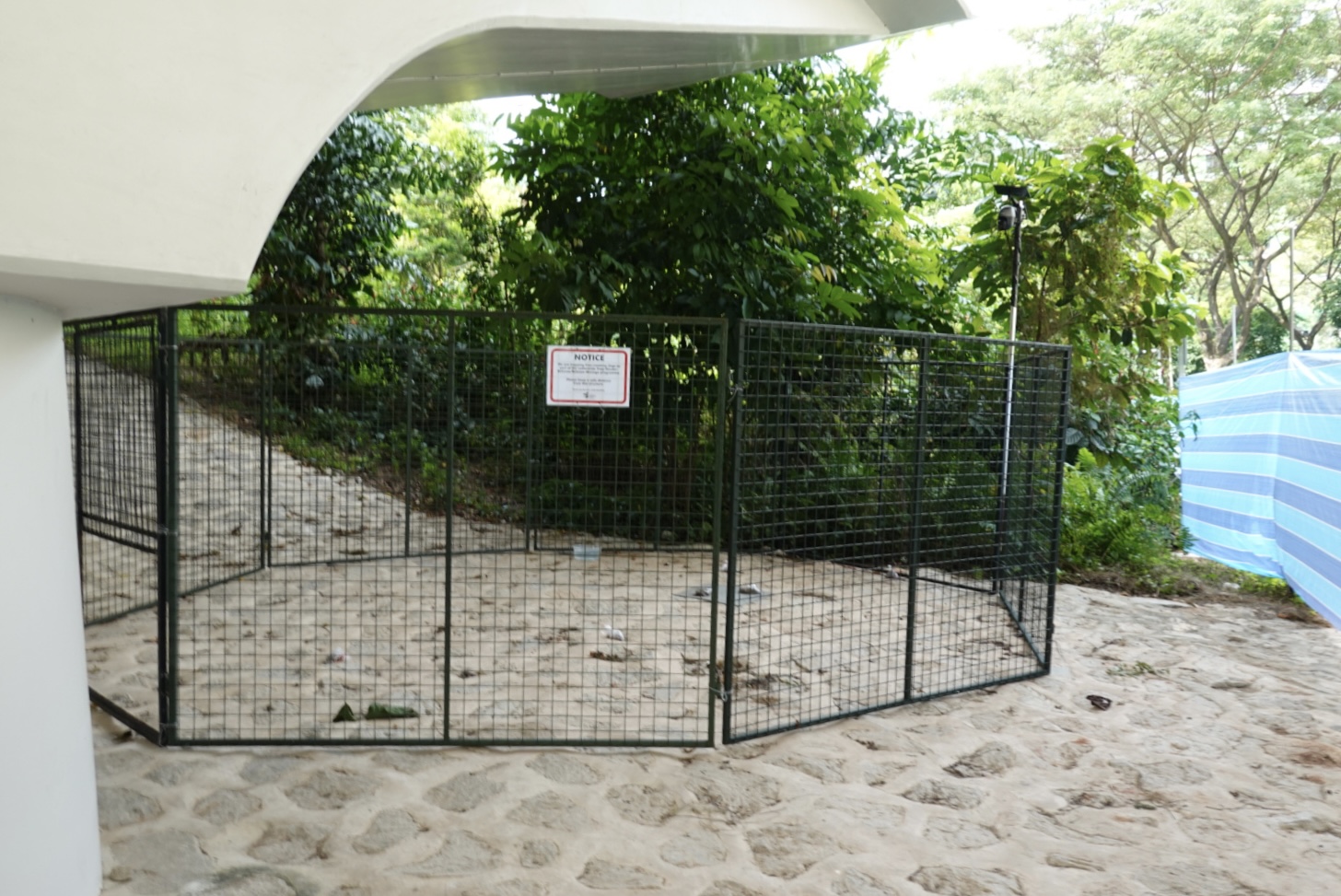 Photo by Ilyda Chua
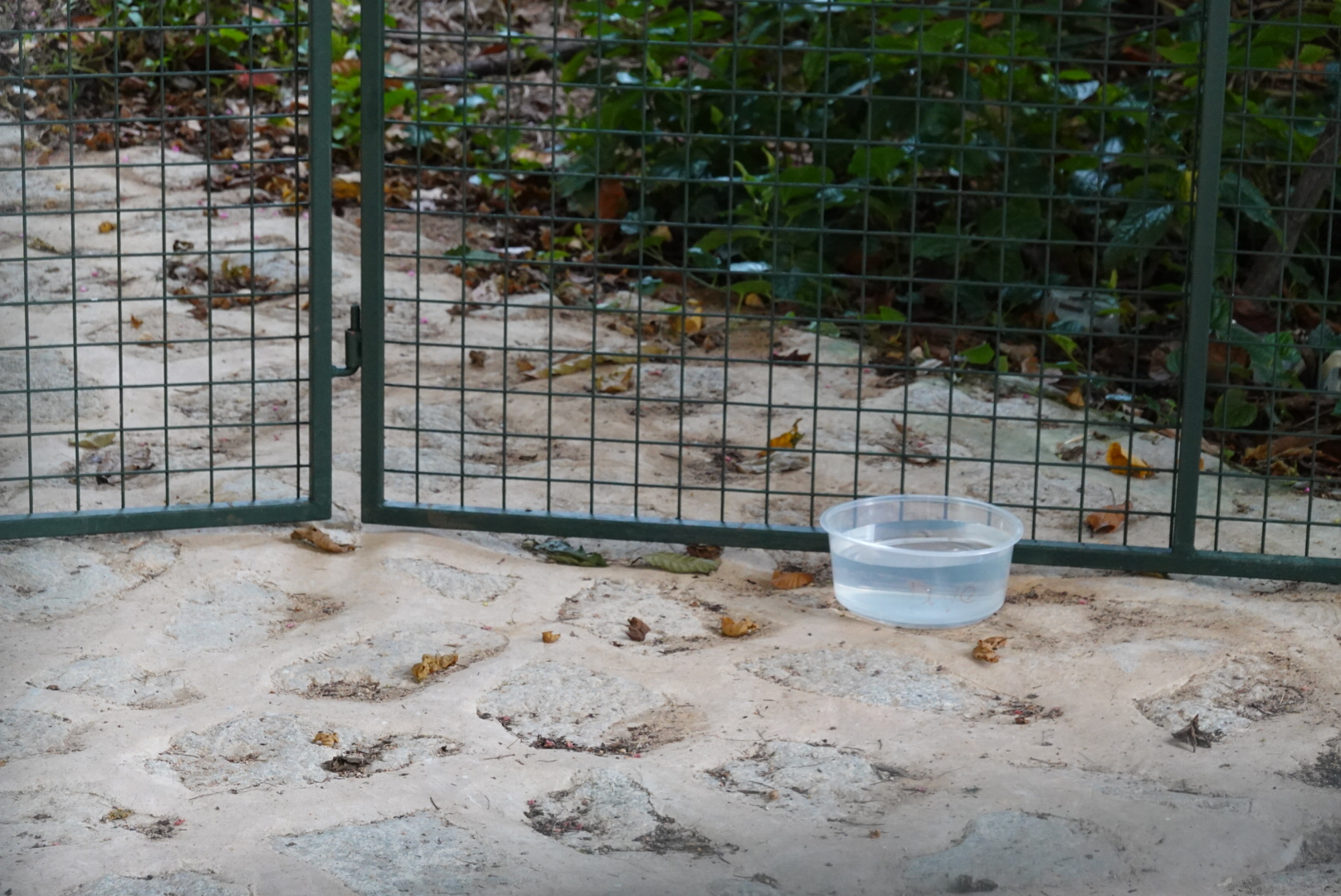 Photo by Ilyda Chua
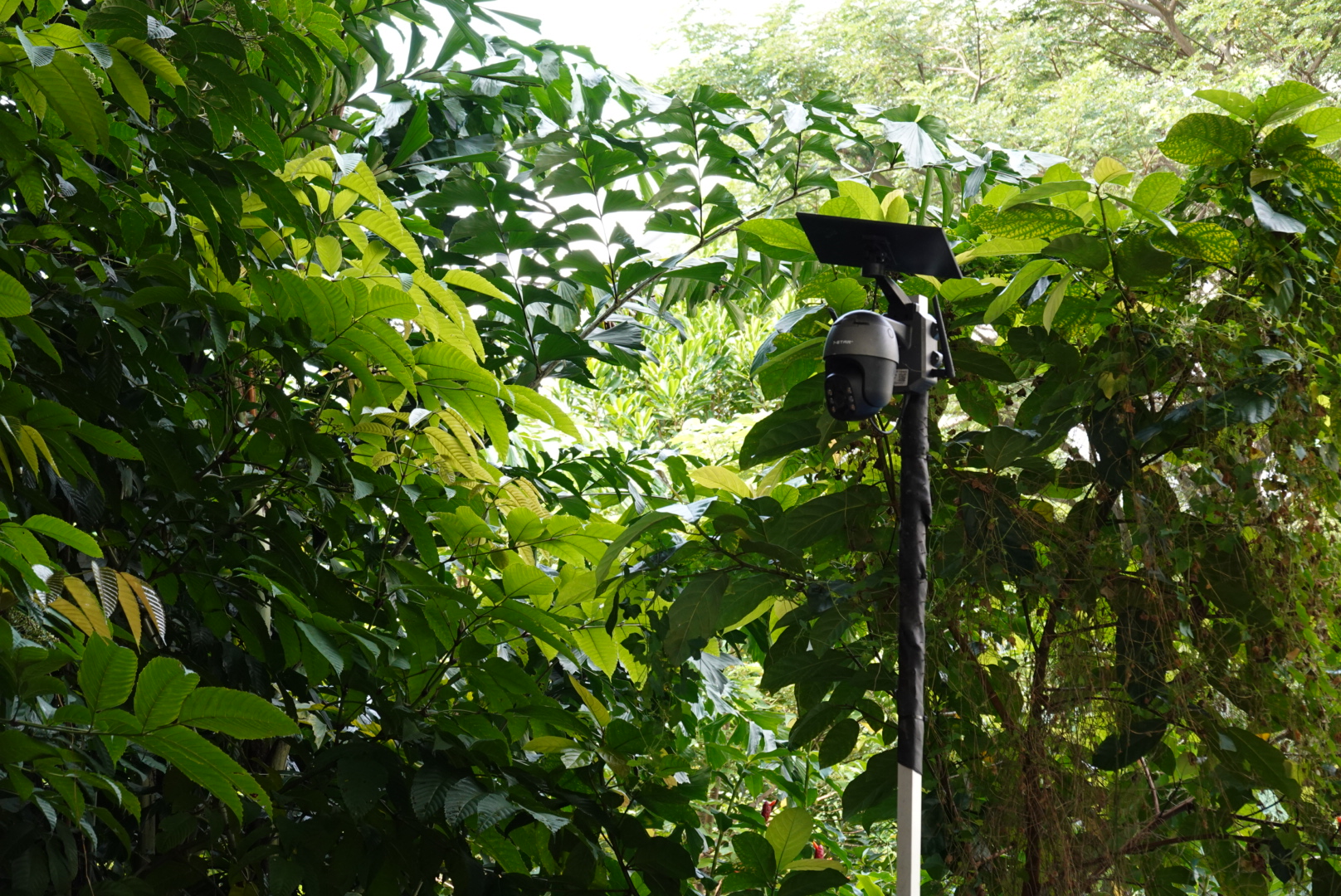 Photo by Ilyda Chua
The trap is meant to condition the dogs into getting comfortable with the corral, Lin said.
As time goes by, the dogs will begin to go in regularly to feed.
"And when the time is right, we'll close the door. And then we'll capture the dogs humanely within this corral," she said.
She added that the door is controlled remotely, and can be activated once the NParks staff observes from the surveillance footage the dogs are safely inside the corral.
Other measures include signage and blue canvas hoarding set up in a U-shaped barrier around a section of the park.
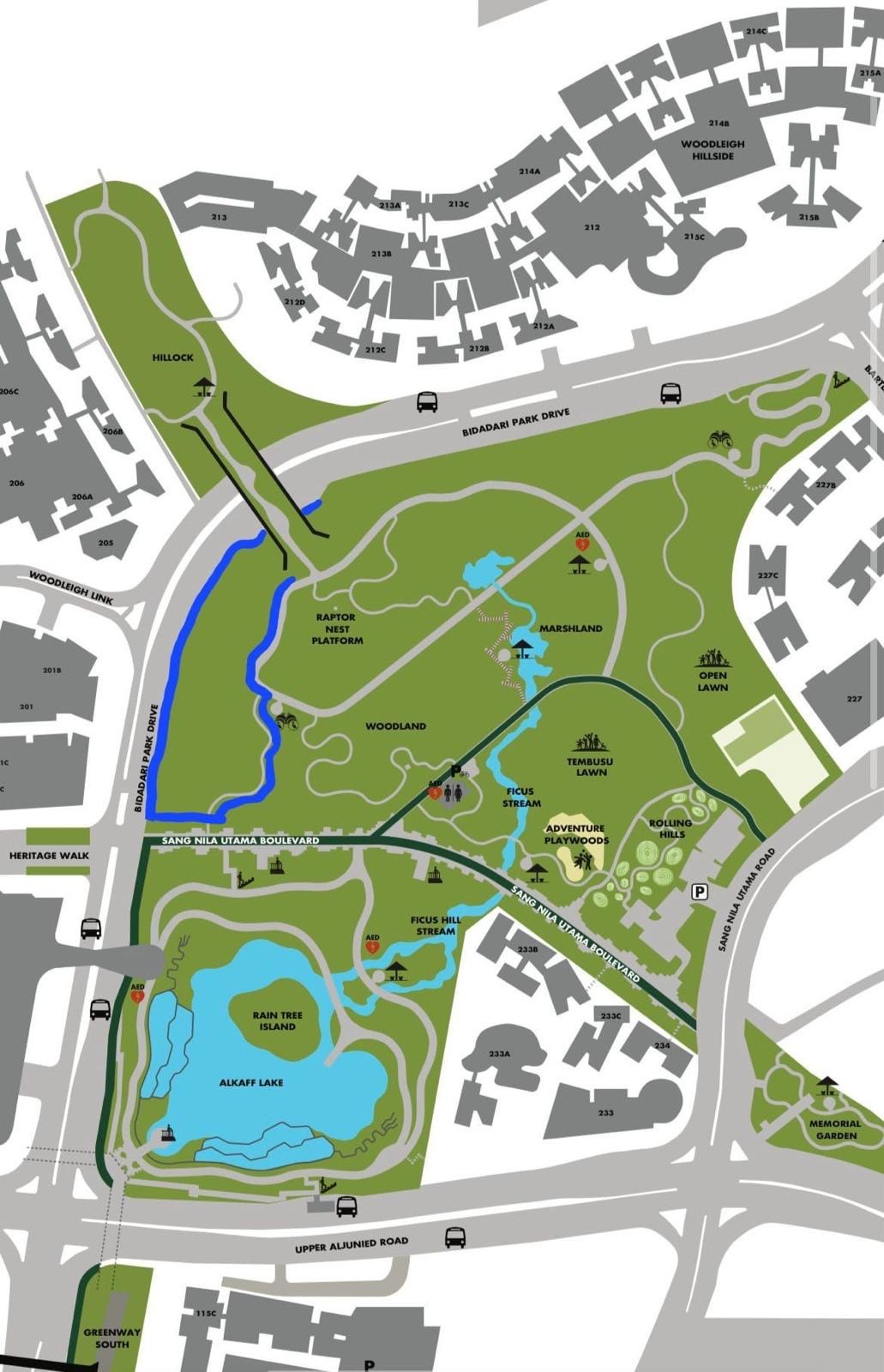 The line in blue shows the canvas hoarding. Image from NParks
When Mothership went down to the site on Feb. 13, dogs could be heard barking in the vicinity, although they were not visible.
According to Lin, that's the canvas hoarding at work.
"[The canvas] is a visual barrier [to] prevent the dogs from seeing people, and people from seeing the dogs.
So that minimises the interaction between dogs and people, minimises barking, minimises chasing, and so on."
Previously, NParks confirmed that the canvas hoarding does not prevent the dogs from going in and out of the hoarded-up area.
The hoarding also does not "trap" the dogs or prevent them from obtaining food and water, and all four dogs have been sighted in the park on NParks' surveillance footage.
 Gif from NParks
Rehoming and fostering
After the dogs have been successfully captured — an effort that might takes weeks or months, according to Lin — they will be either rehomed, or put into a shelter or foster home.
This will be done in partnership with local animal welfare groups (AWGs).
Due to their wild nature, they will also be rehabilitated to "teach them how to be a pet dog", if assessed to be suitable, Lin said.
She refuted claims that rehabilitation would be more difficult due to their age.
"I would say it's not always true that it's difficult to rehome an older dog," she said.
"For sure, with the right techniques, rehabilitation [and] behaviour modification is always possible. They say you can't teach an old dog new tricks, but actually you can with the proper methods," she quipped.
Lin explained that euthanasia will only be considered "as a last resort, on animal health or animal welfare grounds".
This means that if the dogs are healthy and are able to adapt to fostering, adoption, or sheltering, there would be no need for euthanasia.
Responsible behaviour
Finally, Lin urged members of the public to behave responsibly.
Remnants of human food packets were found slipped under the hoarding, including a spicy food snack.
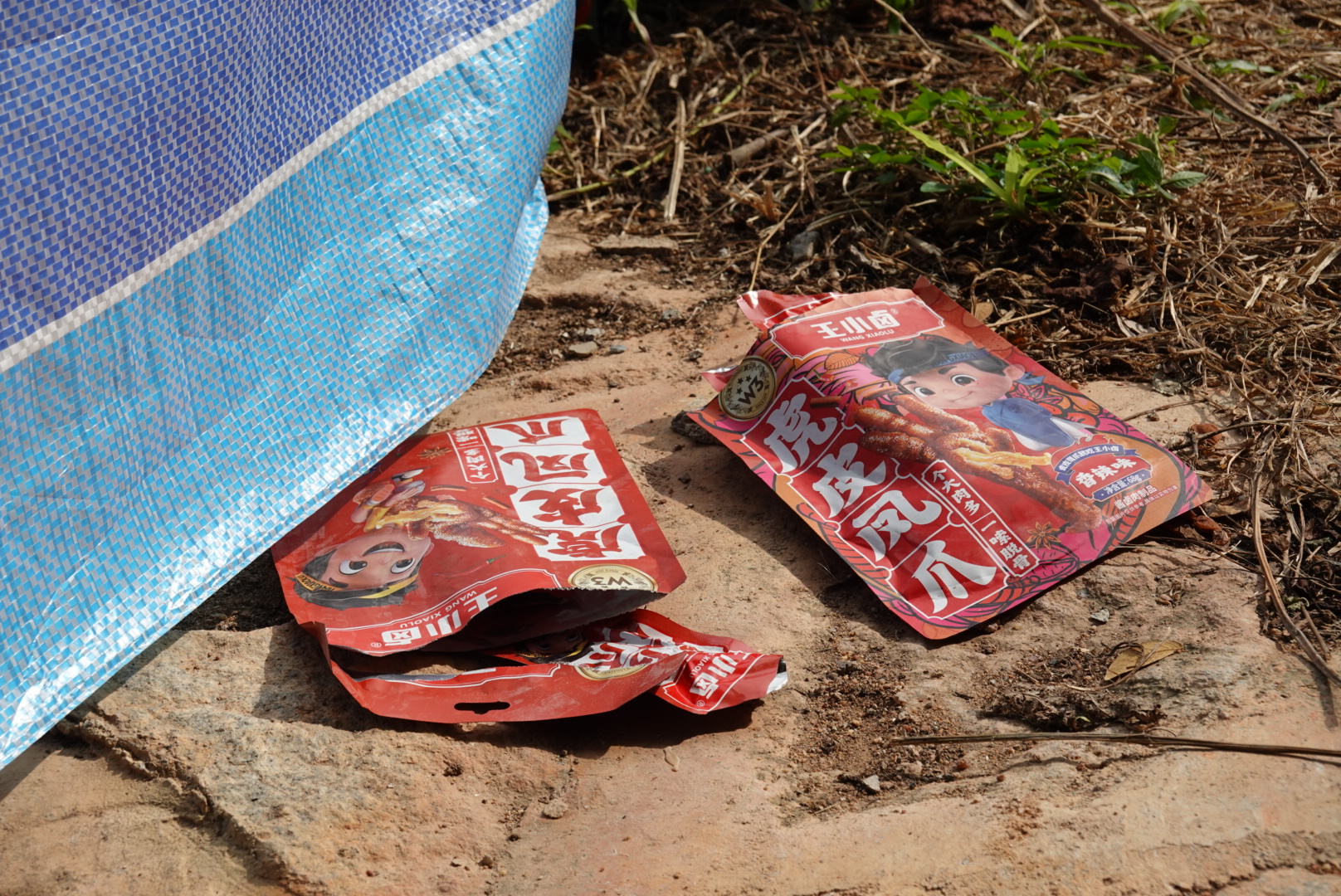 Photo by Ilyda Chua
Calling it "irresponsible feeding", Lin said that such food can cause health conditions in the dogs, especially given their age.
She added that parkgoers should also not approach the stray dogs, and adhere to the advisory signs on what to do in the event of an encounter.
For instance, they're advised not to stare at the dogs, to speak softly, and to walk away slowly without making any sudden movements.
Members of the public who need help can contact the Animal Response Centre at 1800-476-1600 or contact AVS at www.avs.gov.sg/feedback.
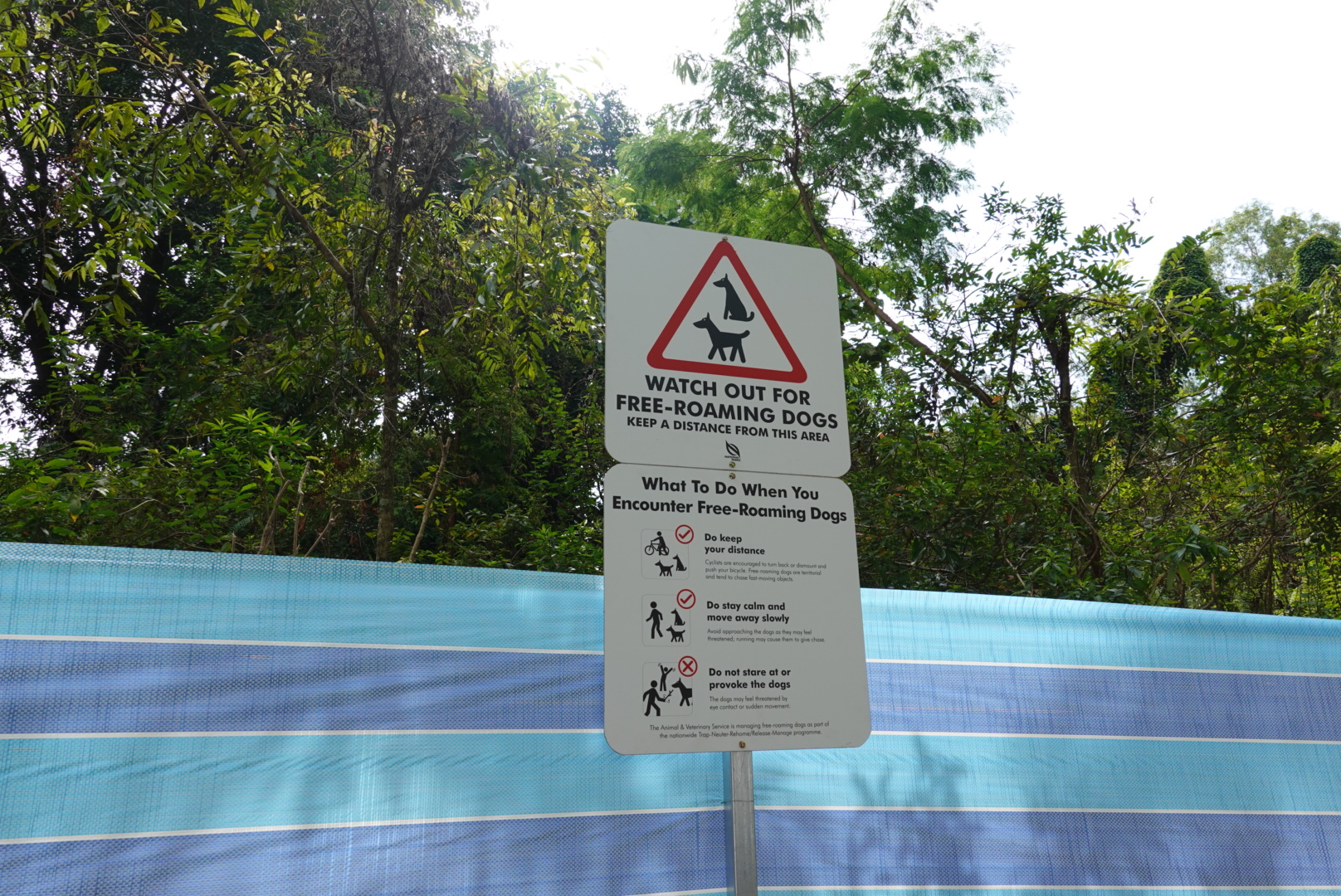 Photo by Ilyda Chua
If you're interested in adopting a dog under the TNRM programme, you can click here for more information and reach out to any of NParks's partner AWGs.
Top image from Jermaine Chua/Facebook and Ilyda Chua