



News

S'pore aims to be 'Global-Asia Node' in order to maximise R&D efforts: DPM Heng
Heng said Singapore's R&D budget was significant, but a fraction of global budgets, and Singapore would need to find international partners.
February 27, 2025, 03:41 PM
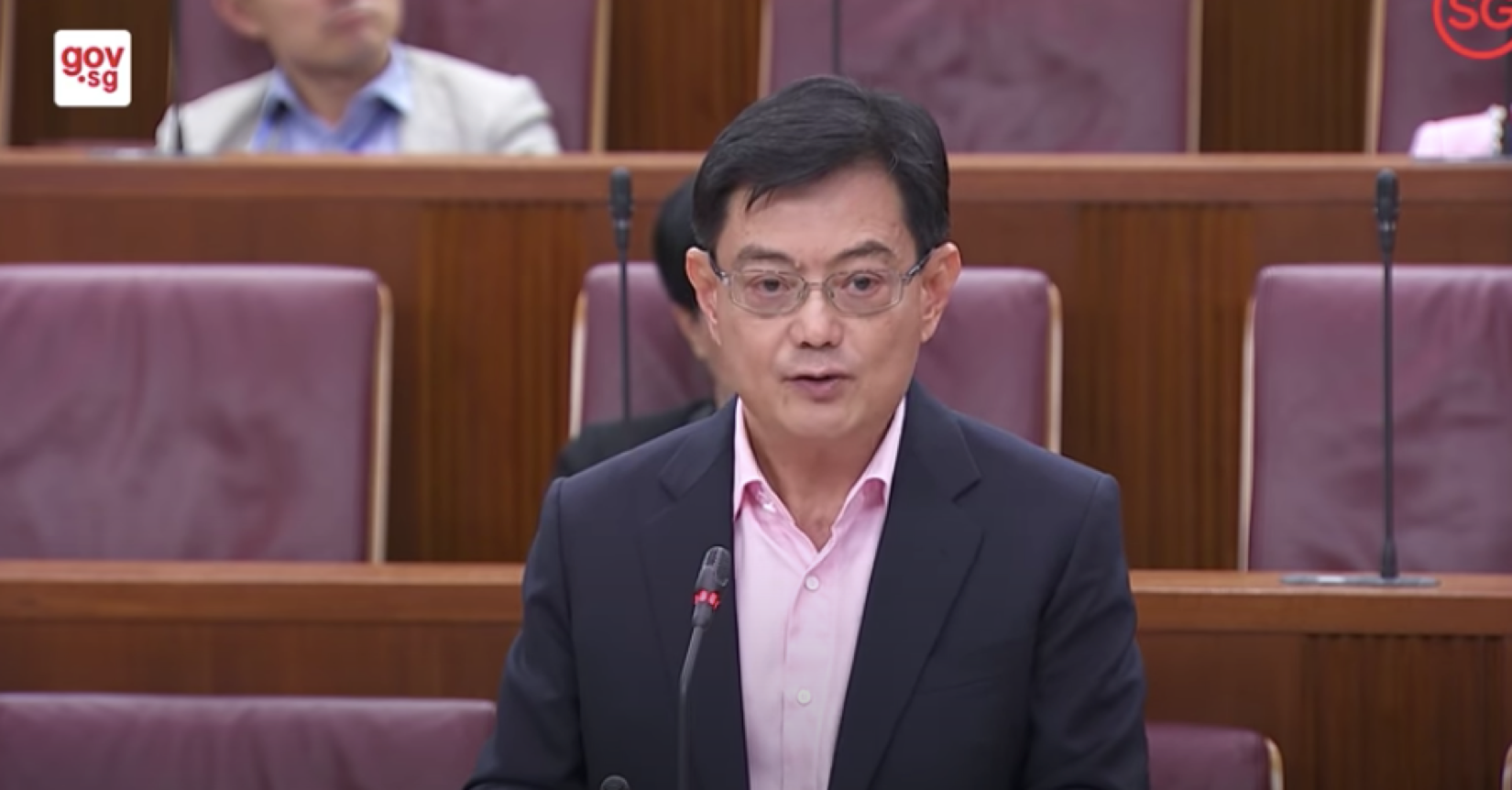


Deputy Prime Minister and chairman of the National Research foundation, Heng Swee Keat, spoke in support of the government's 2025 budget on Feb. 27.
Heng spoke about Singapore's success over the past 6 decades, but also about the need for it to respond quickly in a rapidly changing global landscape.
Heng said that it was necessary to press on with Singapore's economic transformation, and to double down on Singapore's investments in research, innovation, and enterprise (RIE).
He announced two new initiatives regarding RIE: the first being Applied Artificial Intelligence in priority sector and the second was the development of new large scale, cross-cutting research and development (R&D) programs.
Applied AI
The first initiative involved applying AI to major use cases in priority sectors such as healthcare, education finance, advanced manufacturing, connectivity, logistics, and transport.
The Applied AI initiative started in October 2024, when the Singapore government launched a S$120 million AI for Science initiative.
AI for Science would support researchers leveraging AI to accelerate discoveries in several fields, such as advanced materials and biomedical sciences.
Heng said Applied AI sat at the intersection of AI and domain knowledge, building on the strong domain expertise of Singapore’s practitioners and researchers in health care, education, finance, engineering, and many others.
It would allow Singapore to invest more in developing “bilingual scientific talents", researchers who had both domain expertise and knowledge of AI technologies, and were able to act as a bridge between both.
Flagships and Grand Challenges
The second initiative involved what Heng called “Flagships” and "Grand Challenges".
RIE Flagships refer to pushes for value creation in key economic sectors.
RIE Grand Challenges on the other hand would address national strategic priorities.
Flagships and Grand Challenges would pull together relevant research and translational capabilities across universities, A-Star and other research institutes.
It would also involve public agencies and private sector players, providing a suite of purposefully coordinated and synergistic programs.
The linkages between research, translation, and commercialisation would be tightened to advance key economic areas, produce new products, and companies and address real world needs and problems.
Heng gave an example of each: the first Flagship would be focusing on advancing semiconductor and microelectronics R&D.
The first Grand Challenges sought to address opportunities and challenges of “healthy and successful longevity”.
A fraction, but significant
Heng said Singapore's R&D budget, while significant, was a small fraction of global R&D spending, at about S$28 billion over five years.
For perspective, he said the United States spent US$923 billion (S$1.24 trillion) in a single year, whereas China spent US$812 billion (S$1.09 trillion).
Even compared to private sector companies, Google's parent company alphabet spent US$45 billion (S$60 billion) in 2023 alone, with Meta spending US$38.5 billion (S$51.6 billion)
According to Heng, in order to maximise that spending, Singapore has to work with like minded partners from the region and around the world to achieve synergies.
Heng said Singapore also needed to contribute to addressing global challenges, beyond simply achieving impact for Singapore.
That is part of why Singapore positioned itself as a “Global- Asian Node” and would step up its international partnerships in coming years.
Top image via MDDI/YouTube