News

New govt unit to act as 'last resort' to clear excessive hoarding in HDB flats
Declutter.
February 27, 2025, 02:10 PM
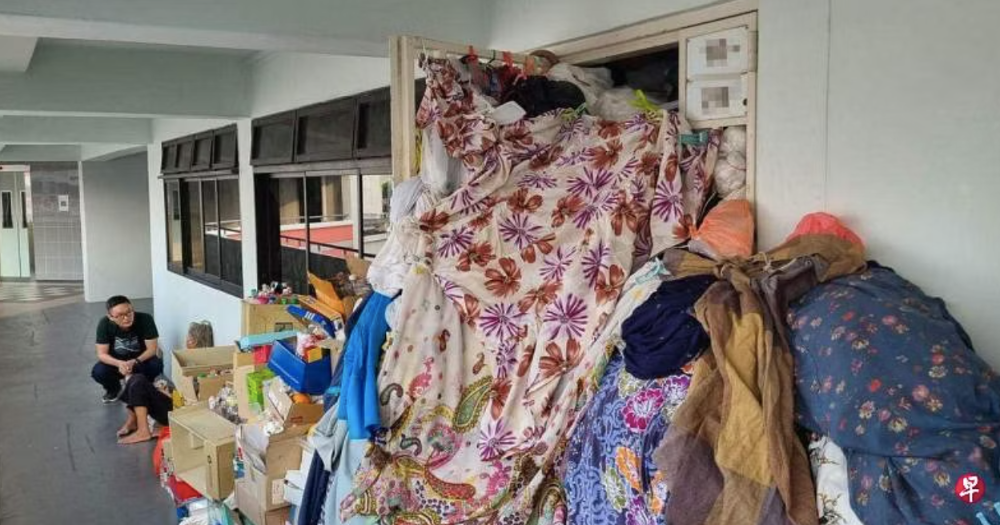


A new government unit known as the Community Relations Unit (CRU) will begin operations from the second quarter of 2025, and will serve as a measure of last resort to declutter the flats of hoarders which pose a significant fire risk.
According to Senior Minister of State for National Development Sim Ann, the government recently amended the Community Disputes Resolution Act (CDRA) to allow the Director General of the pilot CRU to apply to the Community Disputes Resolution Tribunals (CDRT) to declutter the hoarder's unit.
This application will be made if existing regulatory levers have been exhausted and the hoarder has failed to comply with the previous CDRT order to declutter his or her unit, she said in Parliament on Feb. 27.
What are the existing levers in place to tackle hoarder's units?
Sim was responding to a question about the protocol for HDB in handling the units of hoarders, how they coordinate with the Singapore Civil Defence Force (SCDF) in the case of units which are also a fire risk, and whether such protocols are being reviewed.
In her reply, Sim said that existing regulatory levers include officers from the Housing Development Board (HDB) visiting the hoarder's unit and coordinating with other frontline agencies working with the hoarder and their family.
If there is a significant fire risk, HDB will also coordinate with the SCDF to seize hoarded flammable items.
Sim noted that despite these efforts, there are cases where hoarders refuse to grant access for inspections or cooperate in decluttering efforts.
In addition, the hoarding may also recur as habits do not change so quickly.
Hence, this is why the CRU was developed, to address such situations, Sim explained.
Enforcement is only one of several measures to address hoarding
Sim also pointed out that the underlying motivations and support network of hoarders varies from case to case.
Enforcement is therefore only one of several measures to address hoarding, she added.
"A whole-of-society approach is needed to address hoarding in a more holistic and sustainable manner," she added.
An alliance to inculcate this approach, called the New Environment Action Team (NEAT), was formed involving members of the public and private sector.
"Through this platform, members can learn from and tap each other's strengths so that collectively, as an ecosystem, we identify hoarding cases early and provide more well-rounded support to hoarders and relief to their neighbours in a sustainable manner," Sim added.
What are the measures that will be taken prior to the rollout of the CRU?
In response to a supplementary question about what can be done to address hoarding cases, prior to the rollout of the CRU, Sim said there is a "very positive role" for grassroots and community volunteers to play in partnering agencies to address hoarding cases.
As for cases where neighbouring residents might be worried about their safety due to the risk of fire, HDB will work together with the SCDF to assess whether a fire hazard abatement notice should be issued.
"This is something that can be set up in cases that are warranted, and we do not have to wait for the CRU to be set up for this," she said.
Top image via Shin Min Daily News