



Abroad


The U.S. wants to tariff us over CPF & labour protections. Its 168-page case doesn't quite add up.
Something not to be thankful for.
November 27, 2026, 03:21 PM
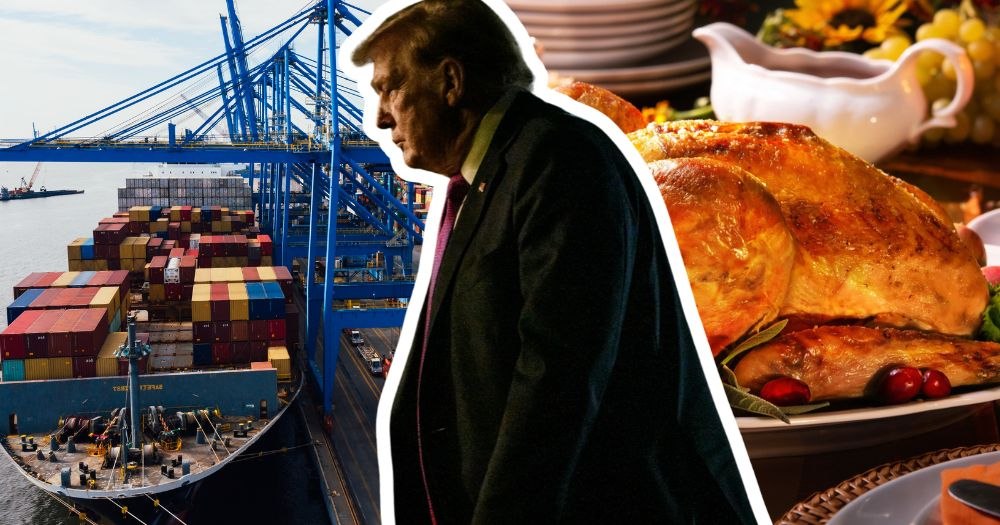
Image via White House Gallery & Canva


On Nov. 25, on the eve of the U.S. Thanksgiving holiday, the U.S. Trade Representative (USTR) gave Singapore and 13 other economies something to be unthankful for.
It proposed tariffs on 14 economies, including Singapore and five other ASEAN countries, the European Union, China, and several others, as the outcome of an investigation into 16 economies over alleged excess industrial capacity, which the USTR launched in March 2026.
Singapore could face a tariff rate of up to 20 per cent, although lower rates could apply depending on the outcome of negotiations with the U.S.
Perhaps the only piece of good news that came along with this announcement is that the new tariffs would be net of existing Section 301 tariffs.
Singapore is currently subject to Section 301 tariffs of 12.5 per cent, but the new tariffs would top out at 20 per cent and would not be cumulative.
The U.S. said that the tariff rate could be reduced to 10 per cent if Singapore was able to reach an agreement on reciprocal trade with the U.S. or conclude other negotiations that are responsive to the determinations of the investigation.
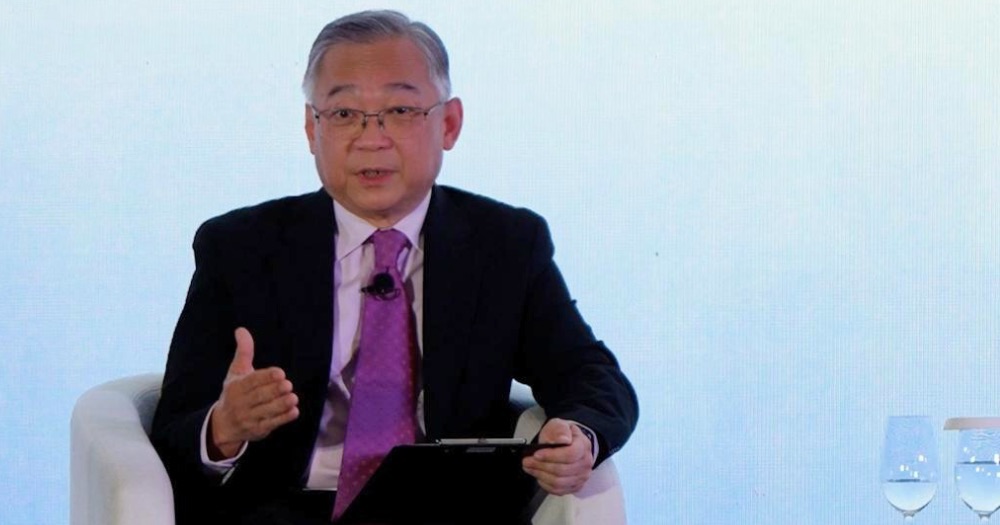
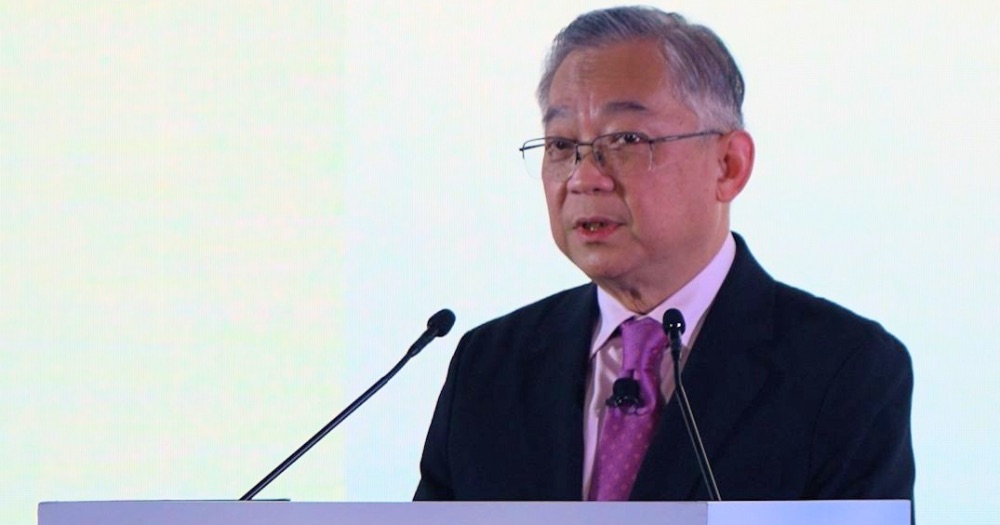
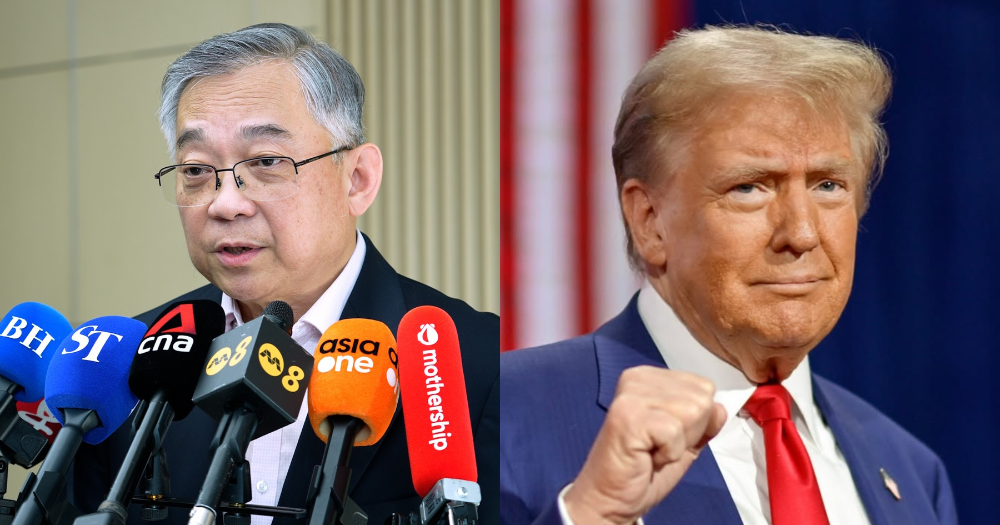
According to DPM Gan, the proposed tariff would affect about S$9.4 billion of Singapore's exports and raise the effective tariff rate on Singapore goods from 7.8 per cent to 10.3 per cent.
Disappointing disagreement
Singapore's Ministry of Energy, Trade and Industry (METI) has issued a statement on Nov.26, saying that it disagreed with the USTR's findings and was "very disappointed" with the proposed actions against Singapore, and did not take into account the structure of Singapore's economy.
METI said that Singapore's global trade surplus was a reflection of its outward and market-oriented economy, as well as Singapore's status as a trusted business and trading hub.
It also noted that under the U.S.-Singapore Free Trade Agreement (USSFTA), Singapore levies no tariffs on U.S. exports to Singapore, and the U.S. committed to levying no tariffs on imports from Singapore.
Since the agreement was signed 23 years ago, the U.S. has enjoyed a consistent trade surplus with Singapore.
METI also said that it has been actively engaging with the USTR, has "thoroughly addressed its queries and concerns".
It added that it will continue to do so, including urging it to reconsider its proposed actions and to explore ways to reduce the tariff.
The U.S. previously got Singapore's trade balance wrong
This is not the first time Singapore has had to clarify the USTR's assessment of its economy.
When the investigation was launched in March 2026, the USTR's Federal Register notice incorrectly stated that Singapore enjoyed a bilateral trade surplus of US$27 billion with the U.S. in goods and services in 2024.
In fact, it was the other way around: the U.S. had a trade surplus with Singapore.
According to a parliamentary reply by Minister of State for Trade and Industry Gan Siow Huang on Apr. 7, 2026, Singapore had raised the discrepancy with the USTR. The USTR later removed the inaccurate statement from the notice.
What the report said
The USTR released an eye-wateringly expansive 168-page report, pithily titled “Singapore’s Acts, Policies, and Practices Relating to Structural Excess Capacity and Production in Manufacturing Sectors,” but it was summarised into six points of contention:
- Industrial plans
- Financial repression
- Savings promotion policies that suppress domestic consumption. (Yes, this refers to the CPF)
- Inadequate labour protections
- Financial support for key sectors
- Failure to address global excess capacity and production, including through imports and foreign direct investment from non-market economies (NME) (essentially China)
The USTR claimed that such policies burdened or restricted U.S. commerce by reducing commercial opportunities for U.S. producers and exporters, harming the U.S. economy by contributing to lost production, exports, jobs, and investment in the U.S. manufacturing sector, and increasing the U.S. economic security risk.
Among the manufacturing sectors highlighted in the report were electronics and semiconductors, healthcare-related manufacturing, and petrochemicals.
What's wrong with the CPF?
The report's detailing of its main issues with Singapore's industrial capacity feels like looking through a mirror smeared with grease: you recognise things but the details seem distorted or absent, which is odd for a 168-page document.
As Deputy Prime Minister Gan Kim Yong noted, one of the more curious findings concerns Singapore's Central Provident Fund (CPF), which the USTR cited as an example of savings promotion policies that allegedly suppress domestic consumption.
The report took issue with what it deemed high levels of employee contribution requirements, saying that it suppressed consumption and that high mandatory employer contribution rates depressed wages and therefore household consumption.
Gan said he was surprised the U.S. was concerned about what he called a "unique" system.
Gan said the CPF is critical for an ageing society with no natural resources, because it keeps people self-reliant without overburdening younger generations.
He added that Singapore also encourages consumption through schemes such as CDC vouchers.
While property purchases are technically classified as investment rather than household consumption, healthcare expenditure does count as consumption.
One of the justifications used against the CPF was drawn from an article about lower-income workers benefiting from 401(k) plans, and whether employer contributions reduce wages.
If you're unsure what a 401(k) plan is, it's because it is a U.S. retirement savings plan that is remarkably different in nature from the CPF, so it's not immediately clear why they made the comparison. Also the link doesn't work.
Pensionable age
There are also other curious additions, such as under Section II Part B no. 4, where the USTR lists failure to prohibit migrant worker recruitment fees as an issue.
The section also includes a portion which indicates that Singapore's substantial reliance on migrant workers is consistent with Singapore's comparatively low levels of social protection coverage.
It lists that Singapore lags behind the U.S. in several social protection categories, such as:
- the percentage of children or households receiving child/family cash benefits
- unemployment benefits
- disability social protection benefits
- the percentage of persons above retirement age receiving a pension
It even provides a graph showing the comparative rates, with an arrow highlighting Singapore's lack of coverage under the unemployment benefits indicator.
However, Singapore introduced the SkillsFuture Jobseeker Support scheme in April 2025 to provide temporary financial assistance to eligible involuntarily unemployed individuals.
Under the scheme, eligible individuals can receive up to S$6,000 over six months while looking for a new job.
Whether the USTR's figures capture this development depends on the period covered by its data and its definition of unemployment benefits.
There is literally an argument in Parliament as to whether this is correct or not, but it's curious as to why they have put this under a foreign workers section.
It is also worth noting that Singapore's retirement system is built around the CPF rather than a state pension.
Singapore's CPF LIFE scheme, for instance, provides eligible members with monthly payouts for as long as they live.
A direct comparison of pension coverage between Singapore and the U.S. may therefore overlook differences in how retirement income is provided in the two countries, depending on whether CPF LIFE payouts are captured by the indicators used.
"Other support"
Beyond that, there are also issues that the USTR raises regarding investment tax credits, schemes to promote SMEs, encourage internationalisation for Singaporean companies, and literally a section labelled “other support.”
But these kinds of government-funded support schemes to encourage business expansion are not unique to Singapore, or the 15 other economies that were investigated.
In fact, the U.S. and the Trump administration have engaged in similar types of schemes, namely in their attempt to return semiconductor production to the United States.
It is also worth pointing out that some of Enterprise Singapore schemes have been instrumental in helping Singaporean firms invest in countries those firms might not otherwise have been able to such as the U.S.
So the USTR’s accusations are not just curious; they also work at cross purposes.
A door left open - The China factor
Singapore is one of only three economies offered a substantially lower rate.
Singapore, India and Vietnam are the three without a finalised Agreement on Reciprocal Trade with the U.S., and the lower rates are an incentive to conclude one.
Singapore's rate would be halved, from 20 to 10 per cent. India could go from 25 per cent to 17, roughly a third less, and Vietnam from 35 per cent to 20, about two-fifths less.
One thread runs through many of the reports: exposure to China.
The USTR labels this "non-market economy" (NME) exposure.
In Singapore's case, under Section II Part A no. 7 b, it says that Chinese content in Singaporean exported manufacturing goods has been consistently higher than in U.S. exported goods.
China bears the brunt of NME exposure claims, although Vietnam is mentioned as well.
One might argue that this is a natural consequence of China’s rise in manufacturing, and not really something Singapore can control (consider the case of YouTuber Destin Sandlin, who documented the immense difficulty of constructing anything entirely in the U.S.), harking back to DPM Gan’s lament about the USTR’s seeming lack of understanding.
Black Friday
As noted, the report is long, and we have only highlighted the parts of it that have stood out as odd.
The USTR's findings raise legitimate questions about the relationship between domestic economic policies, international trade and global manufacturing capacity.
But whether Singapore's policies have the adverse effects alleged by the U.S. is a separate question, particularly when some of these policies were designed to address Singapore's own economic and social circumstances.
From CPF to government support for businesses, policies that are familiar to Singaporeans appear to have been assessed primarily through the lens of their potential impact on American commerce.
What deserves closer scrutiny is whether that assessment sufficiently accounts for how these policies actually work, why they exist, and the circumstances of a small and open economy like Singapore's.
Written comments are due Jan. 5, 2027, and public hearings begin Jan. 25, 2027. In the meantime, pity the METI staff who now have to comb through 168 pages and work out what's being asked of Singapore.
For them, the report is something Americans will recognise: someone you’re close to turning up just before Thanksgiving, chewing something odd and dry, and spending Black Friday hunting for a good discount.