



News


S’pore will continue to engage the US in efforts to lower new tariff rate: Gan Kim Yong
DPM Gan said the proposal came as a "surprise".
November 26, 2026, 07:11 PM
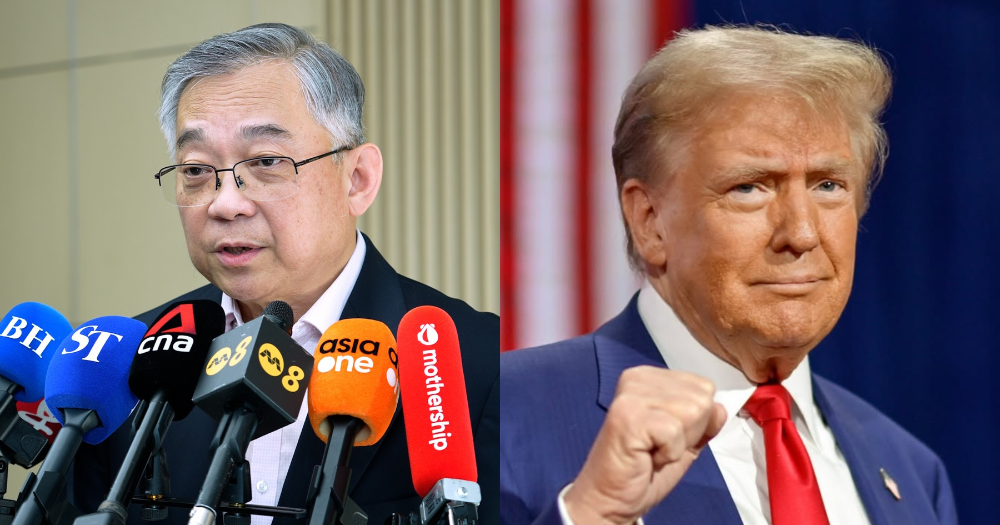
Photos from Mothership and Donald Trump/Facebook.


Singapore will continue to engage the United States in an effort to lower the proposed tariff rate on its exports, said Deputy Prime Minister Gan Kim Yong on Nov. 26.
This comes after U.S. president Donald Trump's administration announced proposed new tariffs on 14 trading partners, after an investigation into alleged excess industrial capacity.
The probe examined whether these economies' manufacturing policies and practices adversely affected U.S. commerce.
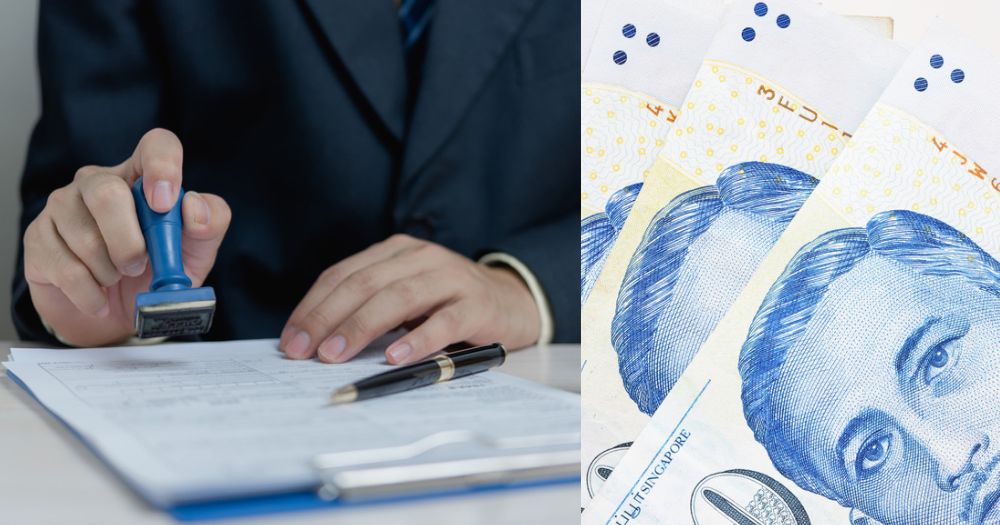
The report proposes a maximum potential tariff rate of 20 per cent, net of existing tariffs, on Singapore's exports to the U.S.
Speaking to reporters at a media doorstop, DPM Gan, who is also Minister for Energy, Trade and Industry (Trade), said the proposed new tariffs would raise the effective tariff rate on Singapore goods from 7.8 per cent to 10.3 per cent.
U.S. investigation report
In its report, the U.S. Trade Representative (USTR) said Singapore had contributed to structural excess capacity through several acts, practices and policies:
- Industrial plans;
- Financial repression;
- Savings promotion policies that suppress domestic consumption, a reference to Singapore's Central Provident Fund (CPF) scheme;
- Inadequate labor protections
- Financial support for key sectors; and
- Failure to address global excess capacity and production, including through imports and foreign direct investment from non-market economies.
Rebutting the findings on the CPF, Gan said the scheme is critical and unique to Singapore due to its ageing society and lack of natural resources.
"The CPF scheme is something that is very critical for us and is unique to us because of the structure of our society," he said. "We are ageing, and we do not have natural resources to rely on."
"We don't want to overburden our younger generation. That's why we have this scheme to make sure that we are all self-reliant."
Came as a "surprise"
Gan also said the proposal came as a surprise, as it was not something one would expect from a major trading partner.
He said Singapore has "always been very principled" in its negotiations, keeping its own interests at the centre of its discussions.
"We also have to bear in mind that whatever agreement we arrive at and achieve in the US, there will be give and take. There will be compromises. There will be trade-offs that we need to be prepared to accept," Gan said.
"Disappointed"
Earlier on Thursday, the Ministry of Trade and Industry (METI) said it was "very disappointed with the proposed actions", adding that the USTR's findings do not take into account the structure of Singapore's economy.
It said Singapore's trade surplus reflects its outward- and market-oriented economy and its status as a trusted business and trading hub.
It added that, as a small country with limited resources, Singapore's priority is to ensure that its markets operate efficiently and that it remains globally competitive.
"Singapore’s economic policies do not protect our domestic market or subsidise manufacturing for export. Our free trade agreements seek to lower barriers to trade and investments, and are fully compliant with World Trade Organisation (WTO) rules."
METI also said it has engaged with the USTR actively throughout the investigation and will submit further comments during the upcoming public consultation period.
Existing tariffs
In July 2026, the Trump administration imposed a tariff of 12.5 per cent of Singapore, alleging that Singapore had failed to impose and effectively enforce a prohibition on the importation of goods produced with forced labour.
However, Singapore maintained that it does not condone forced labour and has a comprehensive framework to tackle such practices domestically.
"There is no evidence of Singapore’s role in the supply chains of goods associated with forced labor exported to the U.S."
Singapore was among 38 countries, including China, hit with the 12.5 per cent rate.
Countries such as Cambodia, Malaysia, Indonesia, India, Bangladesh, the United Kingdom and Mexico received a lower rate of 10 per cent.