



News


PAP keeps top line-up intact in 39th CEC, puts younger leaders to work at party HQ: Analysts
Party leaders and cadres aligned on importance of stability, but renewal still happening elsewhere.
November 05, 2026, 11:21 PM
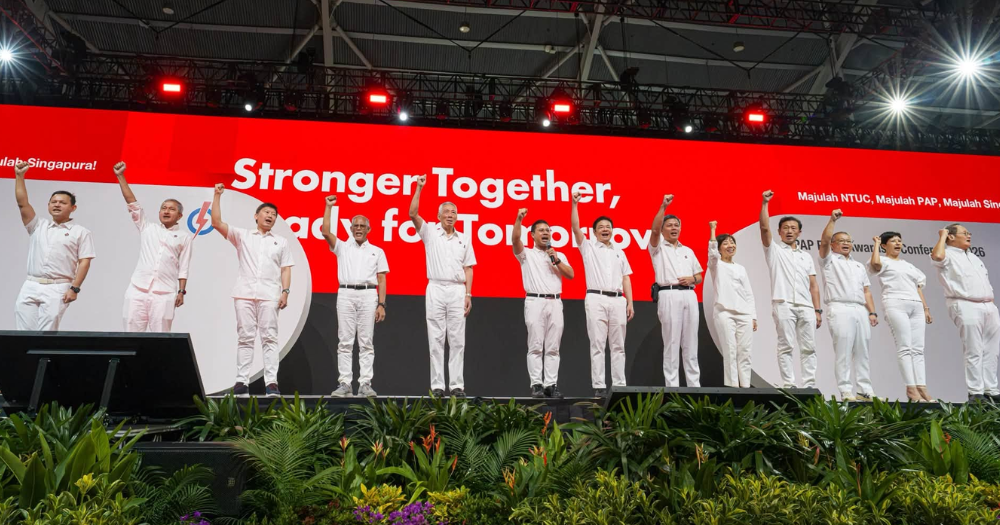
Photo via Lawrence Wong/Facebook.


As with the People's Action Party (PAP) Central Executive Committee (CEC) election on Oct. 25, there was no major shake-up to the appointments that make up the ruling party's highest decision-making body.
All eight top spots were retained by their incumbents.
Education minister Desmond Lee continues as party Chairman, social and family development minister Masagos Zulkifli as Vice-Chairman, Prime Minister Lawrence Wong as Secretary-General and defence minister Chan Chun Sing as the Assistant Secretary-General.
The status quo appointments for the PAP's 39th CEC signal the party's preference for stability and emphasis on leadership consolidation at this stage, analysts said.
That doesn't mean renewal, which PM Wong has often stressed is needed, isn't underway.
It's just taking place elsewhere in the party organisation, like the PAP HQ Executive Committee (ExCo).
No changes to the top eight spots
While party cadre elects the CEC members, the CEC members parcel out the appointments among themselves.
They also decide who to co-opt.
The absence of changes in the CEC's top eight spots meant the party leaders echoed the voting pattern of the over 2,000 party cadres during the party elections on Oct. 25.
This shows that the party leaders and cadres are aligned on the position that stability and status quo is important at this stage of the electoral cycle, just over a year since GE2025, said Eugene Tan, political analyst and Professor of Law at Singapore Management University (SMU).
"It’s about the party’s emphasis on leadership consolidation at this stage," Eugene Tan added.
Teo Kay Key, senior research fellow at the Institute of Policy Studies, commented, "It is possible the party leaders might have taken the cue from the results of the [party] elections."
Independent analyst Felix Tan found the outcome unsurprising.
He offered two ways of looking at it.
First, it reflects a preference among cadre members for stability and continuity amid growing regional tensions and global political and economic uncertainties.
Second, it could be a subtle indication that the party is not quite ready to embrace PM Wong's call for newer and more diverse voices within its leadership.
"I would hesitate to call it a rebuke, but it does suggest that the pace of renewal may be more gradual than some had initially expected," Felix Tan said.
Observers had also been watching for whether another assistant secretary-general (ASG) will be appointed. None was.
For Eugene Tan, not appointing another ASG could reflect PM Wong's intention to not distract from the immediate tasks at hand.
"Had a second ASG been appointed, that could set tongues wagging and trigger over-exuberant discussion on who in the 4G team would be appointed deputy prime minister(s) after Gan Kim Yong," Eugene Tan said.
Felix Tan said that it suggests a preference for maintaining the status quo, rather than change for change's sake.
Stability at the top a norm
Until recently, it was normal to see little to no major change in the PAP CEC's top posts even as the CEC's composition shuffled.
For example, the top CEC appointments did not change across the 32nd to 34th CEC, from 2012 to 2018, under then-Prime Minister Lee Hsien Loong.
Following retirements, some changes were made in 2018 in the 35th CEC. The 36th CEC retained the same appointment holders.
It was only in the 37th CEC in 2022 that the top posts saw significant changes.
That year, the party created a new Deputy Secretary-General post for Lawrence Wong, who was then the PM-in-waiting.
Then party chairman Gan Kim Yong, now DPM, also retired from the CEC, with Heng Swee Keat taking over as party chairman.
In 2024, Lee Hsien Loong stepped down as party chief at the end of the 37th CEC, paving the way for Wong to take over as Secretary-General in the 38th CEC.
The next significant change came in 2025 when then-party chairman Heng retired and Desmond Lee took over.
In that same shuffle, Ong Ye Kung took over from K Shanmugam as party treasurer, and Chee Hong Tat rose to assistant treasurer. Faishal Ibrahim was also co-opted.
A year later in 2026, Faishal resigned from the CEC and Zaqy Mohamad was co-opted after taking over as the acting minister for Muslim Affairs.
The 39th PAP CEC's status quo appointments thus represents a return to the norm.
In other words, the dust may finally be settling after the party spent the past four years and more navigating a leadership transition, seeing through PM Wong's first general election as party chief and managing Faishal's resignation.
Jeffrey Siow, Jasmin Lau
Four spots remained vacant on the CEC and were up for co-option.
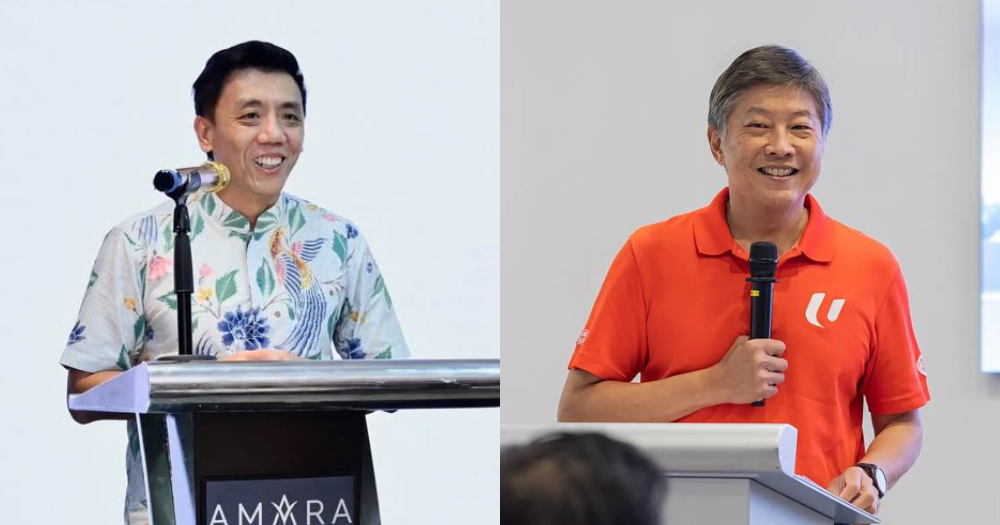
Minister for Transport Jeffrey Siow was co-opted, along with Second Minister for Foreign Affairs and Home Affairs Sim Ann and labour chief Ng Chee Meng.
Notably, Acting Minister for Manpower Jasmin Lau was not co-opted.
Both Siow and Lau were on the ballot of 19 candidates put to cadres for voting at the Oct. 25 party elections.
Eugene Tan said that he would not read too much into the co-option of Siow but not Lau.
"The fact that Lau was among the 19 nominated for the CEC election is significant," he added.
Sim's and Ng's co-option were not surprising, said analysts.
Renewal still taking place elsewhere in party organisation
That things are status quo does not mean renewal has paused. It continues, but this time in the PAP HQ ExCo.
"It is the salient theme in the CEC appointments with several leaders, elected in GE2025, being given appointments within the PAP HQ," Eugene Tan pointed out.
Minister for Culture, Community and Youth David Neo will take over from Tan See Leng as chair of the Seniors Group.
Neo was not part of the team previously.
However, he was the founding group chief of the Silver Generation Office, part of the Agency for Integrated Care.
Goh Pei Ming will take over as Climate Action Group chair, replacing Koh Poh Koon, who stepped from political office in June 2026.
Similarly, Goh was not on the team previously.
Both Neo and Goh were promoted in July's cabinet reshuffle.
Dinesh Vasu Dash was made assistant organising secretary of the HQ ExCo.
The rest of the HQ ExCO is unchanged, with Chan continuing as chairman.
"The younger leaders are given opportunities to engage in party work and the PAP HQ ExCo is one platform by which they are exposed to such opportunities of working closely with the party rank and file," Eugene Tan commented.
Teo Kay Key suggested that placing younger leaders in lower party appointments could also be a way to test whether they measure up in party leadership roles.
The HQ ExCo sits beneath the CEC in terms of hierarchy in the party's organisations.
Its various committees organise activities and engage communities based on their specific focus areas, such as seniors, mental health, and climate change.
Their work is sometimes tabled in parliament for debate.
The HQ ExCo was proposed and formed by Goh Chok Tong in 1985.
Writing in his book, "A History of the People's Action Party, 1985-2021", Shashi Jayakumar noted that Goh's impetus for forming a HQ ExCo was for it to assist the party's organising secretaries and HQ staff "to think out and implement ways and means of ensuring that the Party continues to enjoy popular support and occupy political high ground".
Seen this way, appointing younger leaders to chair HQ ExCo committees could also be the party's way of giving them a hand in shaping the party's policy stances.
Aljunied and Sengkang representation
The fourth person co-opted to the 39th CEC was PAP Serangoon branch chairperson Chan Hui Yuh, who contested as part of the PAP slate in Aljunied GRC in GE2025.
PAP Sengkang branch chair Lam Pin Min is now absent from the CEC, leaving the GRC unrepresented on the party's executive body.
"Rotation is the explanation," Eugene Tan said.
He pointed out that there are three constituencies where the PAP is not the incumbent. They are Aljunied GRC, Sengkang GRC and Hougang SMC.
"The PAP probably wants the different constituencies to be represented in turn on the CEC," Tan surmised.
Teo Kay Key made a similar suggestion, but said that it could also be a way to test Chan for future leadership positions.
Lam was co-opted into the 38th CEC, while Victor Lye, who contested in Aljunied GRC, was co-opted into the 36th CEC.
In the 37th CEC, PAP Aljunied GRC candidate Alex Yeo was co-opted.
Felix Tan remarked that it might have to do with how the PAP has weighed its electoral prospects.
"Given the controversies surrounding the Workers' Party and some of its senior leaders, the PAP may see an opportunity to improve its electoral prospects in Aljunied at the next general election," he said.
However, Tan noted that the electoral outcome will ultimately depend on the candidates fielded, their engagement with residents and whether voters see a compelling reason for change.
The end of one transition and onto the next?
Preceded by a period of numerous changes, the status quo outcome of the 39th PAP CEC elections and appointments may mark an end of one period of transition.
This calm and quiet might not last long, however.
As it is, leadership and party renewal is still ongoing, and may soon reach the upper echelons of party leadership once more.
Before the next general election, due by 2030, there may be two more PAP CEC elections — in 2028 and 2030.
By the next GE, senior figures like Senior Minister K Shanmugam and foreign affairs minister Vivian Balakrishnan will be 70 or older.
PM Wong himself has admitted that they have reminded him of their need for successors.
Nobody can say for certain if senior figures like them will stay on in the CEC after the next party election in 2028.
"We can expect the pace of change to pick up in 2028, and even more so in 2030 should the CEC election take place before the general election," Eugene Tan remarked.
Felix Tan echoed this, saying that while there might be relatively few changes to the PAP CEC for the time being, we may see more significant changes as the next GE approaches.
"Any changes introduced closer to the election may also carry greater significance, particularly in signalling how the PAP intends to position its next generation of leaders," he added.
Teo also expects to see more changes moving forward.
"However, there seems to be a possibility that the PM might want to have more stability especially in the face of more volatile international and economic environment, to ensure that the leadership core remains consistent," Teo said.