



Abroad


How are Indonesia's peatlands affecting transboundary haze?
Indonesia is home to nearly a quarter of the world's tropical peatlands.
October 14, 2026, 02:50 PM
Image via AFP

 Transboundary haze has affected everyday life in Singapore, and air quality has often fallen into the unhealthy range.
The haze is a regional problem, reaching beyond Indonesia, Malaysia and Singapore.
It also bears repeating that Indonesians are ultimately the worst affected, breathing air that is often an order of magnitude more polluted.
Root causes
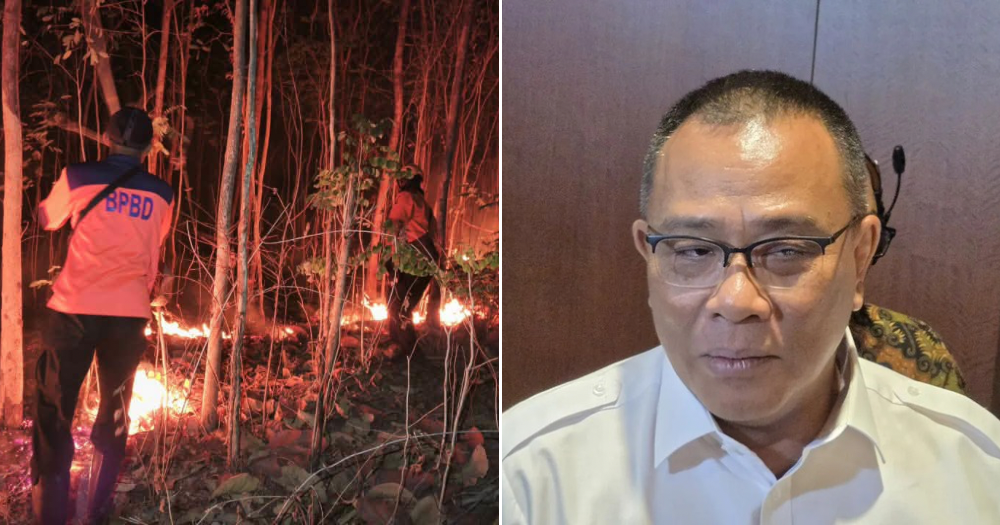
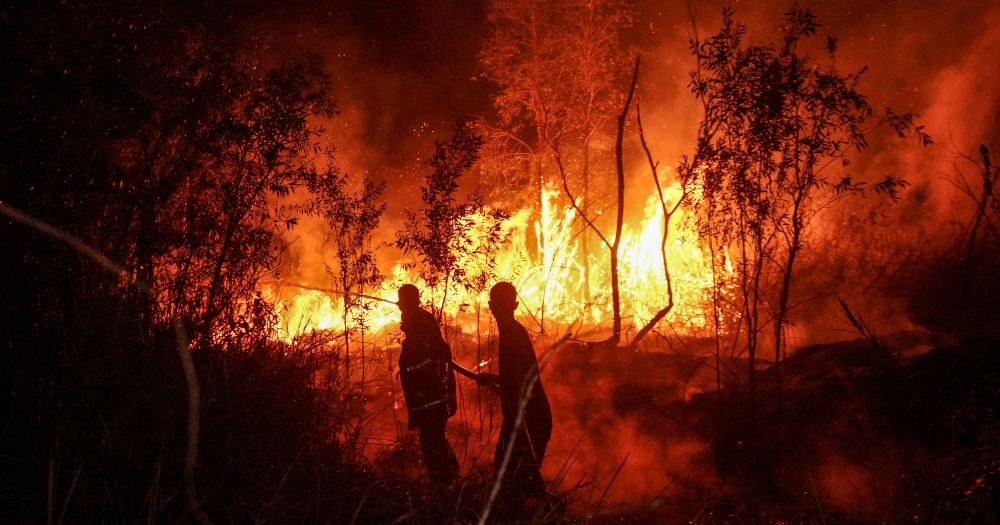
The current haze is attributed to forest fires in Indonesia, specifically in Sumatra and Kalimantan, with the latter being the main focus for this year’s outbreak.
Added to this is the fact that the world is currently experiencing one of the strongest El Niño events in recent decades.
This means that Southeast Asia is expected to experience less rain in the coming months, making it less likely that the air will be cleared and the forest fires will be extinguished soon.
Blame has rightly been targeted at humans and corporations. That mostly covers why the forest fires happen, but it might also be helpful to look down and explore how it burns.
What is peat?
According to the International Peatland Society, peat is the surface organic layer of soil, mostly consisting of decomposed organic matter, usually made from plant material.
It often develops under conditions of oxygen deficiency and waterlogging, and in areas like Southeast Asia, peat is usually formed by fallen leaves and branches from rainforest trees.
This results in an energy-dense material, and in the past, northern European countries like Ireland made extensive use of peat as fuel for electricity and heating, to lower reliance on imported fuel, although it no longer does so for environmental reasons.
Kalimantan and Sumatra, which are covered in dense rainforests, are also rich in peatlands.
Indonesia, according to an article in Frontiers, is home to 23 per cent of the world’s tropical peatlands.
32 per cent of Indonesia's peatlands, about 45,000 square kilometres, is found in Kalimantan.
Slash and burn
In Indonesia, slash-and-burn methods are traditionally used to clear land for small-scale agriculture.
While not considered good for the long-term health of the forest, it allows small-scale farmers to cultivate otherwise difficult-to-farm land for a few years, before needing to move on.
It is also a very cheap way to clear land, essentially lighting the undergrowth on fire and waiting for the results.
Perhaps in small amounts, the land clearing might be less problematic, but at this time, the land is used by more than just local small farmers.
DW reports that large tracts of land have been cleared in preparation for industrial-scale agriculture, usually for palm oil plantations, or for paper production.
In an especially dry year, such as the super El Niño-affected 2026, fires can quickly grow larger than intended.
But perhaps the most alarming aspect of this is the peatlands.
The peatlands
In order to make peatlands acceptable for agriculture, it is necessary to drain them of water using canals dug through them.
AFP estimates that over 285,000 kilometres of canals have been cut into peatlands in Indonesia, an amount it says is seven times the circumference of the Earth.
When the peat catches fire, it doesn’t just burn at the surface, but spreads underground and continues to burn after surface fires are put out.
This means that after firefighters leave, a fire can reignite, starting the process all over again.
Worse still, once the peat has been dried out, it becomes hydrophobic, making it difficult to rewet and extinguish those underground fires.
Underlying problems
DW’s report on the fires notes that in the aftermath of the 2015 fires, Southeast Asian countries took measures to try to prevent such a serious outbreak of both fires and haze from occurring again.
But despite Indonesian and Asean efforts to restore peatlands and monitor fires, Indonesia has placed a permanent moratorium on new concessions in primary forest and peatlands, there remains a significant amount of drained or degraded peatland.
An expert DW spoke to, David Mark Taylor of the National University of Singapore, said these areas can become highly combustible during periods of prolonged drought.
“The underlying problem hasn’t gone away, and neither has the driver," Taylor said.