News


Dyson says ‘small number of early batches’ of S$699 CameraJet toothbrush may have component issue
It is currently out of stock in Singapore, the U.S., France and the UK.
September 15, 2026, 04:32 PM
Top images via Mothership


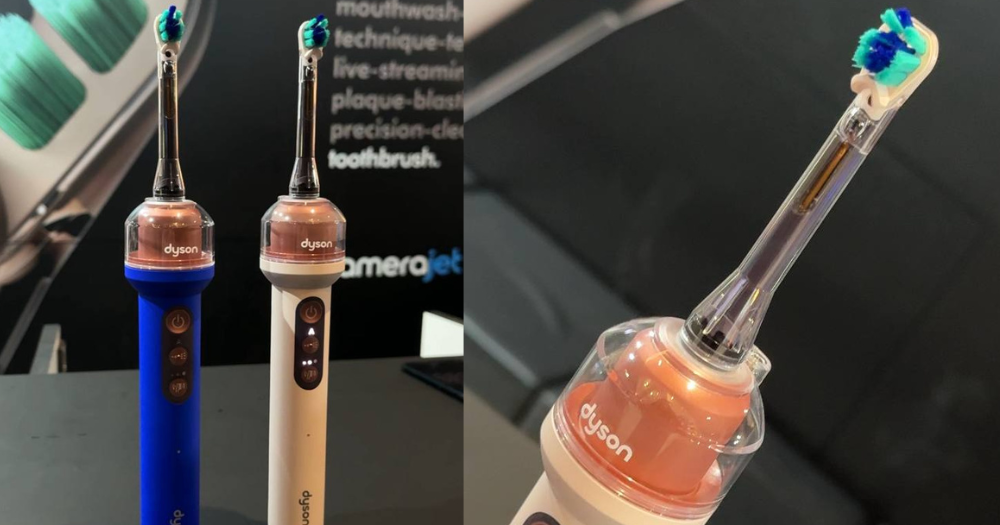
Dyson has acknowledged that some early batches of its CameraJet toothbrush, which retails at S$699 in Singapore, may have been affected by a component issue.
The company was responding to queries from Mothership.
The CameraJet is an electric toothbrush that combines brushing, flossing and rinsing by using a built-in camera and artificial intelligence.
 Photo via Dyson
What users have reported online
However, some customers have surfaced issues with the device online.
Some Reddit users claimed that they found water in the battery compartment.
One user on X said their CameraJet initially experienced problems with its camera before it stopped charging.
Another claimed their toothbrush stopped working shortly after they began using it.
“Do you want to tell me why I paid £420 (S$720) for a fancy toothbrush for it to be faulty after 30 seconds, it does not turn on,” the user said, adding that they had contacted Dyson's customer service about the issue.
Man fuck @Dyson this toothbrush doesn’t work. Their customer service is ass. Don’t buy it. Lmao I’m so fucking annoyed. I got it yesterday and it started with camera not working to now not even charging.
— Kathy (@kdotv_) September 10, 2026
What Dyson said
The toothbrush is currently listed as "out of stock" on Dyson's websites in Singapore, the U.S., France and the U.K..
In a statement to Mothership, a Dyson spokesperson said:
"We have had a very positive reaction to the new Dyson CameraJet and are experiencing strong demand globally. We are seeing some shortages of supply as we are in the process of scaling up production."
The spokesperson added that Dyson is aware a small number of early batches "may have experienced a component issue", and that the company is isolating those batches and taking the necessary steps to support customers.
Dyson did not say what the component issue was, how many units were affected, or which markets those batches went to.