



News


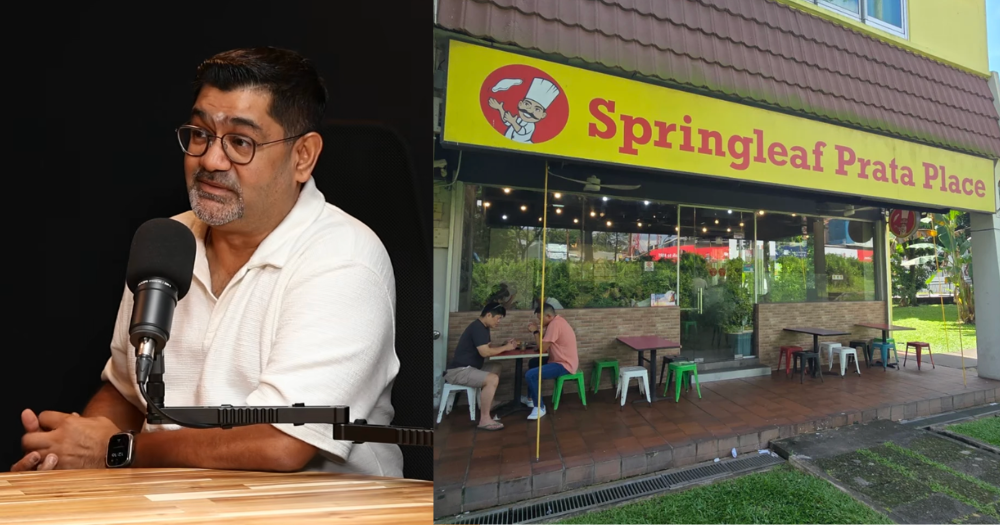
Springleaf Prata Place boss gives long-time staff a cut of each shop's profits, doesn't work weekends despite being in F&B
He runs a profit-sharing scheme where staff of five years or more take up to 30 per cent of a new shop's profits.
September 15, 2026, 03:22 PM
Top images via The Rojak Room/YouTube, Google Photos


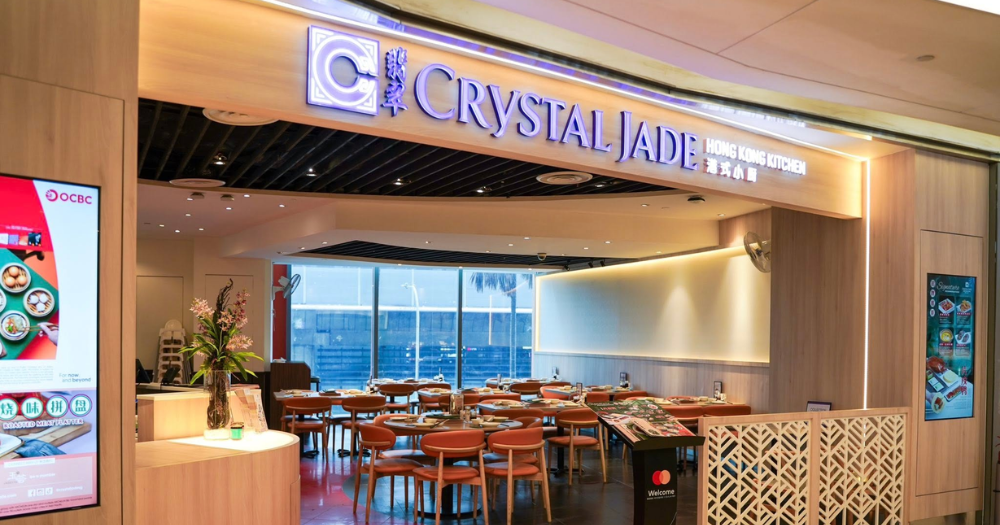
Springleaf Prata Place is the chain behind some of the more inventive things that have ever been put on a prata.
Hits include the Murtaburger, the salted egg prawn prata, the eggs benedict version, and portobello mozzarella prata.
The chain has 12 outlets, and its boss, SV Gunalan, known as Guna, recently sat down for an interview on The Rojak Room podcast.
He also doesn't work weekends, which in this trade, takes some explaining.
How he stopped working weekends
His wife's requirement was that he get back to office hours three years after—close to impossible in this trade.
He then decided to build a structure around it.
Staff who have been with Springleaf five years or more are offered a junior partnership in a new shop. They continue drawing their last salary, which is then frozen.
In return, they take 10 per cent of that shop's profits in year one, 20 in year two, and 30 from year three onwards.
They get no equity. That is where his accountancy training proves useful, he said.
"When you want to sell, you don't need to do a valuation or anything."
There were also two things that drove it. He wanted his weekends, and one of his better staff was about to leave.
He said: "I need to come up with something to keep him there as well."
But his summary of the whole arrangement was blunter than that: "I think I'm lazy."
Every batch of dough is made by someone with autism
Beyond the prata, Guna spoke about who makes it.
"Every dough made by Springleaf is made by someone with autism," he revealed.
A team of six to eight people work in the dough room under one supervisor, in four-hour morning and afternoon shifts.
The company also employs people with special needs as packers and dishwashers.
He said 35 per cent of his central kitchen staff have special needs, and that the target is 80 per cent.
To make that possible, the kitchen has been moving towards automation so staff can work without being exposed to open flames. Spices are pre-packed at the company's own spice factory in India, so cooking is a matter of opening a packet and adding water.
He said: "So it's, you can cook, I can cook."
How the hiring works
Springleaf films its cooking processes and sends the videos to the Autism Resource Centre (ARC), which has a service that trains and places adults with autism in suitable jobs.
For the first three to six months, a trainer from ARC supervises and helps them settle in, and remains reachable afterwards.
He said one trainer, Matthew, has been with them for three or four years, and is almost like his own staff.
Guna acknowledged it is not always smooth. Sometimes someone forgets medication and flares up, he said, but his staff are getting better at handling it.
When the host said it was good that he was giving opportunities to people who might not otherwise have them, he said: "I always say we're selling prata. We need good karma."
A separate intiative
Springleaf went further than hiring.
It also ran an outlet called Pronto Prata that was largely staffed by people with special needs.
A social kitchen supplied the staff, and machinery let them handle the noodles and drinks, though a chef still made the prata.
But the point had been to move people from Pronto Prata to regular outlets, and that did not happen.
Springleaf then wound down the arrangement last year.
However, Guna added that they are now looking at other ideas, including working with a coffee machine company on a one-button system.
"90% and above of my customers are not Indian"
Guna also shared what he had learnt over the years running Springleaf Prata Place.
When he opened in 2003, he said, nobody ordered fish curry and everyone went for chicken. Tastes have then shifted and now it runs roughly 70 to 80 per cent fish and 20 per cent chicken.
He has views on spice tolerance that cut against the stereotype.
He said: "Chinese can take spicy food. People come to me and say, 'You can make your curry spicier, we can take it.'"
And then the figure that surprised his interviewers: "Indians, we don't have so many. Actually less than 3 per cent of my customer base is Indians."
He returned to the figure later, when asked about Springleaf keeping its Singaporean identity.
"Like I said, 90 per cent and above of my customers are not Indian. So we're not going into Serangoon Road."
A new prata every August since 2012
Since 2012, Springleaf has launched a new creation every August for National Day. The Murtaburger came and stuck. Then an eggs benedict version, salted egg, an Alfredo, and a pratwurst after a trip to Germany, among others.
Not all of them land, however.
Kimchi prata, he admitted, was a mistake. Chilli crab prata worked but the crab was expensive enough that it had to sell at S$16.90, which he assumed nobody would pay.
Next year, some are coming off the menu and going seasonal.
The one that got away
Springleaf went to Las Vegas once, through a tie-up with Genting, for a reported US$30,000 (S$38,160) a year in royalties.
Training was done through a 60-inch screen, an hour a day.
Guna had friends in Vegas acting as informal quality control, and their reports got worse as the chefs kept changing. The annual visits that were meant to happen never did.
Eventually Genting said it wasn't profitable enough and the two parted ways.
He said: "More than the money, it was our name being there."
From one shop to 12
Guna started in the trade as a child, helping at his family's business. His father, mother, sister and two brothers run Casuarina, making him, in his words, “the outcast”.
He studied psychology at NUS while learning accounting at ACCA part-time, worked two years as an auditor, then two more as an admin manager at a school.
It was his principal who told him his admin work was not good and that he was probably meant to do something else.
He started the prata place with Casuarina, but the collaboration lasted about six months before he took it over alone.
His family let him have the place for free, and he spent two years paying his brothers back. He never repaid his father.
The business was renamed Springleaf Prata Place after a customer suggested naming it for its location, on Springleaf Road.
It now has 12 outlets.