Parliament


S'porean SMEs succeed because of relationships with MNCs, not in spite of them: PAP responds to WP future economy motion
Four political office holders spoke in parliament about the WP's economy motion.
August 05, 2026, 08:34 PM
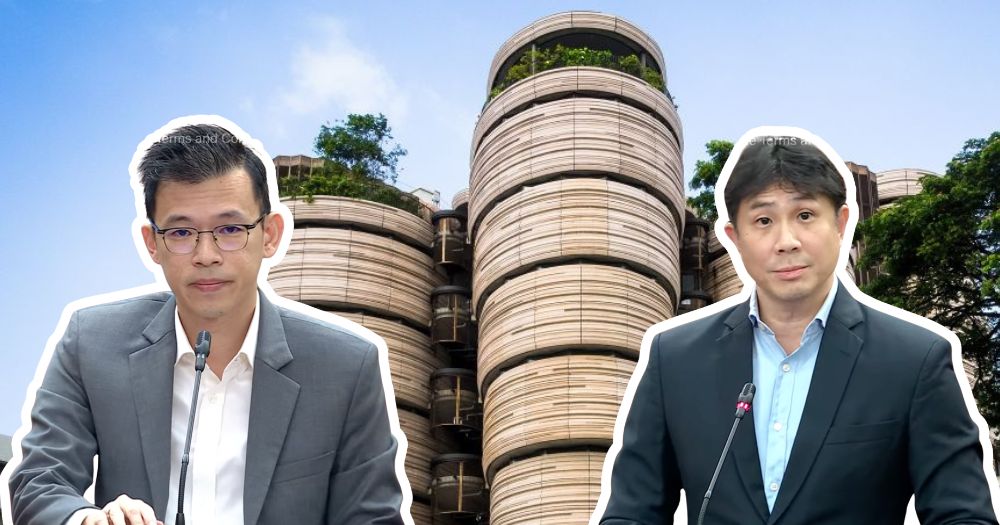
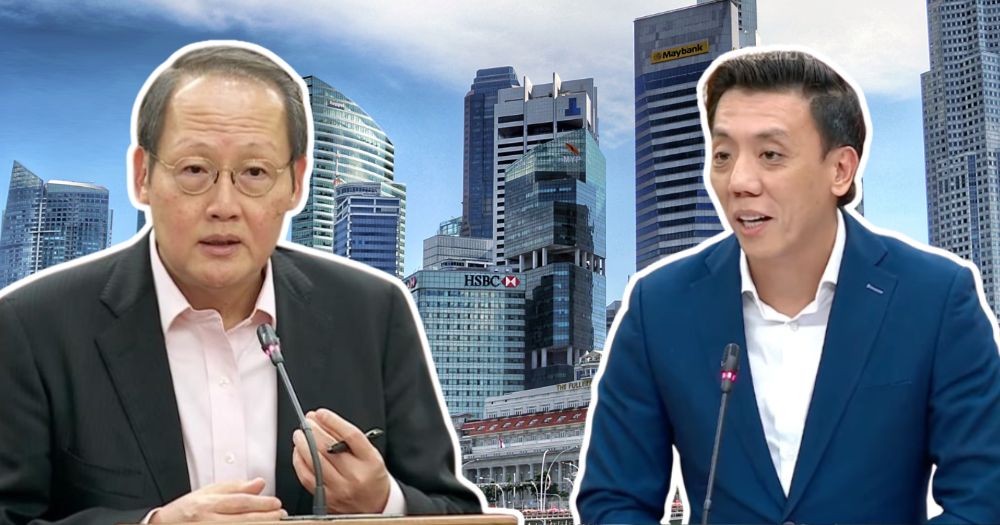
Image via MDDI/YouTube & Canva


On Aug. 5, 2026, the Workers' Party (WP) tabled its first motion since 2023 titled: “An economy of the future that works for all”.
The motion was filed by WP MP Kenneth Tiong and seconded by Jamus Lim, with amendments made by Edward Chia.
In response, four PAP political office holders rose to speak in favour of an amended version of the motion:
- Senior Minister of State for Culture, Community and Youth and Trade and Industry, Low Yen Ling,
- Minister of State for Cultural Community and Youth and Manpower, Dinesh Vasu Dash,
- Minister for Transport and Second Minister for Finance, Jeffrey Siow, and
- Minister for Trade and Industry (Energy and Industry), Tan See Leng.
They emphasised the government’s commitment to ensuring that Singaporean workers are able to succeed, while highlighting the difficulties that entrepreneurs face and the moves the government has made to help them.
They also stated that Multinational Companies (MNCs), far from hindering the success and growth of local SMEs and start-ups, instead, provided good partners and test beds for such small companies to succeed.
Not choosing between growth and inclusion
Dinesh began by acknowledging the important aspiration that he said was at the heart of the motion: “That Singapore remains an economy where our people have opportunities to succeed, and our workers can look to the future with confidence.”
Noting the difficult external environment, he said that the "evidence does not support the conclusion that Singapore's economic model is failing", but it is in fact navigating a “difficult and uneven” structural transition, and is doing so from a position of strength.
Dinesh highlighted the ways that the government's policies had kept Singaporeans at the centre of its manpower policies.
He also highlighted the need for enterprise transformation and workforce transformation must work together, as well as the importance of Singapore's tripartite partnership: government, businesses and workers, working together.
Thriving in a changing world
Low spoke about how to ensure Singaporean enterprises can continue to thrive in a rapidly changing world.
Pointing out external challenges, including technological disruption, intensifying competition, and global disruptions, Low said that the Singapore government's response was not just to help enterprises weather each new storm, but also to allow them to become stronger, more competitive, and more resilient over the long term.
It does this by helping enterprises build stronger capabilities, scale globally, as well as invest in strengthening the enterprise ecosystem.
Low affirmed that the government will stand alongside businesses during challenging times by providing timely and targeted measures.
She said that while the government sought to catalyse the ideal environment, it is the enterprises that continuously “innovate, adapt, and strengthen capabilities that will thrive and conquer new markets.”
Different understandings of Singapore’s economic model
Siow said there was considerable common ground within the House, saying that “we do want an economy with dynamic local enterprises and good jobs for Singaporeans”.
But Siow also pointed out a "significant difference" between the WP and the government's understanding of Singapore's economic model:
"From the speakers I've heard, the Workers' Party appears to believe that Singapore's economic model is imbalanced and needs to be fundamentally reoriented.
They have portrayed Singapore as a place where MNCs create wealth, and there's some Faustian bargain where SMEs are held down, and Singaporeans receive the benefits through redistribution."
Siow said he disagreed with this characterisation, calling it "not an academic disagreement, but one that is crucial to the policies that we will pursue".
He emphasised that the PAP government's economic strategy "has always been built around Singaporeans, whether as workers, professionals, investors, entrepreneurs, or business owners".
"Economic growth has never been an end in itself. It is a means to an end — to create better jobs, higher incomes, and better lives for Singaporeans."
Siow said SMEs played a critical role in Singapore's economy, as they employed the majority of the workforce, and that "many enterprising Singaporeans start their own businesses to forge their own paths, and strive for their hopes and dreams".
However, he noted that "very few countries support local companies like we do here", citing the nearly S$2 billion in direct grants the government provides for SMEs.
He acknowledged that "it has indeed become more difficult for SMEs to venture oversees", but that should not be a reason to "turn inward".
Instead the reverse should be done — "We must strengthen our companies to compete more effectively in more overseas markets, with greater resilience," Siow said.
Working with MNCs, not against them
Siow reiterated that while the government increases its efforts to support local companies, it is important to remember that MNCs remain important to Singapore's economy as they bring in "resources, capabilities, and technology we do not yet have."
"Many of our local companies grow and succeed because of their relationships with MNCs, not in spite of them," he stated.
Global companies, he said, create good, high-skilled, high-paying jobs, noting that two-thirds of senior management positions in MNCs in Singapore were held by Singaporeans.
Siow concluded that both SMEs and MNCs were key to the country's success:
"Our task is not to discard what has made Singapore successful, but to renew and strengthen our formula for a different world.
We are not choosing between SMEs and MNCs. We need both.
We are not choosing between domestic demand and external markets. We need both."
Mind the gaps
Tan delivered the closing speech on the motion and emphasised that, despite different views, diagnoses, and prescriptions, there was "substantial common ground", such as the desire for fulfilling careers and good incomes for Singaporeans, and confident and innovative entrepreneurs.
Quoting Tiong, Tan asked: "How does an ordinary Singaporean get a lasting share of our country's success?"
A Singaporean, he said, does so by “meaningfully participating in our economy through a good job”, acquiring and building skills that remain relevant, as well as recovering from setbacks by taking up the opportunity to learn.
He shared his own experience as an entrepreneur in starting the Healthway Medical Group, and recalled the help he received from MNCs.
"In my own experience, established global companies helped a home-grown Singapore enterprise to start, establish credibility, to grow. They did not crowd us out. They gave us an opportunity to grow and compete."
This experience, he said, also taught him what the government could and could not do — government support could be a "springboard" but it "cannot become the business model".
He highlighted a "non-exhaustive" list of five "gaps," or "difficult crossings" that entrepreneurs must overcome, as well as the steps or initiatives that the government had championed to help Singaporean companies overcome them.
These challenges range from making the step from aspiration to venture, to turning research into innovation and ultimately enterprise.
It also includes bringing products to an enterprise’s first customer, moving from early traction to sustained scale, and using domestic demand as a “first market to test products and build brands”.
"Government policy can undoubtedly help at each stage — but it cannot make the journey risk-free," he noted.
Singapore’s success
While reiterating his support of the amended motion, Tan highlighted the equation for Singapore's success — an equal and inclusive economy with opportunities for entrepreneurs, households, businesses and workers, and an economy powered by local companies and global enterprises.
"We cannot guarantee that every venture will succeed, every job will remain the same, or every transition will be painless. [...]
But we can ensure that Singapore remains a place where every person has a fair chance to try, a pathway to progress, and the support to recover from setbacks."
This "next chapter" of Singapore's growth will be "powered by all fellow Singaporeans who can build, lead, own, innovate, adapt and grow".
"That is how we will secure the best future for Singapore. And that is how we will ensure that Singapore’s future economy truly works for all Singaporeans."