Court


S'pore court finds reviews criticising TCM practitioner defamatory, patient ordered to pay S$12,500 in damages
The patient claimed she experienced severe neck and shoulder pain after the treatment.
August 05, 2026, 05:36 PM
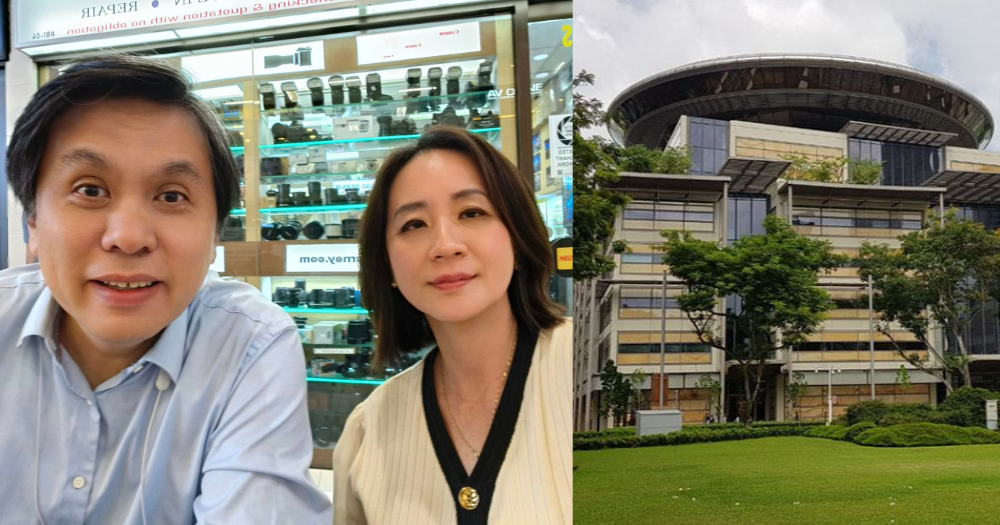
Photos from Canva and Liang Yi TCM's website.


A woman who left negative Google reviews after undergoing acupuncture treatment at a Traditional Chinese Medicine (TCM) clinic in Singapore has been ordered to pay S$12, 500 in damages after a court found that the posts were defamatory.
According to a judgement paper cited by Shin Min Daily News, the plaintiff was Chau Mei Sze, a registered TCM practitioner who was practicing at Kin Teck Tong TCM Clinic at Plaza Singapura at the time of the incident.
The defendant, identified as Lin Ching Ling, was a patient who had received acupuncture treatment from Chau.
Chau filed a defamation suit on Dec. 20, 2024, alleging that the patient had posted defamatory comments on the clinic's Google review page.
She also sought an injunction restraining the patient from publishing similar defamatory statements in the future.
The case
According to Shin Min, the patient visited the clinic on Nov. 17, 2024, seeking treatment for neck and shoulder pain.
Chau performed acupuncture on the patient, while another therapist administered cupping and tuina massage.
After the treatment, the patient said she experienced severe neck and shoulder pain that night.
She further claimed that her right arm became so weak the following day that she was unable to lift it to brush her teeth, prompting her to call the clinic.
However, both parties gave differing accounts of the phone conversation.
Chau said she had asked the patient to return to the clinic for a review, but the patient claimed Chau had told her the symptoms were normal and would improve after a few days, so she did not return that day,
On Nov. 19, 2024, the patient returned to the clinic after being contacted by the clinic manager, and was examined by two other TCM practitioners.
The following day, she sought treatment at the National University Hospital's Emergency Department, where she was diagnosed with neurapraxia of upper extremity and cervical radiculopathy.
On Nov. 21, 2024, the patient posted a Google review recounting her experience, writing, among other points:
"Be careful if you're going in for neck/shoulderache for acupuncture. Or maybe just the specific physician or therapist are not qualified"
On Dec. 2, 2024, the clinic responded to the review, saying the patient's account might not accurately reflect the treatment she had received.
The next day, the patient was informed that the clinic would not be issuing her a refund.
According to Chau, the patient also threatened to file a police report and post more negative reviews if she was not given a refund.
Eight days later, the patient posted another review questioning the clinic's denial that there had been any error in the acupuncture treatment.
In her review, she described the clinic as a "money making" business that did not care about their customers' health.
The second review was later removed by Google before Dec. 17, 2024.
Court's findings
The judge found that both Google reviews clearly referred to Chau and could lower her reputation in the eyes of reasonable members of the public, Shin Min reported.
Though the reviews did not allege that Chau lacked professional qualifications, training, or certification, nor did they suggest that she was not entitled to charge for her treatment or bear the patient's future orthopaedic costs, they were sufficient to damage her reputation.
The judge found that the first review questioned whether Chau was qualified to perform acupuncture, while the second suggested that she lacked the competence to perform acupuncture or had administered it negligently or incorrectly, causing injury to the patient.
The court later ordered the patient to pay Chau S$10,000 in general damages and S$2,500 in aggravated damages.
Chau also argued that the patient's refusal to apologise or retract the reviews suggested that they were made in an attempt to pressure or retaliate against the clinic, rather than reflect her genuine belief.
The judge found there was no evidence that the patient knew, at the time she posted the reviews, that her pre-existing medical condition could have caused the symptoms she experienced.
However, the judge held that when the patient claimed in her second review that Chau had performed the acupuncture incorrectly and caused her arm weakness, there was no factual basis for making that allegation.
At most, she knew it was only one possible explanation and was therefore at least reckless as to the truth of the allegation.
The judge also found that the second review was more likely posted in retaliation for the clinic's refusal to issue a refund, or in an attempt to obtain one, and hence awarded aggravated damages.
Injunction refused
According to Shin Min, the judge noted that an injunction would only be granted if there was a likelihood that the patient would publish further defamatory statements.
However, Chau failed to produce evidence showing that the patient was likely to repeat the defamatory allegations.
The judge also noted that Chau did not pursue the injunction in her closing submissions, and dismissed that part of her claim.