Parliament


Create special zone around NTU with lower land costs: WP suggests in future economy motion
Lim said Singapore could wean away "from a top-down, foreign investment-reliant multinational economic model, and instead build a bottom-up domestic capital-led... SME focused one".
August 05, 2026, 04:45 PM
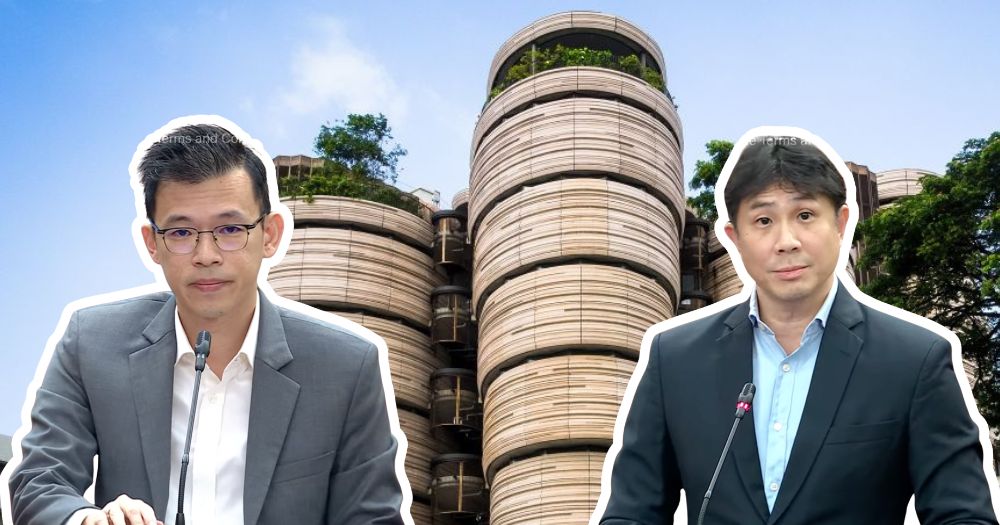
Top photo from Marcellino Setiawan/Google Maps and MDDI/YouTube


Member of Parliament (MP) for Aljunied GRC Kenneth Tiong said that the "biggest competitor" to Singaporean startups and SMEs are the Singaporean government-linked companies (GLCs) in his opening speech tabling the Workers' Party's (WP) first motion since 2023.
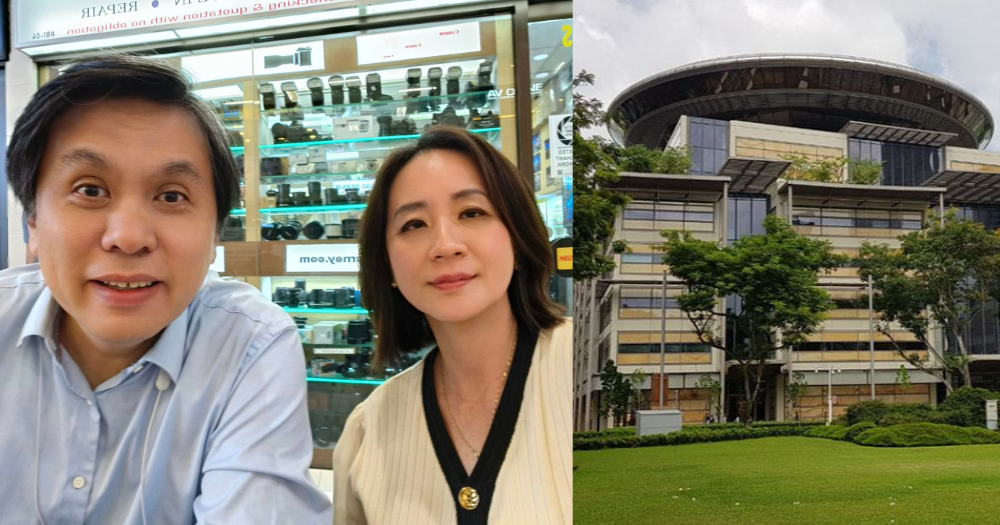
The motion titled "An economy of the future that works for all" was filed by Tiong and seconded by MP for Sengkang GRC Jamus Lim, focusing on the party's vision for the Singapore economy.
Tiong proposed creating an "updated growth model" that cares not solely about GDP growth, but about "structure of growth", and a special Research and Development (R&D) zone at Nanyang Technological University (NTU), among other suggestions.
"Before we can remake society to be young, we must remake society for the young," he said.
Lim meanwhile focused on how Singapore could wean away "from a top-down, foreign investment-reliant multinational economic model, and instead build a bottom-up domestic capital-led... SME focused one".
'A lasting share of our country's success?'
According to a WP press briefing on Aug. 1, Tiong said the motion can be summed up in a question: "How does an ordinary Singaporean get a lasting share of our country’s success?"
During the briefing, Lim said the motion should not necessarily be seen as a substitute but rather as a complement to current policies.
Lim told the media that the WP wants to ensure the message they send is both a reaction and distinct from the Economic Strategy Review (ESR), which was launched in 2025.
Motion consists of 2 parts
Speaking in Parliament, Tiong introduced the motion, which consists of two parts.
The first pushes for a "more equal and inclusive economy, with opportunities for entrepreneurs to experiment, households and businesses to succeed, workers to thrive, and ideas and innovation to flourish".
The motion will also ask the House if it believes in "an economic engine driven by dynamic local companies, healthy domestic demand, and Singaporeans and Singaporean capital venturing abroad".
Tiong cited the trend of multinational corporations (MNCs) and Singaporean companies moving overseas.
"High business costs and slow manpower approvals accelerate offshoring to regional centres based in countries like Malaysia and Vietnam," Tiong said.
He mentioned layoffs by H&M, which has shifted its regional headquarters to Kuala Lumpur, and Tiger Beer, which shifted its production to Malaysia and Vietnam, affecting about 130 jobs.
Yeo's and Gardenia also shifted their production facilities to Malaysia.
'Few dream of being entrepreneurs'
To elaborate on why this motion was put forth, Tiong outlined how "Singaporeans face a uniquely challenging set of circumstances".
"The major model of Singaporeans getting on the economic ladder has been jobs. Without a job, you're not able to afford renting a place or buying HDB flat. Without your own place, it is difficult to think about having children."
He said few of these children dream of being entrepreneurs, with nine out of 10 being employees.
"For almost all of us, the jobs ladder is the main route up, with not many Singaporeans becoming entrepreneurs."
He added that reasons include the small market and "daunting" cost of business, which lacks social safety nets for risk-taking, and that "not enough true growth capital exists for all the private wealth attracted here".
Job structure based on hosting large companies
Tiong said Singapore's "job structure rests on being the best place in the region for foreign companies to base themselves. We host many large companies, but build few of them."
He cited how of the three companies Singapore has in the Fortune Global 500, all are commodity traders, two of which were founded overseas before moving to Singapore.
Compared to South Korea's 13 and Taiwan's six companies on the same list, which were "built by their own people", Tiong said Singapore's companies "came here and can as easily go".
Tiong added: "The standard answer for advanced economies has been R&D, build what others cannot easily copy, so that firms come here in spite of our costs. But after decades and tens of billions, not one local R&D champion has emerged worth more than a billion dollars."
He noted that Singapore "should continue to invest, but the upshot is that our R&D complex is sadly not ready to be our growth engine".
'Engine of investment to jobs is faltering'
Tiong first suggested an updated growth model that "cares not only about the headline GDP growth figure but the structure of growth".
"It is acceptable as an exigency to grow first, and then redistribute by vouchers and rebates, but over the medium and long term, we should be building an economy where a fair distribution is produced by the growth itself, rather than repaired afterwards out of the proceeds, pre-distribution or redistribution."
He emphasised that this is why Singapore requires an economic engine "driven by dynamic local companies, healthy domestic demand, and Singaporeans and Singaporean capital venturing abroad".
Secondly, Tiong said Singapore needs an "honest measurement and prioritisation of what matters from growth".
He made three points on the "indigenous share of national income", "real income growth that keeps pace with productivity, not lag it" and "whether Singaporeans can still afford the city they built".
"These three North Stars point us towards a more equal and inclusive economy, with opportunities for entrepreneurs to experiment, households and businesses to succeed, workers to thrive, and ideas and innovation to flourish," he said.
Special zone around NTU
Tiong talked about universal land pricing and noted that Singapore has been good at "bringing other people's companies here".
However, he questioned: "We have been slow to put the same land that we own behind our people building their own. Why do we take a high land price as a law like gravity?"
He said the ideology of universal land pricing is coherent and convenient, but "the people of Singapore need to decide if this ideology still serves them".
Instead, he proposed that Singapore should stop treating market land value as a "natural price for every socially productive use of land".
He proposed a test — a university-centred special zone where state land is priced at development cost rather than market scarcity value.
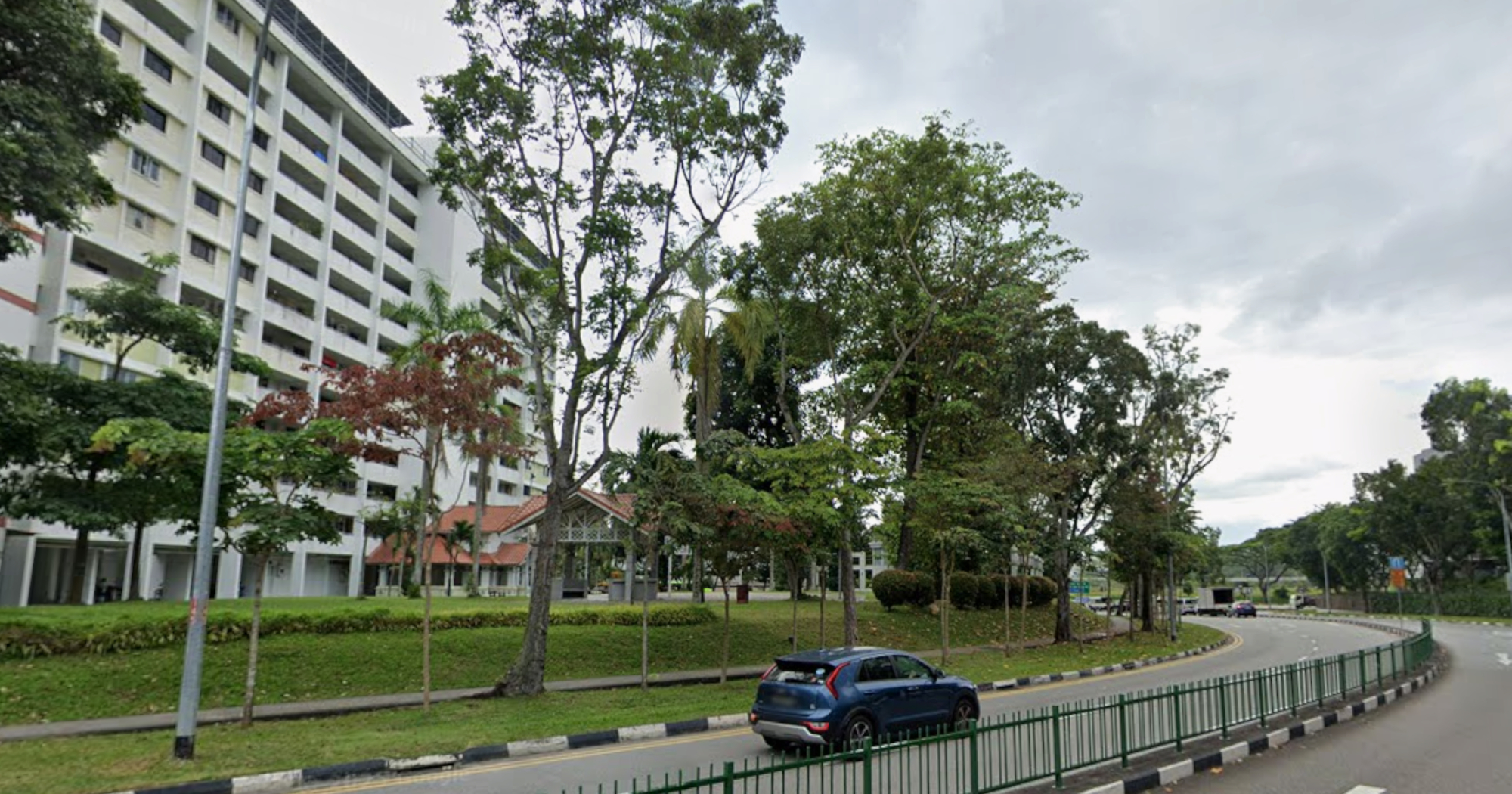
This special zone, he suggested, could be surrounding NTU.
He elaborated:
"The bargain has four parts:
- A place to live near where the work and the research happen at a price a starting salary can carry,
- In service of something the country needs, [which is] more local enterprise and R&D,
- With an upside staying with the risk takers,
- And a say in the rules."
Tiong said the test “will be zoned for organic messiness, a district that is pro-worker and pro-business, built around the needs of young people and young companies”.
He proposed that the zone has its own board and stated that most of what he was asking did not require new legislation.
He cited the JTC Corporation, which writes its own contracts and the Urban Redevelopment Authority’s planning circular.
Tiong added:
"So the ask is threefold: a zone around NTU, a new use category for restricted, non-tradable, mixed housing and enterprise land, valued as the restricted interest it is, and a zone authority that runs its own operations and takes stakes in the enterprises it grows."
Tiong urged that "today's Singaporeans should have as much say over scarce land as the master planners of decades ago".
Rent-seeking mindset
Subsequently, Lim began his speech by sketching out Singapore's traditional growth model, which was to accumulate factors of production.
These factors of production are "to ride on increases in the labour force due to demographic change, while simultaneously building up complementary capital, both manufactured — in the form of machines, equipment, and factories—as well as human, through education".
He noted that while the traditional model was successful, it made Singapore somewhat obsessed with "courting foreign capital and fearful of right-minded pro-worker policies that would reduce our attractiveness as regional headquarters".
"Our educational system churned out a formidable number of excellent operators, but far fewer risk-taking entrepreneurs."
Lim added: "In the drive to economise on scarce land, our government's leasehold model has fostered a rent-seeking mindset in real estate, rather than treating land as just another normal input to production".
New model should evolve away from traditional reliance on MNCs
Lim said the new model should "evolve away from our traditional reliance on foreign MSCs as a driver of our growth and pivot toward SMEs as our homegrown economic engine".
"While the ESR speaks about both, it betrays somewhat an implicit bias toward the former."
Lim stated that a shift from fixation with tax competition, an undervalued exchange rate and wooing of footloose multinationals is needed.
He proposed: "We must instead promote bottom-up formation and growth of our indigenous companies and unleash the innovative and entrepreneurial spirit of our local workforce."
This, Lim said, requires companies to be weaned off cost-cutting "as the only means to be competitive".
"What we want is for 'Made in Singapore' to be synonymous with better, not just faster or cheaper, which is best left to economies lower down the income ladder."
He noted that to enable the transformation, Singapore needs a "domestic body of medium-sized enterprises capable of growing to become the next wave of national corporate champions and driving a 21st-century innovation-led economy.
"We need Singaporeans to start Singaporean companies, and for these companies to grow and succeed domestically and on the world stage."
Advancing to the next stage of growth
Although there are many government-run schemes to boost productivity for SMEs, more can be done to allow them to advance to the next stage of growth, Lim said.
He said: “There remains additional room for the state to act well through its indirect influence on GLCs. Despite being half of our economy's value added, R&D spending by domestic enterprises accounts for only S$1 out of every S$5.”
Lim called for the GLCs to look towards “elevating their spending to more closely match those of other MNCs”.
He noted that SME productivity could also be supported by “tackling sky-high business costs”, and proposed capping rents to a “historical increase of about 3 per cent annually”.
He also urged “to revisit the dependency ratio ceiling (DRC) for certain sectors like F&B, where Singaporeans continue to shun open positions that are advertised even at attractive wages”.
The DRC refers to the maximum ratio of foreign workers to the total workforce that a company employs.
Lim noted:
“To be clear, what I'm calling for is not a wholesale overhaul of our GLC-heavy MNC-led and foreign capital reliant model, which has, to date, served as well.”
Last WP motion in 2023
The last time the WP filed a motion in Parliament was in 2023.
The 2023 motion was tabled by party chief Pritam Singh and MP for Sengkang GRC Louis Chua over helping Singaporeans with the cost of living.
It was passed after a seven-hour debate with amendments from the PAP.
However, in 2023, the WP and PSP did not vote in favour of the amended motion.