News


Elected Presidency, GRC, NCMP schemes have 'served S'pore well': SM Lee at Jayakumar's new book launch
The book also revealed how Lee Kuan Yew and his leadership team discussed and debated over these institutions that are unique to Singapore.
August 12, 2026, 07:46 PM
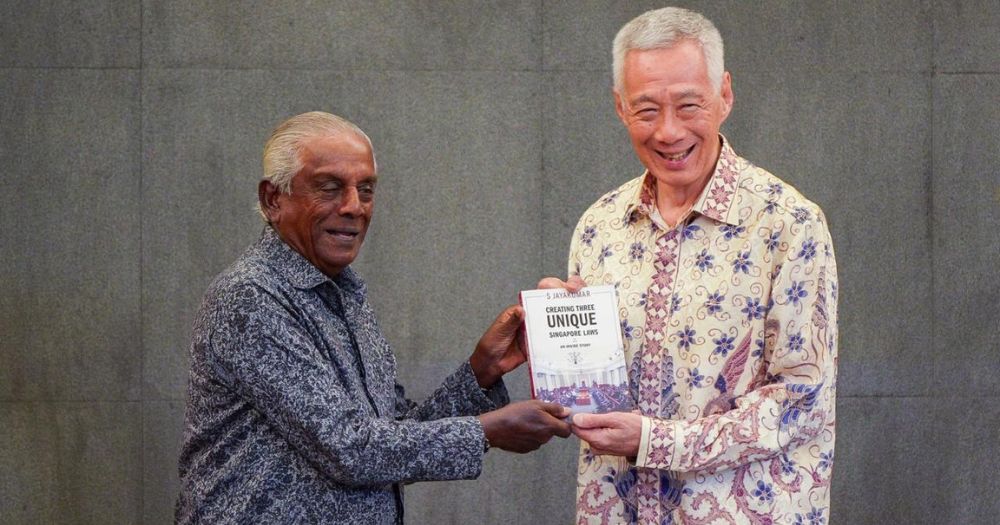
Photo by Mothership.

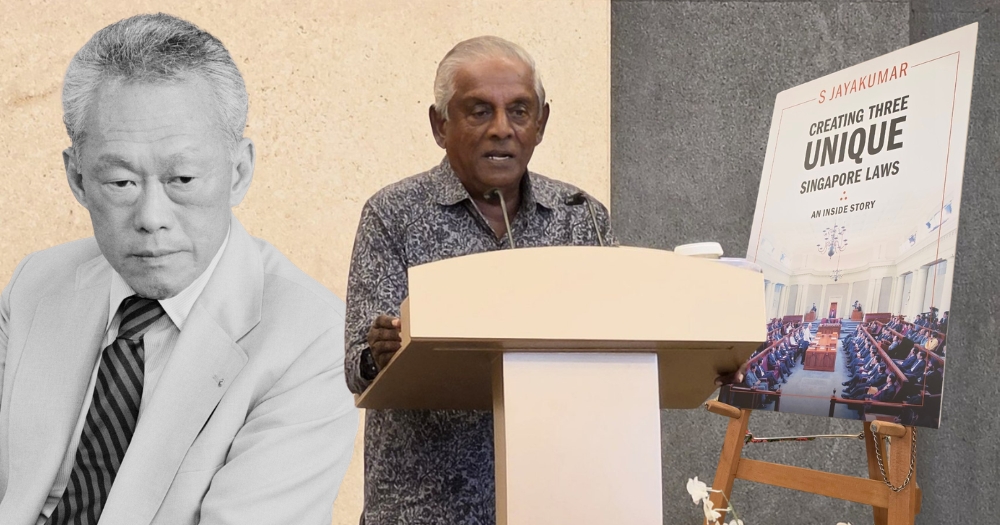
 Three novel laws established in Singapore's Constitution, namely the Elected Presidency, the Group Representation Constituencies (GRC) and Non-Constituency Members of Parliament (NCMP), have "served Singapore well", said Senior Minister Lee Hsien Loong.
SM Lee was speaking at the Aug. 12 launch of "Creating Three Unique Singapore Laws", a new book by former Deputy Prime Minister S. Jayakumar.
The book "sheds light on how the leadership team worked behind those doors. How open they were to radical, out-of-the-box ideas. How intensely but objectively they argued with one another. How Mr Lee Kuan Yew, as Prime Minister, put forth his views robustly, yet repeatedly and indeed obsessively sought alternative perspectives," SM Lee described.
The book launch, held at the Ministry of Foreign Affairs, was attended by a host of dignitaries, including all living former prime ministers as well as past and present Cabinet members.
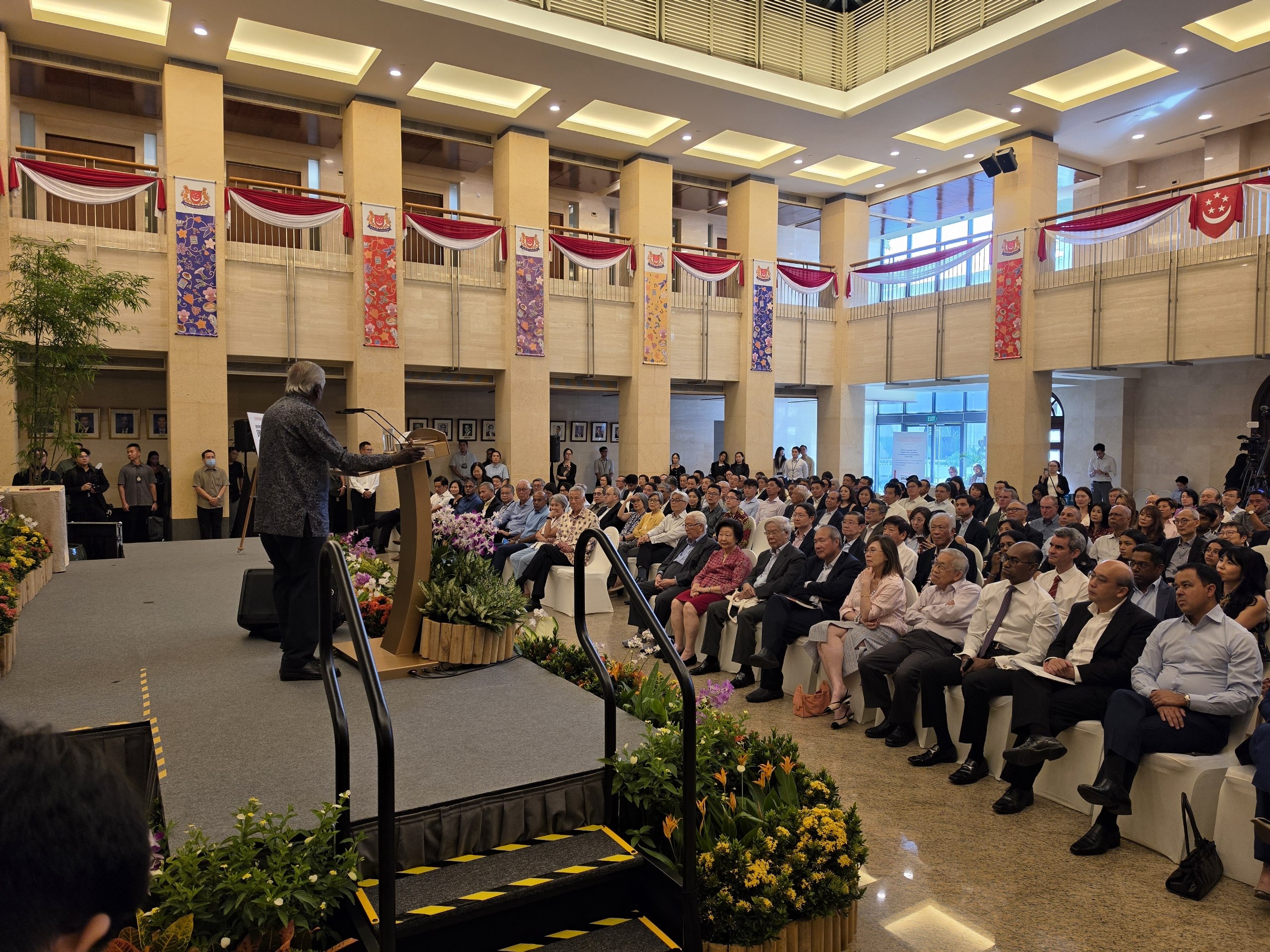 Image via Azrizal Abu Che'/Mothership
Served Singapore well
In his speech, SM Lee said the true test of these institutions was in how they would work out in practice over the years and changes in governments.
"Looking back now after nearly half a century, we can safely say that these three institutions have indeed served Singapore well."
He further elaborated:
The GRC system, which was enacted in 1988, has allowed for the question of minority representation in Parliament to be "no longer seriously doubted" today.
"Nor is there any question that the minority member of a GRC team enjoys the same mandate and political standing as his teammates. Importantly, the GRC scheme has also discouraged race-based politics," SM Lee added.
Meanwhile, the NCMP scheme, which was established in 1984, he said that its establishment had prevented a scenario where the winning party makes a clean sweep at general elections.
"Opposition MPs are routinely elected in general elections. But at the same time, the public’s expectations for more alternative voices in Parliament have gone up."
On the Elected Presidency, enacted in 1991, SM Lee said successive governments and elected presidents have continued operating this system of checks and balances.
While the detailed working have continued to be refined, the core concept – that each elected government should spend within its means, and only draw on past reserves with the consent of the Elected President – remains unchanged.
The results are evident even in the modern day, he explained.
In emergencies like the Global Financial Crisis and the Covid-19 Pandemic, the government has been able to draw on past reserves to fund substantial emergency packages with the approval of the Elected President.
A 'custom-made' Constitution for Singapore
Singapore's Constitution has been shaped over the years to suit our needs, said SM Lee.
Unlike other countries like India and the U.S., where constitutional architecture was designed from the ground-up, a newly-independent Singapore did not have the luxury of time.
Instead, the nation cobbled together a "patchwork Constitution" in a hurry, he said.
He cited Lee Kuan Yew's rejection of a theoretically redrafted Constitution over his belief "it would not work in practice", in favour of a "custom-made" one.
In the elder Lee's words in Parliament in 1984,
"Constitutions have to be custom-made, tailored to suit the peculiarities of the person wearing the suit.
Perhaps... like shoes, the older they are, the better they fit. Stretch them, soften them, resole them, repair them.
They are always better than a brand new pair of shoes."
The redrafted Constitution, drafted by British legal experts, lacked an intimate understanding of Singapore’s society and ground realities, SM Lee said.
"Elegant as their draft was, [Lee Kuan Yew] judged it ill-suited to the local context."
In Jayakumar's book, this was vividly described through the amendments to include the three institutions, he added.
After more than three decades of refinements and revisions, these institutions are no longer "recent alterations to our old shoes, but have themselves been stretched, softened, smoothed, and re-patched, to become essential parts of the whole", SM Lee said.