



News


GRC system wasn't conceived to fix the opposition, LKY had the idea way back in the 70s: Jayakumar
Jayakumar's new book also reveals how the PAP government discussed on important matters.
August 12, 2026, 11:44 PM
Photos by Mothership and Library of Congress/Wikipedia


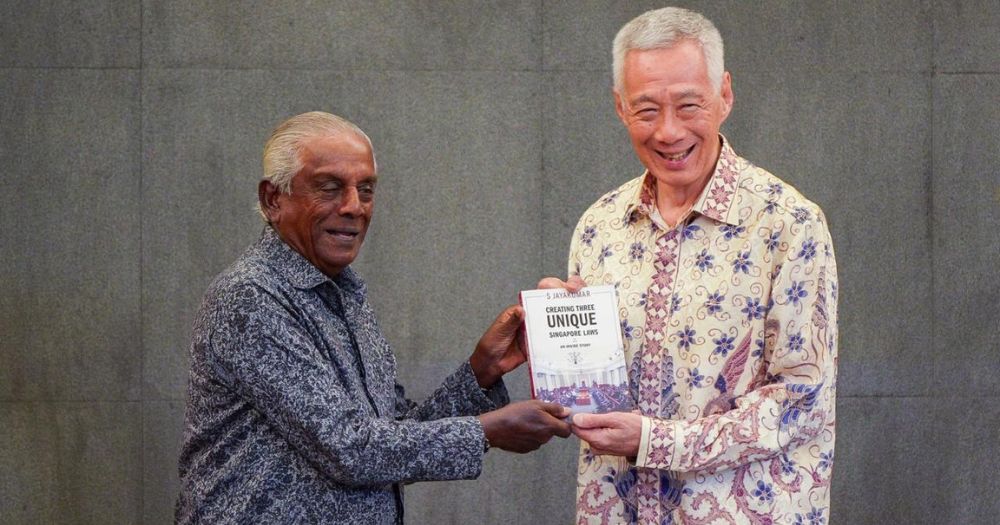
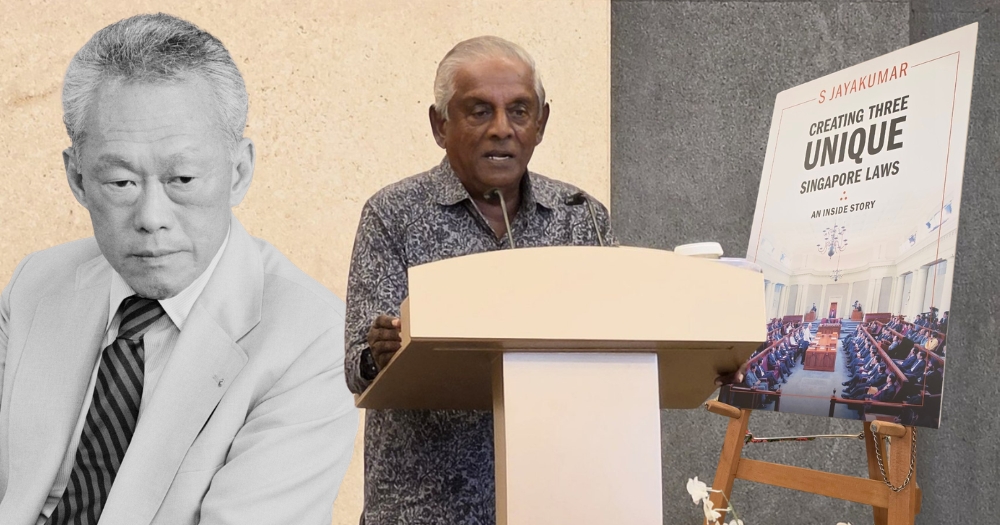
Former Deputy Prime Minister S. Jayakumar launched a new book, Creating Three Unique Singapore Laws, on Aug. 12.
By unveiling the behind-the-scenes discussions that went into the enactment of three constitutional innovations—the Elected Presidency, Group Representation Constituencies (GRC), and Non-Constituency Members of Parliament (NCMP) schemes—Jayakumar hopes to lift the veil of secrecy surrounding how the Cabinet discusses important matters.
The 87-year-old also aims to open a window for more people to appreciate founding Prime Minister Lee Kuan Yew's farsightedness, and to dispel the myth that Lee was someone who "brooked no dissent."
According to Jayakumar, all three schemes were initially proposed by Lee, but underwent alterations through Cabinet discussions before being included in the Singapore Constitution.
Lifting a veil of secrecy
First, it aims to "lift a veil of secrecy" surrounding the internal deliberations of the PAP government, which has always kept a tight lid on such discussions.
These discussions were "detailed, thorough and robust" and the book reveals the arguments, rebuttals, dynamics and personalities involved, as well as how compromise and consensus were achieved, "all with one thought in the mind of all levels of Cabinet: What will be in the interest of Singapore?"
It would be a pity if the public did not have this insight into the way Cabinet discusses important matters, Jayakumar said.
On Lee Kuan Yew's far-sightedness
Secondly, the book is intended to offer an insight into Lee's far-sightedness and leadership style when interacting with his leadership team.
Lee spent "all his waking hours" thinking about how to keep Singapore going, Jayakumar said.
His vision goes far beyond his lifetime and that is special, he added.
Using the GRC system as an example, which some criticised to be used to "fix the opposition", Jayakumar said that Lee came up with it to ensure the minority representation as far back as in the 70s.
"In the early 70s, he wrote a letter to all the PAP MPs expressing a deep concern for Malay PAP MPs, how they could effectively operate and function in a constituency which, at that time, was more predominantly Chinese-speaking than now, where many are English-speaking," he said.
Lee Kuan Yew was headstrong but willing to be persuaded
Lastly, the details in the book serve to dispel the misconception that Lee was an unyielding leader who refused to allow differing opinions.
"The first myth is about Mr Lee Kuan Yew – that he was such a towering figure with such strong views – some say fierce.
The myth was he brooks no dissent...and any proposal that he had, he will just ram through."
The book shows that while Lee was "very headstrong", he was willing to listen to contrary views, though with cogent arguments.
During the creation of these three laws, younger ministers at the time held their ground or proposed alternatives, contrary to beliefs that they were merely "yes-men".
According to the book, Lee had originally intended to vest the President with extensive executive powers, but this was later altered to grant custodial powers instead to prevent an abuse of power.
This came after then-younger ministers, including former president Tony Tan and former prime minister Goh Chok Tong, voiced concerns about an over-concentration of power in a single person.