News


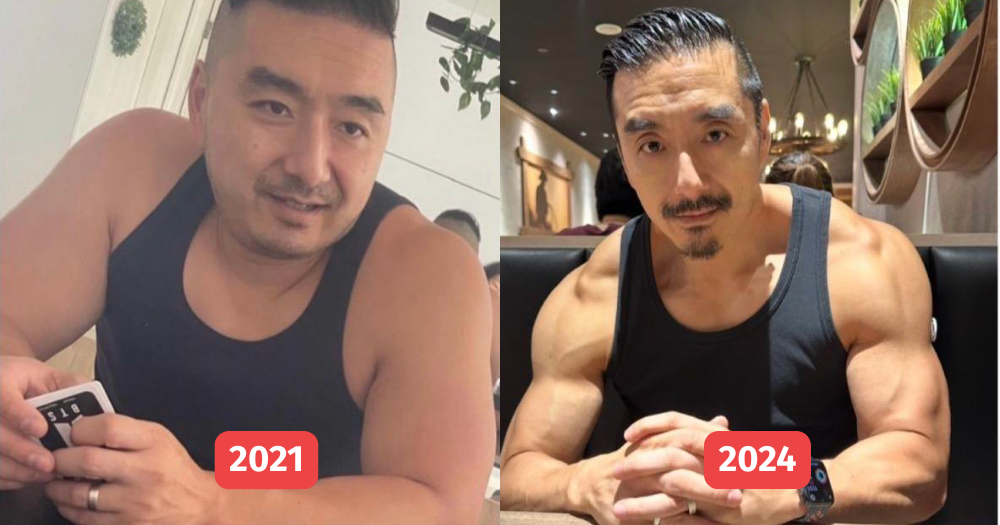
NUS professor, 47, becomes own test subject in longevity study, cuts biological age to 32
He went through a regimen of fasting durations, exercise routines, and nutrition adjustments.
August 15, 2026, 01:36 PM
Photos from NUS


Reverse ageing may sound like science fiction, but perhaps we have more control over the rate we age than we think.
A 47-year-old professor at the National University of Singapore (NUS) decided to become his own test subject in a longevity study, and put his body through various fasting, nutrition, and exercise routines since mid-August 2024.
While his experiment continues today, he recently discovered some remarkable results.
His biological age was estimated at around 32, nearly 15 years younger than his actual age, according to a custom AI copilot developed for the study.
Tracking the body's changes
The study known as DELTA, published on Aug. 12 in the journal PLOS One, seeks to rethink how we understand our own health.
Dean Ho, director of the Institute for Digital Medicine (WisDM) at NUS Medicine, explained that he was exploring how different each person becomes from themselves over time.
"We started this study to better understand what happens between annual health screenings, which most people rely on as their measure of health — to look beyond static markers and focus on how the body functions and changes in real time," he said, as quoted in an NUS press release.
Rather than "snapshots" taken through annual health screenings, Ho set out to track how his body would change every day.
Turning point
Before embarking on this study, Ho used to take a diet that comprised sugary drinks and various deep-fried foods, according to NUS.
He would enjoy five cups of iced lemon tea in one sitting, for example.
He would also have only about five hours of sleep or less, going to bed at around 1am or 2am.
 Ho in 2021. Photo from NUS
 Ho in 2020. Photo from NUS
The turning point came in 2021 when he bought a blood test kit as a birthday gift for himself, to track his daily glucose levels.
It led him to explore how science and data could improve his health, and he began to experiment with intermittent fasting, and diet and workout adjustments.
The regimen
For the study, Ho made deliberate adjustments to his body through a series of lifestyle interventions, while using wearables to monitor how his biology responded in real time.
The regimen included around 20 hours of fasting each day, multiple 48-hour fasts, and 90 minutes of strength or cardiovascular training every morning.
He also ate a structured "clean" diet centred on leafy greens, seeds, olive oil, lean protein, and other Mediterranean-style foods, with beverages limited to water, electrolytes, black coffee, and black tea without milk and sugar.
 Photo from NUS
 Photo from NUS
The results
Ho saw several improvements to his health as a result of this regimen.
His metabolic switching (the rate at which body can switch between burning sugar and burning fat) became faster over time, from over 24 hours before the experiment, to 16.5 hours afterwards.
According to NUS, for someone of Ho’s age, the average metabolic switching is 36 to 72 hours, or even longer, and it often becomes less efficient as one grows older.
Ho’s resting heart rate also improved, falling from 65 beats per minute (bpm) to 46 bpm, which can indicate more efficient heart function and better recovery.
 Photo from NUS
 Photo from NUS
For this study, Ho changed his sleeping habits to sleep earlier at around 9pm instead of past midnight previously.
Consequently, his sleep pattern showed an increase in total sleep from five to nearly eight hours. His sleep quality also improved as he got more deep sleep and woke up less during the night.
Additionally, his gut microbiome health showed positive changes, including better energy conservation during certain fasting periods.
While his weight used to be around 90kg or more, he has reduced it to about 72kg now.
Sharing what he felt during the study, Ho likened the experience to a game.
"It was like playing a game—adjusting my lifestyle in small ways and watching the numbers shift in real time," he said. "Having visual access to my own data in motion got me hooked and kept me going in adopting a healthier lifestyle."
Through this study, Ho and his team hope that others can feel empowered to engage with their own data to make better lifestyle adjustments, rather than copy another person's routine or pursue perfection.